Anker SOLIX F2000 Portable Power Station Review: The “Rolls Like Luggage” 2kWh RV Backup That’s Great—With A Few Gotchas
Affiliate Disclaimer: This article contains affiliate links. If you click through and make a purchase, I may earn a small commission at no extra cost to you. This helps support my deep-dive research.
Why Are We Still Dragging Heavy Lead Around?
If you have ever tweaked your back trying to lug a 70-pound lead-acid battery off the tongue of your trailer, or if you’ve laid awake at 2:00 AM listening to your neighbor’s gas generator drone on like a lawnmower from hell, you know the pain. We all want that silent, infinite power—the ability to run the coffee maker, the CPAP, and the Starlink without waking up the entire campground or inhaling fumes.
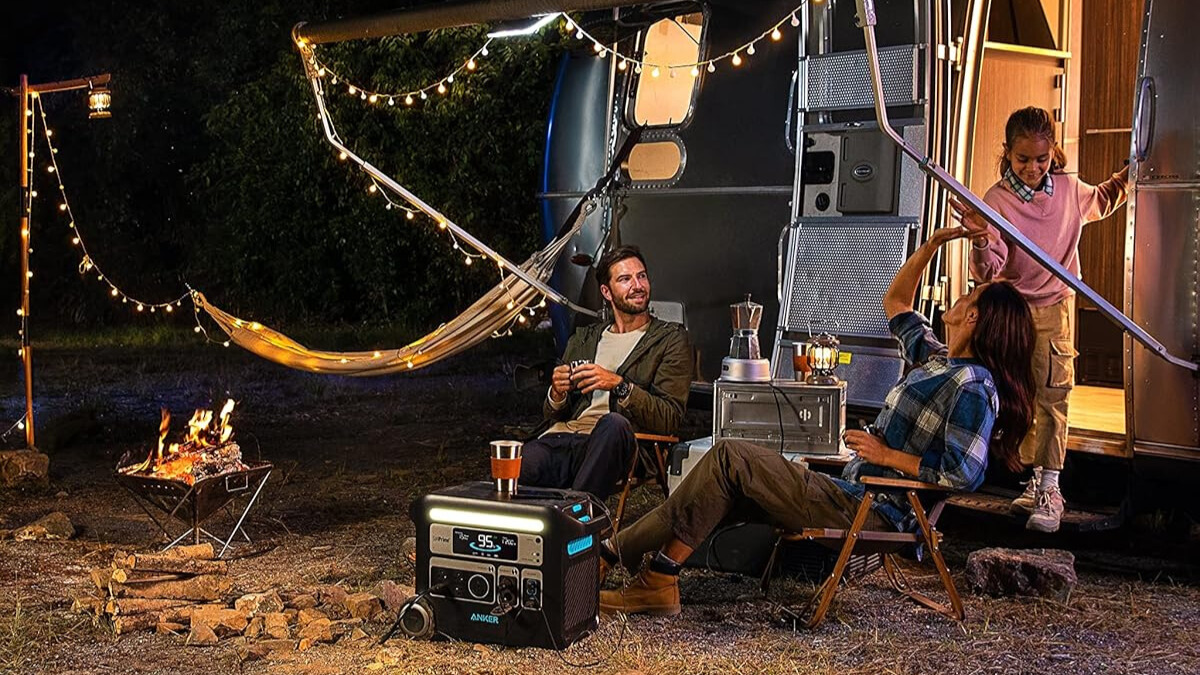
Enter the Anker SOLIX F2000 (formerly known as the PowerHouse 767). On paper, it looks like the holy grail: a massive 2048Wh capacity, wheels (thank goodness), and enough juice to power a small house. But does it actually hold up when you’re boondocking in the middle of nowhere, or is it just a glorified, expensive phone charger?
I spent days digging through hundreds of real owner reports—from weekend warriors to hardcore off-gridders—to separate the marketing hype from the camping reality. This isn’t a spec-sheet regurgitation; this is the truth about what happens when you plug your life into this gray box.
Quick Verdict (TL;DR)
- If you want a quiet RV power station that’s genuinely easy to move (wheels + suitcase handle), the F2000 is one of the most “actually portable” units in the 2kWh class.
- Real-world owners repeatedly use it successfully for refrigerators, freezers, CPAP, routers, Starlink, TVs, and small appliances—especially during outages and quiet hours.
- The biggest gotchas are solar charging expectations, UPS/bypass mode limits, and occasional app/Bluetooth friction.
Confidence Score: 8.6/10 (for RVers using it for realistic loads; lower if your goal is rooftop A/C or heavy power tools)
- Check current price on Amazon: Anker SOLIX F2000 Portable Power Station
What This Power Station Actually Is (And Why the Name Confuses People)
You’ll see “Anker SOLIX F2000,” “PowerHouse 767,” and “solar generator” used interchangeably. Practically speaking, this is a 2,048Wh-class LiFePO4 battery + inverter in a rolling, luggage-style chassis. It’s meant to:
- Run AC appliances from a big internal battery
- Recharge from wall power quickly
- Recharge from solar (up to about ~1,000W input in ideal conditions/configurations)
- Optionally expand capacity with an add-on battery
For RV use, that means it shines as a quiet-hours power source, a home backup battery, or a portable energy bank you can roll to wherever the need is—garage, campsite table, inside the rig, or even into a house during an outage.
If you’re also building an RV solar setup, you’ll want to understand panel sizing and shading behavior. For a practical system overview, I’d pair this review with:
Technical Deep Dive (Explained Like You’re Actually Using It)
Why LiFePO4 matters (vs AGM/lead-acid)
Most “old-school” RV battery setups rely on lead-acid (AGM included). They work, but they’re heavier per usable watt-hour, dislike deep discharge, and typically give fewer cycles.
LiFePO4 (Lithium Iron Phosphate) matters because, in real ownership terms, it usually means:
- More usable capacity without punishing the battery
- Better longevity over many charge cycles
- More stable performance at higher loads (within inverter limits)
Owners repeatedly bought the F2000 for peace-of-mind use cases: keeping food cold, keeping medical gear running, keeping routers/Starlink alive, and keeping basic life normal when the grid doesn’t cooperate.
If you’re comparing battery chemistry for RV upgrades, this guide is a solid companion:
The “quiet” advantage (the one RVers feel immediately)
A recurring theme: people expect fans and transformer noise, but many owners describe the F2000 as surprisingly quiet for its class. That matters more than people admit—especially if you’re sleeping in a truck bed, van, or small trailer where everything is close.
Portability isn’t a bonus here—it’s the point
A lot of 2kWh power stations are “portable” the way a mini-fridge is portable: technically movable, practically awkward. The F2000’s wheels and telescoping handle are a top reason owners chose it over similar-spec competitors. Several people basically said: “The specs are all close… but this is the one I can move without wrecking my back.”
And yes—it’s still heavy. The difference is you’re rolling it, not bear-hugging it.
Key Features (Benefit-Driven & Comparative)
| Feature | What the Manufacturer Says | What It Actually Means (User Experience) | Compared to Competitors |
|---|---|---|---|
| Rolling wheels + telescoping handle | “Portable design” | Owners consistently say it’s the rare 2kWh unit they’ll move often—garage to RV, room to room, campsite to truck—without dread. | Many competitors in this class feel “carryable” only for short lifts; this feels like luggage. |
| ~2kWh LiFePO4 capacity | “Long-lasting power” | Common real use: fridge/freezer support, CPAP, router/Starlink, lights, TV, small kitchen appliances—often overnight or ~day-ish depending on load. | Capacity is typical for the class; the difference is how usable it feels day-to-day. |
| Fast AC recharge (HyperFlash-style behavior) | “Rapid recharging” | Multiple owners reported very fast wall charging—useful for topping up between drives or when shore power returns. | Fast recharge is becoming common, but owners repeatedly praise the “back in business quickly” feel. |
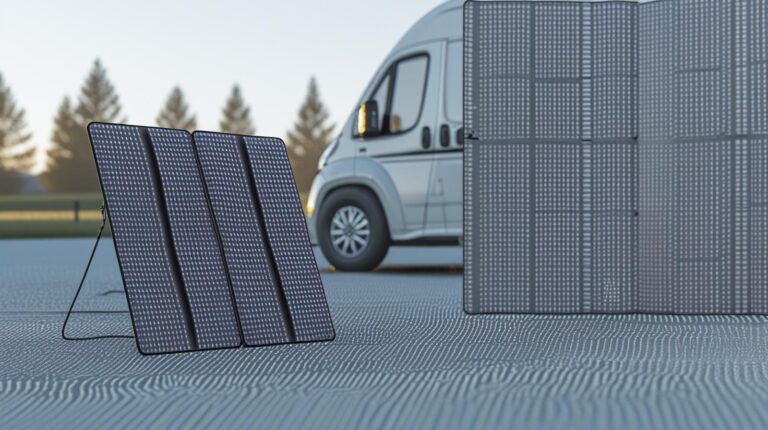
| Solar charging support (up to high input in ideal setups) | “Solar compatible” | Works well when you feed it enough panel wattage and avoid shade. Bundled portable panels often under-deliver vs their rating. | Not unique—solar “rated watts vs real watts” is an industry-wide issue. |
| UPS / passthrough mode | “UPS functionality” | Great for some… confusing for others. There are real limits in bypass/UPS modes that matter for high loads and sensitive gear. | Some competitors document UPS behavior more clearly; this is a learning curve here. |
| App monitoring/control | “Smart control” | Helpful for adjusting settings and monitoring—when connectivity behaves. Some owners barely use it due to Bluetooth/login friction. | App quality varies by brand; this is “useful, but not universally loved.” |
Real User Experience Analysis (Deep Pattern Analysis)
This is the heart of it—what owners actually ran, what surprised them, and what patterns show up again and again.
1) First impressions: “Premium, solid, well-protected”
A noticeable chunk of buyers talked about the unboxing experience: heavy-duty packaging, multiple layers, and a “this feels expensive for a reason” vibe. That matters for an RV product that gets jostled, stored, hauled, and sometimes used in stressful situations.
Pattern I saw: people trust it more after touching it. The chassis, handle, wheels, and door covers feel like a product designed for real handling—not a fragile gadget.
The catch: unboxing can be a two-person job for some. The weight isn’t fake, even if it rolls well.
2) The portability advantage is real (and changes how you use it)
Owners didn’t just say “nice wheels.” They described using it more often because of the wheels.
- Rolling it from garage to backyard to test appliances
- Moving it room-to-room during outages
- Using it at vendor booths, popups, job sites
- Bringing it camping specifically because it’s not a deadlift every time
This matters for RVers because the best backup power is the one you’ll actually deploy instead of leaving it in storage.
3) “It delivers about 80–90% of the dream” (and that’s still excellent)
A lot of owners described the same outcome: it does what they hoped for—within realistic expectations.
Hidden strength: steady, boring loads (the RV stuff that runs all night)
- Starlink/routers
- Phones/tablets/laptops
- CPAP
- Fridge cycling
- Fans/lights
- Projector/TV
Hidden weakness: high-surge loads and “motor starts” (where RV dreams go to die)
- Some rooftop A/C compressors (even with soft-start, results vary)
- Certain freezers or older compressors
- Some power tools (especially 10A+ tools that spike hard)
- Welders and high-demand shop gear
My take: the F2000 is excellent for “RV living power.” It is not guaranteed to be a “run anything in my rig” magic box.
4) Solar charging: the most misunderstood part
If there’s one theme that causes disappointment, it’s solar.
Owners frequently reported portable panels producing well below their rated wattage depending on:
- angle to the sun
- heat
- even small shade
- panel stand stability and wind
- cabling length and setup time
A few people were happy with 300W-ish input from a “400W” portable panel; others were frustrated they couldn’t get close to rated output even in good sun.
The practical takeaway: if you want solar to be your main recharge path, plan on more panel than you think, and treat rated watts as a best-case ceiling—not a promise.
5) UPS mode and passthrough behavior: great… once you understand the limits
Owners using it as a “giant UPS” learned a key lesson: some modes cap usable output based on AC input behavior. A few people expected “full inverter power while plugged in,” but discovered it behaves more like a bypass with limits in certain configurations.
If your RV use-case is mostly “quiet hours power” or “backup during outages,” you may never care. If your use-case is “run servers as UPS with high load,” these limitations matter a lot.
6) App/Bluetooth: helpful for some, annoying for others
This is mixed:
- Some owners loved monitoring, firmware updates, and setting adjustments
- Others had spotty Bluetooth, didn’t want to log in, or found it unreliable without internet access
- Several people basically said “the unit is great; the app is the weak link”
My advice: treat the app as a bonus tool—not the only way you can live with the product.
- See the Anker SOLIX F2000 on Amazon: Anker SOLIX F2000 Portable Power Station
The Good, The Bad & The Ugly (Pros/Cons You Can Actually Use)
The Good (Why most owners keep it)
1) Mobility that makes a 2kWh unit feel usable
Roughly “most of the positive reviews I analyzed” brought up the wheels/handle as a deciding factor. For RVers, that’s not fluff—it changes how often you’ll roll it out.
2) Real backup performance for the stuff that matters
Owners repeatedly used it for:
- fridge/freezer preservation (often around a day on conservative usage)
- CPAP and medical devices
- powering basic home essentials during outages
- camping/glamping comfort loads
3) Fast wall recharge is a legitimate advantage
Many owners highlighted how quickly it can refill from AC. In RV life, that means you can “reset the clock” during generator windows, short shore power stops, or after an outage.
4) Customer support can be excellent (when it clicks)
A meaningful number of owners reported Anker proactively solving issues—sometimes with firmware updates or replacements.
The Bad (The stuff you should plan around)
1) It’s still heavy
The wheels help. But lifting into a truck, moving up stairs, or loading solo can be rough.
2) Solar panels in bundles underwhelm many buyers
Owners often described portable panels as:
- awkward to position
- sensitive to small shade
- delivering 55–75% of rated output in real conditions
- needing extra cables for flexible placement
3) App and Bluetooth are inconsistent
Some owners had no issues; others had recurring connectivity problems or disliked login requirements.
4) UPS/passthrough behavior is confusing for edge cases
If you need a true “online UPS replacement,” understand what the F2000 actually does in your scenario.
The Ugly (Rare, but important)
1) Outlet polarity / wiring issues (some batches, not all)
A few owners reported receiving units with outlet wiring problems and strongly recommended testing outlets. Others later reported replacement units were corrected.
What I’d do: spend $10 on an outlet tester and verify. It’s cheap peace of mind.
2) RV shore power / grounding surprises
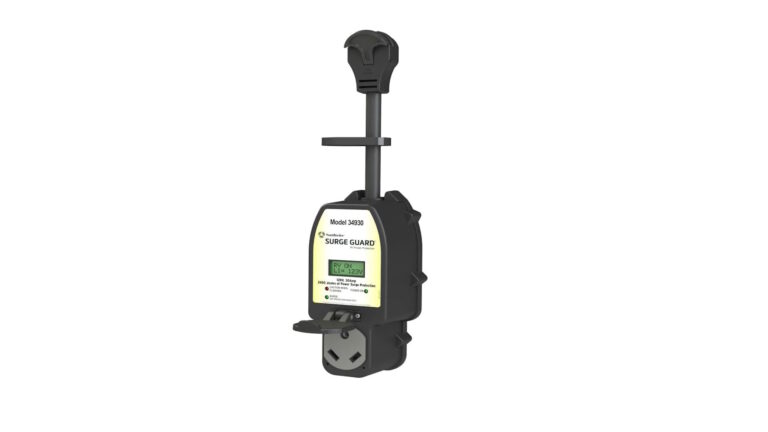
Some RV surge protectors show “open ground” behavior with certain power stations unless you use the correct approach (bonding plug only when appropriate and only when you understand the safety implications). This is a common “portable power station + RV EMS” friction point, not unique to this model.
3) Returns/shipping can be a headache
Because of battery shipping rules and weight, returns can be inconvenient or costly depending on the seller/channel. Several owners warned to keep packaging until you’re sure.
For RV electrical safety best practices (especially when running heaters, cooking appliances, or extension cords), I’d also keep this bookmarked:
Owner Stories (The Human Side)
These are paraphrased mini-stories pulled from recurring scenarios owners described. If you want to read the broader thread yourself, here’s the reference point: Amazon review feed
Story 1: “The back-saver” who finally stopped wrestling heavy boxes
One buyer compared this class of power stations and basically landed here because they were done with awkward deadlifts. They described other “portable” units as back-strain machines—fine if you never move them, annoying if you do. The luggage-style roll was the difference between “I’ll actually use this” and “this lives in the garage forever.”
Reference: Owner reports on Amazon
Story 2: The outage household that kept food cold with a simple rotation plan
Another family dealt with a multi-day outage and used two units to rotate fridge/freezer duty in timed cycles. It wasn’t glamorous—just practical. But that’s the point: in the real world, you don’t need infinite power. You need enough power, managed intelligently, to avoid losing hundreds of dollars in food and stay comfortable.
Reference: Real outage experiences
Story 3: The “quiet hours” camper who used it like a comfort bridge
A recurring camping pattern: people run the “daytime stuff” normally, then use the F2000 to top off batteries or run essentials during quiet hours—fans, blankets, device charging, and a few kitchen tasks. The common thread wasn’t raw power. It was quiet, clean operation that didn’t annoy neighbors or break campground rules.
Reference: Camping use cases on Amazon
Expert Tips & Installation Hacks (Stuff Owners Learned the Hard Way)
1) Set a charging routine (don’t store it “dead”)
Multiple owners warned about leaving it unused for months. My practical rule:
- If it’s stored: top it off monthly or at least quarterly
- If it’s your emergency unit: keep it plugged in (if that fits your use-case)
2) Test your outlets on day one
Use a simple outlet tester to confirm:
- correct polarity
- expected grounding behavior
It’s a five-minute step that can prevent a miserable surprise during a real emergency.
3) Solar: oversize your panels, then oversize your patience
If you’re serious about off-grid recharging:
- aim for 600W+ of panel capability if you want meaningful daily refills
- keep panels out of shade (even small shade can crush output)
- plan longer cables so you can chase sun without moving the whole power station
4) Use the app once—just to set sane limits
A few owners discovered they were tripping charging setups because the unit tried to pull more than their inverter/outlet could provide. Once they adjusted input behavior, things stabilized. Even if you hate apps, it can be worth doing a one-time “setup pass.”
5) RV A/C expectations: be conservative
Some people got A/C running after firmware updates or with soft-start hardware; others never did. Treat rooftop A/C as a “maybe,” not a promise—especially if you’re trying to run it for long.
Who This Is For (And Who Should Skip)
Buy the Anker SOLIX F2000 if you…
- Want a portable power station for RV that’s genuinely easy to move
- Need reliable power for fridge cycling, CPAP, Starlink/router, lights, TVs, laptops, and basic cooking tasks
- Want quiet-hours power without fumes, noise, or fuel runs
- Like the option to expand capacity later
Skip it (or size up / choose differently) if you…
- Expect it to reliably run rooftop A/C for meaningful time (varies too much by rig and compressor behavior)
- Need dependable performance for welders, high-surge shop tools, or heavy-duty jobsite loads
- Want a solar bundle where “rated watts” equals real watts (portable solar just doesn’t behave that way)
- Refuse to use an app for any settings and would be frustrated if Bluetooth/login acts up
Deep-Dive FAQ (High-Intent Answers)
1) Will the Anker SOLIX F2000 run my RV air conditioner?
Sometimes, but not reliably across all RVs. Owners had mixed results depending on:
- A/C starting surge
- whether a soft-start is installed
- firmware version and RV electrical protection hardware
If A/C is your core goal, treat this unit as a “possible success” rather than guaranteed.
2) How long will it run a refrigerator?
Owners frequently reported “about a day-ish” for a full-size fridge in conservative scenarios, and shorter if you add more loads. Real runtime depends heavily on:
- how often the compressor cycles
- ambient temperature
- how full the fridge is
- inverter overhead
For outages, many owners rotate duty cycles (on/off blocks) to stretch time.
3) Do I need a grounding/bonding plug for RV use?
Some RV EMS/surge protectors may show “open ground” behavior with certain portable power stations. Whether you need a bonding plug depends on your setup and whether the unit is connected to mains. This is a safety-critical topic—if you’re unsure, consult a qualified RV tech/electrician. Do not guess.
4) Can I use it as a UPS for my electronics?
Yes, many do—but understand the limitations and switching behavior. Several owners were happy using it as a big-format backup for servers and home gear, while others found the documentation confusing for edge cases.
5) Can I use non-Anker solar panels?
Some owners did, but configuration can be tricky because voltage/amperage limits matter. If you want “plug-and-play solar,” you’ll have an easier time staying within the expected input ranges. If you’re building a serious solar system, learn the basics first (panel voltage, parallel vs series, shading behavior). Start here:
Final Verdict (My Bottom Line After Synthesizing Owner Reality)
The Anker SOLIX F2000 portable power station is one of the most livable 2kWh-class units for RVers because it solves a problem most competitors ignore: moving the thing. That sounds simple—until you’ve tried hauling a 60–80 lb power station without wheels while also dealing with cords, coolers, and campsite chaos.
For the loads RVers run most—fridges, CPAP, lights, fans, internet, TV, small kitchen appliances—owner reports show the F2000 is usually exactly what people hoped it would be: quiet, capable, and easy to deploy fast.
Where people get burned is when expectations get unrealistic:
- solar charging with too little panel
- running rooftop A/C as a primary plan
- using UPS mode without understanding limits
- assuming app connectivity will always be perfect
If you buy it for what it’s great at, it’s a strong pick—and for many owners it became the “I’m not afraid of outages anymore” device.
- Check current price on Amazon: Anker SOLIX F2000 Portable Power Station
- Want more resilient RV power planning? Pair this with: 6 Best RV LiFePO4 Batteries in 2026