SereneLife RV Gravity Flush Toilet Review (2026): Worth It? An Owner-Feedback Deep Dive
Last updated: June 2026
Here’s what I checked and refreshed for this update:
- Re-read the full spread of recent owner feedback, including reviews from early 2026, to catch any shifts in quality or customer support patterns.
- Re-verified the recurring “burp/blowback” warning that owners keep raising, plus the long-running complaints about the carry bag and replacement parts.
- Cross-checked the positive long-term reports (the folks who’ve run this daily for a year-plus) against the failure stories so the verdict stays balanced.
- Confirmed the standout pro tips owners share for getting clean, splash-free flushes.
Affiliate disclosure: Some links below are Amazon affiliate links. If you buy through them, I may earn a small commission at no extra cost to you. It doesn’t change what I recommend — the analysis here is driven entirely by what owners actually report.
Intro
If you’ve ever spent a cold night in a camper doing the math on whether you can hold it until morning or face the half-mile walk to the campground vault toilet, you already understand why portable RV toilets exist. The problem is that “portable toilet” covers everything from a glorified bucket to a self-contained unit with a flush pump, a fresh-water reservoir, and a sealed waste tank. Figuring out where the SereneLife RV Gravity Flush Toilet lands on that spectrum — and whether it’ll actually survive real travel without leaking in your van — is the confusing part.
That’s exactly the gap I wanted to close. Instead of repeating the marketing bullet points, I spent hours digging into a large pile of real owner feedback to find the patterns that matter: who loves this thing, who regrets it, and why the same unit can earn a glowing five-star write-up and a furious one-star rant in the same week. If you want the full category framework first, my complete walkthrough on choosing a camper commode lays out the decision criteria before you ever click “buy.” This review zooms in on one product and what living with it is really like.
How this review was built (so you can trust it)
I synthesized this from a broad sample of owner reviews — comfortably into the hundreds across both glowing and critical write-ups — spanning roughly late 2020 through early 2026. That’s a multi-year window, which matters for a product where the real story is durability over time, not first-day impressions.
Here’s the method in plain English. I read through the feedback and tagged it into categories: flush/pump performance, seat and bowl comfort, odor control, leak and seal reliability, dump/cleanout experience, carry-bag quality, and customer support. Then I separated setup-driven issues (things owners caused or could prevent, like flushing with the lid open) from likely product failures (cracked tanks, broken pump clips, seals that quit). That distinction is the whole game with this toilet, because a lot of the scary reviews are preventable and a lot of the happy reviews come from people who learned two or three tricks early.
Important limitations:
- Reviews skew toward extremes — thrilled buyers and furious ones write more than the satisfied middle, so raw sentiment overstates both the highs and lows.
- RV, van, boat, and off-grid setups vary wildly; a toilet that’s perfect in a pop-up may feel cramped in a cuddy cabin, so “it didn’t fit” is sometimes a fitment mismatch, not a defect.
- I prioritized patterns that showed up repeatedly across many owners over dramatic one-off stories.
Quick Verdict (TL;DR)
Best for:
- Weekend campers, van-lifers, and boaters who need an occasional or backup toilet, not a daily-driver house replacement.
- Households where the main users are kids, smaller adults, or anyone fine with a compact seat.
- Buyers who’ll actually use deodorizer/enzyme treatment and learn the “lid-closed flush” habit.
Not for:
- Larger adult men who need a roomy, deep bowl for comfortable seated use — this is a recurring complaint.
- Anyone storing it in a tight, exact-dimension cubby without measuring the real unit first.
- People who want bulletproof long-term durability with zero fuss and no maintenance.
Standout win:
- When it works, owners love the manual flush pump that sprays around the bowl, the easy top/bottom separation for dumping, and genuinely good odor containment with treatment.
Watch-outs:
- Pressure can build in the waste tank and “burp” waste back at you if you flush with the lid open — owners report this across the board.
- The carry bag is widely panned, and replacement parts plus customer support are a recurring frustration.
Confidence Score: 6.5 / 10 — 🛠️ “Good value with caveats you must respect.”
This score reflects buyer usefulness, not a reliability statistic. I weighed how consistent the patterns were, how many issues are preventable versus baked into the design, the strength of the long-term positive reports against the leak/crack failures, and how the support experience colors ownership. It’s a solid pick if you match the right use case and follow the owner-tested habits — and a regret if you don’t.
👉 Check today’s price on Amazon
What This Product Is (and What It Isn’t)
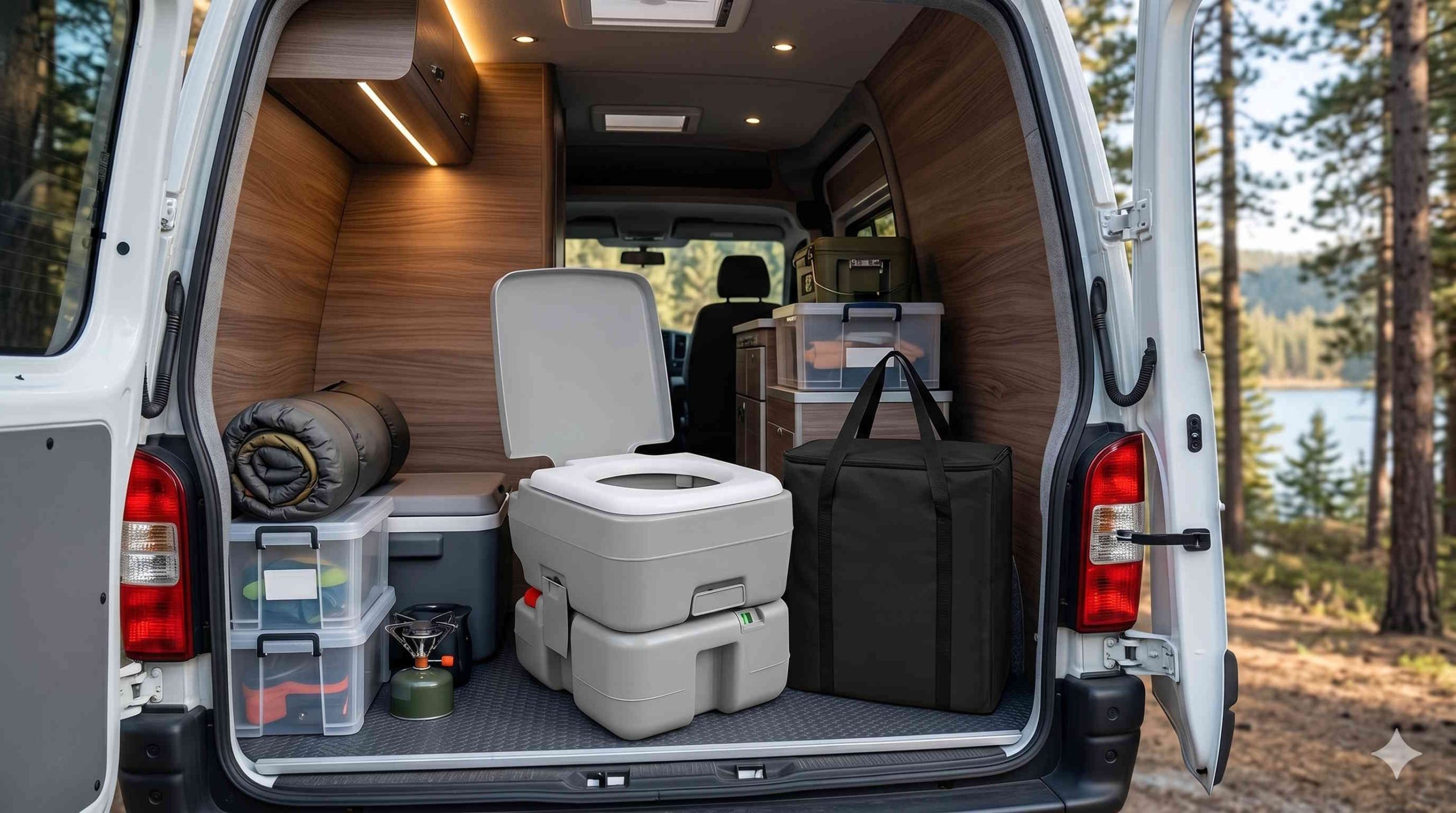
The SereneLife is a self-contained, two-piece gravity/pump-style portable toilet. The top section holds fresh water and the seat/bowl; the bottom is a detachable waste holding tank. You manually pump water into the bowl to flush, then open a slide valve to drop waste into the lower tank. When the tank’s full, you separate the halves, carry the bottom to a dump point or sewer cleanout, and empty it through a swivel spout. Think of it as a manual, miniature version of an RV’s black-tank system that you can carry anywhere.
A few misconceptions worth clearing up:
- It isn’t a full-size residential toilet. Owners repeatedly note the seat and bowl run small and the unit sits relatively low. It’s an emergency/occasional fixture for many, not a like-for-like home replacement.
- It isn’t fully odor-proof on its own. It seals well when closed, but the people who report “no smell” are almost always using a deodorizer or enzyme treatment. Skip that, and the dump-out can get rough.
- It isn’t a bagged camping toilet. You can’t drop a waste bag in the tank and toss it; you empty the liquid tank directly, which some owners wish were different.
Key Specs That Actually Matter for RVers
I’m only listing the things owners say actually change the experience:
- Two-piece separable design. This is the feature owners praise most for dumping — you tote just the waste tank, not the whole rig. It also lets the unit break down smaller for storage.
- Manual piston/pump flush with bowl spray. When healthy, it rinses the whole bowl, which owners say makes cleaning far easier. It’s also the single most common failure point, so it cuts both ways.
- Swivel/rotating dump spout. Reduces spill and splash during emptying — a genuine plus — though several owners find the spout stiff to rotate and note waste/paper can hang up in the neck.
- Seat and bowl size. Compact and on the shallow side. Critical if taller or larger adults will use it; fine for kids and many women per owner feedback.
- Real-world height vs. listed height. Multiple owners report the unit measured taller than the listing led them to expect, which wrecked tight storage plans. Measure your actual space against the unit, not the spec sheet.
- No waste-tank pressure relief. There’s no vent to bleed built-up pressure, which is the root of the “burp” problem in warm conditions.
Feature-by-Feature Breakdown (Truth vs Marketing)
| Feature | What the Manufacturer Says | What It Actually Means (User Experience) | Compared to Competitors |
|---|---|---|---|
| Gravity/pump flush | Effective flushing with hand sprayer | Works well and sprays the bowl when the pump is healthy; owners love it — but the pump clip/piston is the top failure point and can leak or break | Similar mechanism to other piston-pump portables; bowl-spray coverage is a relative strength owners call out |
| Soft-close seat & lid | Comfortable, quality seat | Seat/lid feel flimsy to many; lid is thin. Comfort is fine for smaller users, cramped for larger men | Some rivals (e.g., oval-bowl units owners mention) fit larger adults better |
| Two-piece / easy dump | Easy to empty and clean | Genuinely a highlight — separates cleanly, swivel spout helps; but full evacuation is hard and TP can clog the neck | Comparable design across the category; this one’s spout is a modest plus |
| Odor control | Sealed, low odor | Strong when closed and treated; owners who skip deodorizer report bad dump-out smells | On par with peers — treatment-dependent, not magic |
| Carry bag included | Convenient storage/transport | Near-universally criticized as flimsy; seams rip early for many | A common weak spot, but this bag draws unusually consistent complaints |
| Durability / sealing | Sturdy build | Mixed: many run fine for a year-plus, but cracked tanks and seal leaks after months are a recurring failure theme | Some owners explicitly switched to harder-plastic rivals after cracks |
Real-World Owner Experience (Deep Pattern Analysis)
Pattern 1: The “burp” / blowback when flushing
In a nutshell: With no waste-tank pressure relief, pressure builds — especially in warm weather or with temperature swings — and pulling the flush valve can send waste splashing back up.
Hidden strength: The tank seals tightly enough that pressure can build, which is the same seal quality that keeps odors contained.
Hidden weakness: Without a vent, that pressure has nowhere to go until you open the valve, and the result can be genuinely unpleasant.
What to do about it: Always flush with the lid closed, and crack the slide valve slowly to release pressure before fully opening. Experienced owners treat this as standard procedure for any toilet of this design. It’s the single most important habit to learn.
Pattern 2: The flush pump is the weak link
In a nutshell: The hand pump rinses the bowl beautifully when it works, but the retaining clip/piston is the part most likely to break, stick, or start leaking.
Hidden strength: The bowl-spray coverage is a standout — owners say it makes cleaning much easier than units that just dribble.
Hidden weakness: Pull the pump up too far and the clip can pop or snap; some units leak around the pump after months of use.
What to do about it: Don’t yank the plunger past its stop. Several owners report easy DIY fixes (a couple of stainless screws to reinforce the cap). Pump a little water into the bowl before use so waste floats rather than sticks.
Pattern 3: Leaks and cracked tanks over time
In a nutshell: A real minority-but-repeated theme is leaking between the upper and lower halves, or the thin tank cracking — sometimes within months, sometimes around the one-to-two-year mark.
Hidden strength: Plenty of counter-examples exist: owners running it daily for a year-plus with zero leaks, which suggests unit-to-unit variability and handling both play a role.
Hidden weakness: When it fails, it fails messily, and the plastic is thin enough that altitude/temperature changes and rough handling have cracked tanks for some.
What to do about it: Test it immediately on arrival — fill, pressurize, check seams — while you’re still inside the return window. Avoid dropping or over-stressing it, and don’t store it bone-dry in extreme heat if you can help it.
Pattern 4: Size and comfort, especially for men
In a nutshell: The compact, shallow bowl is the most consistent comfort complaint, and it lands hardest on larger adult men.
Hidden strength: That same compactness is exactly why van-lifers, boaters, and tent campers love how it tucks away.
Hidden weakness: Taller/larger men frequently say it’s awkward for seated use; several relegate it to emergency or kids/ladies duty.
What to do about it: Be honest about who’ll use it. If a larger adult is the primary user, an oval/deeper-bowl alternative may fit better. Read the dimensions carefully before buying.
Pattern 5: Carry bag and replacement parts
In a nutshell: Two separate but constant gripes — the included bag is flimsy and rips early, and getting replacement parts (caps, gaskets, pump bits) can be a hassle.
Hidden strength: When customer support does respond, a meaningful number of owners report free replacement caps/parts and praise the help.
Hidden weakness: Support is inconsistent — some owners get fast, friendly replacements; others report unanswered emails and hoops to jump through.
What to do about it: Don’t rely on the included bag for anything important; budget for a sturdier tote. Keep your proof of purchase handy in case you need to claim a part.
The Good, The Bad & The Ugly (Pros/Cons)
Pros
- Flush & cleaning: Bowl-spray flush rinses thoroughly; easy to keep clean when working right.
- Dumping & portability: Two-piece separation and swivel spout make emptying relatively painless; lightweight and compact for travel.
- Odor control (with treatment): Sealed tight; many owners report genuinely no smell when using deodorizer/enzyme packs.
- Long-haul value for some: A subset of owners run it daily for a year or more and would buy again.
Cons
- Comfort/size: Small, shallow, low bowl — awkward for larger adults, especially men.
- Durability variance: Recurring leaks, cracked tanks, and pump-clip failures for a meaningful minority.
- Design quirks: No pressure-relief vent (burp risk), full evacuation is hard, TP clogs the neck.
- Accessories & support: Flimsy carry bag; inconsistent customer service and parts availability.
Mini Toolkit: Decide + Fix (Fast)
Issue-Tag Box
- 🚽
burp/blowback-on-flush - 💧
seal/leak-between-halves - 🔧
flush-pump-clip-failure - 📏
bowl-too-small-for-large-adults - 🎒
flimsy-carry-bag - 📞
inconsistent-support/parts
Fitment / Use-Case Mini-Matrix
| Your setup | Likely fit | Watch for |
|---|---|---|
| Van / pop-up / tent, occasional use | Strong | Secure it so it can’t tip; learn lid-closed flush |
| Boat / warm-climate use | Workable | Burp risk rises with heat — vent pressure slowly |
| Daily primary toilet, larger adult | Marginal | Bowl size + long-term durability may disappoint |
Mini Decision Tree
- If your main users are kids/smaller adults → it’s a good value pick.
- If a larger adult man is the primary user → consider a deeper oval-bowl alternative.
- If it’ll travel in heat → commit to slow, lid-closed flushing every time.
- If exact storage dimensions matter → measure the actual unit before the return window closes.
- If you want zero-maintenance durability → temper expectations or look up-market.
Troubleshooting Quickflow (warm-weather blowback)
- Keep the lid closed before touching the flush valve.
- Crack the slide valve slightly to bleed built-up pressure.
- Wait for the hiss to stop.
- Open the valve the rest of the way, slowly.
- Flush water into the bowl to clear residue.
- Close the valve fully before moving the unit.
For the broader selection logic across the whole category, my side-by-side guide to picking the right camper commode covers the trade-offs in more depth.
Mini Return-Window Reality Check
- Fill the fresh tank, pick the unit up, and check every seam for leaks — side-seam leaks are a known early failure.
- Pressurize and test the flush pump fully; confirm the clip/piston moves smoothly and doesn’t pull off.
- Dry-fit it in its actual storage spot — measure the real height, since owners report it runs taller than listed.
- Sit-test for comfort with the actual primary user before you commit.
- Confirm all caps/parts are present and the halves seal and latch securely.
Installation / Setup Tips (RV-Realistic)
- Measure your storage space against the physical unit, not the listing dimensions — multiple owners got burned here.
- Always flush with the lid closed to avoid splashback.
- In warm weather, bleed tank pressure slowly before fully opening the valve.
- Pump a little water into the bowl before use so waste floats and dumps cleaner.
- Use a deodorizer or enzyme treatment from day one — it’s the difference between “no smell” and “regret.”
- Don’t pull the flush plunger past its stop; that’s what snaps the retaining clip.
- Keep TP out of the bowl (use a lined bin) to prevent clogs in the dump neck.
- Secure/strap the unit while traveling — it’s top-heavy and tips on tight curves.
- Replace the flimsy included bag with a sturdier tote before your first real trip.
- Rinse and air-dry after dumping; a quick bowl spray-down between uses keeps odor down.
- Keep proof of purchase on file in case you need a warranty part.
- For any reinforcement beyond simple cap screws, verify against the manufacturer instructions or consult a qualified RV tech.
For general guidance on safe waste handling and sanitation while camping, the CDC’s guidance on hygiene in the outdoors is a solid baseline.
See It in Action: Visual Reality Check
Specs and bullet points only tell you so much — seeing this toilet assembled, flushed, and dumped in a real setup tells you far more about whether it fits your rig and routine. Watching someone run through it can save you from learning the quirks the hard way.
What to look for in this video (based on owner patterns):
- 📏 Scale check: Notice how small and shallow the bowl really is compared to the user’s hands — picture a larger adult actually sitting on it.
- 🔧 Pump action: Watch how far the flush plunger pulls up; that travel is exactly where owners report the retaining clip snapping.
- 💧 Seam & seal: Look at where the two halves meet — that joint is the spot owners report leaking over time.
- 🚽 Dump sequence: Pay attention to how the swivel spout empties and whether liquid hangs up in the neck, since full evacuation is a common gripe.
- 🎒 The bag: If they show the included carry bag, judge that fabric — owners say it shreds early.
Keep in mind this video shows the initial setup and dump, but it won’t show the cracked tank or pump-clip leak that some owners report only after months of real use.
Owner Stories
The stories below are composite scenarios reflecting repeated patterns across owner feedback.
- The long-haul van-lifer: Runs it daily for over a year as a replacement for the built-in RV tank. Loves being able to tote just the bottom to any dump point instead of moving the whole rig. Had the pump clip break once when a hand slipped — fixed it with a couple of stainless screws and kept going. Uses enzyme treatment, reports zero smell, and would buy another.
- The weekend family camper: Bought it so the kids and spouse don’t have to walk to the vault toilet at night. Works great for #1, easy to dump and clean. Learned fast to keep the lid closed when flushing after one warm-afternoon “surprise,” and now treats slow pressure-release as routine.
- The larger adult who passed it on: Functionally fine — no leaks, good bowl-wash — but the seat and bowl were simply too small and shallow for comfortable seated use. Relegated it to emergency-backup duty and bought a deeper oval-bowl unit for regular trips.
🔎 See more owner feedback on Amazon
Who This Is For (and Who Should Skip It)
Buy it if…
- You need an occasional, backup, or emergency toilet for a van, pop-up, boat, or off-grid spot.
- Your primary users are kids, smaller adults, or anyone fine with a compact seat.
- You’ll commit to deodorizer and the lid-closed, slow-release flush habit.
- You value easy two-piece dumping and a bowl-rinsing flush.
Skip it if…
- A larger adult man is the main user and needs a roomy, deep bowl.
- You want a maintenance-free, guaranteed-durable unit with no learning curve.
- You’re fitting it into an exact-dimension cubby and can’t verify the real height first.
- You expect the included carry bag to last, or need rock-solid, fast support.
👉 Check today’s price on Amazon
If you’re comparing options, start here: Top RV Toilet Picks
Alternatives (Quick Comparisons)
- For larger adults wanting a roomier seat: Look at deeper, oval-bowl portable toilets — owners who found this one cramped frequently moved to that style.
- For a built-in RV bathroom upgrade instead of a portable: A fixed gravity or residential-height RV toilet is a different category; my bathroom solutions hub covers those directions.
- For maximum durability over portability: Some owners explicitly switched to harder-plastic units after cracking issues; prioritize thicker tank material if longevity is your top concern.
- For bag-based simplicity: If you’d rather toss a sealed bag than empty a liquid tank, a bagged camping toilet is a different trade-off worth weighing.
Deep-Dive FAQ
What should I test immediately after delivery?
Fill the fresh-water tank, lift the unit, and inspect every seam — side-seam leaks are a known early failure. Then pressurize and fully cycle the flush pump to confirm the clip/piston moves smoothly without pulling off, and dry-fit the unit in its actual storage spot. Do all of this inside the return window.
Why does waste sometimes splash back when I flush?
There’s no waste-tank pressure-relief vent, so pressure builds — especially in heat or with temperature swings — and releases when you open the slide valve. Always flush with the lid closed, and crack the valve slowly to bleed pressure before opening it fully. This is the most important habit to learn.
Is it comfortable for tall or larger adults?
For many larger adults, especially men, the bowl is too small and shallow for comfortable seated use — this is the most consistent comfort complaint. It’s well-suited to kids and smaller adults. If a larger adult is the primary user, a deeper oval-bowl alternative is worth considering.
How bad is the odor?
When closed and used with a deodorizer or enzyme treatment, owners overwhelmingly report little to no smell, even in heat. Skip the treatment, and the dump-out can get unpleasant. Treatment isn’t optional if odor matters to you.
What are the most common problems and fixes?
The flush pump clip breaking (don’t pull the plunger past its stop; reinforce the cap with stainless screws if needed), leaks between the halves or cracked tanks over time (test early, handle gently, don’t store dry in extreme heat), and the burp/blowback issue (lid-closed, slow-release flushing). Keeping TP out of the bowl also prevents dump-neck clogs.
Will this work with my RV or van setup?
It’s self-contained and needs no plumbing, so it works in almost any RV, van, boat, or tent — but it’s top-heavy and tips on tight curves, so strap it down while traveling. Verify the actual unit height against your storage space, since owners report it runs taller than the listing suggests.
Is the included carry bag any good?
No — it’s the single most consistent accessory complaint, with seams ripping early for many owners. Plan to replace it with a sturdier tote before your first serious trip.
How long does it last?
It varies. A meaningful number of owners run it daily for a year or more with no issues, while others report leaks or cracks within months. Gentle handling, early leak-testing, and avoiding extreme dry-heat storage all improve your odds.
Final Verdict
The SereneLife RV Gravity Flush Toilet is a genuinely useful, fairly priced portable toilet that rewards the right buyer and punishes the wrong expectations. The flush that rinses the whole bowl, the easy two-piece dumping, and the strong odor control (with treatment) are real strengths that owners come back to again and again. The catch is that it’s compact, the plastic is thin, the pump clip is fragile, and there’s no pressure vent — so you have to respect the design and learn a couple of habits, or you’ll end up writing one of those furious reviews.
Bottom line: if you’re a weekend camper, van-lifer, boater, or off-gridder who needs an occasional or backup toilet for kids and average-sized adults — and you’re willing to use deodorizer, flush with the lid closed, and test it early — this is a solid value. If a larger adult needs it as a daily primary toilet, or you want zero-maintenance durability, look at a roomier, tougher alternative instead.