Filling and Using Your RV Freshwater Tank Off-Grid
The Complete Guide to Off-Grid RV Water Use (Pump, Tank, Tips & Tools)
When you’re camping off-grid — away from city hookups — your RV’s freshwater tank becomes your lifeline. But how do you fill it safely? How does the pump work? And how do you make water last?
In this guide, we’ll walk you through everything you need to know to fill, use, and conserve water from your RV’s onboard tank, especially for boondocking, dry camping, or remote travel.
This article expands on the off-grid water setup discussed in RV Water System 101.
💧 What Is the RV Freshwater Tank?
The freshwater tank is a built-in container (typically 20–100 gallons) that stores clean, drinkable water inside your RV.
This water is used for:
- Drinking & cooking
- Washing hands & dishes
- Taking showers
- Flushing the toilet
➡️ When you’re not connected to city water, this tank becomes your primary water source.
🔄 How the System Works Off-Grid
When you turn on a faucet or flush the toilet:
- A 12V water pump activates automatically
- It pulls water from the freshwater tank
- Water flows through your plumbing to the faucet or fixture
💡 You’ll hear the pump briefly run whenever water is used.
🧰 What You Need to Fill the Freshwater Tank
| Item | Purpose |
|---|---|
| ✅ Drinking-water-safe hose | For clean water transfer |
| ✅ Inline water filter (optional) | Filters sediment & taste |
| ✅ Filler attachment or funnel | Helps aim water into the fill port |
| ✅ Water treatment drops or tablets | Keeps tank water safe & fresh |
🪣 How to Fill Your RV Freshwater Tank (Step-by-Step)
1️⃣ Locate the “Fresh Water Fill” Port
This is usually a gravity-fill port labeled Fresh Water Only — separate from the city water inlet.
2️⃣ Attach Your Drinking-Safe Hose
Use a hose specifically rated for potable water. You can also use a filler tube or funnel to make the job easier.
3️⃣ Filter the Water (Optional, But Smart)
Install an inline filter between the spigot and hose to remove chlorine, dirt, and sediment.
4️⃣ Begin Filling Slowly
Turn on the spigot and let water flow into the tank. Most RVs will overflow gently or hiss/vent when full.
📌 Don’t leave it unattended — there’s no automatic shutoff.
5️⃣ Cap It & You’re Ready
Once full, seal the fill port. Turn on your 12V water pump inside the RV when needed.
⚙️ Using the RV Water Pump Off-Grid
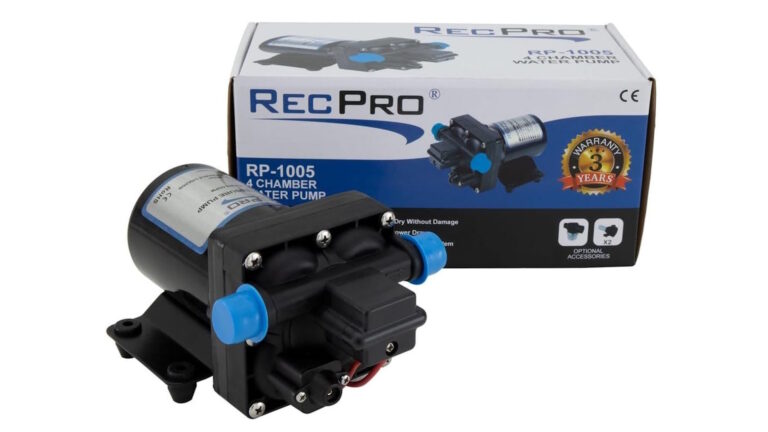
The 12V water pump is your silent worker off-grid. It pulls water on demand whenever you turn on a tap.
- Runs off your RV’s battery
- Makes a soft buzzing sound when active
- Turns off automatically when water stops flowing
Conservation tip: Turn off the pump at night or while driving to avoid surprises.
🚿 Making Your Water Last: Boondocking Conservation Tips
When camping away from refill options, water becomes precious. Use these tips:
- 🛁 Take “Navy showers” — turn off water while lathering
- 🍽️ Use paper plates to reduce dishwashing
- 🧼 Catch rinse water for toilet flushing
- 🧴 Use leave-in shampoo or dry soap
- 🚱 Don’t let water run when brushing teeth or washing hands
💡 Want to go longer? Carry a collapsible water bladder or portable tank for refills.
🧼 How to Keep Your Tank Clean & Safe
Every few weeks, or after storage, sanitize your tank to prevent odors or bacteria.
Basic Sanitizing Steps:
- Mix bleach with water (¼ cup per 15 gal)
- Pour into tank & fill fully
- Run through all faucets
- Let sit 6–12 hours
- Drain tank & flush with clean water
📌 Full guide: How to Sanitize Your RV Freshwater Tank
🧪 Optional Upgrades for Off-Grid Water Use
- 🚰 Water level monitor – See how much water remains
- ⚡ Pump silencer kit – Reduce pump noise
- 💧 Accumulator tank – Smooths out water flow & reduces pulsation
- 🛍️ Water bladder + transfer pump – For carrying extra water during long boondocks
🔄 Related Posts
- 👉 RV Water System 101: How Your RV Gets Water
- 👉 Hooking Up to City Water at Campgrounds
- 👉 Best RV Water Pumps for Off-Grid Use
- 👉 How to Sanitize Your Freshwater Tank
- 👉 Water Conservation Tips for Dry Camping
✅ Final Thoughts
Your RV’s freshwater tank is the heart of off-grid living — giving you comfort, independence, and flexibility anywhere you go.
By understanding how to fill it properly, use it wisely, and maintain it well, you’ll enjoy stress-free boondocking and cleaner, safer water on every trip.
➡️ Next up: Best RV Water Pumps for Reliable Off-Grid Use