
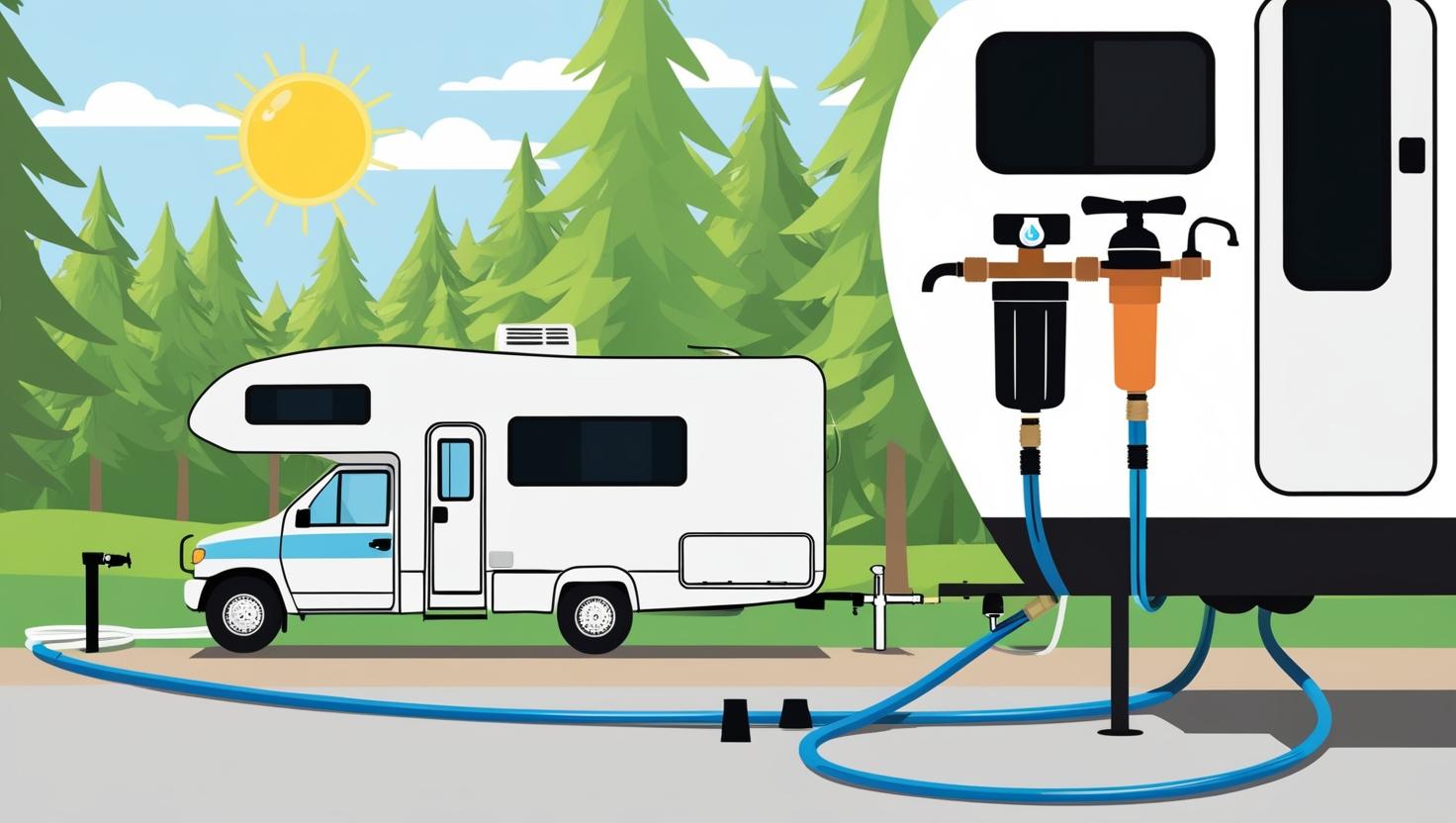
Hooking Up at the Campground: Using City Water in Your RV
Step-by-Step Guide to Safe and Reliable Water on the Road
Connecting to city water at a campground sounds easy — but if done wrong, it can damage your RV plumbing, flood your floor, or make your water taste like a garden hose.
This guide will walk you through everything you need to safely and correctly hook up your RV to city water, protect your plumbing, and enjoy clean, steady water wherever you park.
“If you’re new to how RV water works, check out our complete RV Water System 101 guide for a full overview.”
🏕️ What Is “City Water” in RV Terms?
In RVing, city water refers to any external pressurized water supply — typically from a spigot at a campground or RV park.
Unlike your onboard fresh water tank, city water comes directly from the local water line and enters your RV via the city water inlet, usually found on the side of your rig.
✅ No need for your RV water pump — the campground’s pressure moves the water for you.
🧰 What You Need Before You Hook Up
| Item | Why It’s Needed |
|---|---|
| ✅ Drinking-water-safe hose | Regular hoses can leach chemicals or taste bad |
| ✅ Water pressure regulator | Protects your pipes from high-pressure campground water |
| ✅ Inline water filter (optional) | Improves taste and removes sediment |
| ✅ Hose elbow or 90° adapter (optional) | Reduces hose stress and helps with tight spaces |
🔌 Step-by-Step: How to Hook Up to City Water
1️⃣ Find the City Water Inlet
Look for a labeled port on the outside of your RV — usually marked CITY WATER.
It often has a screw-on connector similar to a garden hose.
2️⃣ Connect the Water Pressure Regulator to the Spigot
Before anything touches your RV, attach the pressure regulator to the campground’s faucet/spigot.
Without this, high water pressure can burst pipes or damage appliances.
3️⃣ Attach Your Drinking-Water Hose
Screw one end of the freshwater hose onto the pressure regulator. The other end will go to your RV.
✅ Use a hose elbow if needed to reduce kinks and stress on your RV connection.
4️⃣ (Optional) Add an Inline Water Filter
Attach the filter either:
- Between the spigot and hose (most common)
- Between the hose and RV (less ideal)
📌 Filters remove chlorine, odors, sediment, and improve taste — especially helpful in unfamiliar places.
5️⃣ Connect the Hose to Your RV’s City Water Inlet
Attach the hose securely to your RV inlet. Hand-tighten only — no need for tools.
Once everything is tight, turn on the spigot slowly.
Watch and listen for leaks at all connection points.
💧 What Happens Inside Your RV?
Now that you’re connected:
- Water flows directly to your sinks, shower, and toilet — powered by external pressure, not your pump.
- Hot water works just like at home (if your water heater is turned on).
- The freshwater tank is bypassed — it won’t fill unless you use a separate fill port.
⚠️ Important: If you hear your water pump running, something’s wrong — it’s not used during city water hookup.
🛑 Common Mistakes to Avoid
- ❌ Connecting without a pressure regulator — risk of pipe damage
- ❌ Using a regular garden hose — bad taste & unsafe
- ❌ Forgetting to check for leaks at connections
- ❌ Turning on the spigot too fast — may cause “water hammer” effect
- ❌ Assuming the campground water is clean — always filter when in doubt
🧼 How to Disconnect When Leaving
- Turn off the spigot at the campground.
- Disconnect the hose from your RV and the spigot.
- Drain remaining water from the hose (to prevent mold/mildew).
- Store hose and regulator in a clean bin (separate from sewer gear).
🧠 Pro Tips
- Use quick-connect fittings for faster setup and breakdown.
- Keep a backup hose washer in case one leaks.
- Label your drinking water hose and keep it separate from black/gray tank gear.
🛍️ Recommended Gear (Optional)
- 🧵 Camco 25ft Drinking Water Hose
- 📏 Adjustable Water Pressure Regulator
- 🧼 RV Inline Water Filter – Sediment + Carbon
- 💪 Hose Elbow Adapter – 90 Degree
📦 These are essential — and budget-friendly upgrades for long-term RV use.
🔄 Related Posts
- 👉 RV Water System 101: How Your RV Gets Water
- 👉 Best RV Water Pressure Regulators
- 👉 Best Inline Water Filters for RVs
- 👉 Troubleshooting: Why Is My RV Water Pressure Low?
✅ Final Thoughts
Connecting to city water is one of the easiest ways to enjoy comfort in your RV — if done correctly.
With the right tools and a few good habits, you’ll have steady, clean water and a protected plumbing system — no matter where you roam.
Now that you’ve mastered hookups, want to improve your water quality even more?



One Comment