Troubleshooting Low Water Pressure in Your RV
Find the Cause. Fix the Flow. Travel Happy.
There’s nothing more annoying than turning on your RV faucet or shower and getting a weak trickle of water. Low water pressure can make dishwashing frustrating and showers miserable.
The good news? Most RV water pressure problems are simple to fix.
In this guide, we’ll walk you through the common causes of low water pressure in an RV — whether you’re hooked up at a campground or boondocking off-grid — and show you exactly how to troubleshoot and solve them.
Not sure how your RV plumbing works? Our RV Water System 101 guide walks you through the full layout
💡 Is It Just One Fixture — Or All of Them?
Before anything else, ask this:
- Is the pressure low in every faucet and shower, or just one?
- Are you using city water hookup or your RV’s freshwater tank?
👉 Answering these will help you quickly narrow down the issue.
🔍 Common Causes of Low RV Water Pressure
1️⃣ Clogged Water Filter
If you use an inline or under-sink filter, it may be partially clogged with sediment.
✅ Fix: Remove or replace the filter. Try running water without it temporarily.
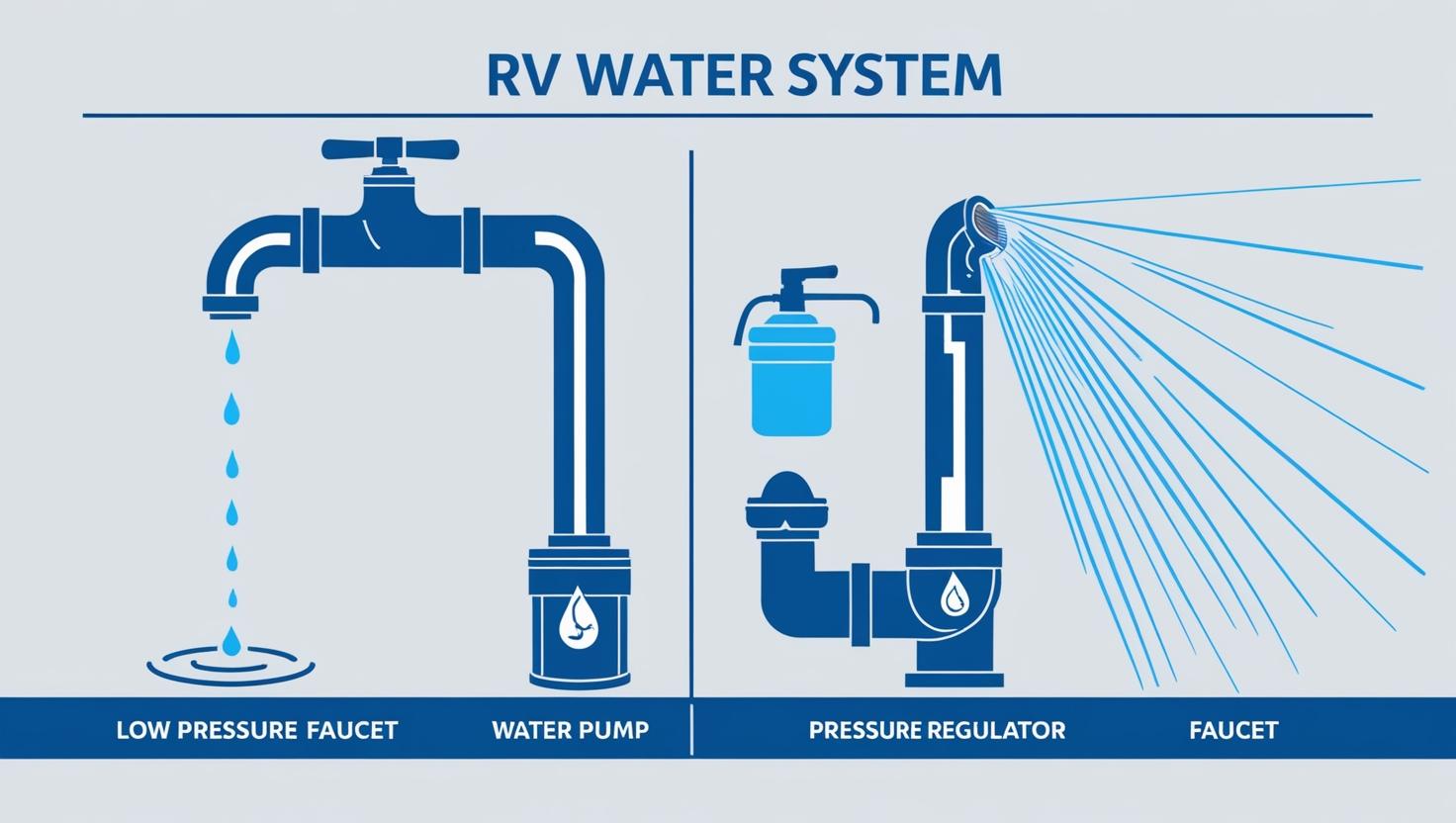
2️⃣ Faulty or Missing Water Pressure Regulator
A bad regulator may cut pressure too much, or you may not have one at all.
✅ Fix: Replace with a quality adjustable regulator (45–55 PSI ideal).
🔗 See Best RV Water Pressure Regulators
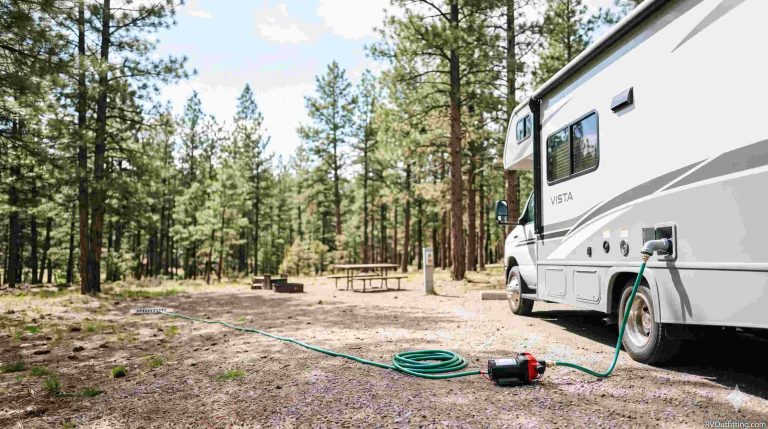
3️⃣ Water Pump Not Working Properly (Off-Grid Use)
- Old or worn out
- Running dry or not primed
- Cycling too often
✅ Fix: Check wiring, prime the system, inspect fittings, or replace the pump.
🔗 Best RV Water Pumps
4️⃣ Airlock or Partially Open Valve
Air in the lines or valves in the wrong position can block flow.
✅ Fix: Open all faucets to purge air. Check winterizing/bypass valves.
5️⃣ Clogged or Dirty Faucet Aerators
Small debris in the mesh screen reduces flow at the faucet.
✅ Fix: Remove the aerator, clean it, and reinstall.
6️⃣ Water Heater Bypass Valve in Wrong Position
Stuck between modes = poor flow.
✅ Fix: Fully open or close all bypass valves near the water heater.
7️⃣ Leaks in Plumbing or Pump Connections
Leaks cause water loss and reduce pressure.
✅ Fix: Check all fittings and the pump. Tighten clamps and check for drips.
8️⃣ Using Too Many Fixtures at Once
Water pumps and campground supply lines have limits.
✅ Fix: Use one water source at a time or upgrade the pump.
Bonus: Fresh Tank Too Low?
Pump may suck air if tank is near empty.
✅ Fix: Top off the tank and purge air from the lines.
🧰 Quick Troubleshooting Checklist
| Step | Task |
|---|---|
| ✅ 1 | Switch between city water & pump — does pressure change? |
| ✅ 2 | Remove/replace water filter |
| ✅ 3 | Check pressure regulator at spigot |
| ✅ 4 | Inspect pump & connections |
| ✅ 5 | Clean faucet aerators |
| ✅ 6 | Look for leaks in lines |
| ✅ 7 | Open all valves/faucets fully |
🛠️ Tools That Can Help
- 💧 Pressure Gauge (to measure PSI at the hose)
- 🛠️ Adjustable Regulator (for better control)
- 🔎 Flashlight (to check under sinks)
- 🔧 Screwdriver or wrench (to tighten fittings)
- 📏 Teflon tape (for sealing threaded parts)
🔄 Related Posts
- 👉 RV Water System 101: How Your RV Gets Water
- 👉 Filling and Using Your RV Freshwater Tank Off-Grid
- 👉 Best RV Water Pressure Regulators
- 👉 How to Replace an RV Water Pump
- 👉 Sanitizing Your RV Water Tank
✅ Final Thoughts
Low water pressure in your RV is annoying — but it’s almost always fixable.
Whether it’s a clogged filter, weak pump, or kinked hose, just follow this checklist and you’ll likely solve the issue fast.
➡️ Still struggling? Consider a combo upgrade: high-performance pump + adjustable pressure regulator