
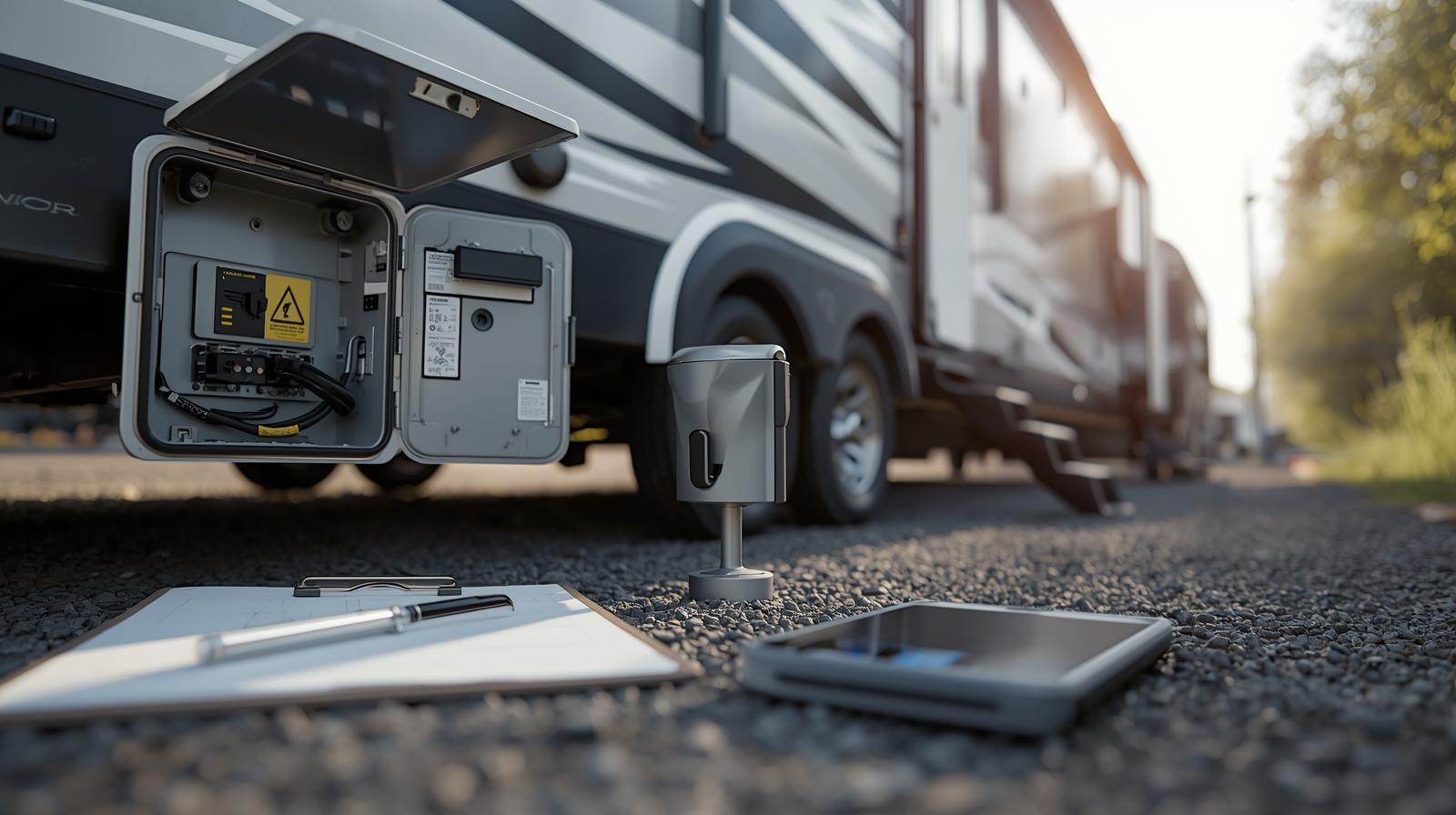
URGENT: Fire Risk & Weight Label Errors – Is Your 2026 RV on the Recall List?
Quick Summary (Read This, Then Do the 60-Second Check)
If you’re towing or driving a 2026 model-year RV, there’s one unsexy task that matters more than your next upgrade: check open recalls.
In the last ~90 days, RV recall notices have repeatedly clustered around:
- Fire risk (propane/LP leaks, heat exposure, electrical overheating, generator/LP hose routing issues)
- Incorrect weight labels (wrong GVWR/GAWR/GCWR/OCCC data that can lead to accidental overloading)
What you should do today: run your VIN in the official recall database (U.S.) or the official recall database (Canada).
60-Second Recall Check (Do This First)
You don’t need a dealer to start—just your VIN.
- Find your RV’s VIN (locations vary by RV type—see the cheat sheet below).
- U.S.: Use NHTSA’s recall lookup and search by VIN.
- Canada: Use Transport Canada’s Motor Vehicle Safety Recalls Database.
- If you don’t have the VIN handy, set a reminder. This is one of those “do it once, sleep better” tasks.
Worth bookmarking: our safety cluster is here → RV Safety Gear Checklist
Where to Find Your RV VIN (Fast + No Guessing)
VIN placement varies a lot by rig type. Here are the most common spots:
- Class A / Class C motorhomes: driver-side lower windshield area, driver door jamb, or inside a cockpit cabinet.
- Travel trailers / fifth wheels: A-frame tongue area, pin box area, or on the federal certification label near the entry door.
- Truck campers: inside a cabinet, near the entry, or on the underside/side near the jack brackets.
If you’re still stuck, check your insurance/registration paperwork—it’s usually the quickest win.
Why These Two Recall Types Are a Big Deal
Fire Risk Recalls: What “Fire Risk” Usually Means in RVs
In recent RV-related notices, “fire risk” commonly comes from:
- Propane (LP) leaks (cracked line, loose fittings, damaged tubing)
- Heat exposure (LP hose routed too close to hot components like exhaust)
- Electrical overheating (undersized wiring, harness issues, bad terminations)
- Appliance interaction quirks (rare, but real—like stove + furnace airflow interactions)
One example of the kind of “stop using it” language you may see: Transport Canada described a case where a generator propane hose could contact exhaust and melt, and the manufacturer advised not using the generator until repairs are completed.
If you want the practical, non-alarmist version of “what actually prevents RV electrical fires,” this guide pairs perfectly with recall checks: RV Electrical Safety Tips: Avoiding Fires, Shocks & Power Damage
Weight Label Errors: The “Quiet” Recall That Can Still Wreck Your Trip
Weight label recalls don’t sound dramatic—until you realize what they can cause.
If your Certification label or OCCC (Occupant & Cargo Carrying Capacity) label shows the wrong numbers, it’s easy to overload without knowing it. Overloading increases the chance of:
- sketchy handling in crosswinds
- longer braking distances
- tire overheating
- suspension damage
- higher crash risk
Weight Ratings Cheat Sheet (So the Labels Actually Mean Something)
| Term | What it means (plain English) | Why it matters to you |
|---|---|---|
| GVWR (Gross Vehicle Weight Rating) | Max allowed weight of the RV when loaded | Exceeding it stresses tires, brakes, axles |
| GAWR (Gross Axle Weight Rating) | Max allowed weight on each axle | One overloaded axle can still be dangerous even if overall GVWR looks “fine” |
| GCWR (Gross Combined Weight Rating) | Max combined weight of RV + anything towed | Critical for tow rigs and motorhomes towing a car/trailer |
| OCCC (Occupant & Cargo Carrying Capacity) | How much “stuff + people” you can add | The number most owners accidentally blow past |
Fire-Risk vs Weight-Label Recalls: What Changes About Your Next Step?
| Recall type | What to treat as urgent | What you do immediately | Typical remedy |
|---|---|---|---|
| Fire risk | Anything involving LP, generator fuel/LP routing, overheating wires, or “do not use” language | Stop using the affected system if instructed; schedule repair ASAP | Reroute/secure lines, add heat shields, replace wiring/harness/components |
| Weight label error | Less immediate “flames” risk, but high real-world risk if you overload | Reduce cargo margin; weigh the rig if you’re close to limits | Corrected label + documentation, sometimes dealer verification |
For an extra layer of “protect your rig from sketchy pedestal power,” this explainer is a smart add-on: RV Surge Protectors 101: Safeguarding Your RV’s Electrical System
What To Do Right Now If You Find an Open Recall
If it’s a fire-risk recall
Treat it as time-sensitive.
- Follow any “do not use” guidance (some notices explicitly say not to use a generator or appliance until repaired).
- If the recall involves propane (LP), don’t “power through” suspicious smells. Stop using the affected system until inspected.
- Schedule the remedy as soon as you can through the manufacturer/dealer network.
Want a “grab-and-go” safety checklist that complements recall reality? Here you go: Top RV Fire Safety Gear Every RVer Should Carry
If it’s a weight label recall
This is usually fixable with a corrected label—but don’t ignore it.
- Ask the manufacturer/dealer for the corrected label/remedy steps.
- Until it’s corrected, be conservative with cargo and consider weighing your rig so you’re not guessing.
How to Weigh Your RV (Quick, Practical, No Drama)
If you’re anywhere near your limits—or you suspect a label issue—get real numbers.
- Load your RV like you actually travel (water level, propane, food, gear).
- Visit a public scale (CAT scale or similar).
- Get:
- total weight
- axle weights (and ideally individual wheel weights if possible)
- Compare to GVWR and GAWR on your labels.
- If your axle weights are close, treat tire pressure and load distribution as safety items, not “optional chores.”
The Most Relevant Recent Recall Themes That Can Hit 2026 RVs (Last ~3 Months)
This is a practical snapshot of the patterns behind the headline. Always confirm by VIN—lists age fast.
October–November: Generator/LP Hose Routing + Propane-Line Issues (Fire Risk)
Common pattern: LP hose routing/retention and propane-line stress caused by movement, heat, or poor clearance.
- Expect language like: hose could contact a hot component → melt → leak → fire risk.
- You may also see instructions to avoid using a generator until repaired.
November–December: Appliance Interaction Quirks (Fire/Burn Risk)
Common pattern: stove + furnace airflow interactions that can cause dangerous flame behavior in certain installations.
December–January: Weight Labels (High-Frequency Theme)
Common pattern: incorrect printed weights on the certification label and/or OCCC label.
This can push owners into unintentional overloading—especially on smaller rigs where payload margin is already tight.
January: Wiring Harness Overheat Risk (Fire Risk)
Common pattern: incorrectly sized wiring or harness issues that can overheat under load.
This is exactly where your “it seems fine” instinct can betray you—because overheating often shows up only after sustained use.
If You’re Buying a 2026 RV Used, Do This Before You Sign Anything
- Run the VIN on the official recall database while you’re standing there.
- Ask the seller for service paperwork showing recall remedies completed.
- If an open recall exists, don’t panic—use it as leverage and get a clear plan for remedy scheduling.
If you’re new to RVing, this pre-trip checklist mindset helps you avoid the “first season chaos tax”: RV Camping for Beginners: Funny First-Timer’s Guide + Checklist
FAQs People Actually Care About
Are recall repairs free?
Typically, yes—recall remedies are commonly described as being completed at no charge. Always confirm the remedy details for your VIN in the official listing.
Why are weight label recalls so common?
Because RVs combine lots of options (generators, batteries, solar, furniture packages), and labels rely on production data being correct. The risk isn’t paperwork—it’s how you load and tow based on that paperwork.
How often do new recalls appear?
Often enough that a “recent recalls” post can go stale quickly. Use VIN lookup as your source of truth.
Should I stop traveling if I have an open recall?
If the notice includes “do not use” guidance (especially for generator/LP/electrical overheating risks), follow it.
If it’s a label issue, you can often travel while waiting—but reduce load margin and weigh your rig.
Is this U.S. only?
No. If you travel in Canada or bought a Canadian-delivered unit, check Transport Canada’s database too.
The Bottom Line
If you own a 2026 RV, don’t assume “new” means “immune.” Recent recall activity shows fire-risk issues (propane/electrical) and weight label errors are exactly the kinds of problems that can hit newer model years.
Do the VIN check today, then schedule any open remedy.