RV Surge Protectors 101: Safeguarding Your RV’s Electrical System
Whether you’re a full-time RVer, a weekend camper, or an RV repair pro, one thing is certain: RV electrical problems can ruin your day fast. ⚡ Ever heard stories of an RV microwave or AC getting fried at a campground hookup? Not fun.
In this guide, we’ll break down what an RV surge protector does and why it’s critical for RV power safety. We’ll also compare basic surge protectors vs. advanced Electrical Management Systems (EMS), discuss portable vs. hardwired models, highlight key features to look for, and even give you a comparison of top units on the market.
By the end, you’ll know exactly how to choose the right gear to protect your home on wheels (and your wallet). Let’s plug in! 🔌
🔍 What Does an RV Surge Protector Do?
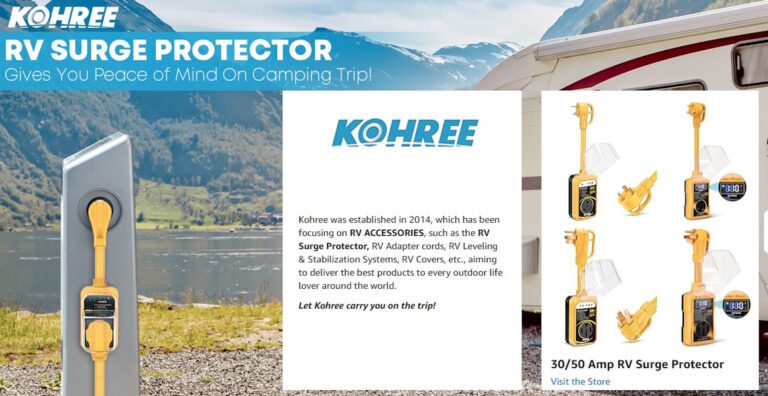
An RV surge protector is essentially a watchdog for your RV’s electrical hookup. You plug it in between the campground’s power pedestal and your RV’s power cord.
Its primary job? Protect your RV from dangerous voltage spikes (surges) that could toast your electronics. If a sudden surge comes through (say from a lightning strike or power grid hiccup), a surge protector absorbs or blocks that excess voltage, saving your RV’s appliances from damage. ⚡
But modern RV surge protectors often do more than just stop surges. Think of them as smart gatekeepers for your RV’s entire electrical system. High-quality units constantly monitor the incoming power and will automatically disconnect your RV if something isn’t right – not just surges, but low voltage, high voltage, or wiring faults.
In other words, a good RV surge protector (often called an EMS – Electrical Management System) doesn’t just protect against rare big surges; it actively watches for everyday power issues that could harm your RV.
For example, if the campground voltage sags below safe levels or spikes too high, an EMS will cut the power before your AC or fridge gets damaged. It can even detect wiring problems (like an open ground or reversed polarity) before you get zapped. ⚠️
Essentially, this device is your RV’s electrical bodyguard, standing between your rig and the wild world of campground power. 🛡️
Why Is It Critical for RV Electrical Safety?
RVs aren’t always plugging into perfect power sources. In fact, plugging into some campground pedestals can feel like a game of electrical Russian roulette. Campground power supplies vary widely – some are brand new and stable, while others are old, miswired, or overloaded. Here are a few of the dangers your RV faces from bad power and how a surge protector or EMS helps:
⚡ Power Surges
A surge is a sudden spike in voltage. It’s actually one of the less common issues, but when it happens it can destroy anything in its path – your microwave, TV, fridge, you name it. Surges might come from lightning strikes or sudden grid switching. A surge protector acts like a sponge, absorbing that spike (up to its design limit) so your RV’s electronics don’t have to. Without protection, a big surge could lead to an early funeral for your appliances.
🔋 Low Voltage (Brownouts)
Far more common than surges is low voltage. Imagine a hot summer weekend when every RV in the park is running AC – the campground’s power can drop below 110V or even under 100V. This “brownout” condition makes motors and compressors in your air conditioner or refrigerator overheat and wear out faster. You might not even realize it’s happening until your AC unit burns out. A good EMS will sense low voltage (typically if voltage falls below ~102–104V) and disconnect power to save your equipment. Once voltage returns to a safe level, it will reconnect after a delay.
⚠️ High Voltage
On the flip side, some park generators or wiring faults can send too high voltage (over ~132V) into your RV. This can instantly damage electronics. An EMS guards against this by shutting off anything beyond the safe range, usually cutting power if voltage exceeds ~132V.
🛑 Wiring Faults & Pedestal Problems
This is the scary stuff. We’re talking about miswired outlets, open neutrals, open grounds, or reversed polarity at the campground pedestal. These wiring mistakes can cause appliances to malfunction or even create an electrocution risk for anyone touching the RV. For instance, an open ground or reverse polarity could energize the RV’s chassis – yikes! 😬
A quality RV surge protector or EMS will check the pedestal wiring the moment you plug in. If it detects something like an open ground, open neutral, or reversed hot/neutral, it won’t allow power through to your RV. This keeps you and your family safe from shock.
As one RV expert noted, an Electrical Management System “checks the campground receptacle for various faults such as open ground, high voltage, low voltage and other problems that can damage your RV circuitry.” In short, it’s constantly monitoring for the things you might not see with a visual inspection.
🛡️ Final Thoughts on RV Electrical Protection
In summary, a surge protector or EMS is critical for RV electrical safety because it protects your RV’s expensive electrical components and the people inside. It’s much cheaper to replace a surge protector than to replace a blown RV fridge or, worse, recover from an electrical fire.
Think of it as cheap insurance: hopefully you never face a severe power problem, but if you do, you’ll be so glad you had that device standing guard. For more essential protection tips, don’t miss our guide on Top RV Fire Safety Gear Every RVer Should Carry.
👉 Read our comparison of the Best RV Surge Protectors
Basic Surge Protectors vs. EMS: What’s the Difference?
You’ve probably seen the term EMS (Electrical Management System) used interchangeably with “surge protector.” While they serve the same general purpose (protecting your RV from bad power), there are important differences in capability. Here’s a quick comparison:
🔌 Basic Surge Protectors (Entry-Level)
These are simpler devices, often lower cost. A basic surge protector primarily guards against voltage spikes. It contains surge suppression components (like MOVs) that absorb excess voltage. Many of these units also have indicator lights (or simple displays) to alert you to wiring issues (like open ground or reverse polarity) when you plug in.
However, a basic surge protector typically does NOT automatically shut off power during sustained low or high voltage conditions – it will let power flow even if voltage is at 95V or 140V, for example. It’s basically a one-time sacrificial shield for big surges and a passive monitor for other issues.
If a massive surge hits, a cheap unit might permanently burn out (sacrificing itself to save your RV). In short: surge-only protectors offer limited protection. They’re certainly better than nothing – they can save you from a catastrophic surge – but they won’t actively manage all the nuances of campground power. Think of them as the bare minimum safety device.
🧠 EMS (Electrical Management Systems)
An EMS is like a surge protector on steroids (and much smarter). It protects against surges and continuously monitors the power for a whole range of problems. If voltage sags too low or shoots too high, an EMS will cut the power automatically to prevent damage. If the pedestal is miswired or there’s a dangerous condition, it won’t energize your RV at all until the issue is resolved.
Essentially, an EMS provides total electrical protection for your RV. These units usually have a digital display or interface that shows you real-time voltage, frequency, error codes, etc. Many EMS devices will delay reconnecting power (often ~2 minutes) once conditions return to normal, to protect your air conditioner from rapid cycling.
They often come with other features too, like test functions or Bluetooth connectivity in some models. As an RV forum member put it, “an EMS… has many more features than a ‘surge protector.’ It checks for open ground, high voltage, low voltage and other problems that can damage your RV.”
The downside? 💸 Cost. An EMS typically costs more than a basic surge protector – but given the breadth of protection, most experienced RVers will tell you it’s worth every penny. It’s the difference between partial protection and comprehensive protection.
✅ Which One Is Right for You?
In summary, a “surge protector” might refer to a simple device or a full-featured EMS. Be sure to read the fine print on what a unit actually does. If you only RV occasionally or are on a tight budget, a basic surge protector is a lot better than nothing.
But if you use your RV often (especially full-timers or anyone with pricey appliances onboard), investing in a true EMS unit is highly recommended – it’s cheap insurance for peace of mind. 🛡️
Portable vs. Hardwired Surge Protectors
RV surge protectors (and EMS units) come in two physical styles: portable plug-in units and hardwired units. They do the same job but in different ways. Deciding between them comes down to convenience, installation, and personal preference. Let’s break it down:
🔌 Portable Surge Protectors/EMS
These are external units that you plug into the campground power pedestal, then plug your RV’s cord into the device. They often look like a bulky electrical adapter with a cord or sometimes a small box with male/female plug ends.
Pros: No installation required – you can use it right out of the box. You can easily move it from rig to rig (great if you upgrade RVs or have multiple campers). Since it’s outside, it’s easy to check the indicator lights or display (although that can also be a con – see below). If the unit fails or wears out, replacement is just a matter of buying a new one (no uninstall needed).
Cons: 😕 Because it’s not permanently attached, you have to remember to use it each time. It’s possible to forget to plug it in when you’re in a hurry (and Murphy’s Law says that might be the one time bad power hits!).
Also, a portable EMS unit can “grow legs and walk away” 🦵🔓 if left unattended – in other words, theft can be an issue at campgrounds. Many RVers use a small padlock or locking bracket to secure the portable protector to the pedestal (some models include a lock ring for this).
Another con: it’s exposed to the elements 🌧️🌞 – quality portables are weatherproof, but heavy rain, sun, and dust are still factors.
Lastly, if you want to monitor the readouts, you typically have to go outside to look at it (unless it has Bluetooth to an app 📱).
🛠️ Hardwired Surge Protectors/EMS
These units get permanently installed inside your RV, usually on the main power line just after the shore power cord inlet or transfer switch.
Pros: Convenience and security. You never have to fuss with plugging in a device at the pedestal – it’s always there in your RV, silently doing its job every time you hook up. No worries about theft (it’s hidden inside) or weather damage.
Many hardwired EMS models come with a wall-mounted display panel or remote monitor you can install inside your RV, so you can see voltage and error codes from the comfort of your couch. It also means if something goes wrong, you’ll notice it inside (some units have audible alarms too).
Another advantage: a hardwired surge protector will protect your RV even from issues in the RV’s own power cord. For example, if your shore power cord or plug has a short or loose connection causing low voltage, a hardwired EMS (being downstream of the cord) can detect and cut power in time – whereas a portable on the pedestal might not notice a problem occurring after it.
Cons: Installation is the big one. You (or an electrician/RV tech) will need to wire the unit into your RV’s electrical system. This typically involves mounting the device in a storage bay or near your power center and wiring it inline. It’s not an impossible DIY for those comfortable with electrical work, but it does take some effort (and working in tight spaces).
Hardwired EMS units also cost about the same or slightly more than portables. And once installed, you can’t easily transfer it to a new RV – you’d have to uninstall it when you sell the RV or buy a new device for the new rig. If a hardwired protector fails, replacing it involves some uninstalling and re-wiring.
✅ Which to Choose?
If you frequently move between multiple RVs or just don’t want to bother with installation, a portable unit makes a lot of sense. If you’re in one rig for the long haul and value convenience (or worry about theft), a hardwired EMS is a great set-and-forget solution.
Some RV owners even carry a portable surge protector as a backup to a hardwired EMS – but that’s probably overkill for most people. The good news is the core protection is similar; it’s really about the form factor that fits your style.
Either way, always use some form of surge protector or EMS whenever you plug in your RV. (Pro tip: if you go portable, consider a small padlock or cable to secure it – thieves are less likely to bother if it’s locked up.)
Key Features to Look For in an RV Surge Protector/EMS
When shopping for an RV surge protector or Electrical Management System (EMS), you’ll notice a variety of specs and features. Here are the key things to consider (and what they mean):
⚡ Joule Rating (Surge Protection Capacity)
The joule rating tells you how much energy the device can absorb from power surges. Think of it as the size of the surge it can take a bullet for. Higher is better – a higher joule rating means the unit can handle a bigger surge spike before sacrificing itself.
Basic surge protectors might have relatively low ratings (e.g., around 800 joules for a small 30A unit), while heavy-duty EMS models for 50A service often offer 3,000–4,000+ joules. Some premium 50A surge protectors can go up to 4,200 joules.
If you have an expensive RV or sensitive electronics, it’s worth investing in a model with a higher joule rating. Also, keep in mind that surge protectors use components that degrade over time. A major surge may permanently damage the unit. Some premium models offer replaceable surge modules, so you don’t need to replace the entire device after one big hit.
🔌 Voltage Protection (High/Low Voltage Cutoff)
This is a hallmark feature of an EMS. Look for units that automatically disconnect power if voltage drops too low or spikes too high.
Typical cutoffs are below 102–104V on the low end and above 132–136V on the high end. A good unit will also automatically reconnect power once the voltage returns to a safe range – often after a 2-minute delay to protect sensitive equipment like air conditioners from rapid cycling.
This time delay or time lapse feature is important for long-term appliance health and overall RV electrical safety.
⚙️ Amperage and RV Service (30 Amp vs 50 Amp)
RV surge protectors are typically available in 30A and 50A versions. A 30A RV has one hot leg and draws up to 3,600 watts. A 50A RV has two 120V hot legs and can draw up to 12,000 watts.
Make sure to buy the correct type for your rig. A 50A surge protector is designed to handle the higher wattage and dual-leg system.
If you occasionally stay at campgrounds that offer different amperage (like using a 30A plug at a 50A site with an adapter), just make sure to attach the adapter before the surge protector so it’s still in line to offer protection.
Bottom line: match the surge protector to your RV’s shore power connection for optimal performance and protection.
🧯 Electrical Fault Detection
Look for units that indicate wiring issues like open ground, open neutral, reverse polarity, or miswired pedestals. Basic units might just have LED lights that clue you into a wiring fault (you often have to decipher a code, like one red light means open neutral, etc.).
Advanced EMS units usually have an LCD screen or digital readout that clearly displays the fault or error code. This is crucial for catching things like a missing ground wire at the pedestal or detecting 240V on a 120V line — a very dangerous condition.
Essentially, your surge protector should act as a tester every time you plug in, refusing to pass power through if something’s unsafe. All top-tier EMS models have this built in. It’s a must-have safety feature.
📊 Display and Monitoring
Think about how you want to receive information from your surge protector. Options include:
- Simple LED indicators: These glow green, red, or amber to indicate general status. They’re fine for quick checks but not very detailed.
- LCD display: Found on higher-end portables and most hardwired EMS units. These cycle through detailed stats like voltage, amperage, frequency, and error codes. Great for tracking power health in real time.
- Bluetooth / Smartphone App: Some models connect via Bluetooth or Wi-Fi and pair with your phone. They allow you to monitor voltage and current remotely and send alerts when issues occur. Brands like Hughes and Southwire include this on newer units. Ideal for convenience and peace of mind.
There’s no wrong choice — just make sure your unit has some form of status indication. If you love data or remote monitoring, go for an EMS with a full display or app.
⚠️ Automatic Shutoff vs. Notification Only
As mentioned, basic surge protectors might only notify you of a problem — with indicator lights or an app alert. But a true EMS system will automatically shut off power during voltage spikes, drops, or other anomalies.
Always check the specs. Some older or budget models may only alert and require you to manually turn off power. Look for terms like Emergency Power Off (EPO) or automatic cutoff to ensure your gear stays protected without needing your intervention.
🌧️ Weather Protection and Durability
If you’re choosing a portable surge protector, remember it will live outside — rain, heat, snow, and all. Quality models are weather resistant, often with rainproof covers and rugged housings. Features like heavy-duty brass connectors are also good indicators of durability.
Hardwired units, being mounted inside the RV, are naturally safer from the elements. Still, it’s important they can withstand road vibrations and temperature changes. If you camp in extreme weather, check the unit’s operating temperature range.
📦 Size & Portability
Portable EMS units vary in size and shape. Some 50A models can be large and heavy. If space or weight is a concern, check the unit’s dimensions before buying.
Hardwired EMS units require space inside your RV’s bay or near the power center. Make sure you have room to install and mount one securely.
✅ Warranty and Support
Warranty length can tell you a lot about product quality. Top manufacturers like Progressive Industries offer a limited lifetime warranty on their EMS products. Others like Camco might offer 1–3 year warranties.
Look for brands with a good reputation in the RV community — such as Progressive Industries, Hughes Autoformers, and Southwire Surge Guard. Solid customer support and proven reliability are just as important as features.
These are the most important features to keep in mind when choosing a surge protector or EMS for your RV. Always read reviews, check manufacturer specs, and if possible, talk to fellow RVers for real-world insights.
The best surge protector is the one you can trust to work when it matters most.
Top RV Surge Protectors & EMS Units (Comparison)
To help you choose the right gear, let’s compare some of the top-rated RV surge protectors and EMS units out there. Below is a comparison table of five popular units, including their key features, pros, and cons. We’ve included a mix ranging from high-end EMS systems to a basic budget protector, so you can see the differences side by side.
| Surge Protector / EMS | Type | Surge Rating | Key Features | Pros | Cons |
|---|---|---|---|---|---|
| Progressive Industries EMS-PT50X (Portable EMS, 50 Amp) | Full EMS protection Portable unit (external) | 3,580 Joules (88,000A surge current) | – Auto shutoff on <104V or >132V – Monitors for wiring faults – LCD display (voltage, error codes) – Weather-resistant with locking bracket | – Comprehensive RV electrical protection – Lifetime warranty – High-quality, trusted brand | – Premium price point – Bulky design – No Bluetooth/app control |
| Southwire Surge Guard 34951 (Portable EMS, 50 Amp) | Full EMS protection Portable unit (external) | ~3,850 Joules | – Auto shutoff on <102V or >132V – Monitors for open ground, faults – LCD display + Bluetooth app – Durable, weatherproof housing | – Strong protection, similar to Progressive – Bluetooth monitoring via app – Lifetime warranty | – Premium price – Slightly bulky clamshell design – Bluetooth may be unnecessary for some users |
| Hughes Power Watchdog 50A (Portable EMS, 50 Amp) | Full EMS protection Portable unit (external) | 4,800 Joules | – Auto shutoff on voltage anomalies – Bluetooth alerts & real-time app monitoring – Replaceable surge module – 90-second reset delay | – Highest surge rating in class – App adds powerful convenience – User-replaceable parts = long-term savings | – 2-year warranty only – No built-in screen (app only) – Less field testing vs older brands |
| Camco Power Defender 55306 (Portable, 50 Amp) | Surge protector with EMS features | 3,850 Joules | – Auto shutoff on voltage extremes – LED diagnostics (open neutral, polarity) – Weatherproof and compact | – Budget-friendly EMS option – Easy plug-and-play design – Good protection for price | – Only 1-year warranty – LED-only indicators (no display) – No Bluetooth or advanced data |
| Progressive Industries SSP-50X (Basic Surge Protector, 50 Amp) | Basic surge-only protection Portable unit | 1,650 Joules | – Surge suppression only – LED polarity tester – Lightweight, plug-and-play – Outdoor rated | – Very affordable – Simple to use – Good for minimal protection | – No voltage cutoff – Won’t detect ongoing issues – Sacrificial (must replace after big surge) |
Note: The above specs are for 50-amp models. 30-amp versions of the same products offer similar features but lower surge joule ratings since 30A systems handle less power. Always match the surge protector to your RV’s amp rating for proper protection.
All the “full EMS units” listed provide protection against a wide range of issues — including power surges, high/low voltage, and miswiring problems. The differences mainly come down to additional features like displays, app connectivity, surge capacity, warranty, and price.
Progressive Industries and Southwire Surge Guard are often considered top-tier EMS brands with strong reputations and long-term reliability. RV owners tend to stick with one or the other based on experience, and both perform similarly in real-world use.
Hughes Power Watchdog is a newer, tech-forward option that many tech-savvy RVers prefer for its Bluetooth app integration and user-replaceable surge modules.
Camco Power Defender is a great budget-friendly EMS for those who want automatic shutoff protection without the higher price of premium brands.
And finally, the Progressive SSP-50X (or similar basic surge protectors) offer minimal surge-only protection at a very affordable price — just keep in mind that they won’t shut off power during brownouts or voltage spikes. Use them if you’re on a tight budget, but be fully aware of their limitations.
Final Thoughts: Choosing the Right Surge Protector for Your RV
At the end of the day, any surge protector is better than none. If you’re RVing without one, consider this a friendly nudge to invest in one sooner rather than later. The cost of not having protection – from fried electronics to potential safety hazards – simply isn’t worth the risk.
A quality RV surge protector or EMS is a one-time purchase that can save you thousands of dollars and countless headaches down the road.
When choosing, think about your needs and camping style. Occasional weekend camper with a small travel trailer? A simpler (and cheaper) unit might do the trick, just to catch the big bad surges and basic faults. Full-timer or anyone with a big rig and lots of sensitive gadgets onboard? Do yourself a favor and get a full-featured EMS – you’ll sleep better at night knowing your RV is being actively safeguarded 24/7.
Also consider ease of use: if you hate setup steps, maybe go hardwired. If you have multiple RVs or plan to upgrade, a portable unit gives you the flexibility to move it around.
We’ve given you a rundown of some top choices in the comparison above, but there are plenty of good products out there. Read our comparison of the Best RV Surge Protectors for an even deeper dive into which models stand out and why — including some real-world reviews and tips.
One thing’s for sure: don’t skimp on this area of RV gear. It’s like buying a helmet for a motorcycle – you hope to never need it, but if you do, it can save your life (or in this case, your RV!). Even the fanciest surge protector costs a fraction of one new RV air conditioner or fridge. In our experience, it’s money very well spent.
Affiliate Note
When you’re ready to pick up a surge protector, be sure to choose a reputable brand from a trusted retailer. We’ve included links in our detailed comparison post – feel free to use them as they help support our blog at no extra cost to you.
More importantly, however you get one — just get one and use it every time you plug in. Your RV will thank you, and you’ll roll down the road with a lot more peace of mind knowing your electrical system is safeguarded.
Happy travels, and stay safe out there! May your trips be filled with great memories and zero electrical surprises. 🚐⚡️