10 Best RV Surge Protectors and EMS in 2026 (Based on Owner Outcomes)
Affiliate Disclaimer: This article contains affiliate links. If you click through and make a purchase, I may earn a small commission at no extra cost to you. This helps support my deep-dive research.
Campground power can be the sketchiest “upgrade” you never asked for: low voltage on hot afternoons, miswired pedestals, and sudden power weirdness that can quietly punish your A/C, converter/charger, and control boards. The tension is simple: do you buy basic surge protection… or true EMS-style shutoff and diagnostics?
How we reviewed: We compiled this ranking from our individual product reviews, prioritizing real-world patterns: what consistently works, what frustrates owners, and what matters for long-term value.
You’ll get a fast “pick this if you’re like this” shortlist, a comparison table, and deep-dive summaries that focus on owner-reported outcomes (not marketing claims).
Helpful context (optional reads):
- RV Surge Protectors 101: Safeguarding Your RV’s Electrical System
- Portable vs. Hardwired RV Surge Protectors: Which Should You Choose?
- RV Electrical Safety Tips: Avoiding Fires, Shocks & Power Damage
Quick Verdict
| Award | Product (Amazon link) | Best For… | Quick Reason |
|---|---|---|---|
| 🥇 Best Overall | Progressive Industries EMS-HW50C 50A Hardwired RV EMS Surge Protector | Hardwired “always-on” protection | Owners consistently praise real saves + clear remote display. |
| 💰 Best Value | Kohree RV Surge Protector | Budget protection + voltage visibility | Strong “good enough” workflow—if you accept mixed longevity. |
| 💎 Best Premium | Progressive Industries EMS-PT50X Portable RV Surge Protector | Portable EMS-style gatekeeping | Owners love low-voltage/wiring-fault protection; watch weather/heat habits. |
| ⚡ Best for 50A rigs wanting phone monitoring | Power Watchdog PWD50 RV Portable Surge Protector | Per-leg insight + app monitoring | Monitoring is the standout—app/friction is the tradeoff. |
| ⭐ Best for 30A travel trailers | Surge Guard Southwire 34930 30A RV Surge Protector | 30A “plug-and-protect” | Owners praise disconnect + auto-retry + useful amps/volts readout. |
| 🎯 Best for first-time buyers | CARMTEK RV Surge Protector | Fast “is this pedestal safe?” check | Simple diagnostics + basic surge layer (not a full EMS). |
Tip: Click a Confidence Score to see the full review and scoring context.
Quick Decision Matrix
- Need 50A rigs wanting phone monitoring → Go to #4 Power Watchdog PWD50
- Need 30A travel trailers → Go to #2 Surge Guard Southwire 34930
- Budget-focused → Go to #7 Kohree RV Surge Protector
- Want least friction → Go to #6 CARMTEK RV Surge Protector
Comparison Table
| Product (Amazon link) | Best For | Owner-Reported Outcome | What Owners Liked | Common Complaints / Tradeoff | Owner Signals | Confidence Score (details) |
|---|---|---|---|---|---|---|
| Progressive Industries EMS-HW50C | Full-timers, hardwired protection | Strong (fault catches + shutoff behavior praised) | Remote display, fault saves, always-on | Install effort, relay hum | Clear diagnostics, Install friction | 8.6/10 |
| Surge Guard Southwire 34930 30A | 30A rigs wanting simple readout | Strong (disconnect + auto-retry often praised) | Amps/volts display, auto-retry, pedestal checks | Cover clearance, weather orientation, mixed longevity | Auto reconnect, Fit/clearance quirks | 8.3/10 |
| Progressive Industries EMS-PT50X | Portable EMS for “mystery pedestals” | Strong (low-voltage/wiring-fault saves described) | Readable display, low-voltage protection | Moisture exposure, heat-at-plug stories | Weather sensitivity, Heat-at-plug risk | 8.1/10 |
| Power Watchdog PWD50 | 50A monitoring + per-leg visibility | Strong (visibility + protective shutoffs praised) | Per-leg insight, replaceable module, monitoring | App friction, nuisance trips, bulky fit | Per-leg visibility, App/Bluetooth friction | 7.9/10 |
| 50A Wireless Surge Guard (Portable) | Portable EMS + inside monitoring | Strong (refuses bad power, disconnect/reconnect described) | Inside monitoring, EMS behavior | Bluetooth issues, false alerts, heat reports | Auto reconnect, Heat-at-plug risk | 7.8/10 |
| CARMTEK RV Surge Protector | Fast pedestal diagnostics | Moderate (wiring-fault detection wins; deeper EMS behavior varies) | Simple lights, quick setup, value | Fit/security, weather exposure, false faults | Clear diagnostics, Fit/clearance quirks | 7.8/10 |
| Kohree RV Surge Protector | Budget protection + voltage display | Moderate (useful monitoring; some low-voltage shutoff wins described) | Voltage readout, simple ritual, value | Mixed longevity, cover fit, 50A leg nuance | Budget value, Mixed longevity | 7.4/10 |
| Power Watchdog PWD50EPOH (Hardwired) | Theft-proof hardwired + monitoring | Moderate (EMS-style shutoff praised; occasional odd faults) | Replaceable component, hardwired convenience | App polish, bright LED, nuisance shutoffs | Hardwired convenience, App/Bluetooth friction | 7.6/10 |
| MILLIONHOME RV Surge Protector | Occasional users wanting simple check | Moderate (peace-of-mind workflow common; some outliers) | Easy lights, budget-friendly | Flimsy cover, early failures, safety outliers | Budget value, Weather sensitivity | 7.6/10 |
| GEARGO RV Surge Protectors | Warm-weather weekenders | Mixed (basic check helps; error codes frustrate) | Simple plug-in check, readable | Cold-temp errors, mixed reliability | Mixed longevity, Fit/clearance quirks | 6.2/10 |
Detailed Product Reviews
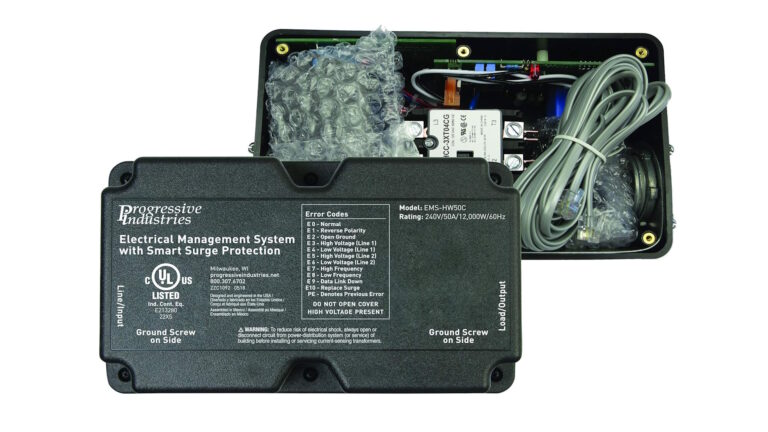
#1. Progressive Industries EMS-HW50C 50A Hardwired RV EMS Surge Protector — Hardwired peace-of-mind workhorse
📌 At a Glance
- Best for: Full-timers and frequent travelers who want hardwired EMS protection with a small remote display.
- Owner-reported outcome: Strong (owners repeatedly describe fault detection that prevents “plug-and-pray” damage).
- Confidence score: 8.6/10
Owner signals:
- Protection saves: Positive — Owners report it catches miswire/low voltage before damage.
- Install friction: Mixed — 50A routing is “doable, but not fun.”
- Relay hum: Mixed — Some owners isolate mounting to reduce buzzing.
Quick Summary:
From real-world feedback and our review notes, this ranks #1 because owners consistently describe it behaving like a true gatekeeper—it protects first, asks questions later. The tradeoff is you earn that convenience upfront with install effort and occasional noise management.
Key Specifications:
- Amperage: 50A (North America split-phase context discussed)
- Type: Hardwired EMS with remote display (as discussed in review notes)
The Deep Dive (Why It Ranked Here):
- Across our individual reviews, a recurring theme is that hardwired units win on “always on, nothing to forget” convenience.
- Owners commonly report it flagging open ground / reverse polarity / low voltage situations before the RV gets power.
- In real-world use, many users find the small remote display changes how they manage loads day-to-day.
- One pattern that comes up repeatedly is install success depends on planning cable routing (stiff 50A wiring).
- From real-world feedback and our review notes, relay hum is real for some installs—mounting isolation is a common workaround.
- A frequent buyer surprise is “missing parts” sometimes being packed inside the housing (owners mention this in install stories).
✅ Why Buy
- Hardwired protection means you can’t forget it at a pedestal.
- Owners describe real “caught it before it bit me” moments.
- Remote display supports basic load awareness without stepping outside.
⛔ Dealbreakers / What to Consider
- If you need zero-install effort, skip this and consider a portable unit.
- Tight install spaces can turn this into a weekend project.
- If you’re sensitive to relay noise, plan vibration isolation.
Verdict for You:
- 👉 Pick this if: you want the highest “set-and-forget” confidence.
- You travel often and hit unknown pedestals.
- You want hardwired protection with visible status.
- 🛑 Skip this if: you want fast portability over permanence.
- You swap rigs or loan gear often.
- You don’t want to deal with install constraints.
Quick Links:
- 🛒 Check Price on Amazon: https://amzn.to/49XKrDb
- 📖 Read the full review: https://rvoutfitting.com/progressive-industries-ems-hw50c-review/
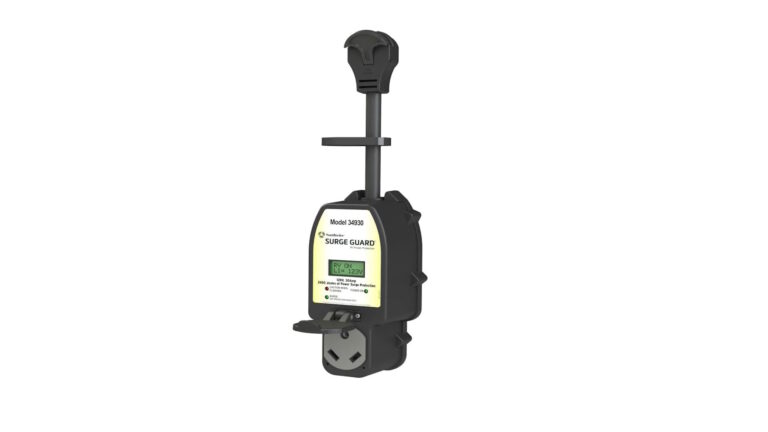
#2. Surge Guard Southwire 34930 30A RV Surge Protector — Best 30A “plug-and-protect” pick
📌 At a Glance
- Best for: Most 30A RV owners (TT-30, 120V) who want protection + a simple amps/volts readout.
- Owner-reported outcome: Strong (disconnect behavior + auto-retry is a frequent “save” pattern).
- Confidence score: 8.3/10
Owner signals:
- Auto reconnect: Positive — Owners describe disconnects followed by retry when power stabilizes.
- Clear diagnostics: Positive — The amps/volts readout gets used for load troubleshooting.
- Fit/clearance quirks: Mixed — Cover/flap can interfere with some plug grips.
Quick Summary:
Based on aggregated owner experiences discussed in our reviews, this earns #2 because it’s the rare 30A option where owners talk about both protection behavior and usable day-to-day visibility. The main tradeoff is physical ergonomics (cover/clearance) and mixed long-term durability stories.
Key Specifications:
- Amperage: 30A (TT-30 / North America context discussed)
- Type: Portable unit with display (as discussed in review notes)
The Deep Dive (Why It Ranked Here):
- Owners commonly report buying it after dealing with “mystery power” and immediately changing their hookup routine.
- One pattern that comes up repeatedly is low voltage / bad ground saves that force a site change (which is the point).
- A frequent buyer surprise is how useful the amp readout becomes for diagnosing breaker pops and load stacking.
- In real-world use, many users find the auto-retry behavior is a real upgrade versus “dead forever” sacrificial units.
- Tradeoff theme: cover/hinge placement can block certain handle-style plugs; orientation matters in rain.
- Reliability feedback spreads out: multi-year wins exist, but “dead unit” and overheating stories also show up.
✅ Why Buy
- Strong 30A “gatekeeper” behavior owners actually describe in use.
- The amps/volts display helps you manage loads, not just feel safer.
- Auto-retry reduces the “unplug/replug dance.”
⛔ Dealbreakers / What to Consider
- If you need perfect plug clearance in tight pedestal boxes, be cautious.
- If you camp in heavy rain frequently, hanging/orientation discipline matters.
- If you need guaranteed multi-year longevity, owner stories are mixed.
Verdict for You:
- 👉 Pick this if: you’re 30A and want real protection plus visibility.
- You camp at older parks or busy summer sites.
- You want a display without app drama.
- 🛑 Skip this if: your pedestal box clearance is always tight.
- Your cord grip is oversized and conflicts with the flap.
- You want hardwired theft-proof protection.
Quick Links:
- 🛒 Check Price on Amazon: https://amzn.to/3LTXXOW
- 📖 Read the full review: https://rvoutfitting.com/southwire-surge-guard-34930-30-amp-rv-surge-protector-review/
#3. Progressive Industries EMS-PT50X Portable RV Surge Protector — Premium portable EMS “gatekeeper”
📌 At a Glance
- Best for: 50A rigs and frequent travelers who plug into unknown pedestals and want EMS-style shutoff.
- Owner-reported outcome: Strong (owners repeatedly describe low-voltage shutdown and wiring fault detection).
- Confidence score: 8.1/10
Owner signals:
- Clear diagnostics: Positive — Owners praise a simple, readable display for status.
- Weather sensitivity: Mixed — Moisture intrusion stories show up alongside “no issues” users.
- Heat-at-plug risk: Negative — A smaller cluster of heat/melting connection stories matters.
Quick Summary:
In our review analysis, we consistently saw this unit described as “expensive insurance” that pays off when pedestal power gets ugly. It ranks #3 because the protection behavior gets real praise, while weather/heat handling is the consistent caution.
Key Specifications:
- Amperage: 50A
- Type: Portable EMS-style unit with display (as discussed in review notes)
The Deep Dive (Why It Ranked Here):
- Owners commonly report it catching low voltage before appliances take the hit.
- In real-world use, many users find it’s most valuable at older parks, fairgrounds, and “unknown” pedestals.
- One pattern that comes up repeatedly is owners adopting a routine: keep it off the ground, manage rain exposure, and use covers correctly.
- A frequent buyer surprise is the importance of checking the connection for heat after 15–30 minutes under load.
- Some owners tie issues to “something else in the chain” (cord ends/adapters), so the whole connection path matters.
- Support experiences vary—some fast warranty stories exist, others describe slower paths.
✅ Why Buy
- Owners describe real low-voltage and wiring-fault “saves.”
- Portable means you can move it between rigs.
- Display reduces guessing during load management.
⛔ Dealbreakers / What to Consider
- If you want theft-proof and permanent, skip this and go hardwired.
- If you camp in heavy rain constantly, you need disciplined placement.
- If you’re highly risk-averse to rare heat stories, consider alternative designs.
Verdict for You:
- 👉 Pick this if: you want portable EMS-level protection and you travel often.
- You plug into older/unknown power regularly.
- You want shutoff behavior (not just “surge absorption”).
- 🛑 Skip this if: you refuse to babysit outdoor gear at all.
- You want hardwired “invisible” protection.
- You can’t secure it against theft where you camp.
Quick Links:
- 🛒 Check Price on Amazon: https://amzn.to/4jO0qXU
- 📖 Read the full review: https://rvoutfitting.com/progressive-industries-ems-pt50x-review/
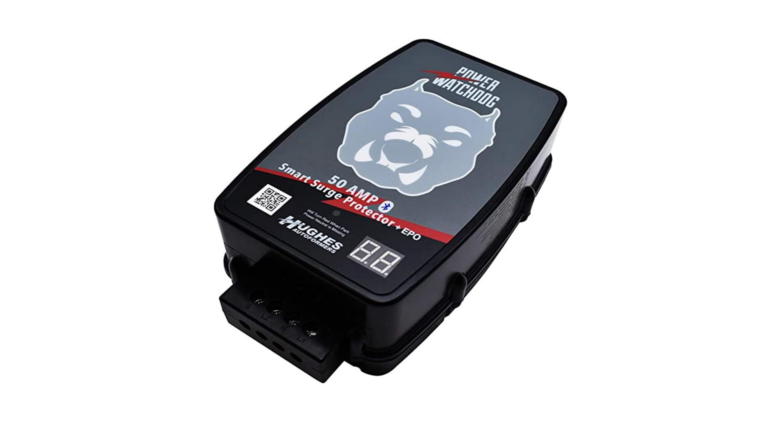
#4. Power Watchdog PWD50 RV Portable Surge Protector — Best for per-leg monitoring nerds
📌 At a Glance
- Best for: 50A RVers who want visibility into what each leg is doing (and like tech-based troubleshooting).
- Owner-reported outcome: Strong (monitoring + protective shutoffs are the repeated “why I kept it” story).
- Confidence score: 7.9/10
Owner signals:
- Per-leg visibility: Positive — Owners specifically value seeing each leg behavior.
- App/Bluetooth friction: Mixed — Pairing/permissions/reconnect quirks show up repeatedly.
- Nuisance shutoffs: Mixed — Some describe repeated shutoffs they can’t explain.
Quick Summary:
Based on aggregated owner experiences discussed in our reviews, this is the “I want visibility” pick: it changes how you camp because you can see what power is doing instead of guessing. The tradeoff is you’re opting into app-based life and occasional troubleshooting.
Key Specifications:
- Amperage: 50A
- Type: Portable unit with app monitoring (2.4 GHz Wi-Fi limitations are discussed in review notes)
The Deep Dive (Why It Ranked Here):
- Owners commonly report the monitoring is the everyday value—especially for troubleshooting without going outside.
- A frequent buyer surprise is how often the “pedestal door won’t close” issue shows up; a short extension cord is a common workaround.
- One pattern that comes up repeatedly is Android pairing issues being solved via location permissions.
- Some owners describe overcurrent-style trips when big loads overlap—many treat it as load management coaching.
- App expectations matter: remote monitoring can be limited by campground Wi-Fi and 2.4 GHz constraints.
- The replaceable-module mindset is repeatedly framed as long-term value.
✅ Why Buy
- Per-leg insight helps you troubleshoot real campground power problems.
- Monitoring supports smarter load management.
- Owners like the replaceable surge component approach.
⛔ Dealbreakers / What to Consider
- If you want zero app involvement, skip this.
- If you need compact fit in every pedestal box, bulk can annoy you.
- If you have no patience for occasional nuisance trips, choose a simpler unit.
Verdict for You:
- 👉 Pick this if: you like visibility and don’t mind tech.
- You camp where power quality is unpredictable.
- You want to understand loads instead of guessing.
- 🛑 Skip this if: you want “dumb simple, always works.”
- You don’t want app troubleshooting.
- You just want a basic plug-in check.
Quick Links:
- 🛒 Check Price on Amazon: https://amzn.to/3YN4rlH
- 📖 Read the full review: https://rvoutfitting.com/power-watchdog-pwd50-review/
#5. 50A Wireless Surge Guard Portable Surge Protector — Inside monitoring without hardwiring
📌 At a Glance
- Best for: RVers who want portable EMS-style protection plus the convenience of monitoring voltage/amps from inside.
- Owner-reported outcome: Strong (refusing bad power + disconnect/reconnect behavior is a repeated story).
- Confidence score: 7.8/10
Owner signals:
- Auto reconnect: Positive — Owners describe disconnects during storms, then restore later.
- Bluetooth friction: Mixed — Pairing reliability varies by owner.
- Heat-at-plug risk: Negative — A few “scary” heat/melt reports are discussed.
Quick Summary:
In real-world use, many users find this hits the sweet spot: portable EMS behavior + inside monitoring. It ranks here because most owners praise the concept and protection behavior, while Bluetooth friction and rare heat reports keep it from the top tier.
Key Specifications:
- Amperage: 50A
- Type: Portable EMS-style unit with wireless/inside monitoring (as discussed in review notes)
The Deep Dive (Why It Ranked Here):
- Owners commonly report it refuses unsafe pedestals and forces a site change (exactly the desired “save”).
- A frequent buyer surprise is the built-in delay/countdown before power flows (owners describe it as protective).
- Bluetooth monitoring is real value when it behaves—especially for watching voltage sag as parks fill up.
- Plug-fit and clearance can matter for some rigs (Airstream/tight inlet mentions appear in owner discussions).
- Heat discipline is a repeated owner recommendation: alignment, no sideways strain, and periodic heat checks.
- If Bluetooth reliability is mission-critical for you, owner experiences suggest you should compare alternatives.
✅ Why Buy
- EMS-style “gatekeeper” behavior without cutting into wiring.
- Monitoring reduces “go outside in the rain” checks.
- Owners use it as insurance for electronics-heavy rigs.
⛔ Dealbreakers / What to Consider
- If you need flawless Bluetooth, skip this.
- If you’re highly sensitive to rare heat/failure stories, consider other designs.
- You still need a theft-prevention plan (portable reality).
Verdict for You:
- 👉 Pick this if: you want portable EMS + inside visibility.
- You camp in older parks or storm-prone areas.
- You want to see voltage/amps without stepping outside.
- 🛑 Skip this if: you want “no wireless headaches ever.”
- You require perfect connectivity.
- You prefer hardwired, theft-proof simplicity.
Quick Links:
- 🛒 Check Price on Amazon: https://amzn.to/49MCvUc
- 📖 Read the full review: https://rvoutfitting.com/50a-wireless-surge-guard-portable-surge-protector-review/
#6. CARMTEK RV Surge Protector — Fast pedestal diagnostics on a budget
📌 At a Glance
- Best for: RVers who want quick pedestal diagnostics + a basic surge layer (and don’t expect full EMS behavior).
- Owner-reported outcome: Moderate (owners strongly praise “is this pedestal safe?” clarity).
- Confidence score: 7.8/10
Owner signals:
- Clear diagnostics: Positive — Owners love quick go/no-go setup clarity.
- Fit/clearance quirks: Mixed — Tight plugs and pedestal fit issues show up.
- Not full EMS: Negative — Buyer confusion is a recurring disappointment theme.
Quick Summary:
From real-world feedback and our review notes, this ranks as the least-friction “setup sanity check” for many people—as long as you’re buying it for what it is. The tradeoff is it’s not the same tool as a true EMS that disconnects for broader conditions.
Key Specifications:
- Versions discussed: 30A and 50A options are discussed in review notes (North America standards context)
The Deep Dive (Why It Ranked Here):
- Owners commonly report it answers the setup question fast: “Is this pedestal safe enough to plug into?”
- A frequent buyer surprise is ordering the wrong amperage; the 30A vs 50A decision matters.
- Fit/security comes up repeatedly: some describe tight insertion or less-than-perfect pedestal stability.
- Weather exposure concerns appear—this tier isn’t described as “forget it in a storm” gear.
- A smaller set of owners report false faults or early failure; most praise is still about simplicity.
- In our review analysis, we consistently saw buyer disappointment tied to expecting EMS-style auto-shutoff.
✅ Why Buy
- Simple, fast diagnostics for pedestal wiring conditions.
- Easy to use every time (which is a hidden “safety feature”).
- Value-tier option when you don’t want premium EMS complexity.
⛔ Dealbreakers / What to Consider
- If you need full EMS shutoff coverage, skip this.
- If pedestal fit issues drive you nuts, consider a higher-tier housing.
- If you camp in constant rain, be cautious about exposure.
Verdict for You:
- 👉 Pick this if: you want the simplest “plug in first, verify” habit.
- You’re newer and want confidence without complexity.
- You mainly want quick wiring-fault warnings.
- 🛑 Skip this if: you’re buying for advanced power management.
- You want broader auto-disconnect behavior.
- You want a display/app that tracks loads.
Quick Links:
- 🛒 Check Price on Amazon: https://amzn.to/49tDn0W
- 📖 Read the full review: https://rvoutfitting.com/carmtek-rv-surge-protector-review/
#7. Kohree RV Surge Protector — “Good enough” value with real caveats
📌 At a Glance
- Best for: Budget-minded RVers who still want voltage monitoring + basic fault detection.
- Owner-reported outcome: Moderate (useful monitoring + some low-voltage shutoff wins; longevity varies).
- Confidence score: 7.4/10
Owner signals:
- Budget value: Positive — Owners repeatedly frame it as strong value for daily use.
- Mixed longevity: Mixed — Some get long use; others report early failure.
- 50A leg nuance: Mixed — Budget 50A monitoring transparency is a recurring discussion.
Quick Summary:
Based on aggregated owner experiences discussed in our reviews, Kohree wins on “I want the ritual: plug in → verify → connect RV” with a bright voltage display—without premium cost. The tradeoff is inconsistent long-term reliability and some 50A nuance.
Key Specifications:
- Versions discussed: 30A (10000J) and 50A (12000J) are explicitly discussed in review notes.
The Deep Dive (Why It Ranked Here):
- Owners commonly report liking the bright voltage display to spot sag during A/C-heavy hours.
- One pattern that comes up repeatedly is this being a “budget step-up” from surge-only devices.
- Mixed longevity is the big limiter: some owners report months to a year+; others report early failures.
- Cover fit depends on plug style; handle-style grips can be a clearance headache.
- A frequent buyer surprise is 50A service monitoring nuance; owners caution against assuming full “lab instrument” clarity.
- Cosmetic durability complaints (faceplate/label peeling) show up repeatedly.
✅ Why Buy
- Strong value when you get a good unit.
- Voltage visibility changes how you manage loads.
- Basic fault detection helps avoid obvious pedestal wiring problems.
⛔ Dealbreakers / What to Consider
- If you’re full-time in older parks constantly, owner stories suggest stepping up tiers.
- If you need rock-solid multi-year reliability, experiences are mixed.
- If you require perfect 50A leg visibility, you may want a higher-end EMS.
Verdict for You:
- 👉 Pick this if: you want meaningful protection without premium spend.
- You camp weekends/seasonally and want voltage monitoring.
- You want a simple, repeatable hookup habit.
- 🛑 Skip this if: your risk tolerance is low.
- You live on shore power full-time.
- You want premium-level consistency.
Quick Links:
- 🛒 Check Price on Amazon: https://amzn.to/4r5pLis
- 📖 Read the full review: https://rvoutfitting.com/kohree-rv-surge-protector-review/
#8. Power Watchdog PWD50EPOH 50A Smart Hardwired Surge Protector — Tech-forward hardwired… with app lottery
📌 At a Glance
- Best for: RVers who want permanent, theft-proof protection and like monitoring power behavior.
- Owner-reported outcome: Moderate (EMS-style shutoff praised; nuisance behavior exists for some).
- Confidence score: 7.6/10
Owner signals:
- Hardwired convenience: Positive — Owners like theft-proof, protected install.
- App/Bluetooth friction: Mixed — Useful data, uneven polish.
- Bright LED: Mixed — Clear status, but many find it obnoxious.
Quick Summary:
In our review analysis, we consistently saw people love the concept: hardwired EMS-style behavior plus monitoring and a replaceable sacrificial component. But the owner-reported tradeoff is real: app experience and occasional odd shutoffs can turn it into a “learn its personality” device.
Key Specifications:
- Amperage: 50A (split-phase context discussed)
- Type: Hardwired with Bluetooth monitoring + replaceable sacrificial surge component (as discussed in review notes)
The Deep Dive (Why It Ranked Here):
- Owners commonly report the hardwired install reduces theft and weather exposure drama.
- A frequent buyer surprise is replaceable sacrificial parts (not replacing the whole unit after an event).
- Bluetooth monitoring helps manage loads; expectations matter (Bluetooth isn’t the internet).
- Bright LED is repeatedly mentioned—many owners use simple covering/tape workarounds.
- A smaller subset describes nuisance shutoffs/odd faults; it can feel like “saved me” or “why again?”
- Support/app experience varies enough that it affects overall confidence.
✅ Why Buy
- Hardwired convenience without leaving gear outside.
- Monitoring is genuinely useful for many owners.
- Replaceable component approach appeals to long-term ownership.
⛔ Dealbreakers / What to Consider
- If you expect flawless app experience, skip this.
- If you hate bright indicators, plan a workaround.
- If nuisance shutoffs would ruin your trips, consider alternatives.
Verdict for You:
- 👉 Pick this if: you want theft-proof protection plus monitoring.
- You like seeing power behavior, not guessing.
- You’re okay with app quirks.
- 🛑 Skip this if: you want “dumb simple, zero tech.”
- You don’t want Bluetooth at all.
- You want ultra-predictable behavior.
Quick Links:
- 🛒 Check Price on Amazon: https://amzn.to/4a0nmzM
- 📖 Read the full review: https://rvoutfitting.com/power-watchdog-pwd50epoh-review/
#9. MILLIONHOME RV Surge Protector — Budget-friendly simplicity, but not for everyone
📌 At a Glance
- Best for: Weekend trips and occasional hookups where you want simple lights + basic surge protection.
- Owner-reported outcome: Moderate (peace-of-mind ritual is common; serious outliers exist).
- Confidence score: 7.6/10
Owner signals:
- Budget value: Positive — Owners like it as “budget insurance” for casual use.
- Weather sensitivity: Negative — The rain cover quality is a repeated complaint.
- Safety outliers: Negative — A few serious reports appear in review notes.
Quick Summary:
From real-world feedback and our review notes, this is “simple and reassuring” for many owners—plug it in, read the lights, then connect your RV. But repeated complaints about the rain cover, early failures, and a few serious outliers mean it lands near the bottom of the list for risk-averse buyers.
Key Specifications:
- 30A vs 50A: Both are discussed at a category level in review notes (and dead-leg detection on 50A hookups is mentioned as a practical win).
The Deep Dive (Why It Ranked Here):
- Owners commonly report it’s easy to use and supports a safer setup habit (pedestal-first sequence).
- The rain cover is the biggest repeated complaint: “feels cheap,” breaks, or doesn’t seal as expected.
- A small cluster reports early failure (no lights / stopped working).
- A few serious outliers raise safety concerns; this heavily affects who it’s appropriate for.
- Theft prevention is on you (portable reality).
- Tight plug fit is mentioned, especially early on.
✅ Why Buy
- Simple setup with clear indicator lights.
- Budget-friendly for occasional use.
- Helps you adopt a consistent “verify first” routine.
⛔ Dealbreakers / What to Consider
- If you want higher confidence for full-time shore power, skip this.
- If you camp in heavy rain frequently, cover complaints matter.
- If you’re risk-averse, the outlier stories may be enough to move up-tier.
Verdict for You:
- 👉 Pick this if: you’re a casual camper who wants basic peace of mind.
- You use it mainly on weekend trips.
- You want simple, fast setup cues.
- 🛑 Skip this if: you want higher-trust protection behavior.
- You camp in older parks constantly.
- You want EMS-style shutoff and monitoring.
Quick Links:
- 🛒 Check Price on Amazon: https://amzn.to/3LAbqeQ
- 📖 Read the full review: https://rvoutfitting.com/millionhome-rv-surge-protector-review/
#10. GEARGO RV Surge Protectors — Budget-friendly… but too many “why is it doing that?” moments
📌 At a Glance
- Best for: Warm-weather weekenders who want a simple plug-in check + basic surge protection at a reasonable price.
- Owner-reported outcome: Mixed (basic function is liked, but frustration patterns are common).
- Confidence score: 6.2/10
Owner signals:
- Cold-temp errors: Negative — Cold weather error codes/shutdowns are a repeated complaint.
- Mixed longevity: Negative — Reliability experiences vary widely.
- Fit/clearance quirks: Mixed — Physical fit/handling complaints appear.
Quick Summary:
Based on aggregated owner experiences discussed in our reviews, this sits at #10 because the “budget basic” appeal is real—until you hit recurring complaints that create friction (especially temperature-related errors and inconsistent reliability).
Key Specifications:
- 30A and 50A variants are discussed in review notes (category-level coverage).
The Deep Dive (Why It Ranked Here):
- Owners commonly report it as a simple plug-in pedestal check that’s easy to understand.
- A frequent buyer surprise is cold-weather behavior causing error codes or shutdowns.
- Mixed reliability stories show up repeatedly, which lowers trust for frequent travelers.
- Some owners report confusing behavior that feels like the protector becomes the problem.
- For warm-weather occasional use, some still find it acceptable for the price.
- For frequent hookups in varied conditions, owners repeatedly recommend stepping up tiers.
✅ Why Buy
- Budget entry point to basic pedestal checking habits.
- Simple operation (when it behaves normally).
- Works for some as a casual-use tool.
⛔ Dealbreakers / What to Consider
- If you camp in cooler temperatures, skip this (error-code complaints matter).
- If you want consistent reliability, owner feedback is not reassuring.
- If you want EMS-style protection behavior, choose a different tier.
Verdict for You:
- 👉 Pick this if: you’re a fair-weather weekender and want basic checks.
- You camp in warmer conditions.
- You mainly want a simple “sanity check.”
- 🛑 Skip this if: you’re a frequent traveler with low tolerance for friction.
- You camp in cold weather.
- You want higher-trust protection behavior.
Quick Links:
- 🛒 Check Price on Amazon: https://amzn.to/3Zk7eCW
- 📖 Read the full review: https://rvoutfitting.com/geargo-rv-surge-protector-review/
7) Buying Guide: How to Avoid a Bad Purchase
Surge-only vs EMS-style “gatekeeper”
- Across our individual reviews, a recurring theme is buyers regretting a surge-only device when they expected auto shutoff for low voltage or miswiring.
- Owners commonly report the most valuable moments are boring ones: bad pedestal wiring and voltage sag, not lightning.
- If your goal is “disconnect when power gets unsafe,” prioritize models owners describe as EMS-style (portable or hardwired).
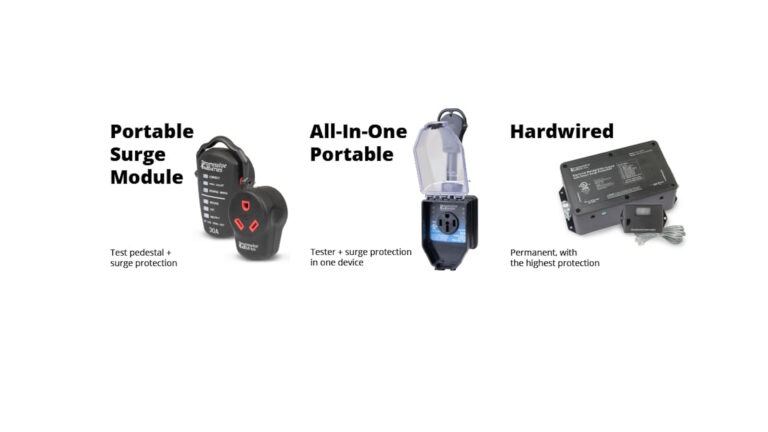
Portable vs hardwired isn’t just preference
- In our review analysis, we consistently saw portable units win on flexibility—but they add two realities: theft risk and weather exposure.
- Hardwired units reduce “setup steps” and “forgot it at the pedestal” mistakes.
- If you swap rigs or want transferable protection, portable is logical—just plan security and placement.
Monitoring can be a superpower (or a headache)
- Owners commonly report displays and per-leg visibility help them stop guessing about load issues.
- Bluetooth/app monitoring is loved when it works smoothly, but multiple reviews describe pairing/app friction.
- If you hate troubleshooting apps, a solid display-only unit can be the happier long-term choice.
Fitment and connection habits matter more than people think
- A frequent buyer surprise is pedestal box clearance: bulky bodies, cover flaps, and handle-style grips can collide.
- Owners repeatedly mention a “support the connection” habit—avoid letting heavy cords hang or sit in wet grass.
- If you’ve got tight-clearance inlets or unique cord geometry, test fit before your first big trip.
Weather and heat discipline is part of the purchase
- From real-world feedback and our review notes, moisture exposure and water intrusion complaints show up across multiple portable units.
- Owners commonly report the simplest safety habit: do a quick heat check after 15–30 minutes under load.
- If you camp in storms or constant rain, treat “outdoor gear placement” as mandatory—not optional.
Support and reliability patterns are real signals
- One pattern that comes up repeatedly is “electronics in harsh environments” means even popular models can have failures.
- If you’re full-time or constantly in older parks, buyers repeatedly lean toward higher-trust tiers.
- If your risk tolerance is low, don’t optimize for cheapest—optimize for consistency and clear diagnostics.
Week-One Testing Checklist
- Turn OFF the pedestal breaker before plugging anything in.
- Plug the protector in first and confirm it reports a normal/safe status before connecting your RV.
- If the unit uses a delay/countdown, let it complete—don’t assume it failed early.
- Connect your RV cord and ensure the connection is straight and not under sideways strain.
- Run a basic load test (A/C or another meaningful load) and watch for stable status.
- After 15–30 minutes under load, carefully check for unusual warmth at the plug/connection.
- If your model has monitoring (display/app), confirm you can read voltage/amps consistently.
- Flip the pedestal breaker off/on once to confirm the unit’s reconnect behavior matches expectations.
Go Deeper:
- Read the full RV Surge Protector & EMS buying guide — If you want a deeper “portable vs hardwired vs feature set” decision flow, it lays it out clearly.
8) FAQ
1) Do you actually need an EMS, or is a surge protector enough?
Owners commonly report the most expensive problems come from low voltage and miswired pedestals, not dramatic lightning events. If you want auto shutoff behavior for unsafe power, many users find EMS-style units fit that goal better.
2) Portable or hardwired—what do owners prefer long-term?
Based on aggregated owner experiences discussed in our reviews, portable is praised for flexibility, while hardwired is praised for “always-on, theft-proof, nothing to forget.”
3) What’s the #1 mistake people make with these?
A frequent buyer surprise is how much problems come from the connection chain: worn adapters, loose cords, poor strain relief, or leaving the unit sitting in wet conditions.
4) Why do some units trip when appliances start?
Owners commonly report overlap of high-draw loads can trigger trips—especially when power is limited or voltage is sagging. Many treat it as load management feedback rather than a defect.
5) Is Bluetooth/app monitoring worth it?
In real-world use, many users find monitoring is genuinely helpful—when it works smoothly. The tradeoff is that multiple products have owner-reported pairing/app friction.
6) Can you use a 50A protector on a 30A hookup with an adapter?
Some owners describe doing this, but your available power remains limited by the pedestal. The protection device doesn’t increase your amperage—it only monitors/protects.
7) How “weatherproof” are these really?
Owners are split. Many use them outdoors without drama, while a meaningful number report water sensitivity depending on hanging/orientation and exposure.
8) What should you do if you see an “open ground” warning?
From real-world feedback and our review notes, owners treat it as a “stop and verify” signal: retest, try a different pedestal, and involve campground staff rather than forcing the connection.
9) Final Verdict & Quick Links
- Best overall: Progressive Industries EMS-HW50C
- Best value: Kohree RV Surge Protector
- Best for 50A rigs wanting phone monitoring: Power Watchdog PWD50
Check Price on Amazon for the Progressive Industries EMS-HW50C.