10 Best RV TPMS in 2026 — Ranked by Real Owner Outcomes
Freshness / Update Log
Last updated: February 2026
- Re-checked owner feedback patterns through early 2026 across all 10 products
- Updated confidence scores based on recurring reliability and setup themes
- Verified signal range performance claims against fifth wheel and travel trailer owner reports
- Cross-referenced valve stem compatibility warnings that recur across multiple systems
You’re cruising down the interstate with your fifth wheel in tow when you hear it: that sickening thump-thump-thump. By the time you pull over, the tire is shredded, your wheel well looks like a warzone, and you’re staring at a repair bill that could have bought three TPMS systems. The worst part? That tire was probably losing pressure for the last hour. You just didn’t know it.
In our review analysis, we consistently saw this exact scenario—and the aftermath—drive RVers to finally invest in tire pressure monitoring. The question isn’t whether you need a TPMS. It’s which one will actually warn you before disaster strikes.
How we reviewed: We compiled this ranking from our individual product reviews, prioritizing real-world patterns: what consistently works, what frustrates owners, and what matters for long-term value.
Methodology snapshot: 10 individual reviews covering approximately 1,500+ aggregated owner experiences spanning 2019–2026, with heavier weighting toward 2024–2026 feedback.
Confidence score rubric: 9+ = very consistent positives; 8–8.9 = strong with manageable tradeoffs; 7–7.9 = good but variance matters; <7 = niche fit/higher downside.
What you’ll learn: How to match your rig to the right TPMS, which systems excel at catching slow leaks versus sudden failures, and how to avoid the setup mistakes that frustrate first-time buyers.
Affiliate Disclosure: This article contains affiliate links. If you purchase through these links, we may earn a small commission at no extra cost to you.
Quick Verdict
| Award | Product (Amazon linked) | Best For… | Quick Reason |
|---|---|---|---|
| 🥇 Best Overall | TireMinder i10 | Travel trailers & fifth wheels wanting proven reliability | Rock-solid signal when booster is placed well; responsive support |
| 💰 Best Value | Tymate M7-3 | Budget-conscious owners needing basic protection | “Cheap insurance” that has genuinely saved trips |
| 💎 Best Premium | TST 507 | Owners who want the best accuracy and flow-through convenience | Readings consistently match calibrated gauges; excellent reputation |
| ⚡ Best for Long Rigs | TireMinder i10 | Fifth wheels over 35 feet | Signal booster makes long-combination monitoring reliable |
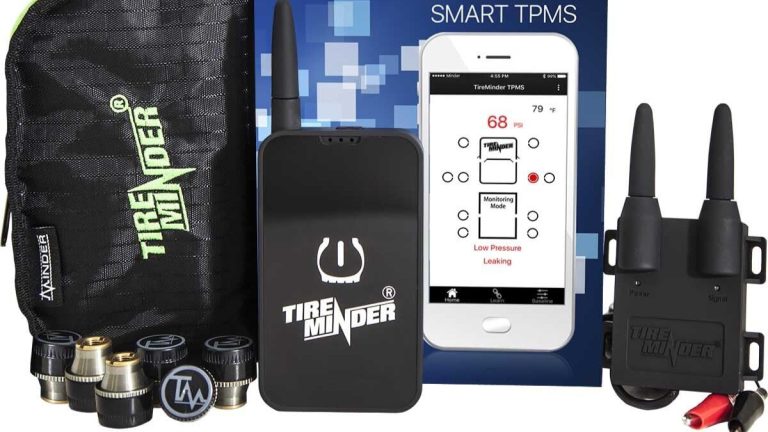
| ⭐ Best for Smartphone Users | TireMinder Smart | Tech-forward RVers wanting app-based monitoring | CarPlay integration; no extra dash display |
| 🎯 Best for Multi-Trailer Owners | GUTA Trailer TPMS | RVers who tow different trailers | Stores 3 trailer configurations without reprogramming |
Decision + Fix
Issue-Tag Box
| Issue Tag | What It Usually Means | First Fix / First Check |
|---|---|---|
| 🏷️ SIGNAL-DROPOUT | Rear tires vanish from display | Move monitor location; add/reposition booster |
| 🏷️ SYNC-DELAY | System takes minutes to connect | Turn on display 10+ minutes before departure |
| 🏷️ STEM-LEAK | Air loss after sensor install | Remove/re-seat sensor; upgrade to metal stems |
| 🏷️ GLARE-ISSUE | Display unreadable in sunlight | Reposition mount to shaded area; rely on alarms |
| 🏷️ FALSE-ALARM | Alerts on cold mornings | Adjust thresholds for temperature-related pressure changes |
| 🏷️ SENSOR-DOA | Sensor won’t pair or read | Replace battery; contact support within return window |
| 🏷️ CAP-REGRET | Chose cap sensors; wished for flow-through | Consider upgrading to flow-through kit |
| 🏷️ REPEATER-DRAIN | Hardwired booster drains battery when parked | Add inline switch or disconnect between trips |
Decision Tree
- If your rig is under 30 feet → Most systems work without a booster; Tymate M7-3 or Hieha offer good value
- If towing a fifth wheel over 35 feet → TireMinder i10 or TST 507 with repeater properly installed
- If you want smartphone-only monitoring → TireMinder Smart TPMS with CarPlay support
- If you tow multiple trailers → GUTA’s multi-trailer memory saves reprogramming hassle
- If you have rubber valve stems → Upgrade to metal before installing ANY external TPMS (skip this and expect problems)
- If you need guaranteed signal-loss alerts → Consider premium systems; budget units often show stale data silently
- If daytime display visibility is critical → Budget TPMS displays all struggle here; premium color displays do better
- If budget is tight but you need protection → Tymate M7-3 or Tymate TM2 offer reasonable entry points
Troubleshooting Quickflow
Flow 1: Sensor Not Reading
- Symptom: One tire shows “—” or doesn’t populate
- Check battery: Replace CR1632/CR2032 with fresh cell
- Re-pair sensor using manual sequence
- Verify sensor is tight on valve stem (listen for brief hiss)
- Move sensor to different wheel to test if sensor or position issue
- Return-window escalation: If still failing after battery swap and re-pair, contact seller immediately—don’t wait
Flow 2: Signal Dropping Intermittently
- Symptom: Tires appear then vanish, especially rear tires
- Move monitor closer to rear of cab
- Keep monitor away from other electronics/screens
- Add booster/repeater if not already installed
- Verify booster has stable 12V power when driving
- Return-window escalation: If dropouts persist with booster properly installed, system may not fit your rig’s signal path
Quick Decision Matrix
- Need proven reliability for fifth wheels → Go to #1 TireMinder i10
- Want best accuracy + flow-through convenience → Go to #2 TST 507
- Need smartphone/CarPlay integration → Go to #3 TireMinder Smart
- Budget under $100 for basic protection → Go to #4 Tymate M7-3
- Tow multiple trailers → Go to #6 GUTA Trailer TPMS
- Want larger display size → Go to #7 Hieha TPMS
- Need expandability to 17+ tires → Go to #8 Vesafe Wireless
Comparison Table
| Product (Amazon linked) | Best For | Owner-Reported Outcome | What Owners Liked | Common Complaints / Tradeoff | Owner Signals | Confidence Score |
|---|---|---|---|---|---|---|
| TireMinder i10 | Fifth wheels & long trailers | Strong | Fast leak detection; rock-solid with booster | Display/mount durability; valve stem compatibility | Signal stability: Positive; Support: Positive | 8.3/10 |
| TST 507 | Premium accuracy seekers | Strong | Readings match calibrated gauges; flow-through option | Setup learning curve; sync delay | Accuracy: Positive; Build quality: Positive | 8.2/10 |
| TireMinder Smart | Smartphone-centric RVers | Strong | CarPlay integration; no extra display | False alarms; baseline adjustment needed | App convenience: Positive; Support: Positive | 8.0/10 |
| Tymate M7-3 | Budget-conscious owners | Moderate | “Cheap insurance”; solar charging works | Display can blank in heat; range limits | Value: Positive; Setup: Moderate | 8.0/10 |
| Vesafe Wireless | Expandable configurations | Moderate | Excellent customer service; expandable to 17 tires | Programming frustration; display sunlight visibility | Support: Positive; Setup: Mixed | 7.8/10 |
| GUTA Trailer TPMS | Multi-trailer owners | Moderate | Multi-trailer memory; long display battery life | Sensor weight destroys rubber stems; display visibility | Value: Positive; Durability: Mixed | 7.4/10 |
| Hieha TPMS | Large display preference | Moderate | Solar charging genuinely works; large screen | No signal-loss alert; polarized sunglasses issue | Display size: Positive; Reliability: Mixed | 7.8/10 |
| Tymate M12-3 | Travel trailer owners under 85 PSI | Moderate | Leak detection when working | PSI ceiling excludes some RVs; stale data issue | Value: Positive; Limitations: Moderate | 7.8/10 |
| Tymate TM2 | Basic tow vehicle + trailer | Moderate | Simple install; solar charging | Dim screen; signal dropouts on longer rigs | Entry-level: Positive; Range: Mixed | 7.4/10 |
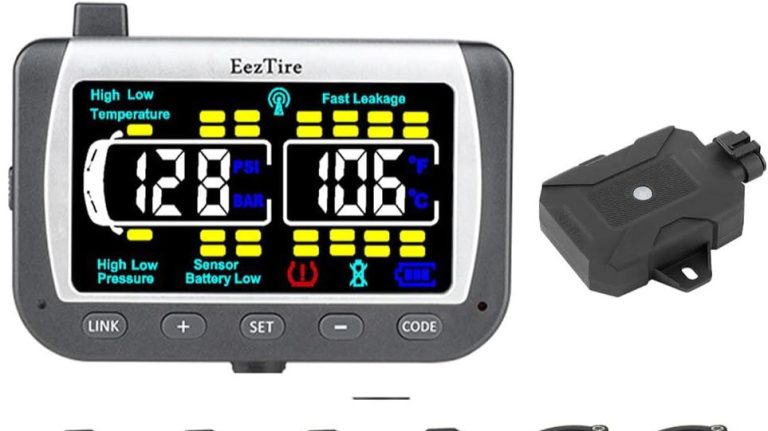
| EEZTire TPMS12MixCB | Flow-through sensor preference | Moderate | Catches leaks early; adjustable thresholds | Signal stability depends on placement; lock collar hassle | Peace of mind: Positive; Setup: Mixed | 7.4/10 |
Tip: Click a Confidence Score to see the full review and scoring context.
Detailed Product Reviews
#1. TireMinder i10 RV TPMS — The Fifth-Wheel Favorite
📌 At a Glance
- Best for: Fifth wheels and longer travel trailers wanting proven signal reliability
- Owner-reported outcome: Strong
- Confidence score: 8.3/10
Signature (from review notes):
- Failure signature: Monitor mount letting go; display cracked from falls
- Install friction: Moderate
- Downside risk: Low when booster placed correctly
Owner signals:
- Signal stability: Positive — “Rock solid once booster is in a smart spot”
- Valve stem sensitivity: Mixed — Rubber stem failures repeatedly reported
- Support responsiveness: Positive — Quick replacements mentioned
Quick Summary: Owners towing fifth wheels and longer travel trailers often describe the i10 as the first system that feels “set it and forget it” once dialed in. The booster placement matters significantly for consistent rear-tire readings.
The Deep Dive (Why It Ranked Here):
- Multiple owners credit fast leak detection with preventing major trailer damage
- Signal booster dramatically improves reliability on rigs over 35 feet
- Temperature monitoring catches brake and bearing issues, not just pressure
- Well-written manual praised as beginner-friendly (unusual for TPMS)
- Several owners specifically mention named support reps who resolved issues quickly
- Display visibility in bright sun is a common complaint, but alarms work independently
- Valve stem compatibility is the biggest “gotcha”—metal stems strongly recommended
✅ Why Buy
- Consistent “peace of mind” reports across years of feedback
- Booster makes long-combination monitoring genuinely reliable
- Customer support praised for quick replacements
- Temperature monitoring adds bearing/brake visibility
- External sensors are quick to install and replaceable
⛔ Dealbreakers / What to Consider
- Rubber valve stems + sensor weight = repeated failure reports
- Display mount has durability concerns; cracked screens mentioned
- If you need perfect daytime display visibility, this is a common pain point
- If you have rubber stems and refuse to upgrade, skip this
Verdict for You:
- 👉 Pick this if:
- You tow a fifth wheel or longer trailer
- You’re willing to place the booster thoughtfully
- 🛑 Skip this if:
- You need crystal-clear daytime display visibility
- You’re on rubber valve stems and won’t upgrade
Quick Links:
- 🛒 Check Price on Amazon: TireMinder i10
- 📖 Read the full review: TireMinder i10 Review
#2. TST 507 Tire Pressure Monitoring System — The Accuracy Standard
📌 At a Glance
- Best for: Owners who want the best accuracy and flow-through sensor convenience
- Owner-reported outcome: Strong
- Confidence score: 8.2/10
Signature (from review notes):
- Failure signature: Setup confusion due to unclear instructions
- Install friction: Moderate (video tutorials practically required)
- Downside risk: Low once configured
Owner signals:
- Accuracy: Positive — Readings consistently match or beat handheld gauges
- Flow-through convenience: Positive — Game-changer for tire pressure adjustments
- Setup complexity: Mixed — Written instructions confuse many; video needed
Quick Summary: The TST 507 delivers meaningful value for most RVers who understand what it is—an early warning system for developing problems, not a real-time blowout detector. Owners consistently report readings within a few PSI of calibrated gauges.
The Deep Dive (Why It Ranked Here):
- Numerous “saved my trailer” stories describe early warning for slow leaks and punctures
- Flow-through sensors let you check and adjust pressure without removing sensors
- Customizable high/low thresholds for each tire position
- Signal range excellent when repeater properly installed
- Sync delay after power-on is normal (several minutes)—not a defect
- 507 series display struggles in bright sunlight; 770 touchscreen handles glare better
- Repeater battery drain concern when parked—consider adding inline switch
✅ Why Buy
- Pressure readings that owners trust against quality gauges
- Flow-through sensors eliminate the cap-removal frustration
- Expandable for multi-axle rigs and spare tires
- Signal repeater dramatically improves long-rig reliability
- Multiple mounting options for display
⛔ Dealbreakers / What to Consider
- Setup requires patience and video tutorials
- Premium price point isn’t for everyone
- Display struggles in direct sunlight (507 series)
- Catastrophic failure detection is limited—sensor ejection may not trigger alert
Verdict for You:
- 👉 Pick this if:
- Accuracy matters and you want readings you can trust
- You’ll invest time in proper setup
- 🛑 Skip this if:
- You expect plug-and-play simplicity
- Budget is your primary constraint
Quick Links:
- 🛒 Check Price on Amazon: TST 507
- 📖 Read the full review: TST 507 Review
#3. TireMinder Smart TPMS — The Smartphone Solution
📌 At a Glance
- Best for: Tech-forward RVers who want tire data on their phone or CarPlay
- Owner-reported outcome: Strong
- Confidence score: 8.0/10
Signature (from review notes):
- Failure signature: False high-pressure alerts after tires warm up
- Install friction: Easy to Moderate
- Downside risk: Moderate (baseline tuning required)
Owner signals:
- App integration: Positive — CarPlay support is a genuine quality-of-life upgrade
- False alarm frequency: Mixed — Tight thresholds + warm tires = repetitive alerts
- Support experience: Positive — Replacements sent quickly, even out of warranty
Quick Summary: TireMinder Smart TPMS eliminates the extra dashboard display by putting tire data on your phone or CarPlay screen. When baselines are properly set, owners describe genuine “saved my RV” moments. The learning curve is in understanding how to configure thresholds.
The Deep Dive (Why It Ranked Here):
- Multiple reports of catching rapid leaks and nails/screws early
- Temperature monitoring helps understand tire behavior on grades and in heat
- CarPlay integration praised by iPhone users
- Support culture stands out—named reps sending replacements proactively
- App can feel dated; font sizes too small for some older eyes
- Booster essentially mandatory for anything beyond tiny trailers
- Brass transmitters + aluminum stems = potential galvanic corrosion concern
✅ Why Buy
- No extra display cluttering the dash
- CarPlay support for integrated viewing
- Strong customer support culture
- Real-world safety wins documented repeatedly
- Works across trucks, RVs, toads, and dollies with one system
⛔ Dealbreakers / What to Consider
- Relying on phone for safety-critical info bothers some owners
- False alerts can erode trust if thresholds aren’t adjusted
- App hasn’t always kept pace with Android updates
- If you hate apps for safety functions, skip this
Verdict for You:
- 👉 Pick this if:
- You want tire data on your phone or CarPlay
- You’re willing to adjust baselines to reduce false alarms
- 🛑 Skip this if:
- You prefer a dedicated display that’s always on
- You get anxious with any false alerts
Quick Links:
- 🛒 Check Price on Amazon: TireMinder Smart
- 📖 Read the full review: TireMinder Smart Review
#4. Tymate M7-3 RV TPMS — The Budget Champion
📌 At a Glance
- Best for: Budget-conscious RVers wanting “cheap insurance” that works
- Owner-reported outcome: Moderate to Strong
- Confidence score: 8.0/10
Signature (from review notes):
- Failure signature: Display LCD blanking or going black on hot dashboards
- Install friction: Easy
- Downside risk: Moderate (range/display limitations)
Owner signals:
- Value perception: Positive — “Peace of mind per dollar” is a recurring theme
- Solar charging: Positive — Rarely need to plug it in
- Range consistency: Mixed — Longer rigs may need repeater
Quick Summary: Owners repeatedly describe the M7-3 as “cheap insurance” that has already paid for itself by catching leaks, bulging sidewalls, and overheating tires. For small-to-mid-size trailers, it hits a practical sweet spot between price and protection.
The Deep Dive (Why It Ranked Here):
- Numerous “saved my trip” stories involving slow leaks caught early
- Temperature monitoring catches problems pressure alone might miss
- Solar-charging display works—owners report months without plugging in
- External sensors add weight to stems; metal stems recommended
- Display can temporarily wash out or go black on very hot dashboards
- Longer combinations may need the optional repeater
- Alarm thresholds are customizable on older versions; newer “auto-baseline” units feel locked down
✅ Why Buy
- Excellent value for basic tire monitoring
- Solar charging genuinely reduces hassle
- Easy install for most standard setups
- Catches the slow-leak scenarios that matter most
- User-configurable alarms on many units
⛔ Dealbreakers / What to Consider
- Display battery is internal and not easily user-replaceable long-term
- Screen can struggle in extreme dashboard heat
- Won’t catch every catastrophic failure instantly
- If you need premium signal range without a repeater, skip this
Verdict for You:
- 👉 Pick this if:
- You tow a small-to-mid-size trailer
- Budget matters and you want solid baseline protection
- 🛑 Skip this if:
- You drive a long Class A or tow a very long fifth wheel
- You need a display that handles extreme dash heat
Quick Links:
- 🛒 Check Price on Amazon: Tymate M7-3
- 📖 Read the full review: Tymate M7-3 Review
#5. Vesafe Wireless TPMS — The Support Standout
📌 At a Glance
- Best for: Owners who value responsive customer service and expandability
- Owner-reported outcome: Moderate
- Confidence score: 7.8/10
Signature (from review notes):
- Failure signature: Programming sequence frustration
- Install friction: Moderate (patience required)
- Downside risk: Low with proper setup
Owner signals:
- Customer service: Positive — Free replacement parts even outside warranty
- Expandability: Positive — Handles up to 17 sensors
- Setup learning curve: Mixed — Instructions frustrate many first-timers
Quick Summary: The Vesafe earns its ranking primarily through exceptional customer service and genuine expandability. Owners who push through programming frustration describe it as reliable once configured. The support team has a reputation for making things right.
The Deep Dive (Why It Ranked Here):
- Temperature monitoring caught stuck brakes and failing bearings for some owners
- Customer service praised by name—”Aileen” mentioned repeatedly for quick help
- Expandable to 17 tires for complex motorhome + toad + dolly setups
- Programming frustrates many—watch videos, take your time
- Display cycles through tires one at a time, not all simultaneously
- Signal repeater option available for longer rigs
- Email-only support (no phone) is a limitation for some
✅ Why Buy
- Genuinely responsive customer service
- Expandable to complex multi-vehicle configurations
- Free replacements sent even outside warranty windows
- Rechargeable display lasts multiple days
- Temperature monitoring adds safety layer
⛔ Dealbreakers / What to Consider
- Programming learning curve is real
- No phone support—email only
- Display difficult to read in bright sunlight
- If you need zero setup patience, skip this
Verdict for You:
- 👉 Pick this if:
- Customer service backup matters to you
- You have a complex setup needing 10+ tire monitoring
- 🛑 Skip this if:
- You have zero patience for programming
- You need immediate phone support
Quick Links:
- 🛒 Check Price on Amazon: Vesafe Wireless
- 📖 Read the full review: Vesafe Review
#6. GUTA Trailer TPMS — The Multi-Trailer Memory
📌 At a Glance
- Best for: RVers who tow different trailers and need configuration memory
- Owner-reported outcome: Moderate
- Confidence score: 7.4/10
Signature (from review notes):
- Failure signature: Sensor weight destroying rubber valve stems
- Install friction: Moderate
- Downside risk: Medium (stem compatibility critical)
Owner signals:
- Multi-trailer memory: Positive — Switch between 3 trailer configs without reprogramming
- Display battery: Positive — Weeks between charges
- Valve stem compatibility: Negative — Rubber stem failures documented repeatedly
Quick Summary: The GUTA’s standout feature is storing up to 3 trailer configurations—swap trailers without full reprogramming. But the valve stem warning is serious: multiple owners report stem failures from sensor weight, sometimes losing multiple tires on a single trip.
The Deep Dive (Why It Ranked Here):
- Verified cases of catching slow leaks and overheating before blowouts
- Multi-trailer memory is genuine standout for owners who tow different rigs
- Display battery life is excellent—weeks between charges
- Temperature monitoring catches belt separation while pressure remains normal
- Display nearly impossible to read in direct sunlight
- 2024 frequency change makes older sensors incompatible with newer monitors
- Periodic polling means sudden failures may show cached “normal” data
✅ Why Buy
- Multi-trailer memory eliminates constant reprogramming
- Long display battery life
- Temperature monitoring catches non-pressure problems
- Significantly cheaper than premium brands
- Repeater included for longer rigs
⛔ Dealbreakers / What to Consider
- CRITICAL: Sensor weight destroys rubber valve stems—upgrade to metal first
- Display visibility in daylight is genuinely poor
- Polling delays mean it’s a slow-leak detector, not blowout preventer
- If you refuse to upgrade rubber stems, skip this entirely
Verdict for You:
- 👉 Pick this if:
- You tow multiple trailers and want config memory
- You have (or will get) metal valve stems
- 🛑 Skip this if:
- You have rubber stems and won’t upgrade
- Daytime display visibility is critical
Quick Links:
- 🛒 Check Price on Amazon: GUTA Trailer TPMS
- 📖 Read the full review: GUTA Review
#7. Hieha TPMS — The Large Display Option
📌 At a Glance
- Best for: Owners who prioritize a big, readable display
- Owner-reported outcome: Moderate
- Confidence score: 7.8/10
Signature (from review notes):
- Failure signature: Display showing stale data after sensor loss (no connection-loss alert)
- Install friction: Easy
- Downside risk: Medium (silent sensor dropout concern)
Owner signals:
- Display size: Positive — Genuinely big; older eyes appreciate it
- Solar charging: Positive — Actually delivers on the promise
- Signal-loss alerts: Negative — System does NOT warn when sensor stops transmitting
Quick Summary: The Hieha’s large display and working solar charging earn genuine praise. The critical gap: it doesn’t alert you when a sensor stops communicating—it just shows stale data, which can create dangerous false confidence.
The Deep Dive (Why It Ranked Here):
- Large display appreciated for quick glances and older eyes
- Solar charging works—owners report multi-thousand-mile trips without plugging in
- High PSI support works for heavy-duty trailer applications
- Customer service responds fast with replacements within warranty
- Critical flaw: No warning when sensor connection lost—display shows phantom readings
- Polarized sunglasses make screen invisible (common complaint)
- Pre-programmed sensors reduce setup friction
✅ Why Buy
- Genuinely large, readable display
- Solar charging that actually works
- High PSI support for trailer tires
- Fast customer service responses
- Pre-programmed sensors simplify setup
⛔ Dealbreakers / What to Consider
- No signal-loss alert is a serious safety gap
- Polarized sunglasses render screen invisible
- Some owners report complete system failures
- If you need guaranteed signal-loss warnings, skip this
Verdict for You:
- 👉 Pick this if:
- Large display size matters
- You understand the signal-loss limitation
- 🛑 Skip this if:
- You wear polarized sunglasses while driving
- You need alerts when sensors stop transmitting
Quick Links:
- 🛒 Check Price on Amazon: Hieha TPMS
- 📖 Read the full review: Hieha Review
#8. Tymate M12-3 RV TPMS — The Travel Trailer Fit
📌 At a Glance
- Best for: Travel trailer owners with tires under 85 PSI
- Owner-reported outcome: Moderate
- Confidence score: 7.8/10
Signature (from review notes):
- Failure signature: Display showing stale readings when sensor communication fails
- Install friction: Moderate
- Downside risk: Medium (PSI limits and stale data concern)
Owner signals:
- Value for travel trailers: Positive — Good fit for typical trailer applications
- Display readability: Negative — Notoriously difficult in daylight
- PSI limitation: Negative — Won’t work for Class A motorhomes (100+ PSI)
Quick Summary: The M12-3 delivers value for travel trailer owners with standard tire pressures. The PSI ceiling excludes many motorhome applications, and the stale-data issue when sensors disconnect is a recurring concern across Tymate models.
The Deep Dive (Why It Ranked Here):
- Owners credit it with alerting to slow leaks before damage
- Works well for short-to-medium trailers under 30 feet
- Signal repeater helps with longer setups
- Display hard to read in daylight—common across budget TPMS
- PSI ceiling (85-87 PSI) excludes Class A motorhomes
- Shows stale data without alerting when sensor communication fails
- Dually configurations need clearance verification before purchase
✅ Why Buy
- Solid value for travel trailer applications
- Catches slow leaks and developing problems
- Expandable with additional sensors
- Works for truck + trailer combinations
- Signal repeater available
⛔ Dealbreakers / What to Consider
- PSI ceiling excludes motorhomes with high-pressure tires
- Display visibility in daylight is poor
- No warning when sensor communication lost
- If you drive a Class A motorhome, skip this
Verdict for You:
- 👉 Pick this if:
- You tow a travel trailer with standard tire pressures
- You’ll verify proper installation during return window
- 🛑 Skip this if:
- Your tires require over 90 PSI
- You need guaranteed signal-loss alerts
Quick Links:
- 🛒 Check Price on Amazon: Tymate M12-3
- 📖 Read the full review: Tymate M12-3 Review
#9. Tymate TM2 RV TPMS — The Entry-Level Option
📌 At a Glance
- Best for: Basic tire visibility on shorter tow setups
- Owner-reported outcome: Moderate
- Confidence score: 7.4/10
Signature (from review notes):
- Failure signature: Signal dropouts on longer tow setups
- Install friction: Easy
- Downside risk: Medium (range limitations)
Owner signals:
- Entry-level value: Positive — Simple install, solar charging works
- Display visibility: Negative — Dim and small in bright sunlight
- Range consistency: Mixed — Longer rigs frequently need booster
Quick Summary: The TM2 works for owners who want basic pressure + temperature visibility without premium pricing. Signal dropouts on longer setups are the recurring frustration—plan for a booster if you’re towing anything substantial.
The Deep Dive (Why It Ranked Here):
- Simple cap-style sensor install praised repeatedly
- Solar charging keeps display powered without wiring hassle
- “Saved my trip” stories exist but less frequent than premium systems
- Screen is dim and small—bright daylight is problematic
- Signal consistency drops on longer tow setups
- Valve stem concerns (leaks, stress, seizing) appear repeatedly
- Startup delay before all sensors show is normal behavior
✅ Why Buy
- Affordable entry into tire monitoring
- Solar charging reduces cable clutter
- Simple install for basic setups
- Pressure + temperature on one display
- Works for shorter tow configurations
⛔ Dealbreakers / What to Consider
- Dim screen is a consistent complaint
- Signal dropouts on longer rigs
- Valve stem stress concerns with rubber stems
- If you tow a long fifth wheel, skip this
Verdict for You:
- 👉 Pick this if:
- Budget is tight and you need basic protection
- Your rig is under 25-30 feet total
- 🛑 Skip this if:
- You tow a long trailer or fifth wheel
- Daytime display visibility matters
Quick Links:
- 🛒 Check Price on Amazon: Tymate TM2
- 📖 Read the full review: Tymate TM2 Review
#10. EEZTire TPMS12MixCB — The Flow-Through Specialist
📌 At a Glance
- Best for: Owners wanting flow-through sensor convenience
- Owner-reported outcome: Moderate
- Confidence score: 7.4/10
Signature (from review notes):
- Failure signature: Leak/fitment issues when mixing flow-through sensors with valve extenders
- Install friction: Moderate
- Downside risk: Medium (fitment-dependent)
Owner signals:
- Flow-through convenience: Positive — Add air without removing sensors
- Signal stability: Mixed — Depends heavily on rig length and placement
- Lock collar hassle: Negative — Anti-theft hardware slows airing up
Quick Summary: The EEZTire offers flow-through convenience for owners who check tire pressure regularly—add air without removing sensors. Signal stability depends heavily on your rig and booster placement, and the lock collar hardware frustrates some owners.
The Deep Dive (Why It Ranked Here):
- Flow-through sensors genuinely convenient for pressure-checking RVers
- “Peace of mind” pattern shows up when setup is dialed in
- Adjustable alert thresholds let you customize for your tires
- Signal stability varies widely by rig length and cab placement
- Flow-through + valve extenders can create leak scenarios
- Lock collar hardware is fiddly on dual-wheel setups
- Some owners report placement optimization taking multiple attempts
✅ Why Buy
- Flow-through sensors add air without removal
- Adjustable thresholds for customization
- Catches slow leaks when properly configured
- Works for truck + trailer combinations
- Booster option available
⛔ Dealbreakers / What to Consider
- Signal stability requires placement optimization
- Flow-through + extenders = potential leak point
- Lock collar hardware frustrates many
- If you hate fiddly hardware, skip this
Verdict for You:
- 👉 Pick this if:
- You check tire pressure often and want flow-through convenience
- You’re patient with placement optimization
- 🛑 Skip this if:
- You want totally hands-off operation
- Your valve setup is already finicky
Quick Links:
- 🛒 Check Price on Amazon: EEZTire TPMS12MixCB
- 📖 Read the full review: EEZTire Review
Buying Guide: How to Avoid a Bad Purchase
Understanding What TPMS Actually Does (and Doesn’t Do)
A tire pressure monitoring system is an early warning tool—not a blowout preventer. Owners who understand this distinction report the highest satisfaction. The system excels at catching gradual pressure loss, slow leaks from nails or screws, and temperature anomalies that indicate developing problems. It cannot always detect instantaneous catastrophic failures, especially if the sensor itself is destroyed or ejected.
For solid foundational context on tire safety, NHTSA’s tire pressure guidance covers why monitoring matters and how pressure affects safety.
The Valve Stem Question Everyone Should Answer First
Across our individual reviews, a recurring theme is valve stem compatibility driving success or failure. External TPMS sensors add weight to your valve stems—weight that rubber stems weren’t designed to handle long-term, especially under trailer vibration and heat. Multiple owners across different brands report stem failures, sometimes losing multiple tires on a single trip.
The safest path: upgrade to metal valve stems before installing any external TPMS. Budget a tire shop visit as part of your TPMS installation. This single step eliminates the most common non-sensor failure mode.
Signal Range Reality
Signal reliability varies dramatically based on rig configuration, metal interference, and monitor placement. Owners with shorter setups (under 30 feet total) often succeed without boosters. Longer fifth wheels, travel trailers, and toad combinations frequently need the signal repeater—and thoughtful placement of both booster and monitor.
If you’re towing anything substantial, order the kit that includes the repeater and plan to install it from day one. Test thoroughly during your return window.
Why Display Visibility Matters Less Than You Think
Nearly every budget TPMS struggles with daytime display visibility—it’s a near-universal complaint. But here’s the pattern owners discover: you learn to trust the alarms more than constant screen-watching. The display is for confirmation; the audible alert is your primary warning. Position the display where glare is minimized, but don’t reject a system solely on this limitation.
Week-One Testing Checklist
- Install all sensors and verify each tire appears on display
- Compare displayed pressures to a quality handheld gauge
- Check for air leaks at every sensor-valve connection (soapy water test)
- Take a 30-60 minute test drive and confirm all tires maintain connection
- Verify temperature readings increase as tires warm up
- Test alarm functionality by lowering threshold below current pressure
- Check daytime display visibility from your normal driving position
- Confirm you can silence/reset alarms without fumbling
- Verify startup time—how long until all sensors populate?
- Document any issues before return window closes

Printable Quick Card: Best RV TPMS Week-One Validation
Week-One Checklist
- [ ] All sensors arrived and batteries included
- [ ] Display powers on and holds charge
- [ ] Each tire reading appears within 10 minutes of driving
- [ ] Readings match handheld gauge within 2-3 PSI
- [ ] No air leaks detected at sensor connections
- [ ] Signal maintained on 30+ minute drive (especially rear tires)
- [ ] Temperature readings rise as tires warm up
- [ ] Alarm sounds when threshold crossed
- [ ] Display visible enough for quick glances
- [ ] Support contact info saved for warranty issues
Pass Signals:
- All tires maintain stable readings during extended driving
- Alarm sounds promptly when you test threshold breach
- No pressure loss at sensor connections after multiple days
Fail Signals:
- Repeated sensor dropouts that don’t resolve with placement changes
- Persistent air loss at sensor-valve connections
- Readings that don’t match gauge by more than 5 PSI
👉 Check the current price on Amazon for the TireMinder i10
Go Deeper (Optional):
- For the complete framework on TPMS selection, fitment validation, and return-window testing protocols, the RV TPMS buying guide covers everything not included in this ranking.
FAQ
Do I really need a TPMS for my RV?
If you tow a trailer, the answer from owner feedback is consistent: you can’t see or feel those tires losing pressure until it’s often too late. A TPMS gives you visibility into what would otherwise be invisible. The question isn’t whether—it’s which system fits your rig.
Can a TPMS prevent a blowout?
Not exactly. A TPMS is an early warning system, not prevention. It catches slow leaks, developing problems, and temperature anomalies before they become catastrophic. Sudden catastrophic failures may not trigger alerts fast enough—especially if the sensor is destroyed in the process.
Why do so many reviews mention valve stem problems?
External TPMS sensors add weight to valve stems. Rubber stems, especially older ones on trailer tires, can crack, leak, or fail under this added stress plus road vibration. Metal valve stems are strongly recommended for any external sensor installation.
How long do sensor batteries last?
Owner reports vary from several months to multiple years depending on use frequency and conditions. Most sensors use common coin cell batteries (CR2032 or CR1632) that are readily available and owner-replaceable.
Do I need the signal booster/repeater?
For rigs under 30 feet total, many owners succeed without one. For fifth wheels, longer travel trailers, or any setup where the cab is far from the rear tires, the repeater is often the difference between reliable readings and frustrating dropouts.
Why does my TPMS show pressure after I unhook my trailer?
Most systems display the last-known reading until sensors transmit new data. This is normal behavior, but it’s also why you should verify readings update during driving—not rely on static displays from memory.
Are temperature readings accurate?
External sensors measure valve stem temperature, not internal tire temperature, so readings run lower than internal sensors would show. Treat temperature as directional (is one tire running hotter than others?) rather than absolute.
What should I do if a sensor stops reading?
First, replace the battery with a fresh cell. Re-pair the sensor following the manual sequence. If it still fails, contact support within your return window—don’t wait until the window closes to troubleshoot.
Final Verdict & Quick Links
After synthesizing feedback across thousands of owner experiences, here’s where we land:
Best overall: TireMinder i10 — Proven signal reliability for fifth wheels and longer trailers when the booster is placed well, backed by responsive support.
Best value: Tymate M7-3 — “Cheap insurance” that has genuinely saved trips for budget-conscious owners willing to accept display and range limitations.
Best for smartphone users: TireMinder Smart — CarPlay integration and app-based monitoring for tech-forward RVers who’ll tune their baselines.
The recurring pattern across all systems: when properly set up and understood, TPMS delivers real-world value that often pays for itself the first time it catches a problem before it becomes a catastrophe. The key is matching your rig to the right system and validating during your return window.