Tymate M7‑3 Tire Pressure Monitor for RVs: Real‑World Owner Review (2026)
Last updated: February 2026
- Checked latest owner reviews through early 2026 for long‑term reliability patterns.
- Re‑evaluated feedback from RVers towing travel trailers, fifth‑wheels, and motorhomes.
- Looked specifically at false alarms, missed blowouts, and range issues with longer rigs.
- Cross‑checked tire safety context against current RV tire blowout guidance from safety resources like the U.S. National Highway Traffic Safety Administration (NHTSA) and RV tire safety articles that stress pressure monitoring for blowout prevention.
Affiliate Disclosure
I may earn a small commission if you buy through links on this page, at no extra cost to you. I only recommend products where owner feedback shows real‑world value for RVers.
Why This Little TPMS Matters For RVers
If you’ve ever white‑knuckled it down the interstate wondering what your trailer tires are doing back there, you’re exactly who I had in mind while digging into the Tymate M7‑3 RV TPMS. Owners repeatedly describe blowouts that shredded fenders, ruined trips, or left them on the shoulder with kids, pets, and traffic screaming by. In that world, a small monitor and four screw‑on caps can be the difference between a controlled stop and a very bad day.
Across the owner feedback I analyzed, a recurring theme is “peace of mind per dollar.” People are using this on everything from short single‑axle vintage trailers to larger fifth‑wheels and 30‑plus‑foot travel trailers, plus older trucks and SUVs that never had factory TPMS. The Tymate sits in that sweet spot between cheap gadgets and the pricey, fully integrated systems that require tire dismounting—and that’s where many RVers are shopping.
If you’re still comparing options or trying to decide whether an external TPMS is even the right route, the broader framework in the RV TPMS setup and selection guide does a nice job of walking through fitment risks and system types before you burn your return window.
How this review was built (so you can trust it)
- I went through what appears to be well over a hundred owner reviews, spanning roughly from 2020 through early 2026, with a noticeable cluster from 2023–2025 as more RVers adopted this system.
- Feedback covers small and mid‑size travel trailers, fifth‑wheels, Class C RVs, tow vehicles, older passenger cars, and even overland trucks used on rough roads.
I tagged and synthesized everything into buckets: performance (accuracy, alerts), install/setup sensitivity, solar charging and power quirks, range/compatibility on longer rigs, reliability symptoms over multiple seasons, and interactions with customer support. I also separated out “setup‑driven issues” (weak valve stems, long initial sync times, missed recharge instructions) from likely product limitations or failures like dead sensors, display failures, or missed blowouts.
Important limitations:
- Owner reviews naturally skew toward strong positive or strong negative experiences.
- RVs vary wildly in length, construction, and electrical “noise,” so range and signal stability you see here won’t be identical on your rig.
- I weighted recurring patterns more heavily than one‑off complaints, especially where the same symptom showed up across different vehicle types and use cases.
- This isn’t lab testing; it’s a practical synthesis to help you decide if the Tymate’s trade‑offs fit your risk tolerance and travel style, with tire‑safety context grounded in guidance from groups like NHTSA and federal TPMS standards.
For a more complete decision framework (especially if you’re debating internal vs external sensors or multi‑axle coverage), the broader RV TPMS system selection guide walks through scenarios this review only touches on.
Quick Verdict (TL;DR)
Best for:
- RVers towing small to mid‑size travel trailers, fifth‑wheels, or toy haulers who want low‑cost “early warning” of leaks and over‑temperature events without breaking the bank.
- Owners of older trucks, SUVs, and cars with no factory TPMS who still want individual tire pressure and temperature on a simple dash display.
- People comfortable with basic DIY—threading sensors on valve stems, occasionally changing coin‑cell batteries, and tweaking alarm thresholds on a small screen.
Not for:
- Drivers of long RV combinations (big Class A plus toad, 30‑plus‑foot trailers behind long‑bed trucks) who absolutely require rock‑solid, instant readings from far‑rear tires; some report unreliable range in those scenarios without a repeater, and even with it in a few edge cases.
- Anyone who must have a big, bright, always‑visible display; multiple owners mention the screen is small and can be very hard to read in direct sun or on hot dashboards.
- RVers who want fully integrated OEM‑style systems with internal sensors and no caps to remove when airing up.
Standout win:
- Repeated real‑world saves: many RVers credit this TPMS with catching slow leaks, damaged wheels, bulging sidewalls, or punctures in time to pull off before total tire failure and body damage.
Watch‑outs:
- The monitor’s LCD can blank or “go black” on very hot dashboards, and some units or batteries have failed after a few years with no option to replace only the display.
- External sensors add weight to valve stems and must be removed to add air; weak rubber stems and poor installation have caused leaks and even stem damage for a few owners.
Confidence Score: 8/10 🙂
This isn’t a statistical reliability score; it’s my sense of how useful and predictable this product is for most RVers, given the trade‑offs. I weighted long‑term use (multi‑year success), repeated “saved my trip” stories, clarity of recurring issues (screen visibility, range on longer rigs, occasional sensor or display failures), and how often problems were solved with better setup, stronger valve stems, or the optional repeater.
👉 Check today’s price on Amazon
What This Product Is (and What It Isn’t)
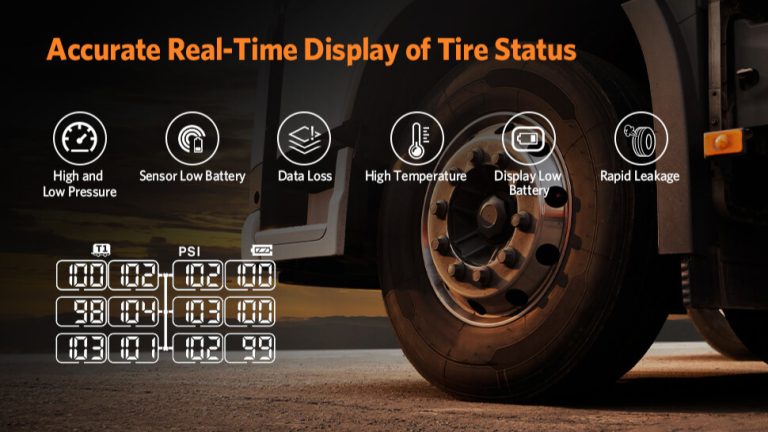
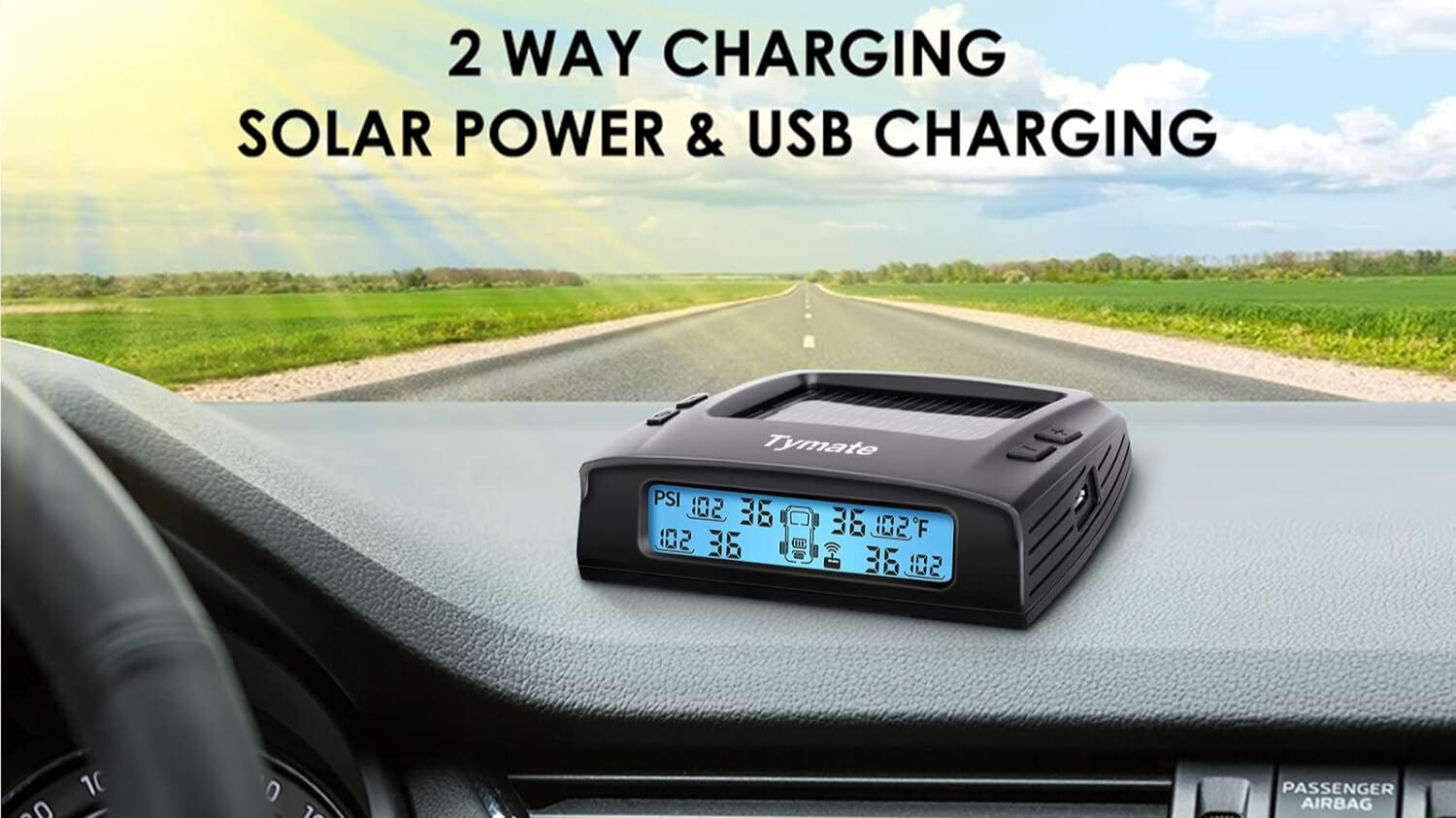
At its core, the Tymate M7‑3 is a simple external RV TPMS: four or more screw‑on valve‑stem sensors talk to a small dash display that shows individual tire pressures, temperatures, and alarms. It’s aimed at RVers and tow‑vehicle owners who want basic, independent monitoring on trailers and older rigs without tearing tires off rims or wiring in a complex system.
A few misconceptions to clear up:
- It’s not a magic blowout shield. Like any TPMS, it helps most with slow leaks, over‑heat trends, and under‑ or over‑inflation—areas tire‑safety guides consistently flag as big drivers of blowouts. brauniglakervresort
- It’s not guaranteed to catch every catastrophic failure instantly. A minority of owners report delayed updates or even missed alarms when a tire let go quickly, which lines up with how TPMS standards focus on under‑inflation thresholds over a detection window rather than instant rupture detection. law.cornell
- It’s not a plug‑and‑forget forever device. Sensors use coin‑cell batteries, the display battery ages, and range can depend on your RV length, metal in the body, and where you place the monitor.
Key Specs That Actually Matter for RVers
No lab numbers here—just the traits that owners say make or break this TPMS in real RV use:
- External, screw‑on sensors. These mount in place of valve caps and can be moved between vehicles or trailers, which is a big win for folks with multiple rigs or changing setups. The trade‑off is needing to remove them to check “true cold” pressure with a gauge.
- Solar‑assisted dash display. Many owners barely ever plug it in, as long as it sees at least some daylight on the dash; others still choose to top it up via USB, especially if the rig is parked in shade. On very hot dashboards, the screen can temporarily wash out or go black.
- User‑configurable alarms (on many units). A large chunk of feedback mentions being able to customize high/low pressure and high temperature alarms, which helps mirror how TPMS safety standards aim to warn drivers before tires are dangerously under‑inflated. Newer revisions auto‑set some thresholds, which some owners like and others find limiting.
- Temperature and pressure on one screen. Being able to see both trends together on your trailer tires is a big deal when you’re monitoring heat build‑up on long summer grades, which tire‑safety resources repeatedly flag as a blowout risk.
- Optional signal repeater. For longer rigs or if the receiver lives far forward in the cab, a number of owners had to add Tymate’s repeater to get reliable readings from all wheels. Others with shorter setups never needed it.
If you want a structured way to map these traits against your specific RV length, number of axles, and tow vehicle, the broader RV TPMS selection guide walks through system architectures without locking you into any brand.
Feature‑by‑Feature Breakdown (Truth vs Marketing)
| Feature | What the Manufacturer Emphasizes | What It Actually Means (Owner Experience) | Compared to Competitors |
|---|---|---|---|
| External screw‑on sensors | Easy install, no tire dismounting | Most owners say installation really does take only minutes with basic tools; leaks usually trace back to missed O‑rings, loose locknuts, or weak rubber valve stems. | Similar to most budget external TPMS; still more flexible than internal systems that require shop work. |
| Solar‑charging display | “Always ready,” minimal charging | Many users run for months with mostly solar, but some see the LCD wash out, go black in extreme dash heat, or the internal battery fade after a few years. | Solar‑assisted displays are common; Tymate’s trade‑off is a smaller, less readable screen in bright sun. |
| Real‑time pressure and temperature | Continuous monitoring and alarms | When range and batteries cooperate, owners see tire pressures track closely with good handheld gauges and get timely alerts on leaks, slow failures, and over‑heat events. A minority report very slow refresh or missed catastrophic events. | Accuracy is competitive with other external systems at this price; refresh speed and range are the main complaints vs higher‑end kits. |
| Multi‑vehicle flexibility | Can move between vehicles or trailers | People successfully run one on a travel trailer, another on a daily driver, older trucks, and even overland rigs, often buying multiple units because setup is simple. | A big advantage over OEM‑only systems tied to one vehicle. |
| Alarm customization | Set your own pressure and temp thresholds | Older versions give fine‑grained control, which savvy RVers use to mirror safe margins recommended in tire‑safety advice; newer “auto‑baseline” units feel more locked‑down to some owners. | Custom thresholds are a must‑have for serious RV use; Tymate checks that box on at least part of its product run. |
| Optional repeater | Extends range for long rigs | Owners of longer trailers or big Class C/crew‑cab combos sometimes need this for consistent readings; without it, the far axle may connect slowly or drop out. | Many RV‑oriented TPMS kits now include or strongly recommend repeaters; Tymate treats it more as an add‑on, which keeps initial price low but adds complexity. |
Real‑World Owner Experience (Deep Pattern Analysis)
1. “Cheap Insurance” That Has Already Paid for Itself
- In a nutshell: Many RVers bought the Tymate M7‑3 as low‑cost insurance after hearing horror stories—or living through one—about trailer blowouts. A lot of those same owners now point to specific trips where it caught a leak, puncture, or cracked wheel before real damage.
- Hidden strength: The system particularly shines on long tows, cross‑country moves, and hot‑weather travel, where slow losses and heat‑soaked tires can sneak up on you. People talk about safely exiting after alarms, fixing issues at a tire shop, and keeping rims and trailer body intact.
- Hidden weakness: Not every emergency is caught. A small but real group reports that catastrophic failures happened before the system updated or alarmed, which is consistent with how TPMS in general are better at under‑inflation trends than instant blowout detection.
- What to do about it: Treat this as an early‑warning layer on top of regular inspections and pressure checks, not a substitute for them. RV tire‑safety resources consistently stress pre‑trip inspections and correct inflation as your baseline defense, with TPMS as an extra alert system, not the only one.
2. Accuracy Is Generally Good—With Some Display Trade‑offs
- In a nutshell: Owners commonly report pressures within a couple PSI of decent hand gauges and vehicle OEM TPMS, which is plenty for spotting leaks and tracking trends.
- Hidden strength: For the price, getting reasonably accurate pressure and relative temperature readings per wheel is a big step up from dash lights that only tell you “something is low somewhere.”
- Hidden weakness: Several people complain that daytime readability is mediocre at best: bright sun on the windshield can wash the screen out, and dashboard heat can make the LCD fade or temporarily black out until things cool down.
- What to do about it: Mount the display where it gets enough daylight for charging but not direct solar oven treatment—slightly shaded dash spots or angled mounts help. If your eyes struggle with small numbers, understand this display skews to “status light and alarm” more than “big, crisp telemetry gauge.”
3. Mixed Range Performance on Longer Rigs
- In a nutshell: On shorter setups—single‑axle trailers, small travel trailers, and older cars—the Tymate usually connects quickly and stays connected. On big crew‑cab plus long‑bed trucks pulling 30‑plus‑foot trailers, results are more mixed.
- Hidden strength: Some surprisingly long rigs report solid performance without a repeater, especially when the display is positioned closer to the rear of the cab or in a spot with good line‑of‑sight to the trailer.
- Hidden weakness: Others see very slow first readings (dozens of miles before all wheels show up), intermittent dropouts from one sensor, or zero contact on far‑rear tires until they add the optional repeater—and in a few cases, even the repeater doesn’t fully fix it.
- What to do about it: If your combined rig length is creeping into “big RV” territory, budget for a repeater and test aggressively during your return window, not months later. RV tire safety advice repeatedly emphasizes catching under‑inflation early, and that only works if the system consistently hears from every wheel.
4. Long‑Term Reliability: Many Multi‑Year Wins, Some Early Deaths
- In a nutshell: There’s a strong cluster of owners reporting three to five years of use, oftentimes with original sensor batteries still going and only the occasional replacement. At the same time, a noticeable minority sees display battery or monitor failures in the two‑to‑three‑year window.
- Hidden strength: For a budget system, the number of “five years, still going” reviews is impressive, especially from people who tow thousands of miles, including on rough roads and in harsh climates.
- Hidden weakness: When the monitor dies, Tymate doesn’t sell just the display for every buyer, so you’re sometimes stuck buying an entire new kit or negotiating with support. A few owners also mention sensor failures or false low‑battery alarms that took time to chase down.
- What to do about it: Think of this as a consumable safety tool with a multi‑year but not indefinite life. For a deeper explanation of how TPMS and tire‑pressure standards treat under‑inflation thresholds rather than lifetime guarantees, see the federal TPMS standard summary. Keep your order info handy in case you need to lean on Tymate’s customer service, which several owners praise for stepping up with replacements.
5. Installation Is Easy—But Valve Stems and O‑Rings Matter
- In a nutshell: Most owners describe install as a 10–20‑minute job: charge the display, screw on locknuts and sensors, snug things up, and wait for readings.
- Hidden strength: For RVers used to wrestling with heavier projects, this really is a low‑effort upgrade that can materially improve safety on the first trip.
- Hidden weakness: A few people saw leaks, bent or damaged rubber valve stems, or trouble airing up because of the sensor bulk and locknuts. Weak or old stems, skipped O‑rings, and over‑tightening show up in several problem stories.
- What to do about it: Before installing any external TPMS, tire‑safety resources strongly recommend inspecting stems and considering metal valve stems for heavy trailers. If you’re unsure whether your stems can safely carry sensor weight, verify against manufacturer instructions or consult a qualified RV tire shop.
The Good, The Bad & The Ugly (Pros/Cons)
Pros
- Safety and peace of mind
- Repeated real‑world saves on trailers, fifth‑wheels, and RVs where leaks or cracked wheels were caught early.
- Individual pressure and temperature per tire, which aligns with best‑practice advice from RV tire safety guides that emphasize active monitoring over simple “low tire” lights.
- Value and flexibility
- Very strong “worth the money” sentiment, especially from people who previously had blowouts or expensive tire damage.
- Easy to move between vehicles—tow vehicle this season, vintage trailer or second car next season.
- Ease of use for most owners
- Straightforward install for basic setups; many report plug‑and‑go after a short learning curve with the menu.
- Solar charging reduces cable clutter; some owners almost never plug in.
Cons
- Display and visibility
- Small screen; hard or impossible to read in bright sun for some drivers.
- LCD can fade or go black on very hot dashboards, even while the unit is still working in the background.
- Range and responsiveness
- Slow to connect or update for a minority, especially on longer RV combinations without a repeater.
- A few reports of missed or delayed alerts during catastrophic failures, echoing broader limitations of TPMS detection windows discussed in TPMS standard documents.
- Longevity and serviceability
- Display failures after a couple years with limited options to replace just the head unit in some cases.
- Occasional sensor failures or persistent false low‑battery alarms that required back‑and‑forth with support.
Mini Toolkit: Decide + Fix (Fast)
Issue‑Tag Box (Mini)
If you’re skimming, these are the recurring “issue flags” that kept coming up:
- Screen hard to read or goes black in strong sun/heat on the dash.
- Slow or unreliable sensor connection on longer trucks + trailers without a repeater.
- External sensors stressing weak rubber valve stems or making air‑ups a hassle.
- Occasional false low‑battery alarms or one “problem child” sensor.
- A few reports of missed or very delayed alarms during catastrophic blowouts.
Fitment / Adapter Mini‑Matrix (when it makes sense)
| Scenario | What Owners Report | Practical Takeaway |
|---|---|---|
| Short travel trailer or vintage single‑axle | Generally quick connection and solid readings without a repeater. | Good baseline use case; ideal if you don’t want extra wiring or hardware. |
| 30‑plus‑foot trailer behind crew‑cab truck | Mixed results—some fine, others needed a repeater or still saw dropouts. | If your rig is long, treat a repeater as part of the “real” cost and test thoroughly. |
| Heavy RV wheels / older valve stems | Some stem flex or damage reports with external sensors on weak rubber stems. | Consider stronger stems and have an RV tire shop confirm your stems can handle sensor weight. |
For a broader compatibility checklist (axle count, stem types, and repeater placement), the dedicated RV TPMS system planning guide is worth a read before you lock yourself into any single product.
Mini Decision Tree (Max 5 Lines)
- If your combined rig is relatively short and you mainly want low‑cost protection, the Tymate M7‑3 is a strong candidate.
- If your rig is long and you don’t want to mess with repeaters, lean toward a more RV‑specific system that’s known for range.
- If you struggle to read small screens or drive in bright sun a lot, consider a TPMS with a larger, higher‑contrast display.
- If you’ve had repeated blowouts or run at high loads and heat, prioritize reliability, bright alarms, and metal stems over absolute lowest cost.
- If you’re primarily outfitting an older tow vehicle or car, this is a clean, low‑profile way to add true TPMS without shop work.
Troubleshooting Quickflow (Max 6 Steps)
- No reading from one wheel? Swap that sensor to another tire and see if the “dead” position moves or the problem follows the sensor.
- If the problem follows the sensor, replace its battery; if it stays with the position, suspect range or interference and consider the repeater.
- If several wheels connect only after long drives, move the display closer to the rear of the cab and re‑test.
- Seeing slow leaks or low‑pressure alerts? Remove the sensor, inspect the O‑ring and valve stem for damage or debris, then re‑install carefully and soap‑test.
- Display goes dark in heat? Move it to a cooler/shaded spot and rely on alarms rather than staring at the numbers.
- If alarms or readings stay erratic despite fresh batteries and careful reinstall, verify against manufacturer instructions or consult a qualified RV tech; then lean on Tymate customer support, which several owners rate highly.
If you prefer a more comprehensive troubleshooting ladder, the broader RV TPMS system planning and setup guide expands on safe diagnostics and when to escalate.
Mini Return‑Window Reality Check
- Install the system as soon as it arrives—don’t wait until the night before a big trip.
- Do at least one highway‑speed shakedown with your actual truck + trailer combination, watching how quickly all wheels appear and whether any drop out.
- Test at least one deliberate “change” like a brief air‑down and refill (in a safe place) to confirm alarms trigger and clear as expected.
- Park in direct sun and in shade to see how the display behaves and whether you can still make out the critical info.
- If you have any doubts about valve stem strength or minor leaks after installation, have an RV tire shop inspect stems and sensors before your return window closes.
Installation / Setup Tips (RV‑Realistic)
- Set your tire pressures correctly with a good gauge before installing sensors; external TPMS should confirm and monitor, not be your only measurement.
- Inspect valve stems carefully; replace questionable rubber stems and strongly consider metal stems on heavy trailers or RVs. When in doubt, verify with your tire manufacturer or a qualified RV tire shop.
- Use the supplied O‑rings and snug locknuts, but don’t over‑torque sensors; firm hand‑tight with the included wrench is enough for most owners.
- Turn the display on and let it fully wake up before you install sensors so it can associate each position cleanly.
- Give the system time: it’s normal for initial readings to take several minutes of motion, especially on the first trip or after battery changes.
- Mount the display where it gets some daylight but not direct magnifying‑glass heat through the windshield; a slightly shaded dash spot often works better than the hottest part of the dash.
- Learn the alarm menu at home, parked—don’t wait to figure it out while towing at speed with the beeper screaming.
- If you add a repeater for long rigs, follow Tymate’s placement guidance closely and secure wiring away from moving parts; if you’re not comfortable, verify against the instructions or work with a qualified RV tech.
- Periodically inspect sensors and stems for corrosion, cracked rubber, or stuck O‑rings, especially after salty or dusty trips.
- When removing sensors to air up, have your new pressure set in mind and reinstall promptly to minimize air loss and re‑seat the O‑ring cleanly.
For broader tire‑safety fundamentals—load, speed, and inflation practices—many RV tire blowout prevention articles echo the same basics: don’t overload the rig, don’t run under‑inflated, and monitor heat and speed.
Video Walkthrough
A straightforward way to visualize installation and setup is to watch a neutral TPMS install/demo video for an RV. One example is this kind of content where an RVer walks through installing external sensors and setting basic alarms on a tow rig and trailer, such as a generic “RV external TPMS installation and setup” walk‑through on YouTube.
What to watch for:
- Watch for how they support the trailer (chocks, brake on) before touching any valve stems.
- Pay attention to the order they use for installing locknuts, sensors, and any protective caps.
- Watch for how long it actually takes before all tires show up on the display during motion.
- Pay attention to where they mount the display to balance visibility, glare, and overheating risk.
- Watch for how they demonstrate alarms—what they change (pressure or temperature) and how they silence and clear alerts.
Owner Stories (The Human Side)
The stories below are composite scenarios reflecting repeated patterns across owner feedback.
- A couple towing a mid‑size travel trailer across several states had already upgraded their tires, but one wheel slowly developed a leak from a hidden crack in the wheel itself. The Tymate alarmed, they manually confirmed pressure loss, and were able to limp to a shop for a wheel swap instead of shredding the tire and bodywork.
- A family with a 30‑plus‑foot fifth‑wheel had already suffered a previous blowout that damaged trim and fenders. With this TPMS installed, another tire began heating and gaining pressure on a hot highway day; the alarm gave them enough warning to pull off, change the tire, and avoid repeat damage.
- An RVer with an older Class C and a small travel trailer uses multiple Tymate units across vehicles. On one trip, the system flagged a bulging sidewall and later a slow puncture, saving both a spare and several hours of roadside hassle. For them, the low price is now “cheap insurance” they wouldn’t travel without.
🔎 See more owner feedback on Amazon
Who This Is For (and Who Should Skip It)
Buy it if…
- You tow a small or mid‑size travel trailer, fifth‑wheel, or toy hauler and want budget‑friendly, per‑tire pressure and temperature data.
- Your tow vehicle or vintage rig lacks factory TPMS, and you want individual readings without paying a tire shop to install internal sensors.
- You’re comfortable with basic DIY and occasional sensor battery swaps, and you understand TPMS is a safety layer—not a guarantee against every blowout.
- You travel enough that catching one leak, puncture, or over‑heat event early would easily justify the cost.
Skip it if…
- You run very long RV combinations where range is critical and you’re unwilling to mess with repeaters or careful monitor placement.
- You need a big, bright, always‑visible screen due to eyesight or driving conditions.
- You’re looking for an ultra‑rugged, long‑lived system and don’t want to treat the display as a multi‑year consumable.
- You want an integrated, OEM‑style solution and are willing to pay more and visit a tire shop for internal sensors.
👉 Check today’s price on Amazon
If you’re comparing options, start here: Top RV TPMS Picks
Alternatives (Quick Comparisons)
Without naming specific competing models, here’s how the Tymate M7‑3 stacks up against common alternatives:
- Higher‑end RV TPMS with built‑in repeater and more sensors
- Typically better suited for large fifth‑wheels and long Class A + toad setups, with range designed specifically for big rigs.
- Higher initial cost but often include extra sensors for spares or tow vehicles.
- Internal‑sensor TPMS (tire shop install)
- Cleaner look, no valve‑stem weight issues, and no caps to remove for airing up.
- Requires dismounting tires and usually costs more up front; less flexibility if you regularly change trailers or vehicles.
- Vehicle‑only aftermarket TPMS for cars/SUVs
- Great if you just need monitoring on a single older tow vehicle, but may not support trailer tires at all.
- Often brighter displays, but not always optimized for long vehicle‑trailer distances.
For a structured rundown of external vs internal systems, repeater use, and sensor count by axle, the RV TPMS planning guide walks through those decision points in more detail.
Deep‑Dive FAQ (High‑Intent)
What should I test immediately after delivery?
- Confirm all sensors are present, labeled, and have intact O‑rings.
- Fully charge the display via USB, then power it on and confirm it wakes up reliably.
- Install sensors on known‑good valve stems, check for leaks with soapy water, and confirm each tire shows up on the display once you drive a short distance.
- Practice silencing and clearing alarms while parked so you’re not fumbling with buttons at highway speeds.
What are the most common problems and fixes?
- Slow or missing sensor readings: Often improved by moving the display, adding Tymate’s repeater on longer rigs, or replacing a weak sensor battery.
- Display hard to read or going black in heat: Relocating the monitor to a cooler, less sun‑blasted spot helps; you may need to rely more on alarms than on constantly staring at the screen.
- Valve‑stem leaks or damage: Usually trace back to weak rubber stems, over‑tightening, or missing O‑rings—issues best addressed by a competent RV tire shop if you’re not fully confident yourself.
Will this work with my RV setup?
- It has worked well for many single‑axle and tandem‑axle travel trailers and mid‑size fifth‑wheels, especially when the tow vehicle isn’t excessively long.
- On longer combinations, you may need Tymate’s repeater and careful display placement to get consistent readings from the farthest tires.
- If your wheels currently use light‑duty rubber stems or you’re running very heavy loads, confirm stem suitability with a tire professional before hanging external sensors on them.
How does this compare to built‑in automotive TPMS?
- Factory TPMS in cars must meet regulatory standards like FMVSS 138, which defines how much under‑inflation triggers an alert and within what time window.
- The Tymate M7‑3 gives you similar under‑inflation and over‑temperature warning behavior but uses external sensors and a separate display instead of tying into the dash cluster.
- For RVers, its main advantage is monitoring trailer tires and older vehicles that never had any TPMS at all.
How should I use this alongside regular tire maintenance?
- Follow the same fundamentals tire‑safety resources recommend: set pressures correctly when cold, avoid overloading, inspect tires visually before trips, and watch for heat build‑up on long runs.
- Use the Tymate to catch trends you might miss between stops—a slow leak, a single tire heating more than its neighbors, or a pressure drift outside your normal range.
- If alarms trigger and you’re unsure why, pull over somewhere safe, confirm with a good gauge, and if needed, get a tire shop to inspect further rather than just silencing the alert.
Is it safe to install or troubleshoot this myself?
- Basic install—threading sensors on, setting alarm thresholds, mounting the display—is well within reach for most RV owners comfortable with checking their own tire pressures.
- If you suspect wiring changes, repeater placement near 12‑volt circuits, or need to upgrade to metal valve stems, verify against manufacturer instructions or consult a qualified RV tech or tire shop rather than guessing.
Final Verdict
If you have a small‑to‑mid‑size trailer or older tow vehicle and you’ve been putting off TPMS because of cost or complexity, the Tymate M7‑3 sits in a very practical sweet spot. It won’t match high‑end RV‑specific systems on range or display quality, and it won’t catch every catastrophic failure, but for many RVers it has already paid for itself by flagging leaks, bulging sidewalls, and overheating tires before they turned into shredded rubber and body damage.
For the right rig—especially if you’ll respect its limitations, test it early, and keep your tire maintenance fundamentals solid—it’s an easy recommendation as “cheap insurance” with a lot of real‑world saves behind it.
👉 Check today’s price on Amazon