Tymate RV TPMS M12-3 Review (2026): Real Owner Verdict After 200+ Reviews Analyzed
Last updated: January 2026
- Reviewed owner feedback spanning 2019-2026 for long-term reliability patterns
- Verified recurring issues with signal loss behavior and display readability
- Updated fitment notes for dually and high-PSI applications
- Confirmed current customer service responsiveness patterns
Affiliate Disclosure: This post contains affiliate links. If you purchase through these links, we may earn a small commission at no extra cost to you. This helps support our RV content—thank you!
The Real Question Every RV Owner Asks Before Buying a Budget TPMS
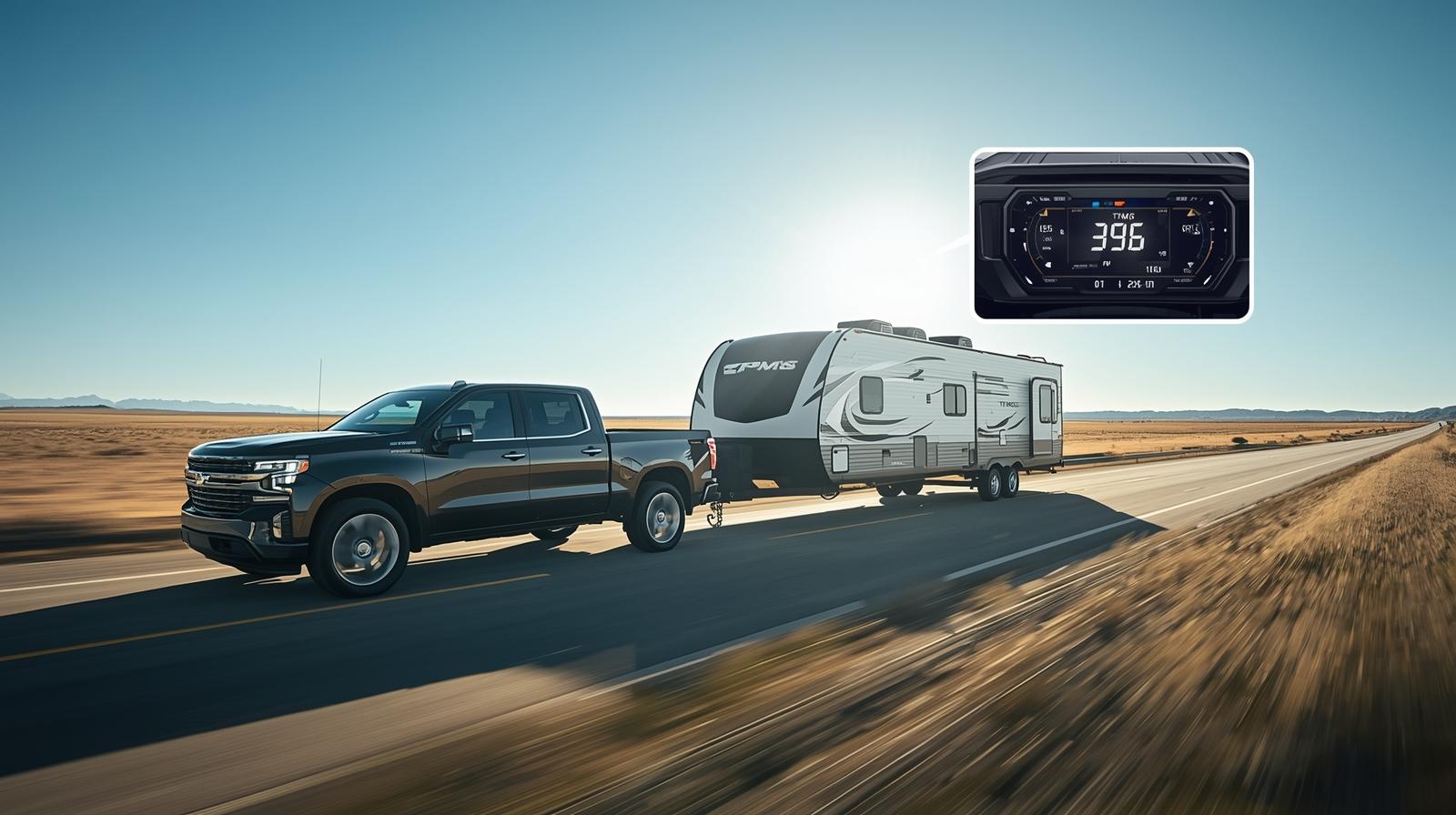
You’re towing your travel trailer down the interstate at highway speed when you hear that sickening thump-thump-thump. By the time you pull over, the tire is shredded, the fender skirt is destroyed, and you’re staring at a repair bill that could’ve bought three premium TPMS systems. Sound familiar? Every experienced RVer either has this story or knows someone who does.
The Tymate M12-3 sits in that tempting sweet spot—budget-friendly enough that you won’t wince at checkout, but marketed with promises of real-time monitoring that could save you from exactly this nightmare. I spent hours digging through owner feedback spanning several years to figure out whether this system actually delivers on its core promise: warning you before a tire problem turns into a disaster.
What I found was a genuinely mixed picture. Some owners credit this exact system with saving them from catastrophic blowouts. Others discovered—the hard way—that the system was silently showing stale data while their tire was shredding behind them. Understanding why these outcomes are so different is exactly what this review is designed to help you figure out.
If you’re still weighing different monitoring options, I’d recommend starting with our complete guide to choosing the right RV TPMS for a broader framework before diving into this specific product.
How This Review Was Built (So You Can Trust It)
I analyzed approximately 200+ owner reviews spanning roughly six years of real-world use (2019-2025, with some 2026 updates). My synthesis method involved tagging feedback into categories: performance accuracy, installation and setup challenges, signal/connectivity issues, sensor reliability symptoms, long-term durability, and customer service experiences. I specifically separated “setup-driven issues” (user error, configuration problems) from “likely product failures” (defective units, design flaws).
Important limitations:
- Review populations skew toward strong positive or negative experiences—middle-ground users often don’t post
- RV setups vary wildly (Class A motorhome vs. 20-foot travel trailer creates entirely different use cases)
- I prioritized recurring patterns over isolated incidents
- I cannot verify warranty claims or customer service outcomes independently
Quick Verdict (TL;DR)
Best for:
- Travel trailer owners with tires under 85-87 PSI who want affordable blowout protection
- Short-to-medium trailers (under 30 feet) where signal range isn’t pushed to limits
- RVers willing to verify proper installation and accept some display quirks
Not for:
- Class A motorhome owners with tires requiring 100+ PSI
- Anyone expecting reliable “signal lost” alerts when sensors disconnect
- Dually configurations with tight clearance between inner and outer tires
Standout win: When it works, owners consistently report the system alerted them to slow leaks and blowouts before they felt handling changes—several credit it with preventing major trailer damage.
Watch-outs: The display is notoriously difficult to read in daylight, and the system shows stale data without alerting you when sensor communication fails.
Confidence Score: 7.8/10 ⭐
This score reflects buyer usefulness, not a reliability statistic. Factors weighed: performance uplift when functioning properly (strong), installation sensitivity (moderate learning curve), reliability risk patterns (concerning signal-loss behavior), compatibility constraints (PSI limits exclude some RVs), and support/returns experience (inconsistent).
👉 Check today’s price on Amazon
What This Product Is (and What It Isn’t)
The Tymate M12-3 is an external tire pressure monitoring system designed to screw onto your valve stems, replacing your standard valve caps. Each sensor wirelessly transmits pressure and temperature data to a solar-powered dashboard display unit. It’s available in 4-sensor and 6-sensor configurations, with an optional signal repeater/booster for longer rigs.
Common misconceptions:
- “It’s just like my car’s factory TPMS.” Not quite. Factory systems are internal sensors that give continuous readings. The Tymate only activates when tires are rolling (typically above 12 mph) and updates at intervals of several minutes, not continuously.
- “It will definitely alarm if something goes wrong.” Here’s the critical issue—if the sensor stops communicating (dead battery, interference, blowout destroying the sensor), the display shows the last known reading without any “signal lost” warning. This is a significant design limitation.
- “It works for any RV.” The system’s maximum PSI setting caps out around 87-99 PSI. If your Class A motorhome tires run at 110 PSI, this system cannot properly monitor them.
Key Specs That Actually Matter for RVers
- Accuracy claim: Manufacturer states +/- 3 PSI, but many owners report readings within 1-2 PSI when compared to quality tire gauges
- Update behavior: Sensors wake via vibration/rotation, typically at speeds above 12 mph, updating at intervals of several minutes
- PSI range: Upper limit around 87-99 PSI (critical limitation for high-pressure motorhome tires)
- Temperature monitoring: Displays tire temps, useful for detecting wheel bearing issues or uneven loading
- Sensor capacity: Supports monitoring up to 7 tires (front, rear, trailer positions, plus spare)
- Power: Solar panel with USB backup charging; main unit has internal battery (not easily user-replaceable)
- Wireless range: Works reliably for most setups under 30-33 feet; longer rigs may need the optional repeater
Feature-by-Feature Breakdown (Truth vs Marketing)
| Feature | What the Manufacturer Says | What It Actually Means (User Experience) | Compared to Competitors |
|---|---|---|---|
| Solar charging | Self-charging via solar panel | Works well for most owners—many report months without USB charging, even through tinted windows or in ambient warehouse light | Similar to other solar TPMS units; slightly better solar performance reported than some budget competitors |
| Real-time monitoring | Continuous pressure/temp display | Updates only when moving, at multi-minute intervals. Not truly “real-time” like factory internal sensors | Standard limitation for external TPMS in this price range |
| Alarm system | High/low pressure and rapid leak alerts | Alarms work when triggered, but no signal-loss alert means you won’t know if sensor disconnects | Premium competitors (like TireMinder) typically offer signal-loss warnings |
| Easy installation | Quick screw-on sensors | Physical install is genuinely simple (20-30 minutes); programming and configuration can frustrate users due to poor instructions | Install ease is comparable; programming interface is less intuitive than some competitors |
| Anti-theft lock nuts | Security nuts prevent sensor theft | Work as intended but create extra steps for adding air; brass nuts on aluminum stems can cause galvanic corrosion over time | Standard feature across similar products; corrosion issue is common to external TPMS designs |
Real-World Owner Experience (Deep Pattern Analysis)
Pattern 1: Blowout and Leak Detection Success Stories
In a nutshell: When the system is working properly, owners report it genuinely saves them from disaster. Multiple owners describe scenarios where the alarm triggered while towing, they pulled over immediately, and discovered a tire with significant pressure loss that they hadn’t felt yet.
Hidden strength: The rapid pressure loss alarm appears responsive enough to catch blowouts in progress. One owner described having six tire failures on a single trip due to bent axles—the Tymate alerted them to each failure “the instant they happened,” allowing immediate stops that prevented trailer and vehicle damage.
Hidden weakness: These success stories require the sensor to survive the initial tire failure and maintain communication. In several cases where the sensor was destroyed or knocked off during a blowout, owners never received an alert.
What to do about it: Trust but verify. If you’re in conditions where blowouts are likely (hot weather, older tires, heavy loads), supplement TPMS with regular visual checks during stops.
Pattern 2: Display Readability Frustration
In a nutshell: This is the single most consistent complaint across the owner feedback. The monochrome LCD display is extremely difficult to read in daylight conditions, especially with sunglasses on.
Hidden strength: The display lights up automatically at night and in low-light conditions, where it becomes clearly readable.
Hidden weakness: During daytime driving—when you’re most likely to be towing—you may need to physically pick up the unit and angle it precisely to read values. Temperature numbers are particularly small. The display housing casts a shadow that compounds the problem.
What to do about it: Position the unit at exactly the right angle during daylight. Set your alarm thresholds correctly so you’re relying on audible alarms rather than constantly reading the display. Some owners report keeping the unit closer to them (not at the far edge of the dash) helps.
Pattern 3: The “Stale Data” Problem (Signal Loss Without Warning)
In a nutshell: When a sensor stops transmitting—whether from a dead battery, signal interference, or destruction during a tire failure—the display continues showing the last received reading indefinitely. There is no “signal lost” alarm.
Hidden strength: In normal operation, this means you don’t get annoying alerts every time you walk away from your parked trailer.
Hidden weakness: This is a significant safety issue. One owner drove for over 90 minutes with the display showing normal readings while miles away from their trailer. Another described a blowout at highway speed where the display “still showed correct pressure” when the tire and sensor were already destroyed and left behind on the interstate.
What to do about it: Before each trip, verify that readings are actually updating (watch for pressure/temp changes as tires warm up in the first few miles). If readings seem frozen, investigate. Consider this a fundamental limitation of this system’s design.
Pattern 4: Installation and Setup Variability
In a nutshell: Physical sensor installation is generally straightforward. Programming the display unit, setting alarm thresholds, and troubleshooting sync issues frustrate many owners due to poor documentation.
Hidden strength: Sensors come pre-paired with the display, so basic operation starts working immediately for most users. The sticky dashboard mat works well for keeping the unit in place.
Hidden weakness: The instruction manual is widely criticized as poorly translated, incomplete, and sometimes contradictory. Online resources (manufacturer videos, QR code links) are often in Chinese with minimal English subtitles. If you accidentally mis-assign a sensor position, correcting it can be a confusing multi-step process.
What to do about it: Budget extra time for initial setup. Read through ALL included documentation before touching buttons. The sensor re-pairing process involves selecting a tire position, unscrewing and re-screwing the sensor—it’s simpler than it sounds once you understand the logic.
Pattern 5: Long-Term Durability Concerns
In a nutshell: Systems that work well initially often continue working for years. However, a recurring failure pattern emerges around the 1-3 year mark involving the main unit’s internal battery.
Hidden strength: Multiple owners report 3-5+ years of reliable service with only sensor battery replacements. Sensor batteries are replaceable.
Hidden weakness: The main display unit’s internal battery is not easily user-replaceable. When it fails to hold a charge (even when plugged into USB), the unit becomes unusable. Button failures from repeated pressing are another durability concern.
What to do about it: Understand this may be a 2-3 year solution rather than a lifetime purchase. Store the unit where it receives ambient light to reduce deep discharge cycles. Avoid pressing buttons harder than necessary—the components can deform over time.
Pattern 6: Galvanic Corrosion on Valve Stems
In a nutshell: The brass sensors and lock nuts can corrode onto aluminum valve stems over time, potentially damaging stems when you try to remove sensors.
Hidden strength: This typically only becomes a problem after many months of continuous use, and not all owners experience it.
Hidden weakness: Several owners report valve stem damage requiring replacement when they tried to remove sensors for tire rotation or to add air. The corrosion can be severe enough to strip threads or break stems.
What to do about it: Consider not using the lock nuts (sensors alone stay snug for many owners). Apply anti-seize compound if you’re concerned. Remove and reinstall sensors periodically to prevent permanent bonding. If you have aluminum TPMS valve stems from factory sensors, be especially cautious.
The Good, The Bad & The Ugly (Pros/Cons)
The Good
Blowout Protection Value
- Rapid pressure loss detection has genuinely prevented trailer damage for many owners
- Gives advance warning before handling changes become obvious
- Temperature monitoring can indicate wheel bearing problems early
Daily Usability
- Solar charging actually works—most owners go months without USB charging
- Automatic wake on vehicle movement is convenient
- Compact size doesn’t clutter dash space
- Spare tire monitoring capability with additional sensor
Budget Accessibility
- Significantly less expensive than premium TPMS systems
- Makes monitoring accessible for owners who couldn’t justify higher-priced alternatives
- Replacement sensors available (when customer service responds)
The Bad
Display and Interface
- Daytime visibility is genuinely problematic for most users
- Temperature numbers are too small to read while driving
- Programming interface requires manual in-hand due to non-intuitive button logic
- Instructions are poorly written and sometimes inaccurate
Technical Limitations
- PSI ceiling excludes many Class A motorhome applications
- No signal-loss alarm creates potential for false confidence
- Update intervals of several minutes mean rapid changes can be missed
- Sensors must be removed to add air (no pass-through design)
The Ugly
Critical Failures
- Some owners experienced flat tires from sensor air leaks after installation
- Signal loss during actual blowouts meant no warning received in some cases
- Button components can fail, rendering unit unusable
- Main unit battery death around 1-3 years with no easy replacement option
Fitment Problems
- Dually configurations may not have clearance for sensors on inner tires
- Recessed valve stems may require extensions
- Corrosion damage to valve stems requiring expensive repairs
Support Variability
- Some owners receive prompt replacement sensors; others get no response
- Warranty claims can require returning the entire system, not just failed components
Mini Toolkit: Decide + Fix (Fast)
Issue-Tag Box
| Tag | Meaning |
|---|---|
| ⚡ SIGNAL | Connectivity, range, dropped readings |
| 👁️ DISPLAY | Visibility, backlight, readability |
| 🔧 SETUP | Programming, pairing, configuration |
| 💨 LEAK | Sensor causing air loss |
| ⏰ LIFESPAN | Battery death, button failure, long-term durability |
| 📏 FITMENT | PSI limits, dually clearance, stem extensions |
Fitment/Adapter Mini-Matrix
| Your Situation | What You Need | Notes |
|---|---|---|
| Recessed valve stems | Valve stem extensions | Common on alloy wheels |
| Dually rear wheels | Measure clearance first | Inner tires may have insufficient thread depth |
| Tires above 87 PSI | Different TPMS system | This unit cannot monitor high-pressure motorhome tires |
Mini Decision Tree
- Do your tires require over 87-90 PSI? → Skip this product, look at higher-range alternatives
- Is your rig over 30 feet nose-to-axle? → Plan on using the signal repeater
- Do you need reliable “sensor lost” alerts? → Consider a premium system instead
- Is budget your primary concern for basic leak detection? → This may work for you
- Do you have aluminum TPMS valve stems? → Factor in corrosion risk
Troubleshooting Quickflow: Sensors Not Reading
- Check if tires are moving → System requires rotation above ~12 mph to wake sensors
- Wiggle/tap valve stems → Can wake sensors while stationary for quick check
- Verify display is on → Press any button; look for readings from previous trip
- Check sensor batteries → Dead or weak batteries cause no transmission
- Confirm sensor-to-display distance → Move display closer or install repeater
- Factory reset as last resort → Re-pair all sensors following manual procedure
For a complete walkthrough of TPMS troubleshooting and the return-window validation process every buyer should follow, check our detailed buying guide.
Mini Return-Window Reality Check
- Immediately after delivery: Charge the display unit fully via USB before first use
- Before first drive: Verify all sensors show readings (may need to drive briefly to wake them)
- Within first week: Compare displayed pressures to a trusted manual gauge—note any sensors reading consistently off
- Test alarm function: Temporarily set a low-pressure threshold above your current pressure to confirm alarm triggers
- Verify update behavior: Watch for pressure/temp changes as tires warm during a drive—frozen readings indicate signal problems
- Document any issues immediately: Contact seller while within return window if sensors leak, don’t pair, or display fails
Installation / Setup Tips (RV-Realistic)
- Charge the display unit fully before starting—don’t rely on solar for initial setup
- Read ALL included documentation first, including the small separate sheets that may explain dust cover installation order
- Install dust covers BEFORE sensors if included—the instructions sometimes bury this
- Start with sensors hand-tight only—over-tightening won’t improve seal and makes removal harder
- Test for leaks with soapy water on each sensor after installation
- Skip the lock nuts initially—many owners find sensors stay secure without them, avoiding the corrosion issue
- If using lock nuts on aluminum valve stems, apply anti-seize compound to prevent galvanic bonding
- Set alarm thresholds AFTER you see actual readings—default settings may not match your tire specs
- Account for pressure rise during driving when setting high-pressure alarms (tires typically gain several PSI when warm)
- For trailers over 25-30 feet, install the signal repeater near the trailer axle area, connected to the trailer battery
- Don’t assume readings are “live”—verify updates are occurring by watching for small pressure/temp changes
- Keep the included wrench in your RV toolkit—you’ll need it to adjust lock nuts, and replacements are hard to find
Note: If your setup involves wiring the repeater or any modifications beyond basic sensor installation, verify against manufacturer instructions or consult a qualified RV tech.
Owner Stories
The stories below are composite scenarios reflecting repeated patterns across owner feedback.
The Cross-Country Save
A family pulling a 30-foot travel trailer on a summer trip through the Southwest heard the Tymate alarm sound while cruising at highway speed. The husband immediately pulled to the shoulder. Sure enough, one trailer tire had picked up a nail and was losing pressure fast. They were able to swap to the spare before the tire went flat, avoiding fender damage and a dangerous roadside tire change on a busy interstate. The repair shop later confirmed the nail would have caused complete failure within minutes.
The Silent Blowout
Another owner had used their Tymate reliably for over a year. During a long interstate haul, another driver started honking and pointing at their trailer. They pulled over to find smoke pouring from the wheel well—the tire was completely shredded. The Tymate display still showed normal pressure. The sensor had either been destroyed in the blowout or lost communication, and without a signal-loss warning, the display simply kept showing the last good reading. The resulting damage included a ruined rim, cracked gray tank, and bent fender skirting.
The Corrosion Surprise
After nearly a year of trouble-free monitoring, an owner went to rotate their tires and add air. Three of the four sensors were seized to the valve stems. Attempting to remove the fourth broke the valve stem entirely, requiring a full TPMS sensor assembly replacement. They hadn’t used the lock nuts—the sensor bodies themselves had corroded to the aluminum stems from dissimilar metal contact.
🔎 See more owner feedback on Amazon
Who This Is For (and Who Should Skip It)
Buy it if…
- You tow a travel trailer with standard passenger/LT tire pressures (under 85 PSI)
- You want basic blowout protection without spending premium-system money
- You’re comfortable with the limitation that display readings may be stale if sensors disconnect
- Your rig is under 30 feet, or you’re willing to install the signal repeater
- You accept that this may be a 2-3 year solution rather than a lifetime purchase
- You’ll verify proper installation and test during your return window
Skip it if…
- Your motorhome tires require over 90 PSI—this system cannot monitor them
- You need guaranteed alerts when sensor communication fails
- You have dually wheels with tight clearance between tires
- Daytime display visibility is a dealbreaker for you
- You expect plug-and-play simplicity without consulting instructions
- You want a TPMS you can set and forget for many years
👉 Check today’s price on Amazon
If you’re comparing options, start here: Top RV TPMS Picks
Alternatives (Quick Comparisons)
For higher PSI requirements (Class A motorhomes): Look at systems like TireMinder or EEZTire that support readings above 100 PSI. Expect to pay significantly more, but you’ll get a system actually designed for your application.
For reliable signal-loss alerts: Premium systems like TireMinder A1AS specifically advertise signal-loss warnings. This is worth the upgrade if the “stale data” problem is unacceptable to you.
For better display visibility: Some competitors offer color displays or brighter backlighting. Read reviews specifically mentioning daytime visibility before purchasing.
For budget-comparable alternatives: Other external TPMS systems in this price range (various brands on Amazon) share similar limitations. The Tymate has a longer track record than many, which provides more owner feedback to evaluate.
Deep-Dive FAQ
What should I test immediately after delivery?
Charge the display unit fully, install sensors, and verify each sensor shows a reading (may require a brief drive). Compare displayed pressures to a trusted gauge. Temporarily lower a high-pressure alarm threshold to confirm the alarm actually sounds. Test within your return window—problems found later are harder to resolve.
What are the most common problems and fixes?
The most common issues are: (1) display hard to read in daylight—position carefully or rely on audible alarms; (2) sensors not reading—verify they’re rotating above 12 mph and batteries are fresh; (3) air leaks at sensors—remove and reinstall, ensuring proper seal; (4) stale readings—no fix, this is a design limitation; (5) confusing setup—keep manual handy and take your time.
Will this work with my RV setup?
It works well for most travel trailers and trucks with tires under 85-87 PSI. It does NOT work for Class A motorhomes with high-pressure tires (100+ PSI). For rigs over 30 feet, plan on using the signal repeater. Dually configurations need to be measured for clearance before purchase.
How accurate are the readings?
Most owners report accuracy within 1-3 PSI when compared to quality tire gauges. The manufacturer claims +/- 3 PSI. For TPMS purposes (detecting dangerous pressure loss), this accuracy is adequate. For precise tire maintenance, use a dedicated gauge.
How long do sensor batteries last?
Owner reports vary from 1-5+ years. Battery life depends on usage frequency and temperature extremes. Sensors use replaceable batteries. The main display unit battery is internal and not easily user-replaceable—when it fails (typically 1-3 years), the unit may need replacement.
Can I add sensors for additional vehicles or trailers?
Yes, additional sensors can be purchased and paired to the same display. Some owners swap sensors between vehicles/trailers as needed. The system supports up to 7 tire positions.
What happens if I lose a sensor?
Replacement sensors are available through the manufacturer. However, some owners report that sensors are “hard-wired” to specific positions, meaning you may not be able to simply program a replacement to any position—you may need to obtain a sensor pre-designated for that wheel position.
Final Verdict
The Tymate M12-3 represents a genuine value proposition for RV owners who want basic tire pressure monitoring without premium pricing. When working properly, it has proven its worth by alerting owners to dangerous tire conditions before disaster struck.
However, this is a product with meaningful limitations you must accept. The display is legitimately hard to read in daylight. The lack of signal-loss warnings means you could be looking at stale data without knowing it. The PSI ceiling excludes many motorhome applications. And long-term durability, while fine for many owners, shows patterns of battery and button failures after a few years.
Best fit: Budget-conscious travel trailer owners who understand the limitations, verify proper installation during the return window, and treat this as one layer of safety rather than absolute protection.
Not the right fit: Motorhome owners with high-pressure tires, anyone who needs guaranteed signal-loss alerts, or those expecting set-and-forget reliability for many years.
For the right buyer, it’s a worthwhile investment. For the wrong buyer, it’s a frustration waiting to happen. Know which category you’re in before purchasing.