YCTechLife LiFePO4 RV Battery Review – A Solid Drop-In Upgrade From Lead-Acid?
Affiliate disclosure: This post contains affiliate links. If you buy through them, we may earn a commission at no extra cost to you.
Quick Summary
- Best for: RVers who want a lighter, simpler “drop-in” lithium upgrade and don’t want to babysit their battery.
- Top owner themes: “Plug-and-play,” noticeably lighter than lead-acid, strong everyday performance, good packaging/shipping experiences.
- Main watch-outs: Make sure you’re buying the right capacity/model for your use (some feedback online is from smaller-capacity versions used in UPS/portable/lighting setups), and lithium charging requirements still matter.
Quick Verdict
If you want a practical move from lead-acid to lithium without turning your RV into a full electrical engineering project, the YCTechLife LiFePO4 RV Battery is getting a lot of “works great” style feedback—especially around easy installation and weight savings. It’s a strong fit for typical RV house-battery use when you choose the correct size for your rig. If your setup demands very high continuous loads or you’re trying to “swap into anything” like certain UPS systems, you’ll want to confirm compatibility first.
What This Battery Is (and Why RVers Buy It)
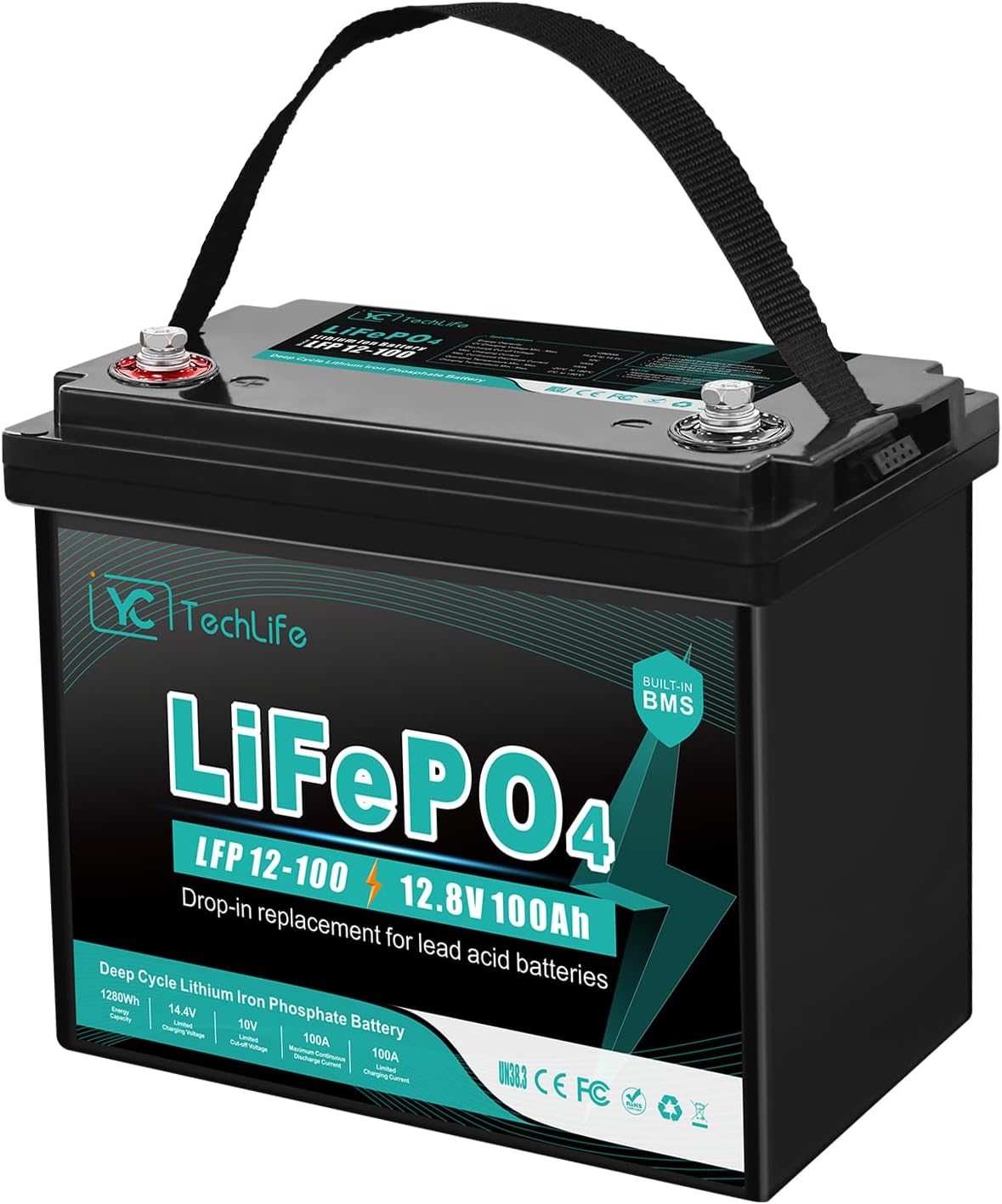
The YCTechLife LiFePO4 RV Battery is a 12V-class lithium iron phosphate (LiFePO4) battery designed to replace traditional 12V lead-acid batteries in common use cases—like RV house power, solar battery banks, and other 12V applications.
In a typical RV (USA/Canada) you’re living in a 12V DC system for lights, water pump, fans, control boards, etc. Your inverter (if you have one) then converts that 12V DC into 120V AC for household-style outlets. In Australia, you’ll still see plenty of 12V DC house systems—just remember that shore power is typically 230–240V AC, so inverter/charger selection can differ.
If you’ve been dealing with lead-acid batteries, the appeal is straightforward:
- Less weight for similar usable energy
- More usable capacity (you typically can use a larger % of the battery without harming it)
- Steadier voltage under load
- Built-in protections in many LiFePO4 batteries via a BMS (battery management system)
Key Features RV Owners Actually Care About
Based on recurring owner comments, here are the “decision” features that keep coming up:
- “Drop-in” replacement vibe (easy install): Multiple owners describe it as remove old battery, install the new one, and you’re done.
- Weight savings: This is one of the loudest themes—people consistently notice the battery being much lighter than an equivalent lead-acid.
- Stable, practical performance: Owners report it “does the job” across real uses (solar storage, backup, powering small appliances/loads).
- Built-in BMS protections (practically important): Several owners mention cutoff behavior and protection working as expected, which matters for day-to-day reliability.
At-a-Glance Specs and “Reality Checks” Table
Because buyer feedback sometimes spans multiple capacities/variants, this table separates what owners commonly describe from what you should verify before you buy.
| Item | What owners commonly report | What you should verify on your exact listing |
|---|---|---|
| Battery type | LiFePO4 lithium | Capacity (Ah), dimensions, terminal type |
| Install experience | “Plug and play” / straightforward swap | Fit in your battery compartment (Group size / tray) |
| Weight | Noticeably lighter than lead-acid | Exact weight (important for tongue weight and storage bays) |
| Charging needs | Works well when charged correctly | Your converter/charger lithium profile (or adjustable settings) |
| BMS behavior | Cutoff/protection reported by some owners | Continuous/peak current rating vs your inverter load |
If you’re also building/expanding a solar setup, read this first so you don’t under-size your battery bank:
https://rvoutfitting.com/how-to-size-your-rv-solar-system-easy-guide-for-panels-batteries/
Real-World Owner Summary (from buyer feedback)
Here’s the consensus snapshot pulled from the owner experiences you shared:
Average sentiment: Generally very positive, with most reviews landing at 4–5 stars, plus a smaller cluster of critical feedback focused on failures, mismatches, or “not a fit for my use case.”
Most praised:
- Easy install / swap-in replacement (“works great,” “remove the old, install the new”)
- Weight savings (frequently described as dramatically lighter than lead-acid)
- Does what it should for typical 12V usage and light-to-moderate loads
Most common complaints:
- Compatibility expectations (some use cases—especially certain UPS setups—can behave oddly or be a mismatch)
- Early failure reports exist (a minority mention a battery failing within months or around a year)
- Capacity/expectation mismatches (a few comments suggest confusion about what a specific capacity can realistically support)
Best for: RVers who want a lighter lithium upgrade and plan to charge it properly (especially if you’re pairing it with solar).
Not ideal for: People trying to use a lithium battery as a direct substitute in every UPS/backup device without checking compatibility and load demands.
Check the YCTechLife LiFePO4 RV Battery price on Amazon
What Real Owners Like (Pros)
1) “Plug-and-play” installation that feels RV-friendly
A standout theme is how many people describe the swap as simple: pull the old lead-acid battery, drop in the lithium one, and it’s running. That matters in an RV because you want fewer surprises—especially if you’re upgrading right before a trip.
2) The weight difference is immediately noticeable
Owners repeatedly call out the battery being much lighter than lead-acid. In RV life, weight is never just a “nice-to-have.” Less weight can mean easier handling, safer installs, and sometimes a bit more flexibility with cargo.
3) Strong performance for “normal” real-life use
Feedback includes successful use in solar storage and powering typical loads. One theme that pops up is satisfaction with day-to-day reliability: people aren’t describing finicky behavior; they’re describing “it works.”
4) Packaging and delivery experiences are frequently positive
Multiple buyers mention solid packaging and the battery arriving in good condition. That’s not a spec—but it’s meaningful, because batteries are heavy items that can be damaged in shipping.
5) Buyer confidence from measurable “it matches expectations” reports
A handful of owners describe actual charge/discharge observations and note the battery behaving close to what they expected for its class, especially when used within sensible limits.
What Real Owners Complain About (Cons / Downsides)
1) Not every “backup power” device plays nicely with lithium
Some negative or mixed feedback centers on UPS-style devices: battery indicators not reading correctly, limited supported output, or inconsistent behavior depending on the UPS electronics. That doesn’t automatically make the battery “bad”—it often means the device was designed around lead-acid behavior.
What this means for you: If your RV setup is a standard 12V house system, you’re usually in a better situation than a random UPS box. If you’re doing something unusual (custom backup rigs, specialty electronics), confirm compatibility.
2) A minority report early failures
There are some hard negative reviews: batteries failing after months or around a year, or no longer charging. Most owners are happy, but it’s important to be transparent—this is still a mass-manufactured product category, and failures can happen.
Practical response: Keep your installation clean (proper torque, correct cable sizing, no loose terminals), and don’t exceed current limits with a big inverter if the battery isn’t rated for it.
3) Capacity confusion can lead to disappointment
Some complaints read like “it doesn’t last long,” which often comes down to using too small a battery for the load or expecting a small-capacity battery to run high-power gear for hours.
In RV terms: a battery is an energy tank. If you want longer runtime, you size the tank appropriately.
If you’re not sure how to size it, this guide will save you time and money:
https://rvoutfitting.com/how-to-size-your-rv-solar-system-easy-guide-for-panels-batteries/
Use Cases and Buyer Types
Best for you if…
- You want a lighter alternative to lead-acid and you care about easier handling.
- You want a battery that owners repeatedly describe as simple to install.
- You’re building a practical RV setup for weekend trips, boondocking, or solar charging—without overcomplicating the system.
- You’re willing to ensure your charging setup is lithium-appropriate (or you’ll upgrade your converter/charger if needed).
Skip this if…
- You need a battery for a high-power, high-current application and you aren’t sure the model you’re buying is rated for it.
- You’re trying to swap into a UPS or specialized device that’s picky about battery chemistry/voltage behavior.
- You don’t want to think about charging profiles at all (lithium is forgiving in many ways, but charging basics still matter).
Mini “Real-Life” Owner Moments (paraphrased)
- Several owners describe the battery as a straightforward replacement where the biggest surprise is how light it feels compared to the old lead-acid unit.
- Multiple use cases mention solar or off-grid style operation where the battery is serving as a reliable buffer—charged during the day, used at night.
These stories are useful because they reinforce what you likely care about most: “Will it actually be easy? Will it actually work the way I expect on a trip?”
Installation and Usage Tips (owner-informed + RV-practical)
1) Confirm your charging setup before your first trip
Many owners explicitly note that LiFePO4 performs best with a charger/converter that supports lithium. In RV terms, that could mean:
- Your RV converter has a lithium mode, or
- You’re using a solar charge controller set to a lithium profile
If you’re building a solar setup from scratch, this beginner-friendly walkthrough helps you avoid common wiring and sizing mistakes:
https://rvoutfitting.com/diy-rv-solar-installation-guide-step-by-step-setup-for-beginners/
2) Don’t judge battery capacity by “feel” — do a quick load reality check
A battery can be working perfectly and still feel “short” if the load is large. If you’re running an inverter, remember that high AC loads can pull a lot of current from a 12V battery.
3) Use clean connections and proper cable sizing
Loose terminals and undersized cables can cause voltage drop, heat, and weird inverter behavior. This is one of the simplest ways to prevent “mystery problems” that get blamed on the battery.
4) If you store your RV in cold weather, plan ahead
Some lithium batteries include low-temperature protections; others may charge differently in cold conditions. If you camp in winter, keep the battery in a warmer compartment if possible and avoid charging when it’s extremely cold unless your model supports it.
Pros and Cons Box
Pros
- Easy install (frequently described as plug-and-play)
- Much lighter than comparable lead-acid batteries
- Strong day-to-day performance in common 12V applications
- Good packaging/delivery experiences reported by multiple buyers
Cons
- Not every UPS/backup device behaves well with lithium
- A minority report early failures (months to ~1 year)
- Capacity mismatches can cause “doesn’t last long” disappointment
- You still need a lithium-appropriate charging setup for best results
FAQ (Common Questions)
Q1: Is this a true “drop-in replacement” for my RV battery?
For many RVers, yes—owners often describe a simple swap. But you still need to confirm physical fit, terminal style, and that your charging setup won’t fight the battery.
Q2: Do I need a special charger or converter?
You’ll get the best results with a charger/converter or solar controller that supports LiFePO4 charging. Many owners specifically mention using lithium-capable charging.
Q3: Can I run an inverter with it?
Potentially, yes—if the battery model you choose supports the inverter’s current draw. Always match your inverter size to the battery’s continuous/peak current rating.
Q4: Why do some people say it doesn’t work well in a UPS?
Some UPS units were designed around lead-acid behavior and can misread lithium voltage curves, show incorrect battery levels, or limit output. That’s typically a compatibility issue, not automatically a battery defect.
Q5: What’s the biggest buying mistake people make with lithium RV batteries?
Under-sizing capacity for their real usage. If you want longer runtime (especially with an inverter), you must size the battery bank appropriately.
Final Verdict
The YCTechLife LiFePO4 RV Battery is getting a lot of real-owner love for the things RVers care about most: easy installation, lighter weight, and dependable performance when used as intended. The biggest risks aren’t mysterious—they’re the usual suspects in this category: buying the wrong size for your loads, expecting universal UPS compatibility, or running a charging setup that isn’t lithium-friendly.
If you want a practical lithium upgrade and you’re choosing the right capacity/model for your rig, it’s a compelling option.