WattCycle LiFePO4 RV Battery Review: Lightweight 12V Lithium Upgrade (But Read This App/BMS Caveat)
Affiliate disclosure: This post contains affiliate links. If you buy through them, you may earn a commission at no extra cost to you.
RV batteries are one of those upgrades you don’t fully appreciate… until the first night you’re boondocking and your lights dim, your 12V fridge complains, or your inverter alarm starts screaming.
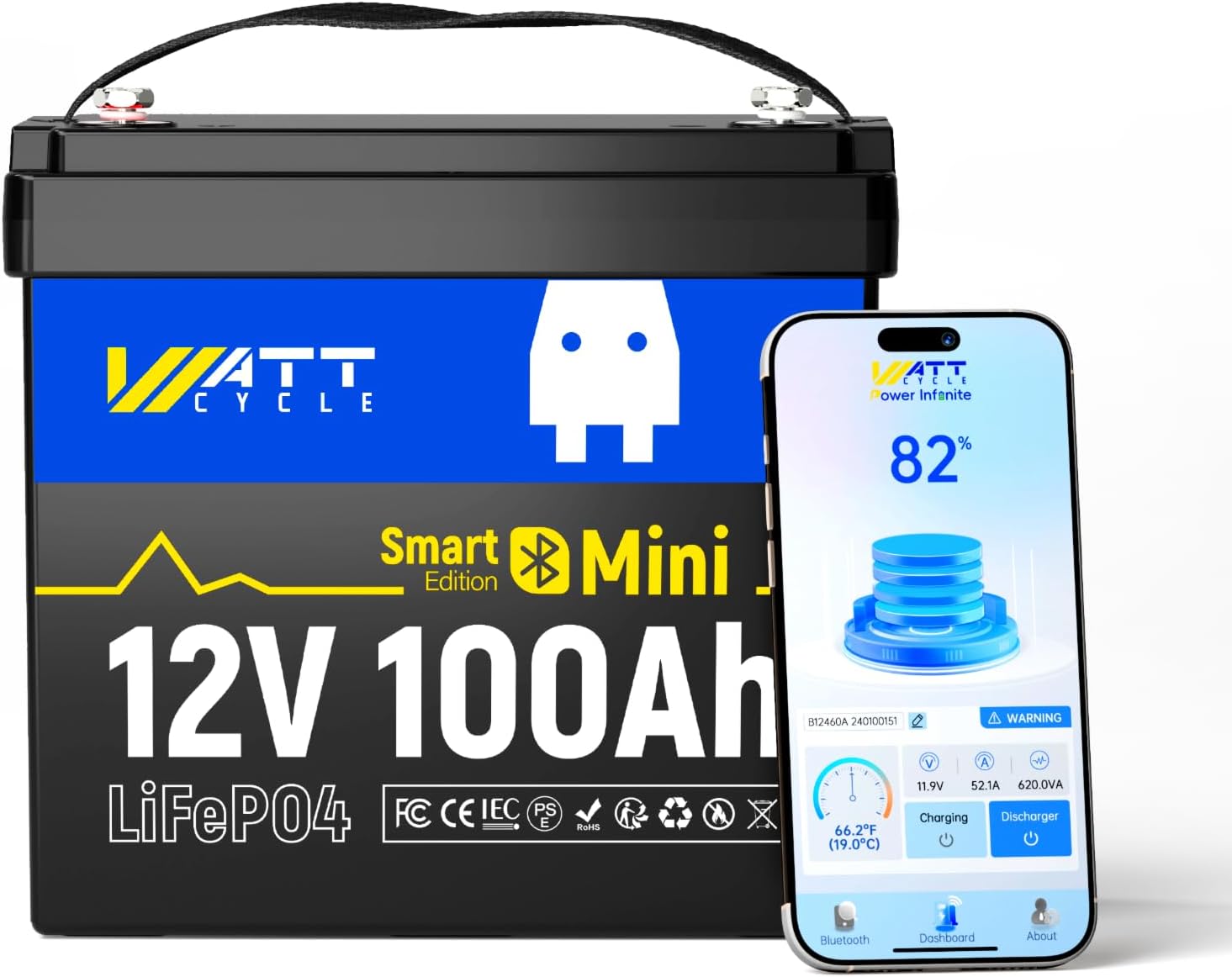
The WattCycle LiFePO4 RV Battery is popular because it promises the “holy trinity” RVers want: usable capacity, lighter weight, and modern BMS (Battery Management System) features—often with Bluetooth. But the owner feedback is clear: the battery performance is usually the hero, while the Bluetooth app experience can be either genuinely helpful or genuinely annoying depending on your phone, the app version, and sometimes luck.
To help you decide faster, I’m pulling together the real patterns RV and marine owners keep repeating—what they love, what they regret, and who should skip it.
Related reading (helps you plan the whole power setup): If you’re building a full off-grid system, start with How to Size Your RV Solar System.
Quick Summary
- Best for: RVers who want a compact, lightweight 12V lithium house battery with lots of usable power for weekends or full-time use.
- Big wins owners mention: strong real-world runtime, stable power delivery, good value, and (when it behaves) Bluetooth monitoring.
- Main caveat: a meaningful chunk of complaints revolve around Bluetooth app reliability, permissions, passwords/lockouts, and occasional BMS lockup/defect stories.
- If you hate apps: consider treating Bluetooth as a “nice-to-have,” not a must-have—many owners recommend adding a separate monitor instead.
Quick Verdict
If you want a lightweight LiFePO4 upgrade that most owners say delivers real usable power (even under heavy loads), the WattCycle battery is a strong value pick. The only reason to hesitate is the Bluetooth/app ecosystem—some owners love it, others call it glitchy or too locked down.
👉 Check the WattCycle LiFePO4 RV Battery price and owner reviews on Amazon: https://amzn.to/48WElRL (opens in a new tab)
What This Battery Is (and Why RVers Buy It)
A LiFePO4 (Lithium Iron Phosphate) RV battery is a modern replacement for lead-acid/AGM house batteries. In practical RV terms, it’s meant to:
- Run your 12V loads (lights, fans, water pump, furnace blower, USB outlets)
- Support inverter use (microwave, TV, coffee maker—within your inverter limits)
- Pair well with solar charging for boondocking/off-grid camping
Owners repeatedly choose WattCycle because it targets the sweet spot: “name-brand-like performance” at a more approachable price, and the compact “mini” form factor is a big deal if your battery bay is tight.
Key Features That Matter in Real RV Use
Here’s what repeatedly shows up as “decision-making features” in owner feedback:
- Compact, lightweight build: multiple owners mention how surprisingly easy it is to lift versus lead-acid batteries.
- 12V 100Ah class sizing: a common “drop-in” upgrade for many RV battery compartments and 12V systems.
- Bluetooth monitoring (on some models): owners like seeing state of charge and basic stats without adding a shunt—when the app cooperates.
- Built-in BMS protections: many buyers cite peace of mind from protection behavior and the battery “saving itself” under abnormal conditions.
- Cold-temp behavior: some owners specifically bought it for low-temp charging protection; others ran into confusion around temperature limits depending on model/app info.
Quick Specs Table (As Owners Commonly Describe the 12V 100Ah Mini Bluetooth)
| Spec / trait | What owners commonly report |
|---|---|
| Nominal system | 12V RV house systems |
| Capacity class | 100Ah “mini” is the most commonly reviewed |
| Weight (typical owner-reported) | ~20–22 lb range (much lighter than lead-acid) |
| Monitoring | Bluetooth app for battery stats (model-dependent) |
| Typical use cases | RV house battery, small inverter loads, trolling motors, DIY power boxes |
Note: WattCycle sells multiple capacities and versions. This review reflects the repeated themes from many 12V 100Ah Mini Bluetooth-style owner reports, plus a few higher-capacity mentions.
Real-World Owner Summary (Amazon Review Patterns)
Based on the owner snippets , the overall sentiment looks like this:
- Overall rating trend: heavily skewed toward 4–5 stars, with a noticeable pocket of 1–2 star warnings tied to app/BMS failures or defective units.
- Most loved: runtime + usable power (especially compared to lead-acid), plus the lighter weight.
- Most common gripe: Bluetooth app issues (permissions, connection instability, password/lockouts, or “works on one phone but not another”).
- Best for: RVers who want serious power in a smaller battery and are okay with basic troubleshooting.
- Not ideal for: anyone who expects a polished “smart battery” app experience with full control, or who can’t tolerate occasional BMS/app drama.
👉 See the WattCycle LiFePO4 RV Battery on Amazon: https://amzn.to/48WElRL (opens in a new tab)
What Real Owners Like (Pros)
1) “It just keeps going” runtime under real load
The most compelling stories are about how long the battery holds up when it actually matters. One owner described running a demanding setup for long sessions and still seeing plenty of charge left afterward—especially in scenarios where their old lead-acid bank would have quit much earlier.
Why you care in an RV: This is exactly what you want for boondocking—stable power that doesn’t fall on its face halfway through the night.
2) Lightweight and compact feels like an instant upgrade
A constant theme: people love that it’s easy to handle, easy to fit into cramped spaces, and doesn’t feel like wrestling a concrete block.
RV benefit: easier installs, less strain on battery trays, and a cleaner fit for multi-battery setups.
3) Strong value for the money
Many owners explicitly mention the price being a major motivator and feeling like they got a lot of performance per dollar—especially when they bought during sales.
RV benefit: you can often allocate budget to the rest of your system (charger, wiring, fusing, solar, inverter) without feeling like the battery ate the whole project.
4) Bluetooth monitoring can be genuinely useful (when it works)
When the app behaves, owners love checking basic stats and state of charge without buying extra gear.
Practical RV takeaway: Bluetooth is helpful for quick checks at the campsite—just don’t build your entire monitoring strategy around it.
5) Customer service is frequently praised in positive outcomes
A meaningful number of owners say support responded quickly and replaced batteries that arrived dead or failed early—sometimes with surprisingly painless warranty handling.
Reality check: not everyone had this experience (see cons), but it’s notable that many people reported good resolutions.
What Real Owners Complain About (Cons)
1) The Bluetooth app experience is inconsistent
This is the #1 recurring pain point.
Common themes owners describe:
- App updates breaking functionality
- Permissions requests that feel excessive
- Batteries that connect one day and refuse the next
- Password prompts to access basic controls
- Short Bluetooth range or poor reconnect behavior
What this means for you: If you’re buying the Bluetooth version primarily for monitoring, you should be comfortable with the possibility that you’ll still want a separate monitor later.
2) “Lockup” and BMS weirdness shows up in a minority—but serious—set of reports
Some owners describe BMS lockup, sudden shutoffs, odd state-of-charge behavior, or cells appearing out of balance. A few long-term reports claim repeated failures across multiple batteries.
How to interpret it: Most owners in your snippets are happy, but the negative reports are severe enough that it’s smart to:
- buy with a plan for warranty documentation (photos, basic tests)
- avoid building mission-critical systems with zero backup plan
3) Quality control is uneven (dead-on-arrival stories exist)
More than a few owners mention a battery arriving at very low voltage or not functioning out of the box—followed by replacement success.
RV takeaway: test everything immediately when it arrives (I’ll give you a simple checklist below).
4) “Smart battery” expectations vs reality
Some buyers expected full “smart control,” fine tuning, alerts, and smooth UX. Instead they got limited controls, locked settings, or unclear behavior.
Bottom line: Treat Bluetooth as monitoring-first. If you want deep control, many owners suggest you’ll end up with a dedicated monitoring setup anyway.
Pros & Cons Box (Fast Take)
Pros
- Big usable power for 12V RV loads and moderate inverter use
- Lightweight and compact (especially compared to lead-acid)
- Strong perceived value for the money
- Bluetooth monitoring is convenient when stable
- Many owners report responsive customer service
Cons
- App can be glitchy, locked down, or demanding with permissions
- Occasional BMS lockups / imbalance / sudden drop reports
- Some DOA or early failure stories (warranty often resolves, but still a hassle)
- Bluetooth range/reconnect issues reported by some owners
Who This Battery Is Best For (and Not For)
Best for you if…
- You’re upgrading from lead-acid/AGM and want the biggest real-world improvement per dollar
- You boondock and want steady power for lights, fans, pump, heater blower, and device charging
- You’re building a small-to-medium inverter setup (and you’re wiring/fusing correctly)
- You want a compact battery that’s easier to fit in tight compartments
- You’re okay doing basic setup/testing and occasional troubleshooting
Skip this if…
- You want a flawless, polished app experience and hate dealing with updates or connection quirks
- You need industrial-grade reliability with zero tolerance for BMS/app drama
- You’re building a high-demand luxury setup where monitoring accuracy and long-term cell balance is non-negotiable
- You will be unhappy if you end up adding a shunt monitor anyway
WattCycle vs Lead-Acid/AGM in Real RV Terms (Quick Comparison)
| What you care about | Typical lead-acid/AGM experience | What owners commonly report with WattCycle LiFePO4 |
|---|---|---|
| Weight | Heavy and awkward | Dramatically lighter, easier installs |
| Usable capacity | Many RVers try not to drain too deeply | Owners commonly run it harder and still get strong performance |
| Voltage stability | Can sag as it drains | Owners often describe steadier power delivery |
| Monitoring | Often minimal unless you add gear | Bluetooth can help (but may be unreliable) |
Mini Real-World Stories Owners Keep Repeating
- The “saved the day” story: Several owners describe demanding sessions where the battery held up far longer than expected—exactly the kind of outcome you want when you’re off-grid and you can’t just “plug in.”
- The “app ruined the smart part” story: Some owners love the battery but say the app either stopped working after an update or required frustrating permissions/password steps.
- The “support made it right” story: A noticeable group reports early problems (including dead batteries) but says the company resolved it quickly—sometimes with replacements and covered return shipping.
Installation & Usage Tips (Practical, Owner-Informed)
Before you install: 10-minute sanity checklist
- Check voltage at arrival with a basic multimeter (owners often treat “very low voltage” as a red flag).
- Fully charge it once before your first trip if possible.
- If you bought Bluetooth, test the app connection right away while you’re still in your return/warranty window.
- Inspect terminals, included bolts, and make sure your cable lugs fit cleanly.
Basic RV install steps (12V house battery)
- Turn off shore power and your RV’s main battery disconnect.
- Remove the old battery and clean cable lugs.
- Place the WattCycle battery securely (no sliding).
- Connect positive first, then negative. Tighten snugly (don’t over-torque).
- Power up and test your main 12V loads (lights, water pump, fans).
- If you run an inverter, test it with a modest load first, then step up gradually.
Charging compatibility tip (USA/Canada/Australia)
- Your RV’s DC system is still 12V, but shore power differs (typically 120V in the US/Canada and 230–240V in Australia).
- What matters is your converter/charger and solar charge controller settings. If you’re not sure your rig is lithium-ready, read: RV Solar Maintenance & Troubleshooting Guide (it includes the same “check your charging gear” mindset that prevents headaches).
Pro-tip for inverter users
If you plan to run a microwave/coffee maker/TV, pay attention to:
- inverter size (watts)
- cable gauge and length
- fusing and disconnects
- airflow (don’t trap heat)
If you want a broader safety checklist for wiring and load planning, this guide is worth bookmarking: RV Electrical Safety Tips.
Bluetooth App Tips (So You Don’t Lose Your Mind)
If you’re buying the Bluetooth model, here’s the simplest “owner-style” approach:
- Use the official app from your phone’s app store (avoid random QR codes or third-party download pages).
- If the app asks for permissions you’re not comfortable with, consider using a spare/old phone dedicated to RV gear monitoring.
- If you see a password/locked controls situation, treat the app as “view-only” and focus on basic monitoring.
- If Bluetooth range is weak, test connection with your phone close to the battery bay—some owners report very short range.
- If you need dependable state-of-charge, consider budgeting for a separate monitor so you’re not stranded by an app update.
Is WattCycle “Worth It” for RV Boondocking?
For most RVers in your review set, the answer is yes—if you’re buying it primarily for battery performance, and you treat Bluetooth as optional.
You’re effectively paying for:
- lighter weight
- compact fit
- lots of usable energy for typical RV loads
- a BMS that usually does its job
…and you’re accepting the risk that: - the app may be annoying
- a small number of batteries may arrive defective or act up later
If you’re planning your full off-grid setup (battery + solar + inverter), you’ll get better results by sizing the system correctly up front: How to Size Your RV Solar System.
FAQ
Q1: Is the WattCycle LiFePO4 battery a good “drop-in” RV house battery replacement?
For many RVers, yes—especially in 12V systems replacing lead-acid/AGM. The main “gotcha” is making sure your converter/charger and solar controller are set up appropriately for lithium charging behavior.
Q2: Should you buy the Bluetooth version or the non-Bluetooth version?
If you want convenience and you’re comfortable troubleshooting app quirks, Bluetooth can be handy. If you want maximum simplicity and reliability, many owners suggest saving money and using a separate monitor instead.
Q3: Can you run an inverter with this battery?
Many owners do, including powering common RV appliances. Just make sure your inverter size, wiring, and fusing are appropriate, and don’t push beyond what your setup can handle.
Q4: What’s the most common complaint from owners?
The Bluetooth app experience: connection issues, permissions, password/lockouts, and inconsistent behavior across phones or app versions.
Q5: What should you do if the battery arrives “dead” or acts weird out of the box?
Test voltage, try a full charge, and document everything (photos/video). Several owners report that support replaced defective units—so early testing is important.
Final Verdict
Final Verdict: The WattCycle LiFePO4 RV Battery is often a legit performance upgrade for RVers who want more usable power with far less weight—especially for boondocking and everyday 12V loads. Most happy owners focus on runtime, stable output, and value. The consistent downside is the “smart” part: Bluetooth/app reliability and occasional BMS-related complaints.
If you can live with that tradeoff—and you test the battery early—it’s a strong contender in the budget-friendly lithium category.
👉 See the WattCycle LiFePO4 RV Battery on Amazon: https://amzn.to/48WElRL (opens in a new tab)