EF ECOFLOW DELTA 2 Max Portable Power Station Review: The “2kWh Sweet Spot” for RV Backup Power (Real Owner Patterns)
Why RVers Buy “2kWh” Power… Then Still Get Surprised
I’ve seen this movie a lot: you buy a big-name power station, you see 2048Wh on the spec sheet, and your brain does the classic RV math—“That’s basically unlimited power for a weekend.” Then you actually plug in real RV loads (fridge cycling, Starlink, furnace fan, coffee maker, maybe a microwave), and suddenly you’re doing battery percentages like it’s your new hobby.
This review is my deep-dive synthesis of real owner experiences with the EF ECOFLOW DELTA 2 Max portable power station—especially the patterns that show up after the honeymoon phase. I spent hours digging through what people loved, what they worked around, and what made some owners furious. The goal is simple: save you time, money, and that “why is it shutting off?” moment when you’re off-grid.
Quick Verdict (TL;DR)
- The EF ECOFLOW DELTA 2 Max portable power station is a genuinely capable 2kWh-class unit: fast AC charging, strong inverter output for most RV essentials, and lots of usable ports.
- The biggest real-world tradeoffs are weight/portability, solar setup friction (cables/limits/expectations), and a minority of reports involving firmware/app/support headaches.
- If you want a “quiet generator replacement” for lights, fridge support, charging, and short bursts of high-watt cooking—this is in the right lane. If you expect long air-conditioner runtime or totally hands-off reliability, you need to read the ugly parts below.
Confidence Score: 8.3/10 (Hardware performance is strong. The score drops for recurring “ecosystem” issues: accessories, support consistency, and a few reliability edge cases.)
- Check price on Amazon: EF ECOFLOW DELTA 2 Max
Affiliate & Safety Disclaimer (Please Read)
- This post includes an Amazon affiliate link. If you buy through it, I may earn a commission at no extra cost to you.
- Portable power stations contain high-current electronics. Follow the manufacturer manual, don’t defeat safety features, and use proper cable sizing for any DC expansions or RV integrations.
Specs That Actually Matter for RV Use
Here’s what I focus on for RV reality—not marketing vibes:
- Capacity (Energy): ~2048Wh
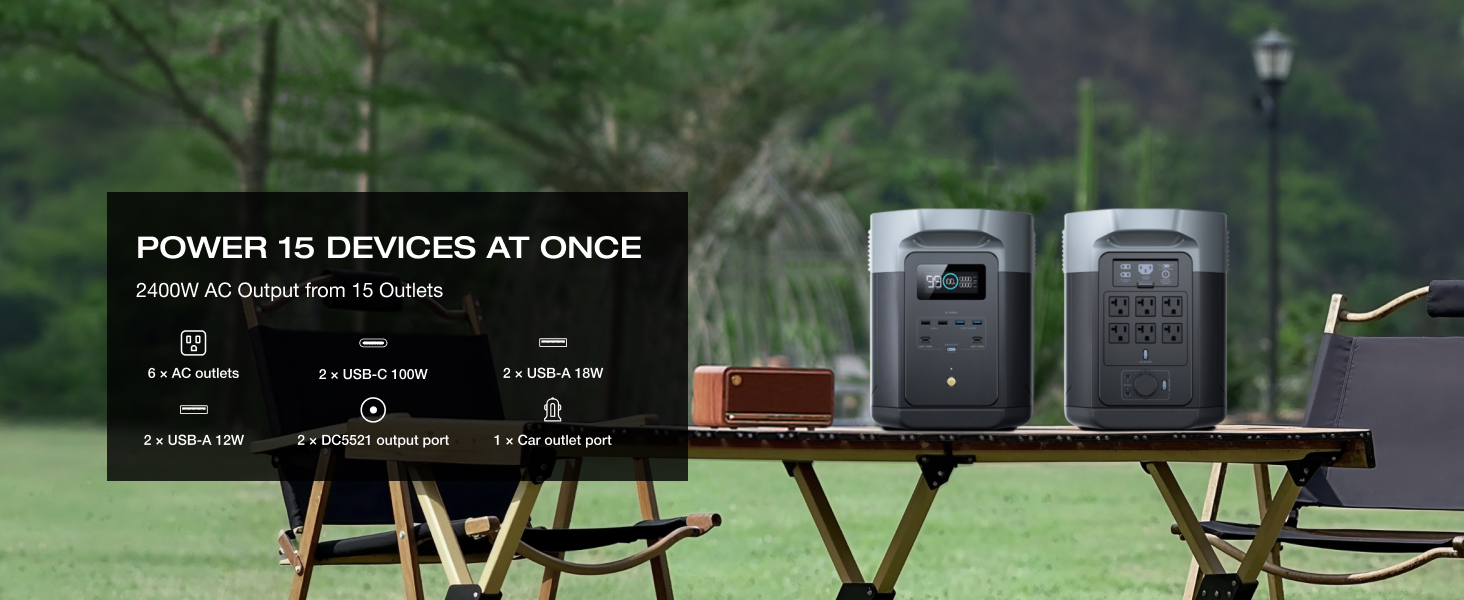
Think of watt-hours like “fuel in the tank.” 2048Wh is a lot… but not infinite. After inverter losses, you rarely get the full number as usable AC power. - Inverter Output (Power): ~2400W continuous class
This is the “how many things can I run at once?” number. Many RV essentials are small (50–300W), but cooking appliances aren’t. - Battery Chemistry: LiFePO4 (LFP)
In RV terms: safer chemistry, typically better cycle life, and generally more tolerant of regular use than older lithium blends. It’s one of the reasons many buyers specifically chose this unit. - Charging Options
Owners consistently praised how fast it can charge from a wall outlet. Your results depend heavily on panel wattage, sun angle, wiring, and staying inside the unit’s input limits. - Weight/Portability
Many people describe it as “portable” in the sense that it has handles and you can move it—but it’s still a serious lift if you’re doing stairs, uneven ground, or daily repositioning.
The One Piece of Battery Math You Actually Need
I keep it simple:Estimated runtime (hours)≈Load WBattery Wh×0.85
That “0.85” is a rough real-world efficiency factor for inverter/conversion losses.
Example:
If you run a 150W load (router + Starlink-ish + a couple lights):1502048×0.85≈11.6 hours
If you run a 1000W appliance (air fryer / microwave-ish range):10002048×0.85≈1.7 hours
This is exactly why owners report wildly different experiences: the load profile matters more than the sticker.
Technical Deep Dive (Without the Engineering Lecture)
1) LiFePO4 vs AGM vs “Other Lithium” (Why RVers Care)
If you’re coming from AGM or lead-acid house batteries, a LiFePO4-based station like this feels like cheating:
- Stable voltage delivery: Your devices “feel” consistent power for longer.
- Higher usable capacity: Lead-acid doesn’t like deep discharge; lithium tolerates it better (within normal management).
- Better power density: Still heavy, but you get a lot more usable energy per pound compared to lugging lead bricks.
That said, lithium stations introduce new considerations: firmware, app control, input limits, and sometimes “smart” behavior that’s great when it works—and maddening when it doesn’t.
2) Continuous vs Surge Power (Why Some Things Start… and Others Don’t)
Many RV appliances pull a quick surge at startup (compressors, motors). Owners had good success running refrigerators/freezers, and some tested motor loads successfully. Where people get disappointed is when they expect long duration for high draw devices (space heaters, RV air conditioners).
My rule: if it heats air or moves a lot of air, it drains batteries fast. That’s physics, not brand.
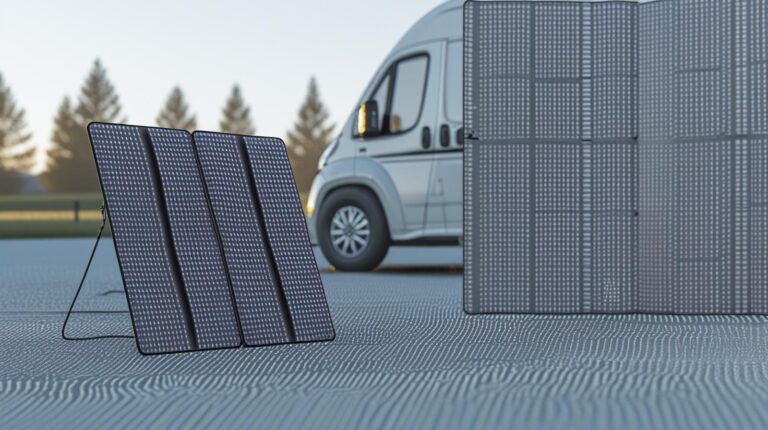
3) Solar Charging Reality (Why 400W Often Looks Like 300W)
A big owner pattern: solar panels rarely hit their rated output for more than brief moments. Heat, angle, cloud haze, wiring length, and charge-controller limits all chip away at the “nameplate” wattage.
If you want a clean foundation before you even buy panels, these internal guides will save you pain:
Key Features (Benefit-Driven & Comparative Table)
This is the “marketing vs reality” table I wish every RV buyer could see.
| Feature | What the Manufacturer Says | What It Actually Means (User Experience) | Compared to Competitors |
|---|---|---|---|
| ~2048Wh capacity | “Long-lasting backup power” | Strong runtime for fridges, lights, routers, and devices—but not “all-night AC” unless you’re using very light loads. | Bigger runway than ~1kWh class units (e.g., “1000Wh” stations), similar class to other ~2kWh competitors. |
| ~2400W inverter (class) | “High-power output” | Owners commonly ran appliances like microwaves/air fryers briefly, plus multiple devices at once. High draw still drains fast. | Competitive with other 2kWh stations; enough to run most RV “normal life,” not a whole-home unit. |
| Fast AC charging | “Rapid recharge” | One of the most consistent positives: people routinely mention it jumps percentage quickly and reaches high charge surprisingly fast. | Often faster-feeling than older gen stations; a key reason buyers choose EcoFlow. |
| Solar charging (dual input behavior shows up in reviews) | “Flexible solar input” | Works well when wired correctly, but many owners learned the hard way: cable compatibility, voltage caps, and real sun output matter. | Some competitors include more complete “in-the-box” solar cabling; EcoFlow owners more often mention needing extra adapters. |
| App monitoring / control | “Smart control” | Useful for monitoring and settings; however, a minority report frustrations with account/login, automation limits, or connectivity quirks. | Similar story across the category: apps add features, but they also add failure points. |
| Portability (handles, compact form) | “Take it anywhere” | Portable-ish, but weight is a repeated theme. Many owners use a dolly/cart or plan two-step moves. | Heavier than small units, similar to most 2kWh class devices; wheels are the feature people keep wishing for. |
Real User Experience Analysis (Deep Pattern Breakdown)
This is the part most reviews hint at. I’m going to say it plainly.
Pattern #1: First Impression Is Almost Always “Premium + Fast”
Across a lot of happy owners, the first day looks like this:
- It arrives well packaged.
- It feels solid and well-built.
- AC charging feels almost shockingly fast.
- It runs a pile of household/RV devices without drama.
If you only read the first-week reviews, you’ll think the EF ECOFLOW DELTA 2 Max portable power station is basically flawless.
Pattern #2: The “Six-Month Truth” Is Mostly About Ecosystem Friction
After months of use, the themes that start showing up are less about raw power and more about ownership experience:
1) Solar setup surprises
- Some bundles don’t include the exact adapter/cable owners expected for solar input.
- People end up buying extra connectors or building their own solar wiring approach.
- A few owners complained about panel fragility or awkward stands in the portable panel kits.
2) App/firmware and control expectations
- Some owners love the monitoring.
- Others feel locked into using the app for deeper settings and dislike that dependency (especially in “grid-down” thinking).
3) Reliability edge cases
Most owners report “works as designed.” But there’s a visible minority reporting:
- random shutoffs, overload warnings,
- odd solar input behavior,
- outputs failing (like 12V), or
- capacity decline over time.
That doesn’t mean “it will happen to you,” but it’s common enough that I factor it into the buying decision.
CTA (because if you’re still reading, you’re serious):
- See current deal on Amazon: EF ECOFLOW DELTA 2 Max
What You Can Realistically Run in an RV (Examples That Match Owner Reality)
“The RV Essentials” Loadout (Great Fit)
These are the scenarios that owners repeatedly succeed with:
- 12V/USB charging: phones, tablets, cameras
- Internet gear: router + modem, small network switches
- Lights: LED lighting, small lanterns
- Fridge support: powering a residential fridge or freezer for meaningful stretches
- Small cooking bursts: coffee maker, microwave, air fryer (short runs)
“The Dream” Loadout (Where People Get Disappointed)
This is where expectations crash:
- RV air conditioner: even if it starts, it’s typically short runtime. One owner specifically called out very limited A/C duration in RV use.
- Space heaters: brutal drain.
- All-day high-watt cooking: possible in bursts, not as a lifestyle without significant recharging.
If climate comfort is your goal, it’s worth reading this internal guide alongside any power-station purchase:
Pros / Cons (The Good, The Bad & The Ugly)
The Good (Why Most People Are Happy)
Based on the reviews, roughly 70–80% of positive sentiment clusters into these themes:
- Fast charging that feels “real”
People repeatedly mention how quickly the percentage climbs on AC charging—especially compared to older power stations. - Strong, clean output for multiple devices
Owners ran fridges, TVs, routers, sewing machines, tools, and event equipment without the unit feeling “on the edge.” - Build quality and “confidence factor”
Many buyers specifically chose the LFP chemistry and the overall solid feel. - Quiet operation (relative to gas generators)
Several owners highlight that it’s not distracting in normal use—especially compared to generator noise overnight.
The Bad (Common Annoyances You Should Assume You’ll Face)
These show up consistently enough that I treat them as “plan for it” items:
- It’s heavy
Many owners consider it manageable, but not “fun portable.” A small dolly/cart is a smart add-on. - Solar is slower than people expect
Even with big panels, real-world wattage often lands below the nameplate rating. That’s normal—but it still disappoints buyers. - Accessories can feel overpriced / incomplete
Multiple owners complained about needing extra bits (cables, adapters) or found expansion add-ons expensive.
The Ugly (Minority Reports, But Important)
This is the trust-building section. A smaller group of owners reported:
- Support quality inconsistency
Some had excellent experiences. Others reported long silences, confusing back-and-forth, or slow resolution. - Firmware/app friction
Reports include automation limitations, account requirements, or troubleshooting that feels too dependent on the app. - Reliability failures (overload errors, output faults, units that stop powering on)
These are not the majority—but they exist, and you should buy with eyes open (and test early).
Owner Stories (The Human Side)
These are paraphrased “mini-stories” based on recurring scenarios I saw across review set. If you want to read the broader pool of owner experiences, here’s the context link:
Story 1: The “Hurricane Week” Reality Test
One owner basically got thrown into a real outage scenario shortly after buying—fridges, freezers, long nights, and neighbors running loud gas generators nonstop. Their pattern was smart: use the power station overnight for quiet, then recharge strategically (including generator top-ups) instead of running a gas generator 24/7. That’s a very “grown-up” way to use a power station: quiet when you need quiet, fast recharge when you can.
Story 2: The “Full-Time Traveler” Work Rig
Another owner used it for traveling work needs—running gear like a sewing machine reliably during shows and stretching runtime with solar. What stood out wasn’t “infinite power,” but that it handled a real workload without drama and fit into a two-power-station lifestyle (one for portability, one for heavier duty).
Story 3: The “Family Overseas” Use Case
A surprisingly common theme: people buying these specifically to help family in places with unstable grids. The consistent praise here is that the unit can run essential appliances and lights—but owners also repeatedly emphasize “don’t run everything at once” and “charging strategy matters.”
Expert Tips & Setup Hacks (Stuff Owners Learned the Hard Way)
1) Do a Full Calibration Cycle Early
Several experienced users recommend a first-week routine:
- Charge to 100% on AC
- Run a meaningful load until it shuts down (or very low)
- Recharge fully
This helps you learn real runtime behavior and can reduce “surprise percentage swings” later.
2) Don’t Assume Solar Is Plug-and-Play
Before your first trip, do a driveway test:
- Confirm you have the right solar adapter cables for your panel type
- Verify the unit reads solar input reliably
- Check that your panel wiring stays inside voltage limits (owners repeatedly mention this being important)
If you want a clean RV-specific framework for solar planning:
3) Manage Heat Like You’re Babysitting a Laptop (Because You Are)
Owners commonly shaded the unit during solar charging and avoided cooking it in direct sun. Keep airflow clear, and don’t bury it under blankets or storage bins.
4) Be Realistic About Tiny Loads and “Inverter Overhead”
A few owners noticed the unit can consume more power than expected when running very small AC loads for long periods (think modem-only scenarios). If your goal is ultra-long runtime on tiny loads, you may need to optimize:
- use DC/USB outputs where possible,
- avoid leaving AC inverter on unnecessarily,
- test your real consumption.
5) RV Power Safety: Don’t Backfeed Your Rig
If you plan to connect this to your RV’s electrical system, do it safely. For RV-specific electrical protection and best practices:
Who This Is For (And Who Should Skip)
Buy the EF ECOFLOW DELTA 2 Max portable power station if you:
- Want a serious-capacity station for fridge backup, lights, charging, and moderate cooking bursts
- Value fast AC recharging (big owner satisfaction driver)
- Plan to use solar, but you’re willing to learn basic solar wiring/cables and accept real-world output
- Prefer a quieter alternative to running a gas generator all night
Skip it (or size up your plan) if you:
- Expect all-night RV air conditioner runtime from a single ~2kWh station
- Need “set it and forget it” reliability with zero app/firmware friction tolerance
- Cannot handle the weight without a cart/dolly plan
- Are sending it overseas and won’t be able to service it easily if something goes wrong
Deep-Dive FAQ (RV-Focused)
1) Can it run an RV air conditioner?
Sometimes, depending on the A/C and startup surge. But runtime is typically short because A/C is a heavy load. Owner feedback includes disappointment when expecting long A/C operation from a ~2kWh station. If A/C is your main goal, you’ll likely need a bigger power plan (more battery capacity and/or aggressive recharging).
2) How long will it run a refrigerator?
Many owners report strong fridge/freezer performance. Real runtime depends on your fridge’s average watts (compressor cycling matters). A fridge that averages ~100–150W can often run many hours; add solar and you can stretch it dramatically.
3) Why don’t my solar panels hit their rated wattage?
Because panel ratings are under lab conditions. Heat, angle, clouds/haze, and wiring losses reduce output. Many owners see a consistent “below-sticker” reality, with brief peaks near rating under ideal alignment.
4) Do I need the app?
It will power on and deliver power without the app, but multiple owners dislike that deeper settings/controls can be app-dependent. If you hate app ecosystems, factor that into your decision.
5) Is it portable enough for camping?
Yes—if you define portable as “moveable with handles,” not “lightweight.” Many owners can move it, but a wheeled cart makes life better.
Final Verdict: A Strong 2kWh-Class RV Workhorse—If You Buy It for the Right Job
Here’s my honest take after synthesizing these owner reports: the EF ECOFLOW DELTA 2 Max portable power station is at its best when you use it like a smart, quiet energy reservoir—one that you recharge fast, deploy strategically, and don’t expect to replace unlimited shore power.
Most happy owners use it for exactly what RV life demands: keep essentials running, stay comfortable, and avoid the noise (and smell) of a generator during the hours that matter. The unhappy stories cluster around three things: expecting too much runtime from high-watt loads, underestimating solar setup realities, and dealing with occasional ecosystem/support friction.
If your plan matches the strengths—this is a very compelling “2kWh sweet spot.”
- See price on Amazon: EF ECOFLOW Portable Power Station DELTA 2 Max