Jackery Explorer 1000 v2 Review (2026): Fast-Charging 1070Wh Power Station for RV Camping & Outages
Why Most RVers Buy a “1000Wh” Power Station… and Still Get Surprised
If you RV long enough, you eventually have that night: the campground power pedestal trips, the generator is too loud (or not allowed), and your “simple plan” to keep the fridge cold and the CPAP running turns into battery math at 2 AM.
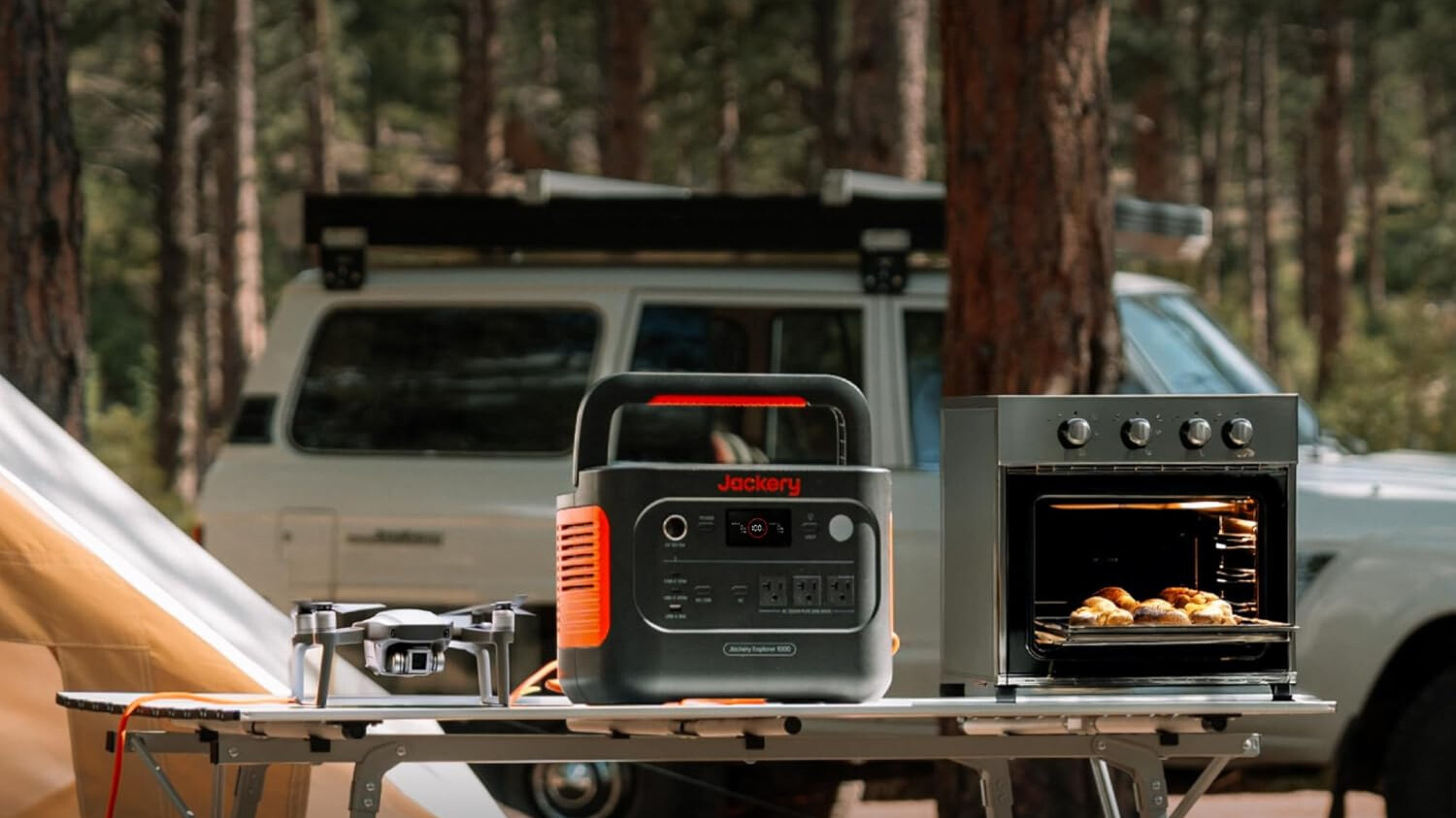
That’s exactly why the Jackery Explorer 1000 v2 Portable Power Station is so popular. On paper, it’s the sweet spot: ~1kWh capacity, a 1500W pure sine wave inverter, fast charging, and enough ports to run the “real life” stuff—without gas, fumes, or noise.
But here’s the part most marketing pages don’t explain well: how a 1070Wh battery behaves in the real world depends heavily on how you use it (AC vs DC, low-watt loads vs high-watt bursts, solar conditions, standby draw, and even app behavior).
For this review, I went through a large batch of owner experiences and pulled out the patterns—what holds up, what frustrates people, and what you should expect before spending your money.
Quick Verdict (TL;DR)
- The Explorer 1000 v2 is a strong all-around choice for RV weekends, CPAP use, fridge support during outages, and portable 120V power—especially if you value fast AC recharging and quiet operation.
- The biggest real-world “gotchas” are AC efficiency losses/standby draw, solar charging being more hands-on than people expect, and Bluetooth/Wi-Fi/app quirks for some owners.
- If you size it realistically (and don’t expect miracles from a single 200W panel), it’s a dependable workhorse.
Confidence Score: 8.4/10 (Excellent core performance; points deducted for connectivity/app friction + solar/connector ecosystem issues)
- Get the Jackery Explorer 1000 v2 on Amazon: Check price on Amazon
- Read more real buyer feedback: See Amazon owner reviews
What This Power Station Is (and Isn’t) for RV Use
Think of the Jackery Explorer 1000 v2 as a quiet, portable “electric outlet box” backed by a ~1kWh battery.
It’s great for:
- CPAP/BiPAP overnight
- Starlink / router / modem backup (short outages or UPS-like behavior)
- 12V fridge / portable cooler support (especially if you’re smart about DC vs AC)
- Coffee maker / kettle / microwave in short bursts
- Lights, fans, phones, drones, camera gear
- Power tools when you don’t want extension cords (within inverter limits)
It’s not great for:
- Running a space heater for hours
- Portable AC units (many will shut it down quickly or drain it fast)
- Anyone who expects solar to be “set it and forget it” with a single folding panel
Technical Deep Dive (Explained Like You’re Actually Using It)
1) LiFePO4 battery: why it matters
The v2 model’s biggest practical upgrade is LiFePO4 (LFP) chemistry. Compared to older lithium chemistries commonly used in portable power stations, LiFePO4 is favored because it tends to offer:
- Longer cycle life (better for repeated use)
- More stable thermal behavior
- Better “own it for years” value if you use it often
If you want a deeper battery-chem breakdown for RV electrical planning, this pairs nicely with your battery research here:
2) 1500W inverter: the real meaning
A 1500W pure sine wave inverter is the difference between:
- “I can charge devices and run small stuff” vs
- “I can run real 120V appliances briefly”
Owners repeatedly used it successfully for things like:
- Coffee makers and kettles in short runs
- Small heaters on lower settings
- Power tools (sand ers, small saws, shop vacs, compressors) within surge/start limits
The important nuance: surge power claims don’t mean every motor load will start reliably. Some tools and compressors have nasty startup spikes that can still cause a fail.
3) Fast AC charging: why people love it
This is one of the most consistently praised real-world advantages:
- Many owners reported “top-up to full” being surprisingly fast
- Some noted that the fastest “emergency” charge mode can draw very high wattage, and should be used sparingly (and with circuit awareness)
In practice: fast AC charging changes how you plan RV trips and outages. If you can recharge quickly at home, a friend’s house, or with a generator for a short period, the unit becomes much more flexible.
4) Solar charging: works, but expectations must be realistic
Solar is where the story splits:
- Some owners got near-rated panel output under ideal alignment and conditions
- Others found it finicky, especially with folding panels, partial shading, heat, or imperfect sun angle
If you’re building an RV solar plan (and want the fundamentals + realistic expectations), use this as your internal reference:
Key Features (Benefit-Driven & Comparative)
| Feature | What the Manufacturer Says | What It Actually Means (User Experience) | Compared to Competitors |
|---|---|---|---|
| 1070Wh LiFePO4 battery | “Long-lasting, durable power” | Great for multi-night CPAP, long router runtimes, and practical RV loads—but AC runtime depends on conversion losses and standby draw | Similar class to other ~1kWh units; expectations vary by how transparent brands are about AC efficiency |
| 1500W pure sine inverter (surge capable) | “Powers most appliances” | Runs a surprising amount, but high-draw heat and some motor startups can still be a hard stop | Competitive in class; some brands offer higher inverter wattage but may weigh more |
| Fast AC charging | “Quick recharge” | One of the biggest quality-of-life wins: owners repeatedly report fast top-ups | Often a deciding factor vs slower-charging alternatives |
| Solar input + foldable panels | “Off-grid ready” | Works well when aligned and supported, but many learn it’s hands-on to maintain high input | Solar experience is highly ecosystem-dependent across brands |
| App (Wi-Fi / Bluetooth) | “Remote monitoring & control” | Helpful for watts/temps/status, but some owners report disconnects, slow responses, and resets | App quality varies widely across brands; Jackery isn’t alone in having complaints |
| Port selection | “Multiple devices at once” | Great for mixed loads, though some owners wish for different USB mix or included cables | Port layouts are preference-based; check your device list before buying |
Real-World Performance: What You Can Actually Run (RV Scenarios)
Scenario 1: CPAP/BiPAP overnight (the #1 RV use-case)
This is where the Explorer 1000 v2 shines for many buyers. Multiple owners reported:
- Multi-night CPAP/BiPAP support with meaningful reserve left
- Some people bought it specifically as a power-outage safety plan for medical devices
My pro take:
If CPAP is your priority, you’ll get the best runtime by:
- Avoiding unnecessary inverter-on time
- Considering DC/USB options where possible
- Turning off outputs you aren’t using
Scenario 2: Refrigerator / freezer during outages
Owners used it to keep:
- Kitchen fridge/freezer cold for extended periods
- Portable coolers running for long stretches
- Routers and basic household electronics during storms
The key reality: refrigerators cycle. The better your strategy (door discipline + cycling + knowing your average draw), the farther you’ll stretch a 1kWh class station.
Scenario 3: Coffee, blankets, and “RV comfort”
A pattern I saw repeatedly: people love this thing for the comfort loads:
- Heated blankets at events or cold camping
- Coffee maker routines
- Light cooking support
But this is where expectations matter. Heating devices are energy hogs. You can do them—just don’t expect all-night heater runtime from ~1kWh.
Scenario 4: The New Connector Nightmare (DC8020)
This is vital info for existing Jackery owners. The Explorer 1000 v2 uses a DC8020 input port (8mm) for solar and car charging.
- The Issue: Older Jackery panels and generic 12V cables use DC7909 (7.9mm) connectors.
- The Result: Your old panels will fit loosely but will not charge reliably without an adapter. You must buy a DC7909 to DC8020 adapter if you plan to use legacy gear.
Scenario 4: Power tools without dragging extension cords
Several owners used it in genuinely practical ways:
- Shop vacs, sanders, smaller saws
- Field repairs where AC wasn’t available
- Even jobsite-style “I just need power right here” moments
This is the “hidden” value: it can pay for itself in convenience if you’re frequently away from outlets.
Design & Build Quality: First Impressions vs Long-Term Reality
First impression patterns
A lot of owners describe the same immediate feel:
- Solid build, “premium” unboxing experience
- Good protection in shipping
- Display and controls feel refined
- Manageable carry format (though not ultralight)
The long-term feel
Most long-term sentiment points to durability and reliability, but there are consistent friction points:
- Some units develop quirks (errors, charging oddities, or needing resets)
- A few owners reported significant issues after months (including error states and replacement cycles)
My practical advice:
Treat it like important gear:
- Don’t store it in extreme heat/cold long-term
- Keep it topped off periodically (many owners follow a “charge every few months” rhythm)
- Test your real loads before the emergency happens
The Solar Charging Reality (What Owners Learn the Hard Way)
If you’re buying this specifically as a “solar generator,” here’s the honest truth based on repeated owner experiences:
Solar works best when:
- You can aim panels frequently
- The panels are supported so they don’t sag
- You avoid partial shading
- You allow airflow to reduce heat buildup
- You accept that “200W panel” rarely means “200W all day”
Solar becomes frustrating when:
- You want to set panels down and walk away
- The panel design is awkward to keep perfectly aimed
- Clouds/season angle reduce input
- A single connector/cable becomes a single point of failure
If you’re serious about solar charging for RV use, it’s worth thinking in systems:
- Panel watts (realistic average, not peak)
- Cable/connector reliability
- Your daily energy budget (Wh/day)
For panel selection and realistic expectations, this internal hub is the right companion:
The App, Wi-Fi, Bluetooth: Helpful When It Works, Maddening When It Doesn’t
There are two very different experiences reported:
The good side
- Monitoring input/output watts is genuinely useful
- Being able to check status without staring at the screen is nice
- Some owners found the app simple and effective
The bad side
- Bluetooth disconnects are a recurring complaint
- Wi-Fi sometimes drops or refuses to reconnect
- Some people reported needing hard resets
- Some features (like faster charging modes) can create dependency on app access
My expert take:
Assume the app is a nice-to-have, not the backbone of your emergency plan. Your emergency power gear should be usable standing in the dark without a phone.
The Good, The Bad & The Ugly (Pros / Cons)
The Good (what consistently delivers)
- Fast AC charging that changes how usable the unit feels day-to-day
- Quiet operation (a big deal for sleeping, hunting, and camp etiquette)
- Strong inverter performance for the size class
- Versatile use cases: RV, outages, events, field work
- LiFePO4 longevity mindset: owners like the “buy once, keep it years” feeling
The Bad (recurring frustrations)
- Solar charging can be hands-on (alignment, sag, seasonal angle, clouds)
- App connectivity issues can be persistent for some users
- Some cables/accessories not included (notably car charging in certain packages)
- Proprietary-ish connector ecosystem creates dependency and adapter hunting
The Ugly (what can genuinely surprise buyers)
- AC output runtime can feel “short” if you assume 1070Wh equals full usable AC energy
- Low-watt AC loads can be inefficient because the inverter itself consumes power
- Power estimates on the display/app can be misleading at low loads
- A small subset report serious reliability issues (errors, failed units, support friction)
Owner Stories (Real-Life Mini Scenarios)
1) The “CPAP insurance policy” that turned into a camping upgrade
Several buyers started with one goal: keep a CPAP/BiPAP running if the power goes out. After testing it, many realized it also enables off-grid camping without anxiety—running medical gear reliably for multiple nights and still having power for small comfort loads like fans or phone charging.
2) The storm outage fridge save
More than one owner described using it during outages to keep a fridge/freezer cold long enough to avoid losing hundreds of dollars of food. The best results came from people who treated it like a power budget tool: keep doors closed, run essentials, and recharge opportunistically.
3) The sideline “dad power” moment
One of my favorite recurring themes: people using it at outdoor events—heated blankets, warmers, coffee, and creature comforts—then becoming the hero when the weather turns brutal. It’s a very “real world” use-case that’s hard to quantify until you live it.
Expert Tips & “RV Hacks” I’d Actually Use
1) Think in watt-hours, not vibes
Make a simple list:
- Device watts (average, not peak)
- Hours per day
- Total Wh/day
This will prevent the classic disappointment of trying to run heat loads for long stretches.
2) Use DC/USB whenever possible
If your load can run on DC (or USB-C), you often avoid some inverter losses. AC is fantastic when you need it—but it’s not always the most efficient path for tiny loads.
3) Test your fridge/cooler ahead of time
Refrigeration is tricky because it cycles. Do a dry run at home:
- Measure average draw over 24 hours if you can
- Check startup behavior
- Learn what “normal” looks like before a real outage
4) Solar charging is a job, not a magic trick
If you want strong solar input:
- Re-aim the panel periodically
- Keep it supported (no sagging sections)
- Avoid shade
- Keep the power station out of direct sun heat when possible
5) Reserve “emergency fast charge” for actual emergencies
High input draw can trip circuits and may be harder on batteries long-term. The normal charge mode is often the better everyday choice.
Who This Is For (and Who Should Skip It)
Buy the Jackery Explorer 1000 v2 if you:
- Want a portable, quiet RV power station that feels refined
- Need reliable power for CPAP/BiPAP, router/Starlink backup, or multi-device charging
- Value fast AC recharge more than maximum raw capacity
- Want a balanced unit for camping + outages + occasional tool use
Amazon link: Jackery Explorer 1000 v2 on Amazon
Skip it (or size up / choose differently) if you:
- Need to run space heaters or portable AC as a primary plan
- Want hands-off solar charging with minimal babysitting
- Hate app ecosystems and require flawless Bluetooth/Wi-Fi behavior
- Need easy compatibility with a wide range of third-party solar setups without adapters
Deep-Dive FAQ
1) Can the Jackery Explorer 1000 v2 run an RV microwave?
It can run many microwaves in short bursts if they stay within inverter and surge capability. The bigger issue is battery drain—microwaves are power-hungry. Expect short runtime if you use it heavily.
2) How many nights can it run a CPAP?
It depends on your CPAP watt draw and whether you use heated humidification. Many owners report multiple nights, but your best move is to test your specific setup at home and confirm your real consumption.
3) Is the solar charging actually useful?
Yes—but with realistic expectations. Under ideal alignment and sun, you can get strong input. In normal camping life (shade, clouds, imperfect angle), solar becomes more variable and often slower than people imagine.
4) Does it work like a UPS?
Some owners use it in a UPS-like way for routers and small electronics, and it can switch quickly enough for certain setups. But it’s not a traditional computer UPS with data signaling, so treat it as backup power, not enterprise-grade UPS behavior.
5) Why do some people say runtime feels shorter than expected?
The short version: AC output isn’t perfectly efficient, and the inverter itself consumes power while it’s on. Low-watt AC loads can be especially misleading if you assume the full rated Wh is fully available as usable AC energy.
Final Verdict: A Reliable “1kWh Class” RV Power Station—If You Size It Honestly
The Jackery Explorer 1000 v2 earns its reputation where it counts: it’s a clean, quiet, portable power solution that handles real RV and outage needs—CPAP, refrigeration support, networking gear, device charging, and even some tool use—without gas-generator headaches.
The main reason people get disappointed isn’t because it’s a bad unit. It’s because they buy a 1kWh power station expecting it to behave like a whole-home system or a “run-anything-all-night” battery. That’s not what this category is.
If your expectations match the physics—and you’re okay with solar being more hands-on than the ads imply—this is an excellent, highly practical piece of gear.
- Check the current deal on Amazon: Jackery Explorer 1000 v2
- Skim more buyer experiences before you decide: Read Amazon reviews