MILLIONHOME 50A/30A RV Surge Protector Deep Dive: Real Owner Patterns on Diagnostics, Storm Use, and the Rain Cover Issue
Affiliate Disclaimer: This article contains affiliate links. If you click through and make a purchase, I may earn a small commission at no extra cost to you. This helps support my deep-dive research.
You know the moment. You finally back into the site, you’re sweaty, you’re hungry, and all you want is to plug in and let the A/C bulldoze the heat out of your rig.
But campground power can be… sketchy. Loose neutrals, miswired pedestals, brownouts, lightning storms rolling through like they own the place—none of that cares how expensive your fridge board or TV is.
So I spent hours digging through aggregated owner feedback to answer one simple question:
Is the MILLIONHOME RV Surge Protector a smart “budget insurance policy,” or the kind of cheap gear you regret the first time power gets weird?
This review is the time-saver: what owners love, what consistently annoys them, what a few people say went very wrong—and who should step up to a more serious EMS instead.
Quick Summary
- Primary keyword: MILLIONHOME RV Surge Protector
- Related terms: RV surge protector 50 amp, 30 amp RV surge protector, RV circuit analyzer, shore power pedestal, open ground/reverse polarity, energy management system (EMS)
Quick Verdict (TL;DR)
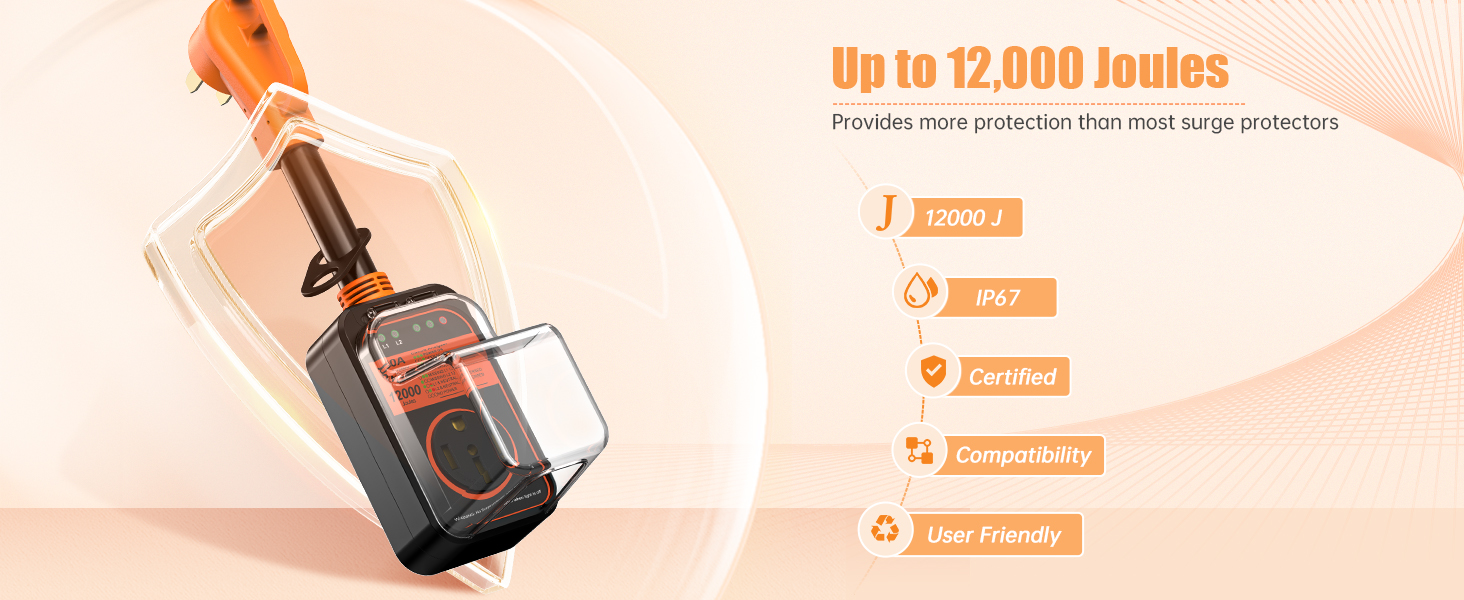
The MILLIONHOME RV Surge Protector is a simple, budget-friendly surge protector + wiring/connection indicator that most owners find easy to use and reassuring—especially for weekend trips and occasional hookups. The big theme is peace of mind: plug it into the pedestal first, read the lights, then connect your rig.
But there are three recurring caveats:
- The clear rain cover is a frequent complaint (flimsy, can break, and may not seal as “waterproof” as people expect).
- A small cluster of owners report early failures (no lights / stopped working).
- A few serious outlier reports raise safety questions—enough that I wouldn’t recommend it for everyone.
Confidence Score: 7.6/10 🔌
If you want the current pricing, here you go: Check price on Amazon ⚡
What This Product Actually Is (And What It Isn’t)
A lot of shoppers mix up these two categories:
1) Surge Protector (what this is)
A surge protector is mainly about absorbing spike events (often with MOVs—metal oxide varistors). It may also include basic wiring-fault indication (like open ground or reverse polarity) via indicator lights.
2) EMS (Energy Management System)
A true EMS is typically more “active.” Many EMS units will disconnect power when voltage is dangerously high/low, handle certain fault conditions automatically, and often include time delays and more detailed readouts.
From real-world owner feedback, it looks like the MILLIONHOME unit is best thought of as:
- Surge protection + simple diagnostic indicator lights
- NOT a premium, full-featured EMS replacement for people who want automatic shutoff and advanced monitoring
That distinction matters, because some buyers expect a budget unit to behave like an expensive EMS. Different tool, different job.
Technical Deep Dive (Simple, Practical Explanation)
Why RV power is uniquely risky
In an RV, you’ve got:
- Long shore cords
- Outdoor pedestals exposed to weather
- Shared campground electrical infrastructure
- Sensitive electronics (converter/charger boards, fridge control boards, A/C control circuits, TVs, etc.)
Even if your rig is perfectly wired, the pedestal might not be. Owners repeatedly describe using this as a first-line “sanity check” before letting unknown power touch their RV.
30A vs 50A basics (USA/Canada)
- 30A RV service is typically 120V (up to ~3,600W theoretical).
- 50A RV service is typically 120/240V split-phase (two 120V “legs,” up to ~12,000W theoretical).
One of the most practical owner wins I saw: indicator lights helping identify a dead 120V leg on a 50A hookup—exactly the kind of issue that can leave you chasing “why only half my outlets work?”
Australia note (important)
If you’re in Australia (or shopping for an AU/NZ style caravan hookup), pause: North American RV surge protectors are commonly built around NEMA TT-30 / 14-50 style connections, not Australian caravan plugs. This product is generally a USA/Canada-style solution, not a universal global unit.
Key Features (Benefit-Driven & Comparative Table)
Here’s how the main features show up in real use—without the marketing fog.
| Feature | What the Manufacturer Implies | What It Actually Means (User Experience) | Compared to Competitors |
|---|---|---|---|
| Plug-in pedestal test (indicator/diagnostic lights) | “Helps confirm safe power” | Owners commonly report it’s fast and reassuring: plug in first, read lights, then connect RV. A few owners caught pedestal/RV-side issues early. | Simpler than units with screens/apps, but faster for quick checks. |
| Clear rain cover over the receptacle area | “Weather protection / waterproofing” | One pattern that comes up repeatedly is the cover is the weak link: some say it’s flimsy, some broke it, some doubt the seal in heavy rain. | Premium units often have more robust housings; budget units often compromise here. |
| 30A and 50A options | “Fits common RV hookups” | Owners like that they can match their rig. A few use a 30A model with an adapter when switching rigs. | Standard feature category-wide; choose based on your shore cord. |
| “Feels heavy-duty / durable” build impression | “Rugged construction” | Many users find it solid in hand and confidence-inspiring—at least initially. | Competes well on “first impression” vs other budget protectors. |
| Fitment and connection tightness | “Standard RV plug compatibility” | A frequent buyer surprise: a few owners say the RV cord connection can be very tight the first time. | Tight fits happen across brands; better units often have nicer ergonomics/strain relief. |
| No-frills interface (lights instead of a screen) | “Simple operation” | Some owners love the simplicity—no extra info, just quick status. Others want a more detailed display. | Screens/apps add convenience but cost more and add failure points. |
Real User Experience Analysis (Deep Pattern Dive)
The “First Impression” pattern: simple, sturdy, reassuring
Across the owner feedback I analyzed, a recurring theme is how straightforward this is:
- Plug into pedestal
- Turn the breaker on
- Check lights
- Turn breaker off
- Plug in RV
- Turn breaker on again
Owners consistently describe it as the kind of tool you can explain to a first-time RVer in 30 seconds.
If you’re ready to add that “power insurance” layer, here’s the product link again: See it on Amazon 🔒
The practical win: catching wiring/power weirdness early
A few owners describe the exact scenario surge protectors are made for:
- Only some outlets working
- A dead leg on 50A service
- A bad breaker on the RV side or pedestal side
In real-world use, many users find this value hard to quantify—until the day it saves them from chasing electrical gremlins (or worse, feeding bad power into expensive electronics).
The “Reality after months” theme: the cover is the weak point
If there’s one repeated complaint worth highlighting, it’s this:
- The clear plastic cover/hinge is where budget design shows up.
- Some owners report it breaking within months.
- Others don’t break it, but they don’t trust it in hard rain.
- A few mention the cover may not close properly depending on how deep the pedestal box is—or how bulky your cord grip is.
My take: even when the internal surge protection is fine, the cover can drive you nuts because it’s the part you touch every time.
Early failures: not common, but present
Most ratings are positive, but there’s a small cluster of “stopped working / no lights / quit after one use” reports. Based on aggregated owner experiences discussed in these reviews, I’d treat it like this:
- Most people: plug in and forget it
- Some unlucky buyers: dead-on-arrival or early failure → exchange/return territory
This is the tradeoff you sometimes accept in the budget tier.
The most serious outliers: safety concern reports
I also saw a small number of high-severity complaints, including an incident report that describes overheating/fire damage and at least one report of downstream equipment damage.
I’m not going to sensationalize that—most owners have a good experience—but I am going to say this plainly:
If you’re a full-timer, you routinely camp in extreme storms, or you need the highest confidence electrical protection, you should seriously consider stepping up to a more robust option (more on that below).
Common Pain Points (What Owners Keep Mentioning)
1) The rain cover feels cheap (and can break)
This is the #1 “design complaint” theme:
- Flimsy hinge
- Breakage after bumps or normal use
- Water resistance skepticism
Workarounds owners used:
- Reinforcing the hinge (DIY fix mentality)
- Positioning it so the pedestal enclosure shields it from rain
- Treating the cover as “splash protection,” not a submersion-grade seal
2) Tight plug fit (especially at first)
A few owners report the RV cord connector felt like it was “blocked” or wouldn’t seat fully until they pushed much harder than expected.
Practical tip: Do your first connection test at home, not at midnight in a campground thunderstorm. If it’s tight, seat it firmly once and consider leaving it connected during the trip (if your storage setup allows).
3) Theft prevention is on you
Owners call out a reality: portable units are removable. A couple of people mention using simple deterrents like:
- Zip ties
- Basic cable locks (where possible)
- Keeping it less visible (within the pedestal enclosure if it fits)
The Good, The Bad & The Ugly (Pros/Cons Box)
✅ The Good
- Simple, beginner-friendly workflow (plug in → read lights → connect RV)
- Peace of mind at a strong price point (value mentions show up a lot)
- Useful “quick diagnostic” behavior for obvious pedestal/RV power issues
- Many owners describe it as sturdy/heavy-duty in hand
- Works for both 30A and 50A users (buy the version that matches your rig)
⚠️ The Bad
- The clear rain cover is the recurring weak point (flimsy, breakage, questionable sealing)
- Some pedestals/cords don’t play nicely (cover clearance, tight fit)
- A small number of early failures (no lights / stopped working)
🚫 The Ugly (Rare, But Important)
- A few high-severity reports raise concerns about overheating/damage in worst-case scenarios.
If that idea keeps you up at night, don’t “hope for the best”—step up to a top-tier protector/EMS style unit.
Owner Stories (The Human Side)
Here are a few scenarios that felt the most “real life” to me—because they’re exactly why RVers buy these in the first place:
Story 1: “The power blinked three times… and my TV died.”
One owner describes repeated outages and power flickers in their area that eventually took out an expensive TV. After installing the surge protector, they continued to experience outages—but didn’t lose additional appliances afterward. That’s the emotional core of this product: it’s not exciting, but it’s the thing you’re grateful you bought once your campground power gets flaky.
👉 Want to read more buyer experiences? See the Amazon review page 🧾
Story 2: “Half my outlets were dead… the lights told me why.”
Another owner used the indicator lights to identify a dead leg / missing power condition—leading them to the real problem instead of guessing. This is the kind of “invisible win” that saves time, frustration, and potentially expensive troubleshooting.
Story 3: “Storm + bad power pedestal = saved trip (maybe saved wiring).”
A few owners mention storms, flooding, or lightning-heavy conditions where campground power behaved badly. They credit the protector with preventing bigger damage. Whether it’s a direct save or simply preventing risky hookups, the pattern is consistent: owners like having a barrier between unknown power and their RV.
👉 More real-world stories here: Amazon reviews 🔎
Expert Tips & Installation Hacks (Owner-Tested)
These are the practical “do this and you’ll have a better time” tips I kept seeing implied in owner feedback:
1) Use the “pedestal-first” sequence every time
- Plug the surge protector into the pedestal
- Turn pedestal breaker ON
- Read the indicator lights
- Turn pedestal breaker OFF
- Plug in your RV shore cord
- Turn pedestal breaker ON
This reduces arcing, makes the diagnostics meaningful, and becomes a consistent ritual.
2) Do a dry-run at home (especially if you’re 50A)
If your cord is stiff or the connector fit is tight, you do not want to discover that while you’re parked sideways in the rain.
3) Treat the cover as “weather help,” not a scuba seal
Even owners who like the product often describe the cover as the weak link. If heavy rain is expected:
- Try to position it under the pedestal enclosure where possible
- Avoid leaving it exposed where water runs directly onto the seam
4) Consider carrying a backup (seriously)
One experienced reviewer made a point that’s worth repeating: a major surge event can sacrifice the protector to save your RV. If you’re far from stores, a spare can turn a trip-ending problem into a 2-minute swap.
5) Add basic theft deterrence
Portable protectors are easy to walk off with. Even a simple zip tie or making it harder to grab quickly can reduce “opportunity theft.”
Who This Is For (And Who Should Skip It)
Buy the MILLIONHOME if you’re…
- A weekend or seasonal camper who wants basic surge protection + quick pedestal checks
- Someone who values simple indicator lights over screens/apps
- Price-sensitive, but still wants a solid baseline layer of protection
If that’s you, here’s the link: MILLIONHOME RV Surge Protector on Amazon 🛒
Skip it (or upgrade) if you’re…
- A full-timer who wants the highest-confidence protection
- Someone who camps in frequent severe storms and wants more robust fail-safes
- Anyone who specifically wants full EMS behavior (auto shutoff on dangerous voltage conditions, richer monitoring, etc.)
- Anyone who doesn’t want to deal with a potentially flimsy cover long-term
If you’re in that camp, I’d point you toward more proven higher-tier picks here:
Safety Notes (Worth Reading Once)
I’ll keep this practical:
- If a pedestal looks damaged, scorched, loose, or wet inside—don’t use it.
- If you ever smell hot plastic or see unusual heat—disconnect immediately and investigate.
- When in doubt, get an RV tech or electrician involved. RV electrical faults can escalate fast.
For RV-specific prevention and best practices:
- RV Surge Protectors 101: Safeguarding Your RV’s Electrical System
- RV Electrical Safety Tips: Avoiding Fires, Shocks & Power Damage
- Top RV Fire Safety Gear Every RVer Should Carry
Deep-Dive FAQ
1) Should I buy the 30A or 50A version?
Match your RV’s shore power cord:
- 30A for standard 30A RV service
- 50A for 50A rigs (two 120V legs)
If you’re using adapters, be realistic: adapters help compatibility, but they don’t magically upgrade your available power.
2) Do I plug this into the pedestal first or the RV first?
Pedestal first. Then check lights. Then RV. Owners repeatedly describe this as the cleanest workflow.
3) Is it actually waterproof?
In real-world use, many users find it weather-tolerant—but the cover is the most criticized part. I would treat it as weather resistant, not “leave it in direct water flow and forget it.”
4) What if the RV cord is hard to insert?
Try the first connection at home. If it’s tight, seat it firmly and avoid repeated connect/disconnect cycles in bad conditions. If it’s excessively difficult or unsafe-feeling, that’s return/exchange territory.
5) Is this the same thing as an EMS?
Not really. This behaves like a surge protector with diagnostic indication. If you want active protection behaviors typical of EMS units, use the top-list upgrade path instead:
Final Verdict
If you want a simple, budget-friendly surge protector that makes you feel smarter every time you plug into unknown power, the MILLIONHOME RV Surge Protector fits the bill for a lot of RVers. Owners overwhelmingly describe it as easy, straightforward, and comforting—especially when campground power is unpredictable.
But I wouldn’t ignore the recurring cover complaints or the small set of early-failure and high-severity reports. If you’re a full-timer or you want maximum confidence, use this as your sign to upgrade to a higher-tier option from the curated list.
Ready to protect your rig the easy way? Check the MILLIONHOME on Amazon 🔌