Dometic 310 Gravity Toilet, Bone, Standard Height Review: Is It Worth It? (2026)
Freshness / Update Log
Last updated: June 2026
- Re-read the most recent owner feedback through spring 2026 to confirm the long-running “won’t hold water” pattern is still showing up in fresh reviews
- Re-checked the persistent white-vs-bone color complaint, which continues to dominate the listing
- Updated the customer-service and parts-availability notes based on newer experiences
- Confirmed the install-friendly story (especially for Dometic 300 upgraders) still holds in current feedback
Affiliate Disclosure
Quick heads-up: some links here are Amazon affiliate links. If you buy through them, I may earn a small commission at no extra cost to you. It doesn’t change what I write — the goal is to give you the honest, unvarnished picture so you can decide for yourself.
The Real Problem With RV Toilets (and Where the 310 Comes In)
If you’ve spent any time in an RV, you already know the original plastic toilet is usually the weakest link in the whole rig. It flexes when you sit, it’s a nightmare to keep clean, and sooner or later it starts pushing that unmistakable holding-tank smell back up into the cabin. That’s the exact pain point the Dometic 310 is built to solve: it’s a porcelain-bowl, residential-feeling upgrade that promises a better flush, a sturdier seat, and a cleaner bathroom.
Here’s the confusion, though. This toilet has a genuinely split personality in the reviews. A huge chunk of owners absolutely love it and call it a night-and-day upgrade. Another vocal group has had it leak, fail to hold water, or arrive in the “wrong” color. Sorting out which camp you’re likely to land in is exactly why I dug into hundreds of real owner experiences instead of trusting the product photos. If you want the full framework for choosing any RV commode, the complete RV toilet buyer’s walkthrough covers the decision criteria in depth — this review zooms in on the 310 specifically.
How this review was built (so you can trust it)
I synthesized this from a large pool of owner feedback — roughly 350+ reviews spanning critical and positive filters, covering a window from about 2020 through spring 2026 (these counts and dates are approximate, derived from the visible review timeline).
Here’s my method in plain English. I tagged every piece of feedback into categories: flush/odor performance, install and setup sensitivity, water-retention reliability, fitment and color/compatibility, durability symptoms, and support/returns experience. Then I separated setup-driven issues (like not priming the bowl before first use, or reusing an old seal) from likely product failures (like a ball-valve seal that quits within weeks of correct installation).
Important limitations:
- Reviews skew toward extremes — thrilled buyers and frustrated buyers post more than the quiet middle.
- RV plumbing varies wildly by make, model, and year, so one owner’s “perfect fit” can be another’s “had to re-route the line.”
- I prioritized patterns that came up repeatedly, not one-off anecdotes.
If you’d rather start from the category-wide selection logic before zeroing in, the framework for matching a commode to your rig is the better launch point.
Quick Verdict (TL;DR)
Best for:
- RVers upgrading from a flimsy plastic toilet (especially the Dometic 300) who want a real porcelain bowl
- Owners who want a residential feel and a swirl-style flush that keeps the bowl cleaner
- DIYers replacing a same-footprint unit who want a fast, simple swap
Not for:
- Buyers who absolutely need a true white toilet to match white fixtures
- People unwilling to ever service a flush-ball seal themselves
- Anyone expecting flawless long-term reliability with zero maintenance
Standout win:
- When it works, it’s a massive comfort-and-cleanliness upgrade — the porcelain bowl, swirl flush, and soft-close seat feel like a home bathroom.
Watch-outs:
- The single most repeated complaint is the bowl losing its ability to hold water, often tied to the flush-ball seal.
- The listing color issue (ordering “white,” receiving “bone”) is a recurring source of frustration.
Confidence Score: 🟡 6.5/10 — “Worth it with eyes open”
This score reflects buyer usefulness, not a lab reliability rating. I weighed the strong upgrade satisfaction, the genuinely easy installs, and the low parts cost against the recurring seal/water-retention reports and the color-listing mess. It lands in the middle because your experience hinges a lot on luck of the draw and your willingness to do basic seal maintenance.
👉 Check today’s price on Amazon
What This Product Is (and What It Isn’t)
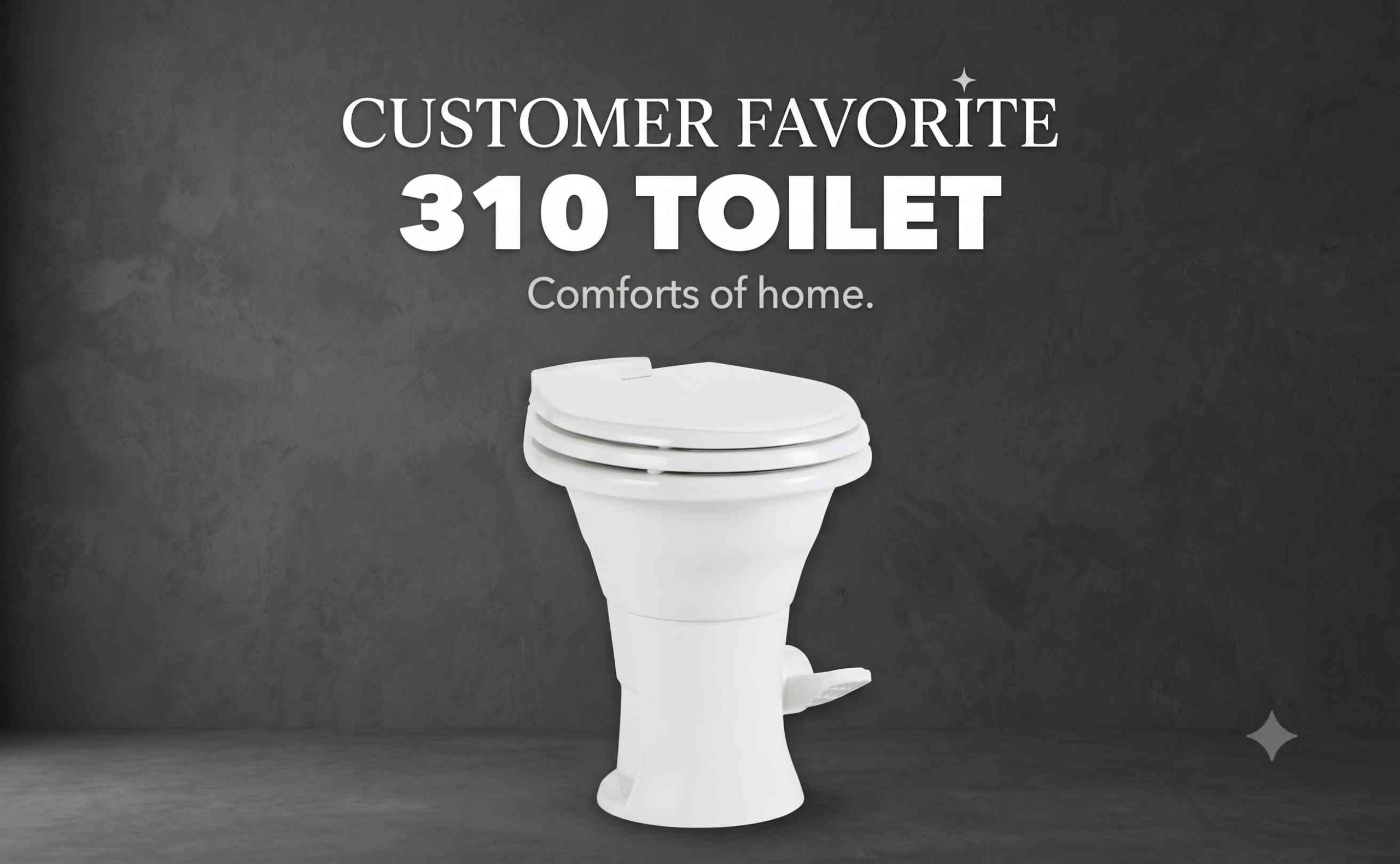
The Dometic 310 is a gravity-flush RV toilet with a porcelain bowl, a foot-pedal flush, and a residential-style seat. In plain RV terms: you connect it to your fresh-water supply (or pump), it sits over your black tank, and a foot pedal opens a ball valve to send waste straight down while water swirls around the bowl. It’s a step up from the all-plastic units that ship with most campers.
A few misconceptions worth clearing up:
- It is not a self-contained or composting toilet. It needs a black tank and a water connection like any standard RV gravity toilet.
- It is not a “set it and forget it forever” appliance. The flush-ball seal is a wear item, and owners commonly report needing to clean, lubricate, or eventually replace it.
- It is not the same as a residential home toilet despite the feel. The bowl is porcelain, but the base and many components are plastic, per multiple owners.
Key Specs That Actually Matter for RVers
I’m only listing the things that change your real-world outcome — and only what owners actually discuss.
- Porcelain bowl, plastic base: Owners consistently praise the ceramic bowl for cleaning and feel, while noting the base and fittings are plastic. This matters because the porcelain is the upgrade you’re paying for, but the plastic parts are where failures cluster.
- Foot-pedal gravity flush with swirl action: The water-around-the-rim flush is a repeated highlight for keeping the bowl clean. It matters for odor control and maintenance.
- Soft-close (slow-close) seat — when it works: Several owners love it; a few report it slamming or failing. Treat it as a nice-to-have, not a guarantee.
- Standard height: Multiple owners, including those with mobility or orthopedic concerns, single out the comfortable sit height versus low plastic units.
- Flush-ball seal as a serviceable part: This is the single most important spec to internalize. The seal can be cleaned and replaced without splitting the toilet — owners repeatedly describe this as the model’s saving grace versus designs that require separating the bowl from the base.
- Color: “Bone,” not white: The listing labels and photos cause confusion. The actual unit is bone/cream. This matters enormously if you’re matching fixtures.
Feature-by-Feature Breakdown (Truth vs Marketing)
| Feature | What the Manufacturer Implies | What It Actually Means (User Experience) | Compared to Competitors |
|---|---|---|---|
| Porcelain bowl | Premium, home-like quality | Owners genuinely love the bowl feel and how easy it is to clean — this lives up to the promise | A clear step above all-plastic Thetford/Dometic plastic-bowl units owners replaced |
| Swirl flush | Strong, clean rinse | Frequently praised; “swirls around the whole bowl,” good odor control when working | Owners say it beats the rear-spray pattern of some competing toilets |
| Soft-close seat | Quiet, no slamming | Hit or miss — some love it, others report it slams or the hinge fails | When functioning, comparable to residential seats; failures are a known sore spot |
| Water retention / seal | Holds water to block odors | The biggest weakness — recurring reports of bowls not holding water, sometimes within weeks | Some owners feel competing designs hold water longer; others say all RV seals are wear items |
| Easy install | Quick swap | Largely true, especially upgrading from a 300; many report sub-30-minute installs | Considered as easy or easier than rivals when the footprint matches |
| Color (Bone) | Photos look white | Recurring frustration — ordered white, received bone | A listing/fulfillment problem more than a product flaw, but real |
Real-World Owner Experience (Deep Pattern Analysis)
Pattern 1: The bowl-won’t-hold-water saga
In a nutshell: This is the dominant critical theme. Owners report the bowl stops holding standing water, which then lets holding-tank odor rise into the RV. It shows up anywhere from a few weeks to a couple of years in.
Hidden strength: The flush-ball seal is designed to be cleaned or swapped without dismantling the whole toilet, so the fix is usually cheap and doable at home.
Hidden weakness: For some owners, replacing the seal once, twice, or even three times doesn’t solve it — suggesting a deeper valve or seating issue on a subset of units.
What to do about it: First, follow the priming step (put water in the bowl before first use). If it leaks down, clean the seal and apply plumber’s silicone grease — a common owner fix. If repeated seal swaps fail, the unit likely has a defective valve and is a warranty/return candidate rather than a DIY fix.
Pattern 2: “I ordered white and got bone”
In a nutshell: An overwhelming number of reviews — positive and negative — mention the color mismatch. The product photos read as white; the delivered toilet is bone/cream.
Hidden strength: Many owners say the bone color looks fine once installed, especially against tan or brown RV interiors.
Hidden weakness: If your sink, tub, and walls are bright white, bone sticks out, and several owners only noticed after installing.
What to do about it: Treat this model as a bone toilet, full stop. If you need true white, confirm the exact color/model before ordering, and inspect the box label on arrival within your return window.
Pattern 3: Arrival damage and packaging
In a nutshell: A recurring minority theme is units arriving with cracked lids, broken seat-mount tabs, chipped bowls, or shattered components.
Hidden strength: When packed in expanding foam, owners report it travels well — so packaging quality seems inconsistent rather than universally bad.
Hidden weakness: Damage often hits the lid/seat hardware, and replacement seats are reported to be expensive relative to the toilet.
What to do about it: Open and inspect the entire unit immediately — before you remove your old toilet — so you’re still inside the return window if something’s broken.
Pattern 4: The customer-service and parts wall
In a nutshell: Owners with post-window failures repeatedly describe frustration: being told to take the RV to an authorized service center, difficulty buying small parts individually, and slow email responses.
Hidden strength: A subset of owners report Dometic did send a replacement seal or resolved their issue promptly, so service isn’t uniformly bad.
Hidden weakness: The recurring complaint is being unable to buy a cheap individual part (like a hinge or seal) and being pushed toward expensive assemblies or service visits.
What to do about it: Keep your receipt and the serial-number tag, photograph the unit on arrival, and source common wear parts (seals, valves) yourself where possible. For anything involving warranty claims, verify against the manufacturer instructions or consult a qualified RV tech.
Pattern 5: The happy upgraders
In a nutshell: The flip side is loud and consistent — tons of owners replacing a stinky plastic 300 call this the best RV upgrade they’ve made.
Hidden strength: Comfort, cleanliness, quieter operation, and the residential feel come up again and again. Many installs are described as 15–30 minutes.
Hidden weakness: Even happy owners sometimes note the color issue or a seat that wasn’t truly soft-close.
What to do about it: Go in with realistic expectations: great bowl, great flush, easy install — and plan to keep a spare seal on hand for down the road.
The Good, The Bad & The Ugly (Pros/Cons)
Pros
- Comfort & feel: Porcelain bowl, standard height, residential-style seat — repeatedly described as a huge upgrade over plastic units.
- Cleanliness & flush: Swirl-style flush keeps the bowl clean and helps with odor when the seal is healthy.
- Installation: Frequently fast and simple, especially as a same-footprint swap from a Dometic 300.
- Serviceability: The flush-ball seal can be replaced without splitting the toilet, and common parts are inexpensive.
Cons
- Water retention: The seal/valve losing water is the defining complaint, sometimes early in ownership.
- Color confusion: Ordering white and receiving bone is a persistent, listing-level problem.
- Shipping damage: Cracked lids and broken seat hardware appear with some regularity.
- Support & parts pricing: Difficulty buying individual small parts and warranty friction are recurring frustrations.
Mini Toolkit: Decide + Fix (Fast)
Issue-Tag Box
- 💧 Bowl won’t hold water (seal/valve)
- 🎨 Color mismatch (bone vs white)
- 📦 Arrived damaged (lid/seat/bowl)
- 🪑 Soft-close seat slams or hinge fails
- 🛠️ Parts/warranty hard to obtain
Fitment / Adapter Mini-Matrix
| Your situation | Likely fitment reality |
|---|---|
| Replacing a Dometic 300 | Usually a direct, fast swap; plumbing often lines up |
| Different brand/model previously | May need a supply-line re-route or elbow/adapter |
| Need true white to match fixtures | Wrong product — this ships bone/cream |
Mini Decision Tree
- If you’re upgrading from a plastic 300 and don’t mind bone color → strong buy.
- If color-matching to white is critical → skip, or confirm a true-white model first.
- If the bowl won’t hold water on day one → prime the bowl, then clean/grease the seal.
- If repeated seal swaps fail → treat as a defective valve and pursue return/warranty.
- If it arrived cracked → document and return before removing your old toilet.
Troubleshooting Quickflow (bowl won’t hold water)
- Add water to the bowl and confirm it drains away (vs never filling).
- Remove and inspect the flush-ball seal for debris or misseating.
- Clean the seal and apply plumber’s silicone grease; reseat it.
- Refill and watch for several minutes.
- If it still drains, install a fresh replacement seal.
- If a new seal also fails, suspect the valve — stop DIY and pursue return/warranty.
Mini Return-Window Reality Check
- Inspect the entire unit — lid, seat tabs, bowl, valve — the day it arrives, before touching your old toilet.
- Confirm the color on the box label immediately; if you needed white and got bone, decide now.
- Test water retention before your window closes: prime the bowl and let it sit.
- Operate the foot pedal several times and check for leaks around the base and valve.
- Keep the box and packaging until you’re certain you’re keeping it.
- For deciding whether to keep, return, or step up to a different model entirely, the side-by-side selection criteria for RV commodes will help you weigh it before the clock runs out.
Installation / Setup Tips (RV-Realistic)
- Dump and flush your black tank first. Owners recommend this before pulling the old toilet — it’s a much cleaner job.
- Bag the old toilet. Slip a large trash bag around it before lifting it out; they’re nasty inside.
- Prime the new bowl before first flush. Add water to the bowl before opening the foot valve — several “won’t hold water” scares trace back to skipping this.
- Scrape the old flange seal. Clean off the previous gasket residue on the floor flange for a proper seat.
- Check the floor ring/seal. Some owners found the floor ring wasn’t included and had to reuse the old one — confirm what’s in your box early.
- Mind the bolt alignment. A few owners describe a tight, fiddly fight getting base holes onto the flange bolts; patience and good lighting help.
- Verify your supply-line orientation. If you’re switching from a different brand, you may need to re-route the line or add an elbow fitting.
- Go easy on plastic fittings. The fresh-water connection is plastic; don’t over-torque adapters or splitters, as owners report stripping threads.
- Thread tape is optional but harmless. Some skip it; others add it for peace of mind.
- Keep a spare seal on hand. Given the seal’s reputation, having one ready saves a trip later.
- Confirm the color before full install. Don’t discover “bone” after you’ve wrestled off the old rusted bolts.
- Anything beyond basic swaps — re-plumbing, drilling new mounting points, or modifying water lines — should be verified against the manufacturer instructions or done with a qualified RV tech.
See It in Action: Visual Reality Check
Specs and review snippets are useful, but watching the unit go into a real RV bathroom tells you more about the install and the fit than any bullet list can. Seeing the pedal action, the bowl swirl, and the base mounting in a tight space is the kind of thing that’s hard to judge from photos alone.
What to look for in this video (based on owner patterns):
- 💧 Seal/Water Check: Watch whether the bowl is primed with water before the first flush — and notice how the standing water sits in the bowl. This is the exact spot owners report failing later.
- 📏 Bolt Alignment: Notice how the base holes line up with the floor flange bolts. Several owners describe this as the hardest, most cramped part of the job.
- 🎨 Color Reality: Pay attention to the actual color under real lighting — it reads bone/cream, not the bright white the listing photos suggest.
- 🪑 Seat Action: Watch the lid close. Owners are split on whether it’s truly soft-close, so see how it behaves on camera.
- 🔌 Water Connection: Look at the plastic fresh-water fitting on the back — this is where owners report stripped threads when over-tightening adapters.
Keep in mind this video shows the initial setup, but it won’t show the flush-ball seal leakage that some owners report weeks or months later, which is the single most important long-term issue to plan around.
Owner Stories (The Human Side)
The stories below are composite scenarios reflecting repeated patterns across owner feedback.
The thrilled upgrader: A full-timer finally rips out the original plastic 300 that’s been stinking up the whole camper. The 310 drops in within about 15–30 minutes, the porcelain bowl feels like home, and the swirl flush keeps everything clean. Months later they’re still recommending it to anyone who’ll listen — the only gripe being that the toilet arrived bone-colored instead of the white they thought they ordered.
The seal-chaser: Everything starts great. The install is painless and the flush is strong. Then, a few weeks in, the bowl stops holding water and the holding-tank smell creeps up. They clean the seal, grease it, and replace it once — it helps briefly, then leaks again. Eventually they conclude the valve itself is the problem and start weighing a warranty claim against just buying the part themselves.
The color-blindsided buyer: They order what the listing shows as a white toilet to match bright-white RV fixtures. After fighting rusted bolts off the old unit and committing to the install, daylight reveals the new toilet is clearly bone. The product itself is sturdy and flushes well, but the mismatch nags every time they walk in.
🔎 See more owner feedback on Amazon
Who This Is For (and Who Should Skip It)
Buy it if…
- You’re replacing a plastic RV toilet (especially a Dometic 300) and want a real porcelain bowl.
- You value a residential feel, comfortable height, and a clean swirl flush.
- You’re comfortable doing basic seal maintenance and keeping a spare on hand.
- Bone/cream color works with your interior — or color simply doesn’t matter to you.
- You want a same-footprint swap that’s usually quick to install.
Skip it if…
- You need a true white toilet to match white fixtures.
- You want zero-maintenance reliability and won’t tolerate ever servicing a seal.
- You can’t easily inspect and test the unit within your return window.
- You’d be deeply frustrated by potential parts/warranty friction.
- Your previous toilet was a different brand and you don’t want to risk a supply-line re-route.
👉 Check today’s price on Amazon
If you’re comparing options, start here: Top RV Toilet Picks
Alternatives (Quick Comparisons)
- Stepping down on price: A lightweight plastic-bowl RV toilet is cheaper and lighter, but you give up the porcelain feel and easier cleaning that make the 310 worth it for most upgraders.
- Staying in the family: Other porcelain-bowl models in the same lineup offer round or elongated bowl shapes — worth checking if bowl shape or a true elongated seat matters to you, since some owners noted the 310’s bowl is more round/short than expected.
- A different brand entirely: Owners replacing competing-brand toilets cite the 310’s easy-to-service seal as a plus, but if your current toilet’s parts are easy to get, a like-for-like brand replacement may reduce fitment surprises.
- If color-matching is the dealbreaker: Confirm a true-white porcelain RV toilet from any brand rather than risking the bone-vs-white listing issue here.
For a structured way to line these up against your rig, the RV toilet decision framework walks through bowl shape, height, and fitment trade-offs.
Deep-Dive FAQ
What should I test immediately after delivery?
Inspect the whole unit for cracks or broken seat tabs before removing your old toilet, confirm the color on the box label, then prime the bowl with water and make sure it holds. Operate the foot pedal several times and watch for leaks at the base and valve. Doing all of this while you’re still inside the return window is the single best protection.
What are the most common problems and fixes?
By far the most common is the bowl not holding water, usually tied to the flush-ball seal. The safe first fix is to clean the seal and apply plumber’s silicone grease, then replace the seal if needed. If repeated seal replacements don’t solve it, the valve is likely defective and it becomes a return/warranty situation. Other common issues are shipping damage (document and return) and the color mismatch (treat it as bone).
Will this work with my RV setup?
Often yes, especially if you’re replacing a Dometic 300 — owners frequently report a direct, fast swap. If you’re coming from a different brand or model, be ready to possibly re-route the supply line or add an elbow fitting. Confirm your floor flange bolt pattern and supply-line orientation before you start.
Is it really not white?
Correct — it’s bone/cream, despite listing photos that read white. If matching white fixtures matters, plan around that or choose a confirmed true-white model.
Is the soft-close seat reliable?
It’s inconsistent in owner feedback. Many enjoy it; some report it slams or the hinge fails, and replacement seats are reported as pricey. Don’t make the soft-close the deciding factor.
Can I get replacement parts easily?
Common wear parts like seals and valves are often available, and the seal is serviceable without splitting the toilet. The recurring frustration is buying small individual parts (like a hinge) through the manufacturer, where owners report being pushed toward full assemblies or service visits.
Does it help with RV bathroom odor?
When the seal is healthy and holding water, owners consistently say yes — the standing water and swirl flush cut down on tank odor noticeably versus the plastic units they replaced. Odor complaints almost always trace back to the seal no longer holding water.
Final Verdict
The Dometic 310 is a genuinely good RV toilet wrapped around one real liability. The porcelain bowl, comfortable height, swirl flush, and easy install make it a standout upgrade — and the loudest, happiest reviews come from people who ditched a flimsy plastic 300 and never looked back. But the recurring water-retention and seal complaints, plus the persistent bone-vs-white color confusion, are too common to wave away.
My honest take: this is a strong buy for the upgrader who doesn’t need true white, is comfortable doing basic seal maintenance, and inspects the unit carefully within the return window. If you need flawless hands-off reliability or a perfect white match, look elsewhere. Go in with realistic expectations and a spare seal on the shelf, and most owners end up happy they made the switch.