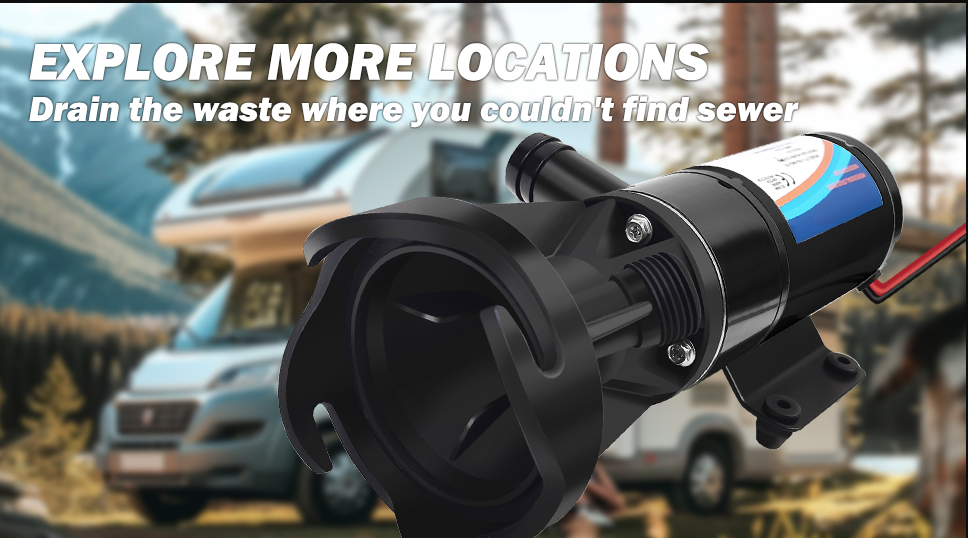
Folconroad RV Macerator Pump Review 2026: Worth It or Disposable?
Last updated: June 2026
- Re-checked the “dies in the second season” pattern against long-haul owners and confirmed it splits cleanly along dry-run and storage habits, not random luck.
- Re-examined the smoking/overheating reports and matched them to the cheap toggle switch and undersized power cord rather than the motor itself.
- Compared the happiest multi-year owners against early failures and pulled out the one storage routine that seems to separate them.
- Verified the reversed-polarity “tanks broke open” warning is rare but real, and added a first-run safety check around it.
As an Amazon Associate, I earn from qualifying purchases. If you buy through links on this page, it costs you nothing extra and helps support the work that goes into these reviews.
The Honest Truth About This Pump
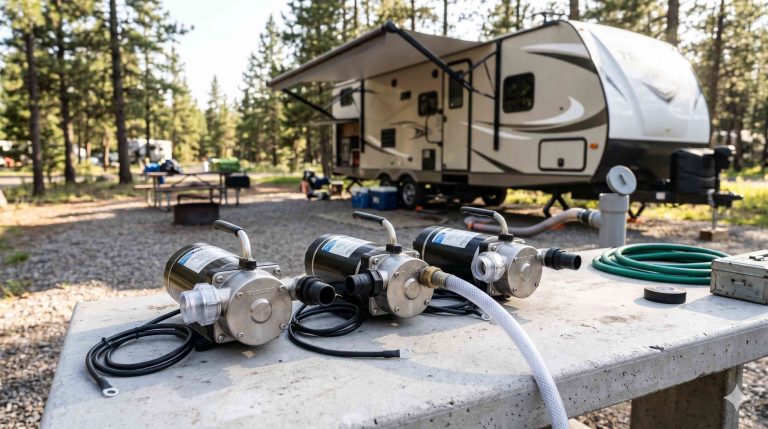
If you’ve ever stood at a packed dump station holding a sagging 3-inch slinky hose, you already know why macerator pumps exist. They grind black and grey waste down to a slurry that pushes through a cheap garden hose, so you can park your rig 100+ feet from a cleanout and still empty your tanks without dragging stiff sewer hoses uphill. The Folconroad pump is one of the dozens of near-identical budget macerators on Amazon, and the big buyer question isn’t “does it work?” — it clearly does — it’s “will it still work next summer?”
Quick answer: It’s worth it as a low-cost, surprisingly powerful pump that moves waste well, but plan on it being semi-disposable — owners consistently get strong performance and inconsistent lifespan. If you want a deeper framework for matching a pump to your tank setup and run length, this hands-on guide to choosing an RV macerator walks through the fitment math before your return window closes.
This review is a synthesis of real owner experience, not a spec rewrite or a single test run. I went through the full spread of feedback — the glowing five-stars and the furious one-stars — to figure out what actually predicts a good outcome with this specific unit.
How this review was built (so you can trust it)
I analyzed roughly 130+ owner reviews spanning from mid-2022 through June 2026, weighted toward the most recent year so the picture reflects the version shipping now.
Here’s how I worked through them. I tagged every piece of feedback into categories — raw pumping performance, install and setup sensitivity, power and wiring, fitment and adapters, reliability symptoms, and seller/return experience — then separated setup-driven issues (dry-running, undersized wiring, wrong hose) from likely product/design issues (the switch, the power cord, second-season seizing). That separation matters a lot here, because a big chunk of the angry reviews describe problems that the happy long-term owners actively prevent.
Important limitations:
- Reviews skew toward extremes — thrilled buyers and failed-unit buyers both post more than the middle.
- RVs vary enormously (tank count, run length, lift, battery distance), so one owner’s “works flawlessly” and another’s “no power” can both be true.
- I prioritized patterns that showed up repeatedly across many owners, not isolated one-off complaints.
Quick Verdict (TL;DR)
Best for:
- Owners who park far from a cleanout and want to dump through a garden hose instead of dragging sewer hose.
- Budget-minded buyers who’d rather treat a pump as a cheap, replaceable tool than invest in a premium brand.
- People comfortable doing a little wiring (extending a cord, bypassing a switch) if needed.
Not for:
- Anyone who wants a true install-and-forget unit they’ll never have to touch or troubleshoot.
- Owners unwilling to baby it — no dry-running, no flushable wipes, careful storage.
- Setups needing serious vertical lift over long distances with heavy solids.
Standout win: For the price, the motor genuinely moves waste — owners routinely report pushing through 100–150 feet of ¾-inch hose, uphill in some cases.
Watch-outs: The toggle switch and power cord are the weak links, and a meaningful number of units don’t survive their second season out of storage.
Confidence Score: 7/10 🛠️
This score reflects how useful this pump is to a typical RV buyer — not a reliability percentage. I weighed strong, consistent pumping performance and excellent value against two recurring drags: weak electrical components and uneven longevity. It loses points for durability gambles, but earns most of them back because when it works (which is most of the time, early on) it does exactly what buyers want at a fraction of premium-brand cost.
What This Product Is (and What It Isn’t)
An RV macerator pump is a 12-volt grinder-plus-pump: it chews up solids and toilet paper into a thin slurry, then pumps that slurry through a small-diameter hose to your dump point. In plain terms, it turns your black tank into something you can empty through a garden hose instead of a fat sewer hose.
What it isn’t:
- It isn’t a permanent, hardwired tank system. This is a portable unit you connect to your dump valve, power up, run, and clean out.
- It isn’t a sealed “set it and forget it” appliance. The grinder side has seals and a rubber impeller that need water to spin freely and need occasional cleaning.
- It isn’t a premium-engineered product at this price. Several owners who cracked open both this and pricier “name brand” pumps reported the internals looked essentially identical — same casting, same motor, same flimsy switch. The takeaway many of them reached: you’re buying the same basic machine for a fraction of the cost, weak switch included.
Key Specs That Actually Matter for RVers
- 12-volt DC power with multiple hookup options: Owners power it from a cigarette-lighter-style outlet or directly from a battery with alligator clamps. The clamp-to-battery method is what experienced owners trust, because the plug is a known weak point.
- Garden-hose discharge: It pumps through standard ¾-inch garden hose, which is the whole appeal — light, cheap, packable hose instead of bulky sewer line.
- Included thread adapter: Some units historically shipped with an adapter cut to a non-US thread that “almost” fits American garden hose; owners flag checking that the adapter actually threads cleanly.
- Manual-turn tail cap: The end cap is keyed to the shaft so you can manually free a stuck impeller by hand — a small but genuinely useful design touch owners appreciate when the pump sits and spins without grabbing.
- Built-in fresh-water rinse port and clear flow section: Lets you flush the discharge hose after dumping and visually confirm flow, which owners use to monitor for clogs.
I’m deliberately not quoting flow-rate or lift numbers as gospel — a few owners noted real-world flow felt slower than the listing implied, so treat the marketing figures as optimistic ceilings, not guarantees.
Feature-by-Feature Breakdown (Truth vs Marketing)
| Feature | What the Manufacturer Suggests | What It Actually Means (User Experience) | Compared to Competitors |
|---|---|---|---|
| Pumping power | High-output waste grinding | Genuinely strong for the price; owners push waste 100–150 ft and uphill, though some find real flow slower than advertised | Owners say it matches or beats pricier Flojet-type pumps |
| Toggle switch | Simple on/off control | The single most common failure point — corrodes, overheats, loses contact; many bypass it entirely | Widely seen as worse than premium units, though internals are otherwise similar |
| Power cord/plug | Plug-and-play 12V hookup | Often too short to reach the battery; cigarette plug overheats; owners extend or rewire | Premium kits tend to ship better-gauged wiring |
| Durability | Long-lasting design | Strong early life, but a recurring share die in month 3–6 or after winter storage | Mixed; some owners say all budget macerators share this fate |
| Hose adapter | Ready-to-connect fittings | Usually fine; occasional wrong-thread adapter requires a swap | Comparable; thread mismatch is an industry-wide annoyance |
Real-World Owner Experience (Deep Pattern Analysis)
Pattern 1: The “second season” failure is the thing owners obsess over
In a nutshell: Far and away the loudest recurring theme is units that work great for a few months — or one full season — then refuse to start when pulled out of storage the next year. Many describe the same symptom: the motor hums or spins, but the pump won’t grab and move water.
Hidden strength: This is the single most important insight, and it’s what most reviews won’t tell you — the failures cluster heavily around storage and dry-running habits, not pure luck. The owners who make it to year two and three almost all describe the same discipline: never run it dry, rinse it thoroughly after every use, and (critically) pull the adapter and impeller area to clean out tangled hair and debris before storing.
Hidden weakness: The rubber impeller appears to be the casualty. Run it dry even briefly and the impeller can melt or deform; let it sit dirty over winter and hair/debris bind the blades and the seals stiffen. Either way you get the “spins but won’t pump” symptom.
What to do about it: Treat storage as a maintenance event, not just “toss it in the bin.” Before storing, run clean water through it, then disassemble the outlet/impeller area, clear out any hair or wipe fibers, dry it, and reassemble. Several multi-year owners credit exactly this 10-minute routine for their pump still running in year three.
Pattern 2: The switch and wiring are the real failure point — not the motor
In a nutshell: When owners autopsy a “dead” pump, the culprit is usually the cheap toggle switch or the plug, not the motor. People report the switch corroding within weeks, losing contact from heat, or arriving faulty out of the box — and the motor running fine once it’s bypassed.
Hidden strength: Because the motor is usually healthy, this is a fixable failure for anyone comfortable with basic 12V wiring. Owners routinely cut out the switch and wire straight to the battery (or to a better aftermarket switch) and get a working pump again. One technically-minded owner even spliced in an inline fuse because a power cord shipped without one.
Hidden weakness: The factory switch carries enough electrical resistance under load that some owners describe it as a genuine fire-hazard-grade weak point, and the included cigarette-lighter plug overheats on longer runs. This is a design-cost corner, plain and simple.
What to do about it: If you’re handy, plan from day one to power it via heavy-gauge wire and alligator clamps straight to a battery, and consider an inline fuse if yours lacks one. If you’re not comfortable with wiring upgrades, relays, or splicing fuses, verify against the manufacturer instructions or consult a qualified RV tech/electrician before modifying anything.
Pattern 3: Dry-running and “flushable” wipes are instant killers
In a nutshell: The fastest way to ruin this pump, per owners, is to fire it up dry or let solids it can’t handle get into it. Paper towels and so-called flushable wipes jam it almost instantly.
Hidden strength: Owners who understand this avoid nearly all the catastrophic, early-death failures. The fix is behavioral, not financial.
Hidden weakness: There’s little margin for error — the impeller wants to be wet to spin freely, and one dry test run can melt it.
What to do about it: Never dry-fire it; if you must test it, pour an ounce or two of water in first. Keep wipes and paper towels out of the tank entirely, use RV-friendly toilet paper, and put a clear adapter on the inlet so you can see what’s entering the pump and catch a jam early.
Pattern 4: Overheating on hot days and long pump-outs is real but manageable
In a nutshell: The sealed motor traps heat, and owners emptying full tanks (plus a black-tank flush) in direct sun report the pump shutting down from heat — or in worse cases, smoking on first use.
Hidden strength: This is one of those experience-driven insights you won’t find on the spec sheet: one seasoned owner cools an overheating unit in under a minute by taping a ziplock bag of ice cubes to the motor, and preempts it on brutal days by icing it before it overheats.
Hidden weakness: Smoking-on-first-use reports are a different, scarier category — those point to a defective unit or a wiring fault and should be returned immediately, not babied.
What to do about it: On hot days, keep the pump shaded and don’t run marathon pump-outs back to back; let it rest. If a brand-new unit smokes or gets dangerously hot on its very first run, stop and start a return rather than troubleshooting.
Pattern 5: When it works, owners genuinely love it
In a nutshell: Strip away the durability anxiety and the performance reviews are warm and repetitive: it moves waste fast, runs quieter than expected, pushes through long hose runs, and turns a dreaded chore into a few easy minutes.
Hidden strength: Value is the through-line. Owners who’ve bought premium brands repeatedly note this does the same job for a fraction of the price, which reframes the durability question — a couple of replacements can still cost less than one name-brand pump.
Hidden weakness: That “buy two over time” math only works if you’re at peace with replacing it; it’s not the right buy if you want one pump for a decade.
What to do about it: Decide upfront which buyer you are. If a cheap, capable, possibly-replaceable tool fits your life, this delivers. If it doesn’t, spend more elsewhere.
The Good, The Bad & The Ugly (Pros/Cons)
The Good — Performance & Value
- Strong waste-grinding and pumping for the price; handles long runs and moderate uphill.
- Runs quieter than many owners expected from a budget pump.
- Flexible power (battery clamps or 12V plug) and a handy manual-turn tail cap.
- Built-in fresh-water rinse and a clear flow section make cleanup and monitoring easy.
- Dramatically cheaper than premium pumps that owners say are mechanically near-identical.
The Bad — Electrical & Fitment
- Toggle switch is fragile, corrosion- and heat-prone, sometimes DOA.
- Power cord is frequently too short to reach the battery and the cigarette plug overheats.
- Occasional wrong-thread hose adapter or missing parts.
- Sealed motor can overheat on hot-day, full-tank pump-outs.
The Ugly — Longevity Lottery
- A real share of units die in month 3–6 or fail to wake up after winter storage.
- Failures sometimes land just past the return window, leaving owners stuck.
- Rare but serious: reversed factory polarity and first-use smoking have caused real messes and safety scares.
Mini Toolkit: Decide + Fix (Fast)
Issue-Tag Box
SWITCH-FAIL— won’t power on / intermittent → suspect switch or plug firstSPINS-NO-PUMP— motor runs, no flow → dry-run damage or bound/dirty impellerOVERHEAT— shuts off mid-job → heat soak; shade and cool itCORD-SHORT— won’t reach battery → extend cord or clamp directCLOG— sudden stop → wipes/paper towels/treatment packets jamming impeller
Fitment/Adapter Mini-Matrix
| Your setup | Likely need |
|---|---|
| Battery far from dump valve | Power-cord extension or longer clamp leads |
| US ¾” garden hose | Confirm adapter is US thread, not straight-pipe |
| Long/uphill run | Largest-ID hose you can use (¾” over ⅝”) |
Mini Decision Tree
- If it won’t turn on → test/bypass the switch before assuming the motor is dead.
- If it spins but won’t pump → prime with water and clean the impeller area.
- If it shuts off when hot → shade it, ice the motor, and rest between tanks.
- If a new unit smokes → stop and return it; don’t troubleshoot.
- If it dies just after winter → it likely seized in storage; this is the durability gamble.
Troubleshooting Quickflow
- No power? Check fuse → check plug → bypass switch to a battery.
- Powers but no flow? Confirm water present (never dry-run) → manually turn the tail cap.
- Still stuck? Disassemble outlet, clear hair/debris, reassemble.
- Runs then quits hot? Cool the motor, shade it, shorten pump-out sessions.
- Leaking at housing? Reseat the internal gasket/washer.
- Still failing? If in-window, return; if out, plan a replacement.
Mini Return-Window Reality Check
- Test it the day it arrives — a surprising number of units are DOA or have a faulty switch out of the box.
- Run it with water immediately to confirm the motor pumps, not just spins.
- Check the hose adapter threads against your actual garden hose before you need it.
- Confirm nothing’s missing (clamps, adapters) — missing-parts reports aren’t rare.
- Most damning failures hit after 30 days, so early aggressive testing is your only real protection.
For a fuller pre-purchase checklist that helps you pressure-test fitment and expectations before you commit, this macerator selection walkthrough is worth a look.
Installation / Setup Tips (RV-Realistic)
- Power it the smart way: Many owners skip the cigarette plug entirely and run heavy-gauge wire with alligator clamps to a battery — the plug is a top overheating culprit.
- Measure your cord run first: The factory cord is commonly too short to reach front-mounted batteries on longer trailers; plan an extension before your first dump, not during it.
- Never dry-fire it: If testing, add an ounce or two of water first — a dry impeller can melt almost immediately.
- Support the pump’s weight: Don’t let it hang off your discharge fitting; owners block or brace it so it doesn’t strain the connection.
- Use a short, heavy suction hose: A 3–5 ft heavy-duty hose on the suction side beats hanging the pump off the RV pipe.
- Add a clear inline section: Seeing what enters the pump helps you catch wipes, hair, or treatment-packet plastic before they jam it.
- Pump tanks in the right order: With multiple tanks, finish on a grey tank so your hose ends with the least-gross water inside.
- Keep wipes and paper towels out: Even “flushable” ones jam this pump instantly — owners are emphatic about this.
- Rinse every time: Use the fresh-water port to flush the pump and hose after each dump.
- Watch the gasket/washer: A loose internal washer causes housing leaks; reseat it carefully and don’t lose it.
- Mind the heat on hot days: Shade it, and keep ice on hand for marathon pump-outs.
- For any wiring upgrade beyond a basic extension — relays, re-fusing, hardwiring — verify against the manufacturer instructions or consult a qualified RV tech/electrician.
Owner Stories
The stories below are composite scenarios reflecting repeated patterns across owner feedback.
- The happy long-hauler: A full-timer parks 150 feet from a cleanout and pumps through a garden hose every few days. They never dry-run it, rinse after every dump, and clean the impeller before storage. They’re into year three and quietly thrilled — it does the worst chore in RV life in a few minutes.
- The storage-season casualty: A weekend camper uses the pump a handful of times, winterizes the rig, and tosses the pump in a bin. Next spring it hums but won’t pump. They didn’t dry it or clean the impeller, and the seized unit lands just past any return help — exactly the failure mode the discipline crowd avoids.
- The handy bypass owner: A DIY-comfortable owner finds the switch dead on arrival. Rather than fight a return, they cut it out, wire straight to the battery with heavier wire, and end up with a pump that “works like a workhorse.” For them, the cheap switch is an annoyance, not a dealbreaker.
SEE MORE OWNER FEEDBACK ON AMAZON
Who This Is For (and Who Should Skip It)
Buy it if…
- You park far from a dump point and want garden-hose convenience over sewer hose.
- You’re price-driven and fine treating a pump as a replaceable tool.
- You can do basic 12V wiring or are willing to learn.
- You’ll commit to no-dry-run, no-wipes, clean-before-storage discipline.
- You want a capable backup pump to keep on hand.
Skip it if…
- You need one bulletproof pump to last many years untouched.
- You won’t maintain it or troubleshoot a switch.
- Your dumps demand heavy lift over long distance with tough solids, often.
- A failure just past the return window would genuinely sting your budget.
- You’d rather pay more once than possibly buy twice.
If you’re comparing options, start here: Top RV Macerator Pump Picks
Alternatives (Quick Comparisons)
- Premium name-brand macerators (e.g., established Flojet-type units): Better wiring and switches and brand support, at roughly two to three times the price. Owners note the core pump head is mechanically similar — you’re largely paying for the electrical components and reliability margin.
- A second Folconroad as a backup: Several owners simply keep two cheap units in rotation, reasoning that two budget pumps still cost less than one premium one. Reasonable if you’ve accepted the durability gamble.
- Traditional gravity sewer hose: No motor to fail and nothing to maintain, but you’re back to dragging stiff 3-inch hose and you lose the long-run, uphill, and garden-hose advantages entirely.
Deep-Dive FAQ
Is the Folconroad macerator pump worth it?
Yes, for the right buyer — it’s a strong performer at a low price, but treat it as semi-disposable. Owners consistently praise how well it moves waste while warning that the switch, cord, and second-season longevity are weak spots. If you maintain it and don’t mind possibly replacing it, the value is hard to beat.
What should I test immediately after delivery?
Power it on with water present and confirm it actually pumps, not just spins. A meaningful number of units arrive with a dead switch, missing parts, or worse, so the first 30 days are your only real safety net — most failures hit after the window closes. Also check the hose adapter threads against your own garden hose before you’re standing at a full tank.
What are the most common problems and fixes?
The most common issues are a failed toggle switch, an overheating or too-short power cord, and a “spins but won’t pump” condition. The switch and cord can usually be fixed by bypassing the switch and wiring heavier-gauge wire with clamps to a battery. The no-pump condition is typically dry-run impeller damage or a dirty/bound impeller — never run it dry, and clean the impeller area when it stops grabbing.
Will this work with my RV setup?
For most setups, yes — owners successfully pump through 100–150 feet of ¾-inch garden hose and up moderate inclines. The main fitment gotchas are battery distance (the cord is often too short, so plan an extension) and the discharge adapter thread. For long or uphill runs, use the largest-inside-diameter hose you can.
Why does it stop working after winter storage?
The most-reported long-term failure is the pump seizing or refusing to pump after sitting through a winter. The pattern points to the rubber impeller and seals binding from leftover debris or stiffening in storage. Owners who survive multiple seasons rinse it, clean out hair and debris from the impeller area, dry it, and reassemble before storing — that routine appears to be the difference-maker.
Can I fix it myself when the switch dies?
Often, yes, if you’re comfortable with basic 12V wiring. The motor is usually fine; owners cut out the failed switch and wire directly to a battery, sometimes adding a better switch and an inline fuse. If that goes beyond your comfort with wiring, fuses, or relays, verify against the manufacturer instructions or consult a qualified RV tech/electrician.
Is it really the same as more expensive pumps?
Several owners who compared this side-by-side with pricier brands reported near-identical castings and internals, down to the same flimsy switch. The practical conclusion many reached is that you’re paying a large premium elsewhere for better wiring and support, not a fundamentally better pump — so buying cheap and maintaining well can be the smarter play.
Final Verdict
The Folconroad macerator pump is a genuinely capable performer wrapped in budget-grade electrical components and a real durability gamble. When it runs, owners love it: it grinds and moves waste fast, runs quieter than expected, handles long garden-hose runs, and turns the worst RV chore into a few easy minutes — all for a fraction of premium-brand pricing. The catch is consistency. The switch and cord are weak, and a real share of units don’t survive their second season, often right after storage.
The buyer who wins with this pump is clear-eyed: park-far-from-cleanout convenience seeker, price-driven, willing to never dry-run it, keep wipes out, clean it before storage, and do a little wiring if needed. If that’s you — or you want an inexpensive, capable backup to keep on the shelf — this delivers real value. If you need one pump to last a decade untouched, spend more elsewhere.