Thetford 42058 Aqua-Magic Style II RV Toilet Review (2026): Worth It?
Last updated: June 2026
Here’s what I checked and refreshed for this version:
- Re-read the most recent owner feedback through early 2026 to catch any shift in quality or support patterns.
- Re-balanced the recurring praise (easy install, ceramic bowl) against the recurring complaints (flush pedal, seat design, warranty friction).
- Added clearer guidance on the “check it before your return window closes” issue, which keeps coming up.
- Tightened the troubleshooting and fitment notes based on what owners actually ran into.
Affiliate Disclosure
Quick heads-up: some links here are Amazon affiliate links. If you buy through them, I may earn a small commission at no extra cost to you. It doesn’t change what I write — the patterns below come straight from owner experience, warts and all.
The RV Toilet Nobody Thinks About Until It Fails
If you’ve spent any time in an RV, you know the bathroom is where dreams go to die. The original toilet that came with your rig is almost always a low, flimsy, all-plastic afterthought — the kind of thing that makes you feel like you’re perched on a kid’s potty seat. So when it finally cracks, leaks, or the pedal snaps, you’re suddenly shopping for a replacement while living without a working toilet. Not fun.
The Thetford 42058 Aqua-Magic Style II is one of the most common “upgrade” answers to that problem. It’s a high-profile, residential-feeling toilet with a ceramic bowl, and for a huge number of owners it’s a near-direct swap for whatever junk came factory-installed. But it’s also a product with a real split personality: people either love it on day one or end up cursing at it within a year.
I dug deep into a large body of owner feedback to figure out which camp you’re likely to land in. If you want the complete decision framework before you commit, the full RV toilet selection walkthrough covers fitment and feature trade-offs in more depth than a single review can.
How this review was built (so you can trust it)
- Reviews analyzed: Roughly 380+ owner reviews across both positive and critical buckets (approximate), spanning a mix of recent and older purchases.
- Time window covered: Owner feedback ranging from several years back through early 2026, with extra weight on the most recent entries.
- Synthesis method: I tagged every piece of feedback into categories — installation/setup, flush and water performance, seat/lid design, reliability symptoms, fitment/compatibility, and support/returns — then separated “setup-driven issues” (wrong fittings, missed return windows) from “likely product failures” (pedal snapping, valve leaking, bowl not holding water).
- Important limitations:
- Reviews skew toward the extremes — thrilled buyers and frustrated ones — so quiet, neutral owners are underrepresented.
- RVs vary wildly in flange position, clearance, and water-line orientation, so one person’s “perfect fit” is another’s “had to cut the wall.”
- I prioritized recurring patterns over one-off complaints, but a recurring pattern is not a guaranteed outcome.
Quick Verdict (TL;DR)
Best for:
- RVers replacing a tired, all-plastic factory toilet who want a taller, ceramic-bowl upgrade.
- DIYers comfortable with a basic swap who can adapt a water-line connection if needed.
- Full-timers who accept that consumable wear parts may eventually need attention.
Not for:
- Anyone expecting a “buy once, forget forever” toilet with zero maintenance.
- Buyers who can’t inspect the box immediately on arrival.
- Shorter folks who need their feet flat on the floor (this is the high-profile model).
Standout win:
- Genuinely easy, fast installation for a like-for-like replacement, often praised as near “plug and play.”
Watch-outs:
- The plastic flush pedal mechanism and the seat design are the two most repeated frustrations.
Confidence Score: ⭐ 7/10 — Solid with eyes open
This score reflects buyer usefulness, not a reliability statistic. I weighed how consistently owners succeed at the core job (a clean, easy swap that flushes well), how predictable the known annoyances are, and how much the support/returns friction can sour an otherwise fine purchase. It’s a strong pick if you go in knowing the seat and pedal are the weak points — and inspect on arrival.
👉 Check today’s price on Amazon
What This Product Is (and What It Isn’t)
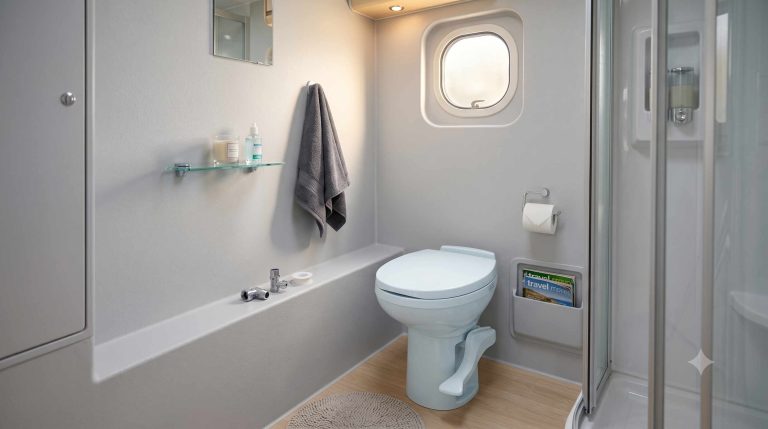
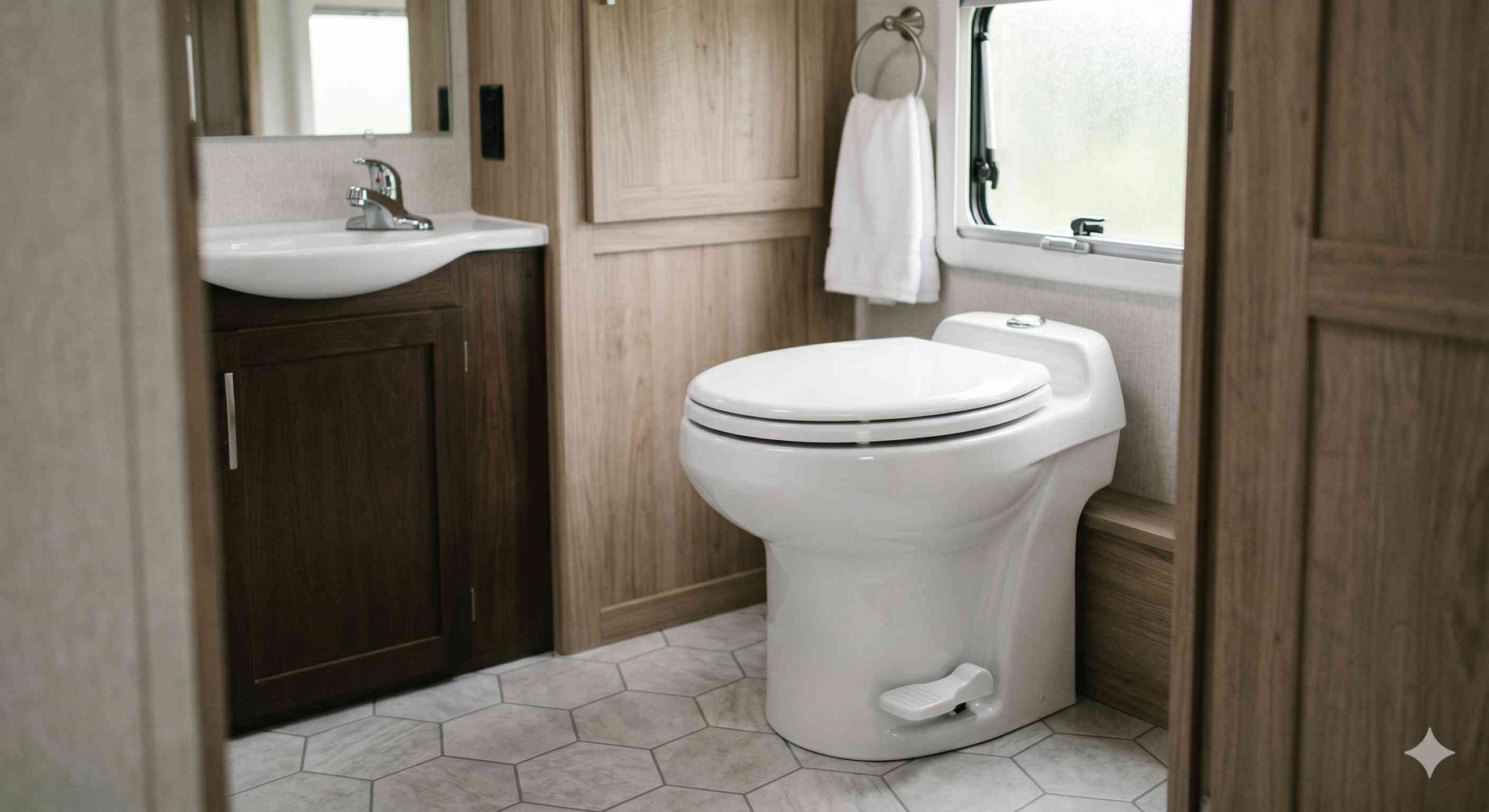
The Aqua-Magic Style II is a gravity-flush RV toilet with a ceramic bowl and a high-profile (taller) seating height that mimics a residential toilet. You step on a foot pedal to add water and open the flush ball; release to seal. It bolts to your existing floor flange and connects to your RV’s pressurized water line. For most owners, it’s a straight replacement for an older Thetford or a builder-grade plastic unit.
A few misconceptions worth clearing up:
- It’s not all-porcelain. The bowl is ceramic, but the base and other structural pieces are plastic. Several owners expected a fully porcelain fixture and were surprised. Across the owner feedback I analyzed, this comes up repeatedly.
- It’s not maintenance-free. Some buyers treat it as a permanent fixture. In real-world use, the flush mechanism and seals are wear items that may need attention over time.
- It’s not guaranteed to fit every rig. “High profile” and the rear water-line position mean clearance and connection orientation matter. More on that below.
Key Specs That Actually Matter for RVers
- Ceramic bowl: This is the headline upgrade owners love — it cleans up nicer and feels far more substantial than plastic. It matters because the bowl surface is what you interact with daily.
- High-profile seating height: Closer to a home toilet, which is a big comfort win for taller adults and anyone with stiff knees or mobility needs. The flip side: shorter users may find their feet no longer reach the floor.
- Foot-pedal flush with water-add function: The pedal controls both rinse water and the flush ball. It’s the heart of the toilet — and, per owner reports, the most failure-prone part.
- Rear water connection: The inlet position can clash with thin RV walls or tight clearances, so it directly affects how smooth your install is.
- Included seal and mounting bolts: Many owners confirm the kit comes with a new seal, bolts, and nuts, so you usually don’t need to buy those separately.
No specific water-use figures, dimensions, or weights are quoted here because they aren’t consistently confirmed in owner feedback — and I’d rather not invent numbers. For exact measurements, verify against the manufacturer’s listing before buying.
Feature-by-Feature Breakdown (Truth vs Marketing)
| Feature | What the Manufacturer Suggests | What It Actually Means (User Experience) | Compared to Competitors |
|---|---|---|---|
| Ceramic bowl | Premium, residential feel | Owners consistently love it; cleans well, feels solid, a clear step up from plastic | Comparable to other ceramic-bowl RV toilets; a clear win over builder-grade plastic units |
| High-profile height | Home-like comfort | Big plus for tall users and stiff joints; a minus for shorter people whose feet dangle | Similar to other “residence/high” models; choose the shorter version if height is a concern |
| Easy installation | Simple replacement | Frequently the best part — many report 5–15 minute installs as a near-direct swap | On par with or easier than rivals when it’s a like-for-like replacement |
| Foot-pedal flush | Reliable operation | The most repeated weak point; plastic pedal components can crack or stick over time | Some owners explicitly cite a different pedal design (e.g., Dometic) as a reason to switch |
| Soft-close lid/seat | Quality touch | The soft-close is liked, but the seat’s grooved underside is widely disliked for cleaning | Many owners reuse an old seat or buy aftermarket; this is a known category annoyance |
Real-World Owner Experience (Deep Pattern Analysis)
Pattern 1: Installation is the genuine bright spot
In a nutshell: This is the single most consistent piece of praise. Owners repeatedly describe quick, painless swaps — sometimes 5 to 15 minutes — especially when replacing the same or a similar Thetford model.
Hidden strength: Because it’s a common factory toilet, the floor flange and footprint often line up exactly, and the kit usually includes the seal and bolts you need.
Hidden weakness: “Easy” assumes the water-line connection matches. When the rear inlet orientation differs from your old unit, the job gets fiddly fast.
What to do about it: Before you remove the old toilet, note where your water line enters and how much wall clearance you have. Keep a right-angle (90°) elbow or a flexible supply line on hand as a cheap insurance policy. Wrapping the inlet threads with PTFE/Teflon tape (a few clockwise turns) is a commonly recommended step to prevent connection leaks.
Pattern 2: The flush pedal is the Achilles’ heel
In a nutshell: The most common failure complaint, by far, centers on the plastic foot-pedal mechanism — sticking, snapping, or leaking at the pedal/valve area, sometimes within months to a couple of years.
Hidden strength: When it works, the pedal action is smooth and the flush is strong. And because full replacements are inexpensive and easy to install, some owners just swap the whole toilet rather than chase parts.
Hidden weakness: The mechanism relies on plastic tension parts holding a pressurized water valve. Owners describe a recurring cycle of drips that worsen until a gasket or the pedal assembly is replaced.
What to do about it: Don’t over-stomp the pedal. Treat it gently. If you see drips at the base or pedal, address the seal/gasket early before it worsens. Anything beyond a basic gasket swap — or if you’re unsure about the valve — verify against the manufacturer instructions or consult a qualified RV tech.
Pattern 3: The seat design is widely disliked
In a nutshell: One pattern that comes up repeatedly is frustration with the seat’s underside — molded with fins and compartments that trap splatter and are a nightmare to keep clean.
Hidden strength: The newer units often include a soft-close lid, which owners genuinely appreciate, especially with kids or for nighttime use.
Hidden weakness: Many owners report the bowl geometry encourages splatter, and the grooved seat underside makes cleanup tedious. A frequent buyer move is to reuse the old seat or buy an aftermarket one.
What to do about it: Plan for a possible seat replacement from the start. Before you toss your old toilet, consider saving its seat if you liked it. Note that some aftermarket seats need creative mounting hardware, since the included nylon screws/nuts are reported to be low quality.
Pattern 4: Bowl-won’t-hold-water and valve failures
In a nutshell: A recurring critical theme is the bowl failing to retain water — often traced to the ball seal/o-ring or the water-inlet valve — sometimes appearing within the first year.
Hidden strength: The ball seal is a serviceable part, so the issue is often repairable rather than terminal.
Hidden weakness: A bowl that won’t hold water lets the black tank vent into the bathroom (odor) and can accelerate further seal wear. Some owners replaced the seal multiple times.
What to do about it: If water won’t hold, the ball seal is the first suspect — keep the genuine replacement seal on hand. If a fresh seal doesn’t fix it, the valve may be the culprit, which is a bigger job; verify against manufacturer guidance or consult a qualified RV tech.
Pattern 5: Shipping damage and the return-window trap
In a nutshell: A meaningful share of critical reviews aren’t about the toilet’s function at all — they’re about cracked lids, shattered bowls, or broken hinges arriving in pristine-looking boxes.
Hidden strength: When damage is caught early, many buyers report smooth Amazon refunds or replacements.
Hidden weakness: Owners who stored the box for weeks (waiting for a project or the camping season) often discovered damage after the return window closed — and report that manufacturer support pointed them back to the seller.
What to do about it: Open and fully inspect the toilet the day it arrives, even if you won’t install it for months. This single habit prevents the most painful outcome in the entire review set.
The Good, The Bad & The Ugly (Pros/Cons)
The Good — themes owners praise:
- Installation: Fast, simple, often a direct swap with included seal and bolts.
- Comfort & looks: High profile feels like home; ceramic bowl looks and cleans nicely.
- Flush performance (when new): Strong, full-bowl rinse that beats the old plastic units.
- Value: Frequently cited as more affordable than dealer pricing.
The Bad — themes owners gripe about:
- Seat design: Grooved underside is hard to clean; flimsy feel; many replace it.
- Splatter geometry: Bowl shape and water spray coverage draw repeated complaints.
- Missing sprayer: Some expected an included hand sprayer based on listing imagery and didn’t get one.
The Ugly — the stuff that makes people swear off the brand:
- Flush-pedal failures: The recurring “replace it yearly” complaint from a subset of frustrated owners.
- Warranty/support friction: Reports of authorized-service-center requirements, parts-instead-of-replacement responses, and hard-to-reach support.
- Damaged-on-arrival + closed return window: The worst-case combo that leaves people stuck.
Mini Toolkit: Decide + Fix (Fast)
Issue-Tag Box (the recurring tags):
- 🦶
pedal-fragile— plastic flush pedal sticks/snaps over time - 💧
bowl-wont-hold-water— ball seal/valve lets water drain out - 🪑
seat-hard-to-clean— grooved underside traps grime - 📦
arrived-damaged— cracked lid/bowl from shipping - 🔌
inlet-orientation— rear water connection clearance issues - ☎️
support-friction— warranty/returns runaround
Fitment/Adapter Mini-Matrix:
| Your situation | Likely friction | Quick fix |
|---|---|---|
| Replacing same/similar Thetford | Minimal | Use included seal & bolts; near-direct swap |
| Different water-line orientation | Inlet hits thin wall | Add a 90° elbow or flexible supply line |
| Rigid PEX connection | Can’t reach inlet | Use a push-to-connect PEX adapter + flexible hose |
Mini Decision Tree:
- If you’re swapping a like-for-like Thetford → this is an easy, high-confidence buy.
- If your old unit is short and you’re tall → the high profile is a comfort upgrade.
- If you’re short or need feet flat on the floor → consider the lower-profile version instead.
- If you can’t inspect on arrival → factor in the return-window risk before ordering.
- If you’ve already burned through pedals on this design → a different brand’s pedal mechanism may suit you better.
Troubleshooting Quickflow (leak at the base/pedal):
- Confirm the leak source — base seal vs. pedal/valve area.
- Check the floor-flange seal seated correctly; re-seat if needed.
- Tighten connections gently; wrap inlet threads with PTFE tape.
- If the bowl won’t hold water, replace the ball seal first.
- If dripping persists at the pedal, inspect the gasket and pedal assembly.
- Beyond basic seal/gasket work, verify against manufacturer instructions or consult a qualified RV tech.
Mini Return-Window Reality Check
- Open the box and inspect the bowl, lid, and hinge the day it arrives — not the day you install.
- Photograph any damage immediately, including the box, before contacting the seller.
- Don’t store an unopened toilet for weeks; the return clock doesn’t pause for your project timeline.
- Confirm the included parts (seal, bolts, and any advertised sprayer) match what you expected.
- If anything’s off, start the return through your point of purchase promptly rather than going manufacturer-direct.
- For a broader pre-purchase fitment and feature check, the RV toilet selection walkthrough helps you validate compatibility before your window closes.
Installation / Setup Tips (RV-Realistic)
- Measure first: note your floor-flange-to-wall distance and clearance before ordering, since “fits” varies by rig.
- Before removing the old toilet, photograph the water-line entry point and orientation.
- Keep a 90° elbow and a flexible supply line on hand — they solve most connection mismatches.
- Wrap the inlet threads with PTFE/Teflon tape, a few turns clockwise, to reduce connection leaks.
- Use the included bolts, not your old ones — owners note there’s a difference that matters.
- Set the toilet, sit on it to compress the seal, then tighten the nuts evenly. Don’t overtighten plastic.
- Do a dry fit before final mounting to catch leveling problems (thin RV walls sometimes need a small relief cut).
- If you’re using a hand sprayer, you may need to snip the connection tip — check before assembling.
- Consider replacing the seat proactively if cleanability matters to you; bring your own quality hardware.
- Common mistake: forcing the pedal or over-stomping during testing — be gentle from day one.
- Common mistake: skipping the leak check. Run water and watch the base and pedal for several flushes.
- Anything involving re-plumbing beyond a basic adapter, or valve internals, should be verified against the manufacturer instructions or handled by a qualified RV tech.
See It in Action: Visual Reality Check
Specs and bullet points only tell you so much — seeing this toilet go into a real RV bathroom tells you a lot more about clearance, connection, and the install flow. A walkthrough can save you a frustrating trip to the hardware store.
What to look for in this video (based on owner patterns):
- 🔌 Water-line check: Watch how the rear inlet lines up with the wall — this is exactly where owners reach for a 90° elbow or flexible hose.
- 🦶 Pedal action: Notice how the foot pedal feels and moves. This plastic mechanism is the part most owners eventually have trouble with.
- 📏 Height/scale check: Gauge how tall this high-profile model sits — picture whether your feet (or a shorter family member’s) will reach the floor.
- 🪑 Seat underside: If the video shows the seat flipped up, look at those molded grooves — that’s the cleaning headache owners complain about.
- 💧 Leak check: See whether the installer tests for leaks at the base after connecting; many owners wish they’d done this sooner.
Keep in mind this video shows the initial setup, but it won’t show the flush-pedal wear or the bowl-not-holding-water issue that some owners report months down the road.
Owner Stories
The stories below are composite scenarios reflecting repeated patterns across owner feedback.
The smooth swap: A full-timer’s factory plastic toilet finally quits. They order the Style II, drop it onto the existing flange using the included seal and bolts, sit on it to compress the seal, connect the water, and they’re done in under fifteen minutes — no leaks, no drama. They’d buy the exact same one again.
The pedal saga: Another owner loves the ceramic bowl but is on their third unit in three years. Each time, the plastic pedal mechanism eventually cracks or starts dripping. They’ve decided that next time they’ll try a different brand specifically for a sturdier pedal design — while admitting the bowl itself held up fine.
The return-window heartbreak: A buyer orders ahead of camping season and stores the box, unopened, in the garage. Weeks later, they open it to find a cracked lid. The box looked perfect, but the Amazon return window has closed, and manufacturer support points them back to the seller. The lesson they share: inspect the moment it lands.
🔎 See more owner feedback on Amazon
Who This Is For (and Who Should Skip It)
Buy it if…
- You’re replacing an old plastic or short factory toilet and want a ceramic, home-height upgrade.
- You’re swapping a like-for-like Thetford and want the easiest possible install.
- You’re a tall adult or have mobility/joint concerns that make a higher seat welcome.
- You’re comfortable keeping a spare ball seal around and doing basic maintenance.
- You’ll inspect the unit the day it arrives.
- You want a ceramic-bowl upgrade without dealer-level pricing.
Skip it if…
- You want a truly maintenance-free fixture you’ll never touch again.
- You’re shorter and need your feet flat on the floor (get the lower-profile version).
- You can’t inspect on arrival and can’t absorb return-window risk.
- You’ve already had repeated pedal failures with this design and want something different.
- A grooved, harder-to-clean seat is a dealbreaker and you won’t replace it.
- You’re expecting an all-porcelain fixture.
👉 Check today’s price on Amazon
If you’re comparing options, start here: Top RV Toilet Picks
Alternatives (Quick Comparisons)
- The lower-profile version of the same line: If the high seat height is your only concern, the shorter Aqua-Magic variant keeps the same easy-swap nature without the dangling-feet problem for shorter users.
- A different-brand gravity toilet (e.g., Dometic-style): Owners who repeatedly broke the Thetford pedal often cite a different pedal mechanism as the reason to switch brands. Worth considering if the foot-pedal is your historical pain point.
- Keep-and-rebuild your existing unit: If your current toilet’s only problem is a worn seal or pedal kit, a rebuild may be cheaper. That said, many owners conclude a full replacement is faster and barely more expensive.
For the broader landscape and how these stack up by need, the top picks roundup is the better place to compare head-to-head.
Deep-Dive FAQ
What should I test immediately after delivery?
Open the box the day it arrives and inspect the ceramic bowl, lid, and hinge for cracks — even if you won’t install it for months. Confirm the seal, bolts, and any advertised accessories are included. This is the single most important thing you can do, because the most painful outcomes in the owner feedback came from damage discovered after the return window closed.
What are the most common problems and fixes?
The two big ones: a flush pedal that sticks, cracks, or leaks (treat it gently, address drips early, and keep a gasket/pedal kit handy), and a bowl that stops holding water (replace the ball seal first). Beyond basic seal and gasket work, verify against the manufacturer instructions or consult a qualified RV tech.
Will this work with my RV setup?
Often yes — it’s a common factory toilet, so footprints frequently match. The catch is the rear water-line orientation and clearance. Measure your flange-to-wall distance and note your inlet position before ordering. A 90° elbow or a flexible supply line resolves most mismatches; a push-to-connect PEX adapter handles rigid plumbing.
Is the whole thing porcelain?
No. The bowl is ceramic, but the base and structural parts are plastic. If you were expecting an all-porcelain fixture, set that expectation aside.
Is the seat any good?
The soft-close lid is liked, but the seat’s grooved underside is a widely repeated cleaning complaint. Many owners reuse their old seat or buy an aftermarket one — just plan for possibly needing better mounting hardware.
How long will it last?
It varies a lot. Plenty of owners report years of trouble-free use; a frustrated subset reports flush-pedal wear within a year or two. Treating the pedal gently and servicing seals early improves your odds.
Does it come with everything I need?
Most owners confirm it includes a new seal, bolts, and nuts. Reports on an included hand sprayer are inconsistent — some expected one and didn’t receive it — so don’t count on the sprayer.
Final Verdict
The Thetford 42058 Aqua-Magic Style II is a genuinely good RV toilet for the right buyer — and a frustrating one for the wrong buyer. Its strengths are real and consistently praised: a ceramic bowl that feels like home, a comfortable high-profile height, and an installation so easy that owners routinely brag about finishing in minutes. For someone replacing a sad, low, all-plastic factory unit, this is a clear quality-of-life upgrade at a reasonable price.
The caveats are just as real. The plastic flush pedal is the part most likely to fail you over time, the seat’s grooved underside is a cleaning chore, and the support-and-returns experience can be rough if something arrives damaged and you didn’t catch it in time. None of these are dealbreakers if you go in informed: inspect on arrival, keep a spare seal around, treat the pedal gently, and budget for a possible seat upgrade.
Best-fit buyer: the practical RVer doing a like-for-like ceramic upgrade who wants an easy install and accepts a little ongoing maintenance. If that’s you, this is a solid, worth-it choice.