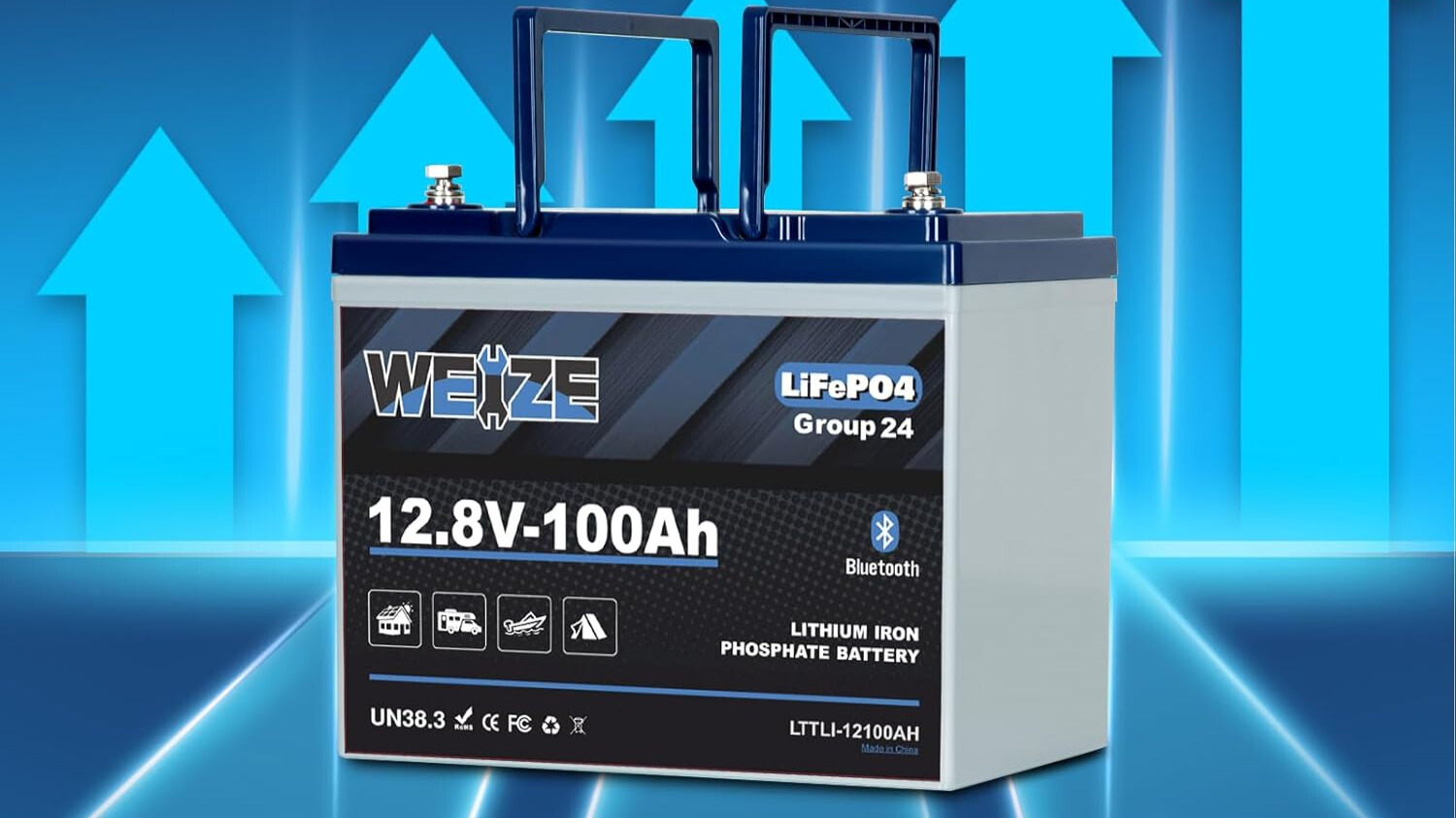
Weize 12V 100Ah Bluetooth LiFePO4 Battery Review: The “Budget Lithium” That RV Owners Actually Live With
Affiliate Disclaimer: This article contains affiliate links. If you click through and make a purchase, I may earn a small commission at no extra cost to you. This helps support my deep-dive research.
The “Dead Battery Morning” Nobody Wants
If you’ve ever woken up in your RV to a furnace that barely whispers, lights that look dim and sad, and a phone that’s one notch away from dying… you already know the pain: house batteries fail at the worst possible time.
That’s why I dug into a big spread of real owner experiences around Weize lithium batteries—especially the Weize 12V 100Ah Bluetooth LiFePO4 battery—to answer the questions you actually care about:
- Does it feel like a legit upgrade from AGM (and not just “cheap lithium hype”)?
- Does the Bluetooth monitoring make life easier—or become one more annoying app problem?
- What breaks, when it breaks, and how the warranty experience really goes
This is the time-saving version of “reading a mountain of reviews so you don’t have to.”
Quick Verdict (TL;DR)
If you want lighter weight, longer usable runtime, and easy state-of-charge checks from your phone, Weize can be a strong value—with one big caveat: long-term reliability looks a little uneven, and warranty support can range from smooth to frustrating depending on your case.
Confidence Score: 7.8/10 🔋
Best for: RVers upgrading from lead-acid who want budget-friendly lithium with monitoring
Watch-outs: occasional early failures + documentation hoops for warranty + app concerns for some users
✅ ⚡️ Check current price for the Weize 12V 100Ah Bluetooth LiFePO4 on Amazon
What You’re Actually Buying
A “12V 100Ah LiFePO4” battery is basically a modern RV power brick that behaves differently than lead-acid:
- LiFePO4 (Lithium Iron Phosphate) gives you a flatter voltage curve and deeper usable capacity than AGM/lead-acid.
- 100Ah is the capacity number you use for rough runtime math (more on that below).
- Bluetooth monitoring means you can check state of charge and battery status without guessing based on dim lights and vibes.
Across the owner feedback I analyzed, a recurring theme is: people buy this battery for one reason—more usable power with less weight—and most of them immediately feel that upgrade.
Quick Spec Reality Check (What 100Ah Means in an RV)
Let’s translate “100Ah” into something you can picture.
A typical 12V 100Ah LiFePO4 is roughly:
- ~1,280 watt-hours (Wh) of energy (12.8V nominal × 100Ah)
- Real-world usable energy depends on:
- your inverter size and efficiency
- battery discharge limits
- temperature
- wiring quality
Here’s the practical version:
| Load in Your RV | Typical Power Draw | Rough Runtime on 100Ah LiFePO4* |
|---|---|---|
| Lights + water pump + phone charging | 30–80W | 12–35 hours |
| 12V compressor fridge (average) | 40–70W avg | 18–30 hours |
| TV + Starlink + small fans | 80–200W | 5–14 hours |
| Coffee maker / toaster (inverter) | 800–1500W | 30–75 minutes |
*Runtimes vary a lot—this is “ballpark planning,” not a promise.
If you want to size this properly (instead of guessing), this internal guide helps:
Technical Deep Dive: What Makes This One Stand Out (Or Not)
1) The weight and “drop-in” feel
In the reviews I went through, I kept seeing variations of the same first impression: lighter than lead-acid, easy to handle, easy to fit. That matters in RV battery compartments where every inch and every pound is a negotiation.
But there’s a twist: a few owners still described it as heavy for one-person lifting—which is not “lithium is heavy,” it’s “this is still a dense power brick.” If you’ve got back/shoulder limitations, plan for:
- a battery strap
- a slide tray
- a second set of hands
2) The voltage “plateau” surprises people
A frequent buyer surprise is seeing the battery arrive around the low-13V range and assuming it’s “basically full.” With LiFePO4, that’s not how the story works. Lithium tends to sit in a tighter voltage band for a long time, so small voltage changes can represent big capacity changes.
Practical takeaway: Charge to 100% before your first trip, especially if you’re wiring multiple batteries together.
3) Bluetooth monitoring: convenience vs. app trust
From real-world owner feedback, it looks like Bluetooth is either:
- a genuine quality-of-life upgrade (“I can finally stop guessing”), or
- a source of hesitation if the required app doesn’t feel trustworthy to the user
If Bluetooth monitoring is a must-have for you, I’d treat it as a bonus tool, not your only tool. Keep a basic multimeter in your kit.
4) The BMS question (the hidden “brain”)
Some owners explicitly talk about performance differences and suggest the battery management system (BMS) quality is where budget lithium brands can diverge. Translation: when something feels “weird” (sudden cutoffs, charging quirks), the BMS behavior is often part of that story.
This doesn’t mean Weize is “bad.” It means you should match the battery to the job:
- RV house loads = typically smoother, more forgiving
- high-thrust trolling motor loads = harsher bursts, more stress
- big inverter loads = heavy current, wiring matters more
Key Features (Benefit-Driven & Comparative)
Here’s the “marketing vs. real life” version, based on aggregated owner experiences discussed in these reviews.
| Feature | What the Manufacturer Says | What It Actually Means (User Experience) | Compared to Competitors |
|---|---|---|---|
| 100Ah LiFePO4 capacity | “Long runtime, deep cycle” | Many users report noticeably longer usable runtime than lead-acid, especially for RV house loads and electronics. | Often delivers more usable capacity than similar-priced AGM; premium lithium may feel more consistent long-term. |
| Bluetooth monitoring | “Check status on your phone” | Owners commonly report it’s great for quickly checking charge levels—but a few users worry about app availability/trust. | Some brands have smoother apps; others are similar. Best treated as “nice-to-have,” not mission-critical. |
| “Drop-in” replacement | “Easy swap for lead-acid” | Many users find installation straightforward—just confirm dimensions and cable reach first. | Similar to most drop-in lithium; the real differentiator is after-sale support. |
| BMS protection | “Built-in safety protections” | In real-world use, most users never notice it—which is good. A minority report sudden failures or odd behavior that becomes a support case. | Premium brands usually win on consistency and support speed; budget brands win on price-per-Ah. |
| Cold-weather use | “Works in real conditions” | Several users ran these through winter for solar/backup use and were happy, but lithium charging in freezing temps still needs caution. | Heated/low-temp-cutoff models from other brands may be better if you camp below freezing often. |
Step 5: Real User Experience Analysis (Deep Pattern Analysis)
This is the part people skip—and it’s the part that saves you money.
Pattern 1: “Arrives well-packed and ready to install”
One pattern that comes up repeatedly is buyers calling out decent packaging and arriving with enough charge to get started. That’s a small detail, but it matters because battery shipping damage is real (and owners definitely mention when boxes show up trashed).
What it means for you: Inspect on arrival. If anything looks off physically, don’t install—start the return/warranty process immediately.
Pattern 2: “Huge upgrade from lead-acid in everyday RV life”
Across the owner feedback I analyzed, the most consistent happiness comes from people doing normal RV stuff:
- running the furnace overnight
- powering lights, water pump, and fans
- keeping the fridge stable
- avoiding the classic lead-acid “voltage sag” drama
Several long-time RV/camper owners describe it as the biggest battery improvement they’ve seen in years—especially when they camp in colder seasons and rely on the furnace.
What it means for you: If you’re coming from tired lead-acid, your “wow factor” is likely high.
Pattern 3: “But a minority get an early failure—and then warranty becomes the real test”
This is the uncomfortable part: a noticeable chunk of negative experiences aren’t “it’s weak” or “it didn’t meet capacity.” They’re “it stopped charging,” “it suddenly won’t work,” or “voltage dropped unpredictably.”
Then comes the second layer: support experiences vary.
- Many owners report the company eventually makes it right (replacement/refund).
- Others report slow communication or feeling like they had to jump through hoops (photos, repeated tests, time delays).
What it means for you: Budget lithium is often a value gamble—if you’re okay with documentation and troubleshooting if something goes wrong, it can still be worth it.
✅ 🔋 See the Weize battery listing on Amazon
The Good, The Bad & The Ugly (Pros/Cons Box)
✅ The Good (What owners consistently like)
- Strong “upgrade feel” vs. lead-acid: In the reviews I went through, a large majority describe better runtime and steadier performance than AGM/lead-acid in real use.
- Lighter and easier to fit than multi-battery lead-acid banks: People replacing multiple smaller batteries (or big lead-acid bricks) love the space savings.
- Fast charge + holds charge well (for many): Several owners report it charges efficiently and sits well during storage/seasonal use.
- Bluetooth convenience (when it works for your phone): Many users enjoy quick charge checks without guessing.
⚠️ The Bad (Real frustrations that show up repeatedly)
- Warranty can require effort: Expect photos, voltage readings, and patience if you end up with a problem unit.
- Monitoring accessories can be hit-or-miss (varies by model): Some users of other Weize variants report monitor issues; for Bluetooth versions, the concern shifts to app trust/availability.
- “Still heavy” for some people: It’s lighter than lead-acid, but it’s not weightless. Plan your install accordingly.
❌ The Ugly (The stuff that breaks trust)
- Early failures exist: A smaller but loud set of reviews report batteries that die in months, won’t charge, or behave unpredictably.
- Support inconsistency: Some owners feel taken care of; others feel ignored. This variability is the biggest reason I won’t give this a 9/10.
Owner Stories
I always pay attention to the stories because they reveal what a battery feels like in real life—not in spec sheets.
Story 1: The “cold-weather camper problem” finally gets solved
One older camper owner described years of battling furnace-heavy trips where lead-acid batteries would crash early. After switching to these lithium batteries, they reported waking up to a battery indicator still showing strong charge after multiple nights—and even after sitting unused for a while, the pack still had meaningful capacity left.
👉 🔎 More real owner experiences here
Story 2: The “boat electronics killed my starting battery” fix
A boat owner running power-hungry fish-finder electronics described how their first outing drained the crank battery. After adding a lithium battery dedicated to electronics, they stopped dealing with dead starts at the ramp.
👉 ⚓️ Read more owner scenarios on Amazon
Story 3: The warranty “hoops” story (and why it matters)
A long-term user described a battery that charged initially, then dropped voltage unpredictably—sometimes minutes later, sometimes days later, even with no load. They eventually received a replacement, but only after documenting the behavior repeatedly.
That story matters because it tells you: if you ever need support, clear documentation and patience can make the difference.
👉 🧾 More owner feedback patterns
Expert Tips & “Install Hacks” Owners Keep Mentioning
These are the practical moves that prevent most avoidable problems.
1) Charge to 100% before you wire multiples together
If you’re building a bigger bank (parallel or series), don’t “just connect and go.” Several owners explicitly mention charging each battery fully first. It helps balance behavior and reduces weird early surprises.
2) Confirm physical fit and cable reach before you unbolt the old battery
This sounds obvious—until you’re in a cramped RV battery bay realizing your lugs won’t reach cleanly. Owners repeatedly recommend confirming dimensions first.
3) Use a LiFePO4-appropriate charger profile
One pattern that comes up repeatedly is confusion around voltage and charge state. If your RV converter/charger has a lithium mode, use it. If it doesn’t, you can still make this work—but you need to understand you may not be charging optimally.
If you want the clean “do it right” version, this guide helps:
4) Treat Bluetooth as a convenience tool—not your only tool
Bluetooth is great for quick checks, but I’d still keep:
- a simple voltmeter/multimeter
- a basic battery disconnect strategy
- a known-good fuse/breaker setup
Who This Battery Is For (And Who Should Skip It)
✅ Buy it if you’re this person
This is a good fit if you want:
- a value-focused upgrade to lithium deep cycle power
- easier monitoring via Bluetooth (and you’re okay verifying basics with a meter)
- more usable energy for normal RV loads (lights, furnace fan, fridge control boards, water pump, charging devices)
🚐🔋 Grab the Weize 12V 100Ah Bluetooth LiFePO4 on Amazon
❌ Skip it if you’re this person
You might want to look elsewhere if:
- you can’t tolerate the possibility of warranty documentation and delays
- your setup is mission-critical (medical devices, no-backup situations)
- you regularly camp in very cold temps and need a battery designed specifically around low-temp charging behavior
If you’re shopping alternatives, start here:
How It Compares: Weize vs. Lead-Acid vs. “Premium Lithium”
This is the cleanest decision lens I can give you:
| Option | What You Gain | What You Give Up | Best For |
|---|---|---|---|
| Lead-acid / AGM | Simple, familiar | Less usable capacity, heavier, voltage sag | Occasional RV use, tight budget, low power needs |
| Weize (budget lithium) | Big runtime upgrade, lighter, Bluetooth convenience | Some long-term reliability variance, support can be inconsistent | Most RVers upgrading from lead-acid |
| Premium lithium | Consistency, polished support, often better ecosystem | Higher price | Full-timers, critical loads, “I want zero drama” buyers |
If you want to keep lithium performing long-term (especially with solar), this maintenance guide is worth a read:
Deep-Dive FAQ (High-Intent Questions)
1) Will the Weize 12V 100Ah lithium work as an RV house battery?
For most RV house systems, yes—owners commonly use this style of battery for typical 12V loads. The key is matching your charging setup (converter/charger and solar controller) to lithium-friendly settings when possible.
2) Do I really need Bluetooth monitoring?
You don’t need it, but many users find it genuinely useful. The practical approach is: use Bluetooth for convenience, and a multimeter for sanity checks.
3) Can I run an inverter with a single 100Ah battery?
Yes, but keep expectations realistic. A single 100Ah battery can handle small-to-moderate inverter loads depending on discharge limits and wiring quality. For high-wattage appliances, a larger battery bank is usually the smoother experience.
4) What should I do before my first trip?
Based on aggregated owner experiences discussed in these reviews:
- charge fully before use
- confirm fit and cable reach
- verify your charger has a lithium profile (if available)
- do a short “test night” at home before relying on it off-grid
5) How do I store it for winter?
Many users store lithium successfully by:
- charging to a reasonable level (not necessarily 100% for long storage)
- disconnecting loads
- keeping it in a protected temperature range
- checking periodically (Bluetooth helps here, if you trust the app setup)
Final Verdict: Worth It—If You Buy With Eyes Open
If you’re upgrading from lead-acid, the Weize experience can feel like you finally gave your RV electrical system a backbone: steadier voltage, longer usable runtime, and the simple joy of not guessing your battery status.
But I’m not going to pretend every story is perfect. A minority of owners report early failures, and the warranty process can be either quick and fair or annoyingly demanding. That uncertainty is the tradeoff that often comes with budget lithium.
If you’re okay with that—and you want the most “power-per-dollar” without jumping straight to premium pricing—this battery is a solid contender in the RV LiFePO4 batteries category.
✅🔋🚐 Check today’s Weize 12V 100Ah Bluetooth LiFePO4 price on Amazon