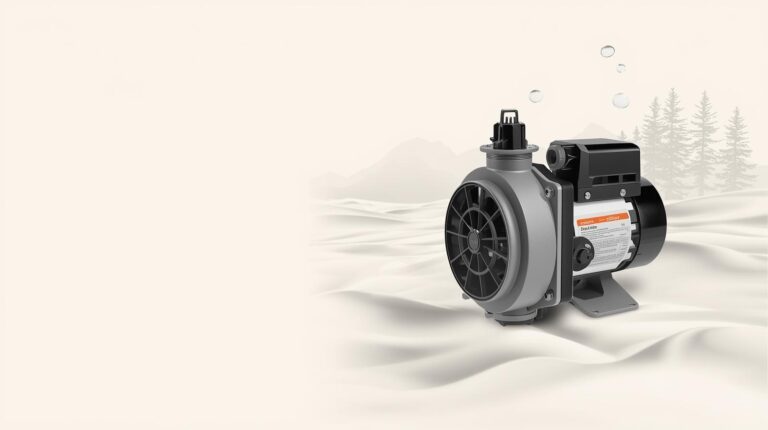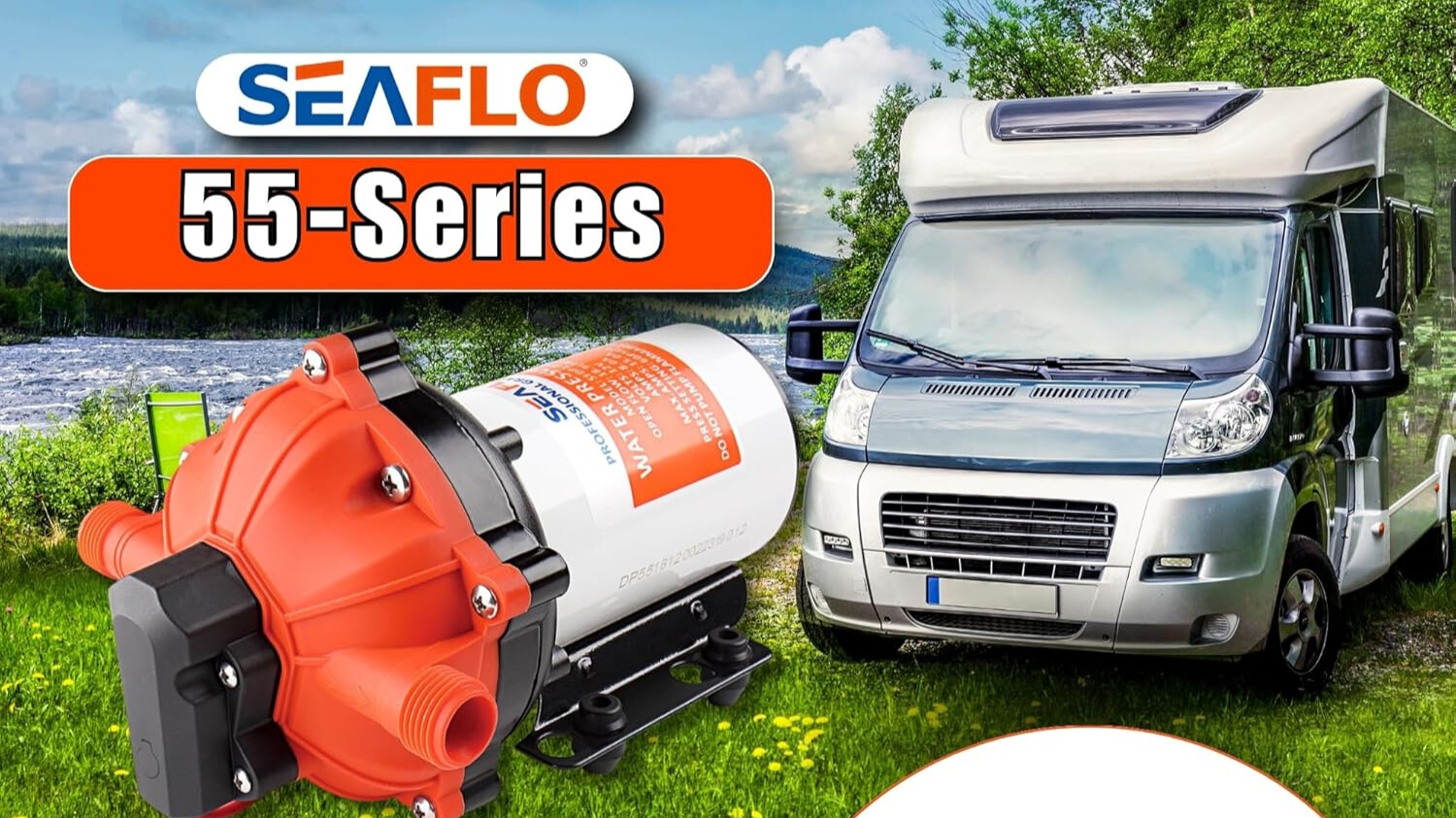
SEAFLO 55-Series RV Water Pump Review: The Real-World Upgrade (and the Failure Pattern You Should Know)
Affiliate Disclaimer: This article contains affiliate links. If you click through and make a purchase, I may earn a small commission at no extra cost to you. This helps support my deep-dive research.
Quick Summary
If you’re shopping for a SEAFLO 55-Series RV water pump because your current pump feels weak, surges, or makes showers miserable off your fresh tank, here’s the short version of what I saw across real owner experiences:
- When it’s a good unit and installed well, it can feel like a legit pressure upgrade—some owners describe the “closest to city-water-like” they’ve had from a 12V pump.
- The biggest risk is shutoff reliability (pressure-switch behavior): a noticeable chunk of owners report pumps that won’t shut off, cycle, or fail early.
- Noise is not one simple story. Plenty call it quiet (especially vs older OEM pumps), but others still describe vibration, pulsing, or “louder than expected” installs.
- Marine/boat users report corrosion/sealing complaints more than RV owners do. If you’re mounting this in a wet compartment, take sealing and mounting seriously.
If you want the “why” behind those patterns—and how to install it so you get the best shot at a good outcome—keep reading.
The Real RV Water Problem Isn’t “No Water”—It’s “No Comfortable Water”
I’ve lost count of how many RVers describe the same moment: you finally get an awesome boondocking spot… then the shower turns into a sad drizzle with random surges. Dishes take forever. The pump chatters. The sink pulses. And suddenly you’re timing rinses like you’re on a submarine.
That’s exactly why I went deep on owner-reported outcomes for the SEAFLO 55-Series RV water pump—not marketing claims, not spec-sheet daydreaming. Just the repeat patterns: what people loved, what made them return it, what failed, and what installation tweaks kept showing up in “this finally works” stories.
Quick Verdict (TL;DR)
My bottom line: The SEAFLO 55-Series can be a genuinely satisfying upgrade if you install it like a high-output pump (wiring + plumbing + mounting) and you’re willing to accept that owner feedback shows a meaningful failure rate tied to shutoff/pressure-switch behavior.
Confidence Score: 7.2/10
Why not higher? Because the “great when it works” theme is real—but so is the “it won’t shut off / it failed early / support was frustrating” theme. This is a pump I’d buy with eyes open and install carefully.
If you want to check current pricing: See the SEAFLO 55-Series on Amazon
What This Pump Is
The SEAFLO 55-Series is a 12V DC diaphragm “demand” pump. That means:
- You open a faucet → pressure drops → pump turns on.
- You close the faucet → pressure rises → pump turns off.
Most RVs in the USA/Canada run a 12V house system like this. In Australia, 12V is common too (some setups are 24V—so confirm your rig’s voltage before buying any pump).
Where this pump tries to stand out is simple: it’s positioned as a higher-output, higher-pressure option for RVs, boats, and off-grid water transfer. In practice, owners buy it for one of three reasons:
- They want stronger showers from the fresh tank.
- They want less annoying cycling/surging than their old pump.
- They’re replacing a worn-out OEM pump and want a “real upgrade,” not just a like-for-like swap.
Before you upgrade anything, it helps to understand your plumbing baseline. If you’re newer to RV water systems, this primer makes the “why is my pressure weird?” stuff click fast:
Technical Deep Dive: What Makes It Feel “Stronger” (When It Does)
Here’s the simple reality: pump “strength” in an RV is a combination of:
- Flow (how many gallons per minute it can move under real restrictions)
- Pressure (how hard it can push against restrictions)
- Control behavior (how smoothly it ramps / how often it cycles)
- Installation losses (wire voltage drop, hose diameter, fittings, filter restriction, accumulator use)
Owners who were thrilled typically had two things going for them:
- Their previous pump was tired, underperforming, or poorly matched to the RV.
- They installed the SEAFLO in a way that let it actually deliver what it’s capable of (especially wiring and plumbing).
Owners who hated it usually reported one of these:
- Shutoff/pressure-switch problems (runs on, won’t stop, cycles constantly)
- Noise/vibration/pulsing that didn’t feel like an upgrade
- Performance not matching expectations (especially if they expected a night-and-day flow increase)
Key Features (Benefit-Driven & Comparative)
Below is the “marketing vs reality” table I wish every RV product page had.
| Feature | What the Listing Implies | What It Actually Means (Owner Experience) | Compared to Common Alternatives |
|---|---|---|---|
| Higher-output rating (commonly bought as a “bigger pump”) | “Stronger showers, faster fill, better flow” | Some owners report a dramatic improvement in shower feel and faucet pressure; others say the real-world increase was smaller than expected | Several owners compare it against older OEM pumps as a clear upgrade; a smaller group swapped to other well-known RV pump models after disappointment |
| Demand switch shutoff | “Turns on/off reliably with faucet use” | This is the biggest swing factor: many had normal behavior; a notable group reported won’t shut off, cycling, or early failure | A common reason people switch brands is consistent shutoff behavior over time |
| “Quiet” operation | “Less annoying pump noise” | Some owners call it surprisingly quiet; others report vibration, installation-sensitive noise, or pulsing that feels worse than expected | Noise depends heavily on mounting and plumbing isolation—more than most buyers expect |
| High current draw reality | “12V pump, simple install” | Multiple owners highlight the need for proper gauge wire and fuse/breaker sizing | Smaller pumps can be more forgiving; higher-output pumps punish weak wiring |
| Multi-use (RV + boat + off-grid) | “Works anywhere” | RV use tends to be kinder than marine; boat users more often mention corrosion/sealing concerns | If you’re mounting in wet/salt environments, protection matters more than specs |
Real User Experience Analysis: The Patterns That Keep Repeating
1) The feedback is polarized—great highs and frustrating lows
Owner ratings cluster on the extremes more than you’d expect for a “simple” RV pump. A large group is genuinely happy, but a meaningful group reports failures, returns, or “never again.”
What that means for you: treat this like a high-output component that needs a proper install—and keep expectations realistic. You’re not buying “magic,” you’re buying capacity that only shows up if the rest of your system allows it.
2) Pressure & shower feel: where the pump earns its fans
Across the owner feedback I analyzed, a recurring theme is that good installs feel like a lifestyle upgrade:
- Better shower “consistency” compared to tired OEM pumps
- Less “pressure collapse” when another faucet opens
- Faster water delivery in everyday tasks
A frequent buyer surprise is that the “big win” isn’t always raw flow—it’s how normal the RV feels when the pump stops struggling.
If you’re chasing better showers but aren’t sure whether your issue is the pump, plumbing restrictions, or a clogged filter, this troubleshooting guide is the fastest way to stop guessing:
3) The biggest complaint: shutoff behavior and pressure-switch reliability
In the reviews I went through, I kept seeing variations of the same story:
- “Worked great for a short time… then it wouldn’t shut off.”
- “It kept running even with all faucets closed.”
- “It started cycling constantly.”
- “I replaced it multiple times for the same reason.”
This is the core risk. Some owners went as far as advising others to plan for a pressure-switch-related fix path (or replacement) if things go sideways.
What it means in real life:
If a pump won’t shut off, you’re not just annoyed—you can burn power, overheat the pump, stress fittings, and eventually create a failure cascade.
4) Noise & pulsing: install-sensitive, and not everyone agrees
Owners commonly report two totally different realities:
Camp A (happy): “Quieter than my old pump,” “surprisingly quiet for the output,” “less annoying than expected.”
Camp B (unhappy): “Vibrates,” “pulses,” “noisy,” or “sounds worse than it should.”
One pattern that comes up repeatedly is that pulsing complaints often come from buyers who expected “variable-speed smoothness.” This pump is typically treated as an on/off demand pump, so if you want steady, almost residential flow, you may need to add system smoothing (more on that below).
5) Marine/boat use: corrosion and sealing complaints show up often
Based on aggregated owner experiences discussed in these reviews, the harshest feedback frequently comes from boat installs:
- Some report corrosion/rust over time
- Some complain about sealing and exposure to water
- Some say it’s simply not the right choice for wet environments
RV takeaway: If your pump lives in a dry interior bay, you’re less exposed to that risk. If it’s in a wet, spray-prone compartment, you should treat moisture protection as part of the installation.
6) Wiring and amperage: the “hidden” upgrade requirement
From real-world owner feedback, it looks like many buyers underestimate electrical needs. Multiple reviews mention:
- Amp draw and the need for correct fuse/breaker sizing
- Wiring gauge choices (to avoid voltage drop and weak performance)
- The pump behaving poorly when power delivery is marginal
Translation: a high-output 12V pump can perform like a mediocre pump if your wiring is undersized or your run is long.
If You Want the Best Price Snapshot
Installation Reality: How I’d Install This Pump to Avoid the Most Common Complaints
If you want the “happy owner” outcome, installation details matter. Here’s a practical approach that matches the recurring success patterns:
Step-by-step: RV-friendly install checklist
- Confirm your baseline problem
- If pressure is bad on both city water and tank water, the pump may not be the main issue.
- If city water is fine but tank pressure is weak/surges, the pump and tank-side plumbing are likely the focus.
- Use a proper inlet strainer / filter
- Even if your system already has filtration, owners often mention performance improving after filter maintenance.
- A clogged strainer can mimic “bad pump” symptoms.
- Plumb for flow
- Avoid unnecessary restrictive fittings.
- Keep inlet runs short and smooth when possible.
- Seal threads correctly (but don’t overdo it—some fitting issues are tolerance-related, and brute force can make it worse).
- Mount for silence
- Use a vibration pad or isolation mounts.
- Avoid mounting directly to thin panels that act like a drum.
- Support nearby hoses so they don’t rattle.
- Wire it like a high-draw 12V appliance
- Use appropriate gauge wire for the run length.
- Fuse it correctly close to the power source.
- Ensure clean ground connections.
- If you’re not confident, this is the part worth having a tech double-check.
- Add an accumulator tank (highly recommended)
- In real-world use, many users find an accumulator helps with:
- smoothing pulsing
- reducing rapid cycling
- making showers feel more “normal”
- In real-world use, many users find an accumulator helps with:
If you want a broader “what pumps fit what rigs” view before committing, this roundup helps you sanity-check your choice:
And if you’re doing a swap yourself, here’s the clean DIY path:
The Good, The Bad & The Ugly (Pros/Cons)
Pros (What owners consistently like)
- Noticeable pressure improvement (especially replacing old or failing OEM pumps)
- Can feel “close to city water” when paired with an accumulator and good plumbing
- Many report quieter operation than expected—particularly compared to older RV pumps
- Works in a wide range of setups (RVs, off-grid watering, transfers), when installed correctly
Cons (Where owners get burned)
- Shutoff/pressure-switch complaints are the #1 risk theme
- Some units fail early (including reports of dead-on-arrival or short lifespans)
- Noise/vibration/pulsing can still be an issue if mounted poorly or if you expected variable-speed smoothness
- Marine/wet installs attract corrosion/sealing criticism more than typical RV installs
- Support/warranty experiences are mixed—a noticeable group found it frustrating when they needed help
Comparison Table: Where the SEAFLO 55-Series Fits vs Common RV Alternatives
This isn’t a spec-sheet contest. This is “what kind of owner tends to be happiest.”
| Option | Best For | Owner-Reported Feel | Typical Tradeoff |
|---|---|---|---|
| SEAFLO 55-Series RV water pump | Buyers wanting a higher-output upgrade and willing to install it properly | Can feel like a major shower/pressure upgrade; noise depends on mounting | Higher risk of shutoff/pressure-switch complaints vs what some buyers expect |
| Common OEM “mid-output” RV pumps | Simple replacement, low drama installs | Familiar, adequate performance for small rigs | Can feel weak in showers; cycling/surging complaints over time |
| Higher-tier RV pump alternatives (often chosen after returns) | Buyers prioritizing long-term shutoff behavior | Owners who switch often report relief and “finally fixed it” | Usually costs more; may still benefit from accumulator/mounting upgrades |
| Variable-speed style pumps | People who hate pulsing and want smooth flow | Smoother faucet feel | Higher complexity/cost; not always necessary for everyone |
Owner Stories: The Human Side (Real RV Scenarios)
I’m going to retell a few owner-style scenarios I kept seeing—because this is how you’ll actually experience the pump.
Story #1: “My old pump was dying—this made my RV feel normal again”
A common scenario: someone replaced an older mid-output pump that had started surging, losing pressure, or acting tired. After the swap—especially when paired with an accumulator—they described showers finally feeling consistent and daily sink use becoming less irritating.
If you want to browse the broader range of owner experiences in one place, here’s the review hub many shoppers referenced:
Story #2: “It was amazing… for two days. Then it wouldn’t shut off.”
Another scenario shows up repeatedly: the pump installs easily and works great initially. Then it starts running on after faucets close, or it cycles constantly. That’s where frustration spikes—because now you’re troubleshooting a brand-new part you bought to stop troubleshooting.
Here’s where owners often went next to compare what others experienced:
Story #3: “It’s quiet, but the water pulses—and I hate that”
Some owners praised the quietness and build feel, but didn’t like the faucet experience. The pump’s on/off behavior can translate to pulsing at the sink or shower unless your system has enough buffering.
That’s why “add an accumulator” keeps popping up in happy installs—and why some buyers who expected variable-speed smoothness felt disappointed.
Expert Tips & Installation Hacks (What Owners Learn the Hard Way)
These are the practical tweaks I’d apply immediately if you’re installing a SEAFLO 55-Series RV water pump.
- Add an accumulator tank early (not later)
- It’s one of the most consistent “this made it better” add-ons.
- It can reduce cycling and help with pulsing.
- Treat mounting as part of performance
- Use isolation mounts or a vibration pad.
- Support hoses so they don’t transmit vibration into cabinetry.
- Don’t starve the pump
- Keep the inlet path clean and unrestricted.
- Maintain filters/strainers; multiple owners reported pressure improvement after basic filter service.
- Wire for voltage stability
- Long wire runs and undersized gauge can cause weak performance and weird behavior.
- Use correct fuse/breaker sizing and solid grounds.
- If your pump bay is damp, protect it
- A few owners reported issues tied to moisture exposure and sealing.
- Mount it where it stays dry when possible, and keep spray off electrical areas.
Who This Is For (And Who Should Skip It)
You should buy it if…
- You want a noticeable upgrade in shower feel from the fresh tank.
- You’re willing to install it properly (mounting + plumbing + wiring).
- You understand that owner feedback includes a meaningful number of shutoff/pressure-switch complaints, and you’re okay with that risk.
Ready to check pricing? See the SEAFLO 55-Series on Amazon
You should skip it if…
- You want the lowest-drama, “install it and forget it” replacement with minimal troubleshooting risk.
- You hate pulsing and don’t want to add an accumulator.
- Your pump will live in a wet/spray-heavy environment and you don’t want to manage corrosion/sealing concerns.
Deep-Dive FAQ
1) Will this actually improve my RV shower pressure?
In real-world use, many users find it can—especially if your current pump is old, tired, or underperforming. The biggest “wow” reports often include an accumulator tank and a clean, unrestricted inlet path.
2) Why do some people say it won’t shut off?
That complaint is typically tied to pressure-switch behavior (or something that looks like it). If the pump can’t reach its shutoff pressure—due to leaks, plumbing issues, a bad switch, or installation-related problems—it may run on or cycle.
3) Is it quiet?
Some owners call it surprisingly quiet; others call it noisy. Mounting, vibration isolation, and hose support make an outsized difference. If you bolt any pump straight to a thin panel, the RV will amplify the sound.
4) Do I need an accumulator tank?
You don’t have to, but if you dislike pulsing or cycling, it’s one of the most consistently helpful add-ons mentioned by satisfied owners.
5) I’m on city water sometimes—do I still care about pump choice?
Yes, because the pump is your “off-grid pressure source.” If your tank-side experience is bad, it changes how you camp. For city hookups, use a good regulator so campground pressure doesn’t damage your plumbing:
Final Verdict
If you’re buying the SEAFLO 55-Series RV water pump expecting a simple, guaranteed, drama-free upgrade, the owner feedback suggests you should slow down. The ceiling is high—some people genuinely love the pressure and shower feel. But the failure/shutoff stories are common enough that I consider this an “install carefully and monitor early” purchase.
If you’re the kind of RVer who will mount it properly, wire it correctly, and add an accumulator tank to smooth the system, this pump can be a satisfying upgrade—especially replacing an aging OEM unit.