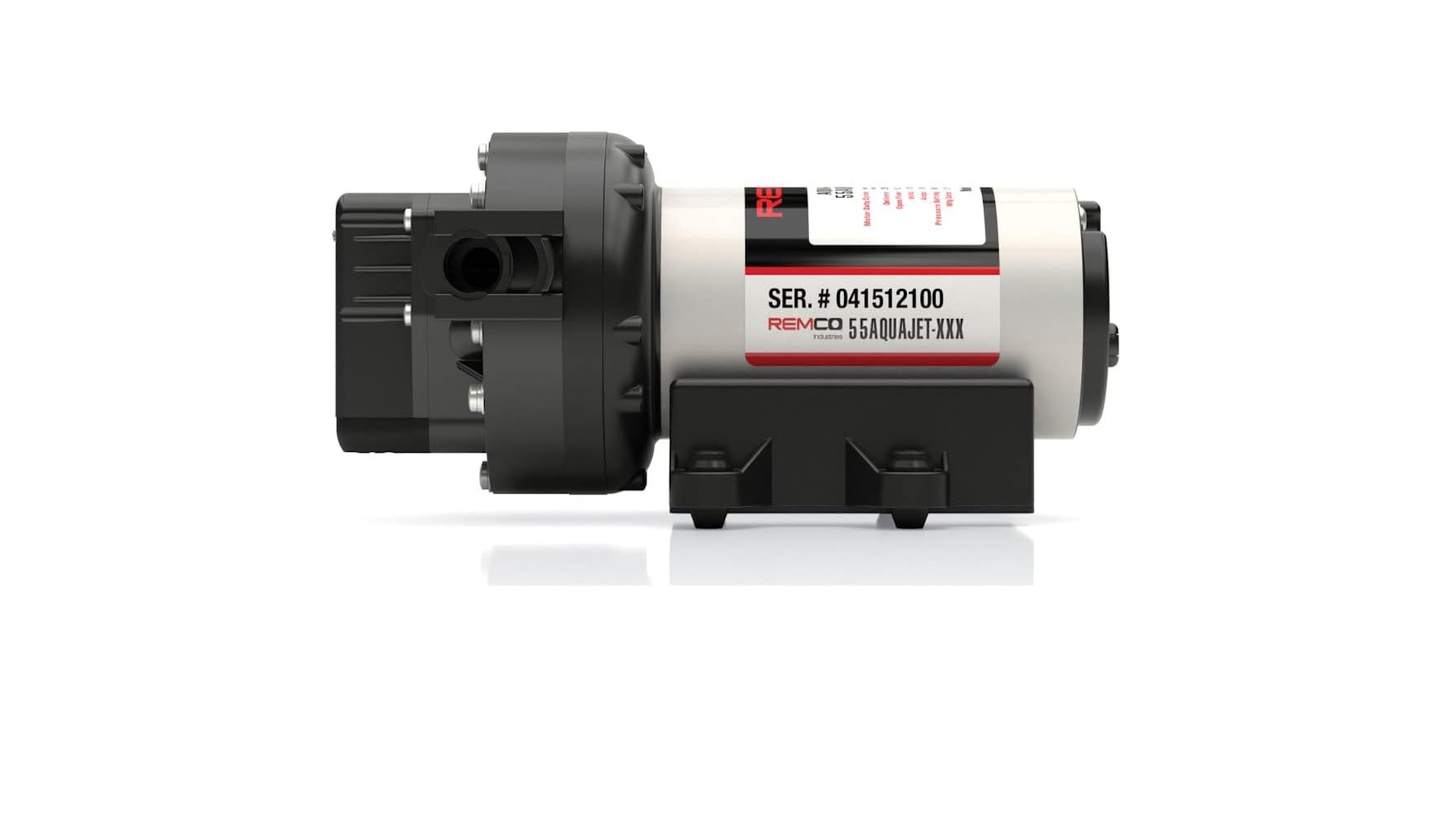
Remco Aquajet RV Water Pump Review: The “Home-Pressure” Upgrade That Can Bite Back
Affiliate Disclaimer: This article contains affiliate links. If you click through and make a purchase, I may earn a small commission at no extra cost to you. This helps support my deep-dive research.
If you’ve ever stepped into your RV shower expecting “normal water pressure” and got a sad drizzle… you already know the pain. Same story at the kitchen sink: you crack the faucet, the pump machine-guns on and off, the pipes rattle, and your rig suddenly sounds like it’s trying to launch.
That’s the exact moment people start searching for a high-performance RV water pump—and the Remco Aquajet RV water pump shows up again and again as the “Cadillac” upgrade.
So I did what you’d do if you had infinite patience: I went through a big pile of real owner feedback and looked for repeatable patterns—what actually improves, what problems keep coming up, and what you should do during install so you don’t accidentally turn your plumbing bay into a pressure-washer test bench.
Quick Verdict (TL;DR)
If your #1 goal is stronger, more stable water pressure—especially with two fixtures running—the Aquajet can absolutely feel like a “why didn’t I do this sooner” upgrade. But it’s not a universal slam dunk. The biggest real-world risks are overpressure, low-flow pulsing, shipping/DOA issues, and warranty headaches when the seller isn’t clearly supported.
Confidence Score: 8.1/10 (for the right rig + the right install habits)
Best for: Class A/Class C, larger fifth wheels, or anyone upgrading from a weak OEM pump and willing to install it correctly (and test it immediately).
Skip if: You have fragile plumbing components, an on-demand water heater that hates cycling, or you want “set it and forget it” customer support.
If you’re still shopping around, I’d also compare it to the other top performers in our roundup:
Quick Specs Snapshot (What You’re Really Buying)
Across owner reports, this pump is consistently described as a high-flow, high-pressure 12V DC pump that feels noticeably stronger than typical OEM RV pumps.
| Spec / Fitment | What you’ll commonly see | What it means in real RV use |
|---|---|---|
| Power | 12V DC | Standard RV/boat system (USA/Canada). In Australia, you’re still 12V, but double-check fitting standards (BSP vs NPT/adapters). |
| Flow | ~5.3–5.5 GPM (varies by model) | Better multi-fixture performance than common 2.8–3.5 GPM pumps. |
| Pressure | ~60–65 PSI nominal (with higher shutoff possible in some complaints) | “Home-like” feel—but you must protect your plumbing. |
| Behavior | Variable speed / demand-based | Can reduce the harsh on/off feel—but low-flow pulsing still shows up for some. |
| Weight | ~8 lb class | Owners often call it “heavy duty” and “premium-feeling.” |
| Install style | Often “direct replacement” for Aqua-Jet setups | Many report plug-and-play plumbing connections, but O-rings/fittings matter. |
Where the Aquajet Sits vs Typical RV Pumps
Most factory pumps are designed to be “good enough,” not “shower like home.” Owners upgrading to Aquajet usually come from pumps in the ~3 GPM / ~45–55 PSI range. The Aquajet’s main real-world difference is that it’s built for high demand and tends to recover pressure faster when multiple fixtures open.
Here’s the practical comparison:
| Category | Typical OEM RV pump | Remco Aquajet RV Series |
|---|---|---|
| Shower feel | Often “okay” until someone opens a tap | Frequently described as “home pressure” |
| Two fixtures at once | Pressure drop + more cycling | More stable flow, faster recovery |
| Noise | Can be sharp/ratchety | Can be very quiet if mounted right |
| Low-flow use (quick hand rinse) | Rapid cycling | Mixed: some smoother, some still “spurt/spurt” |
| Risk profile | Lower | Higher (pressure-related + warranty/seller issues) |
If you’re fighting weak pressure, also check the simple stuff first (it’s shockingly often the culprit): clogged inlet strainer, kinked suction line, failing pump, or a regulator choking flow. This is worth a quick read:
Technical Deep Dive (In Plain English)
Variable speed: what it should do
A variable-speed RV pump tries to match motor speed to demand. Instead of blasting to full speed the moment you crack a faucet, it’s supposed to ramp smoothly and maintain a steadier line pressure.
In real-world feedback, many users do feel it reacts faster and more intelligently than basic single-speed pumps—especially when someone opens/closes fixtures randomly. That’s the “premium” behavior people pay for.
The honest reality: “variable speed” isn’t magic
A recurring theme is that the Aquajet behaves best when you give it enough continuous flow (shower, two faucets, higher-flow fixtures). When you use RV water the way most people do—quick spurts, low-flow rinses, water conservation—some owners still report pulsing or surging.
That doesn’t automatically mean the pump is “bad.” It often means the system isn’t giving the pump a stable demand signal, or the plumbing layout is amplifying pressure swings.
Thermal protection + electronics: a double-edged sword
Some owners love the feature set: variable speed, protections, and strong output. But multiple negative experiences cluster around the controller/switch behavior: not turning on reliably, failing to shut off, or behaving inconsistently after some months.
That’s the tradeoff: more “brains” can mean better performance—and more things that can fail compared to a simpler pump.
Key Features Table (Manufacturer vs Real Owner Meaning)
| Feature | What the manufacturer implies | What it actually means (user experience) | Compared to competitors |
|---|---|---|---|
| High flow (~5.3–5.5 GPM) | Strong delivery | Better shower + better multi-fixture use; many report it “keeps up” | Outperforms many 3.0–3.5 GPM RV pumps in demand situations |
| Higher pressure (~60–65 PSI nominal) | “Home-like” | Feels great… but can stress weak plumbing or components | More “bite” than common 45–55 PSI pumps |
| Variable speed / demand control | Smoother, less cycling | Often faster recovery; still mixed at low-flow hand rinses | Can feel smarter than single-speed pumps—but not always quieter |
| Noise-reduction potential | Quiet operation | Many say it’s quiet only when mounted/plumbed correctly | Can be quieter than older pumps, but not guaranteed |
| Direct replacement fit (for many Aqua-Jet installs) | Easy upgrade | Many report quick swap; others fight fittings/O-rings | Easier than re-plumbing when it matches your original layout |
Real User Experience Analysis (Patterns That Kept Showing Up)
1) First impression: “Feels premium, heavy-duty”
Across owner feedback I analyzed, a recurring theme is the pump feels substantial—more like marine/coach-grade hardware than a budget RV pump. People notice the weight and build, and many call it a “serious” upgrade.
2) The big win: pressure + multi-fixture stability
In the reviews I went through, I kept seeing the same delight: the shower finally feels normal, toilet flushing improves, and you can run more than one faucet without everything falling apart.
If you’ve got a family rig, or you full-time and your pump runs constantly, this is the core reason the Aquajet earns loyalty.
3) The big surprise: quiet depends more on install than the pump
Owners commonly report wildly different noise outcomes:
- Some say they can barely hear it and had to double-check it was even running.
- Others describe pipe-rattling chaos.
One pattern that comes up repeatedly is that noise is usually vibration transmission—not “motor loudness.” Mounting and line routing matter more than the marketing.
4) The biggest risk: pressure can be high enough to cause damage
This is the part I won’t sugarcoat. A handful of owners describe overpressure events where the pump kept climbing and damaged plumbing components—blown seals, filters collapsing, relief valves popping, and leaks appearing “everywhere.”
Even if this is rare, the impact is expensive. If you’re upgrading to a high-pressure RV water pump, you need to treat pressure as a system design variable—not just a comfort upgrade.
5) Check valve/backfill issues when connected to city water
A frequent buyer surprise is fresh tank backfilling when connected to city water. More than one owner solved it by installing an inline check valve on the pump outlet. If your setup allows city water to push backward through the pump, you want a one-way valve strategy.
If you want a clean overview of how city water interacts with your pump and tanks, this helps:
6) Warranty + seller confusion is a recurring headache
From real-world owner feedback, it looks like a meaningful portion of the worst experiences are not just “pump failed,” but “pump failed and I couldn’t get support cleanly.” People describe being bounced between the marketplace and manufacturer expectations.
That doesn’t mean every buyer gets burned. It does mean you should:
- test the pump immediately,
- keep packaging and documentation,
- and treat “unknown seller” situations as added risk.
The Good, The Bad & The Ugly (Pros/Cons You Can Actually Use)
Pros (What owners consistently like)
- Pressure upgrade feels dramatic: Many describe “house-like” pressure and better toilet/shower performance.
- Handles demand better: Running two fixtures often stays more stable than common OEM pumps.
- Can be very quiet when mounted correctly: Flexible lines, isolation, and not over-tightening mounts show up as repeat fixes.
- Often an easy swap: Many owners replacing an older Aqua-Jet-style pump report fast installs.
Cons (What keeps coming up)
- Low-flow pulsing still happens for some: Quick hand washes and water-conserving use can trigger surging.
- Overpressure risk: A small set of reports describe pressures high enough to damage components.
- Quality variability: DOA units, inconsistent behavior, controller/switch issues appear across multiple years of feedback.
- Warranty path can be messy: Especially when the seller relationship isn’t clear.
The “Ugly” (High-cost failure modes)
- System damage: If you get a runaway pressure situation, repairs can cascade.
- Backfilling the fresh tank: Can waste water and create confusing “why is my tank filling?” problems.
- On-demand water heater compatibility: Cycling/pulsing can cause temperature instability in certain setups.
Owner Stories (Real Scenarios That Teach You Something)
Here are a few patterns retold as real-life “this is what happened” stories—because that’s where you learn what to do before you install.
Story #1: “It became whisper-quiet… after re-routing the plumbing”
One owner described the pump as extremely capable but only truly quiet after they changed how the lines were routed and secured. The big lesson: you’re not just buying a pump—you’re tuning a vibration system.
If you want to skim similar experiences, see the owner discussion here: Amazon reviews.
Story #2: “Instant pressure upgrade… but it exposed weak links”
Another pattern: buyers upgrade for pressure, love the shower, then discover their plumbing bay has a weak component (filter housing, fittings, seals) that never got stressed before. When the system sees higher static pressure, those weak links show themselves fast.
More owner context: Amazon reviews.
Story #3: “Great pump… until support became the problem”
A frustrating scenario shows up where the pump fails early (or arrives looking used), and the buyer’s bigger issue becomes the warranty path. The practical takeaway: inspect on arrival, test immediately, and keep records.
More experiences here: Amazon reviews.
Installation Guide (How to Get the “Quiet + Strong” Outcome)
If you install this like a basic OEM pump swap and call it a day, you might get lucky. But the consistent “best outcomes” share the same install habits.
Step-by-step install checklist (practical, not theory)
- Kill power and depressurize
- Turn off the pump switch and 12V feed.
- Open a faucet to relieve pressure.
- Match fittings carefully
- Replace questionable O-rings.
- Don’t assume “it fits” means “it seals.”
- Use vibration control from day one
- Use flexible hoses on inlet and outlet if possible.
- Add a gentle loop rather than perfectly straight runs (helps break vibration transfer).
- Mount smart
- Use rubber isolation grommets if included.
- Do not over-tighten mounting screws (this is mentioned repeatedly by owners chasing noise).
- Consider a dense rubber pad under the mounting surface.
- Wire it like a high-demand pump
- Use appropriate gauge wiring for a pump that can draw real amperage.
- Use proper fusing and clean grounds.
- Test immediately
- Run one fixture, then two.
- Verify it shuts off correctly.
- Watch for weird cycling, delayed starts, or pressure runaway.
If you want a broader understanding of how the pump fits into the whole RV plumbing “loop,” this is a solid refresher:
Expert Tips & “Hacks” Owners Keep Recommending
1) Add a check valve if your system backfeeds on city water
If your fresh tank starts filling while on city water, an inline check valve on the outlet side is a common real-world fix.
2) Install a shutoff valve at the pump inlet (especially if you use city water often)
Multiple owners mention isolating the pump when connected to city water to avoid unintended pressure stress and backflow weirdness.
3) If it short-cycles, look for the hidden adjustment behavior
One pattern that comes up repeatedly is that some units have an adjustment screw hidden under a plug—despite claims that nothing is adjustable. Owners who found and tuned it often report dramatically better cycling behavior.
4) Quieting is plumbing physics, not wishful thinking
The most consistent “quiet” strategies:
- flexible hoses or braided lines,
- loops in lines,
- isolate the pump from hard surfaces,
- and secure lines so they don’t slap cabinetry or framing.
5) Protect your system with pressure management
If you’re running high pressure, it’s smart to manage it upstream and avoid surprises. A regulator is a must-have on city water:
Who This Pump Is For (And Who Should Skip)
You should buy the Remco Aquajet RV water pump if…
- You want a real upgrade from weak OEM pressure.
- You run two fixtures at once often (family rigs, full-timers).
- You’re willing to do a careful install (vibration + fitting discipline).
- You’ll test it immediately and confirm shutoff behavior before a trip.
You should skip (or be very cautious) if…
- Your rig has components that can’t tolerate higher static pressure.
- You mostly use tiny trickle flows and hate any hint of pulsing.
- You rely on an on-demand water heater that is sensitive to cycling.
- You want easy, predictable warranty support with no seller ambiguity.
If your main issue is “my pump cycles like crazy” and not “I need more power,” you may be better served by addressing system causes first. Start here:
Common Pain Points (What to Watch Before It Ruins a Trip)
Pain point #1: “It’s still noisy.”
This is often install-related. If your lines are hard-plumbed and rigid, the pump can transmit vibration like a drum. Fixing it usually means rethinking how vibration travels—not replacing the pump.
Pain point #2: “It surges at low flow.”
This tends to show up when you crack a faucet slightly. Some owners say it’s worse than basic pumps in that specific scenario, because the pump isn’t staying in a smooth low-speed state.
Pain point #3: “Fresh tank backfilling on city water.”
This is the classic “where is my water going?” moment. Many owners solve it with a check valve strategy.
Pain point #4: “Pressure switch/controller weirdness.”
If it won’t kick on reliably, won’t shut off, or behaves inconsistently, you’re likely dealing with switch/controller behavior—not plumbing. That’s where immediate testing after delivery matters.
FAQ (High-Intent Questions People Ask Before Buying)
1) Is it actually quieter than a standard RV pump?
It can be—and many owners say it is—but only if you isolate vibration. If you bolt it hard to a thin wall and run rigid lines, it can sound awful.
2) Will it stop pulsing and cycling?
Under steady demand (showers, two fixtures), many users report smoother behavior. Under very low flow, multiple owners still report pulsing or “spurt/spurt” behavior.
3) Do I need an accumulator tank?
Owner experiences are mixed. Some say it helps with noise/pulsing. Others warn that certain configurations don’t pair well. If you add one, do it intentionally: correct placement, correct pressure, and verify the pump’s guidance for your exact model.
4) Can this pump damage my RV plumbing?
It can if you get an overpressure situation or your system has weak links. If you’re upgrading to higher PSI, consider adding a pressure gauge during testing and ensure your system is protected—especially if you’ve had leaks before.
5) Why does my fresh tank fill when I’m on city water?
That’s usually backflow through the pump path. A check valve (one-way valve) on the outlet side is a common fix reported by owners.
Final Verdict (My Bottom Line)
The Remco Aquajet RV water pump earns its reputation for one reason: when it’s working correctly and installed correctly, it can make your RV water system feel dramatically more “residential.” Better showers. Better multi-fixture performance. Faster recovery. For many people, it’s the single most noticeable comfort upgrade they’ve made.
But you’re not just buying comfort—you’re buying power, and power needs control. The real-world downside cluster is clear: pressure-related risk, low-flow pulsing for some setups, quality variability, and seller/warranty friction.
If your rig is a good match (and you install it like you mean it), it’s an upgrade you’ll feel every day.
- See price on Amazon
- Also compare alternatives here: Best RV Water Pumps for Reliable Pressure