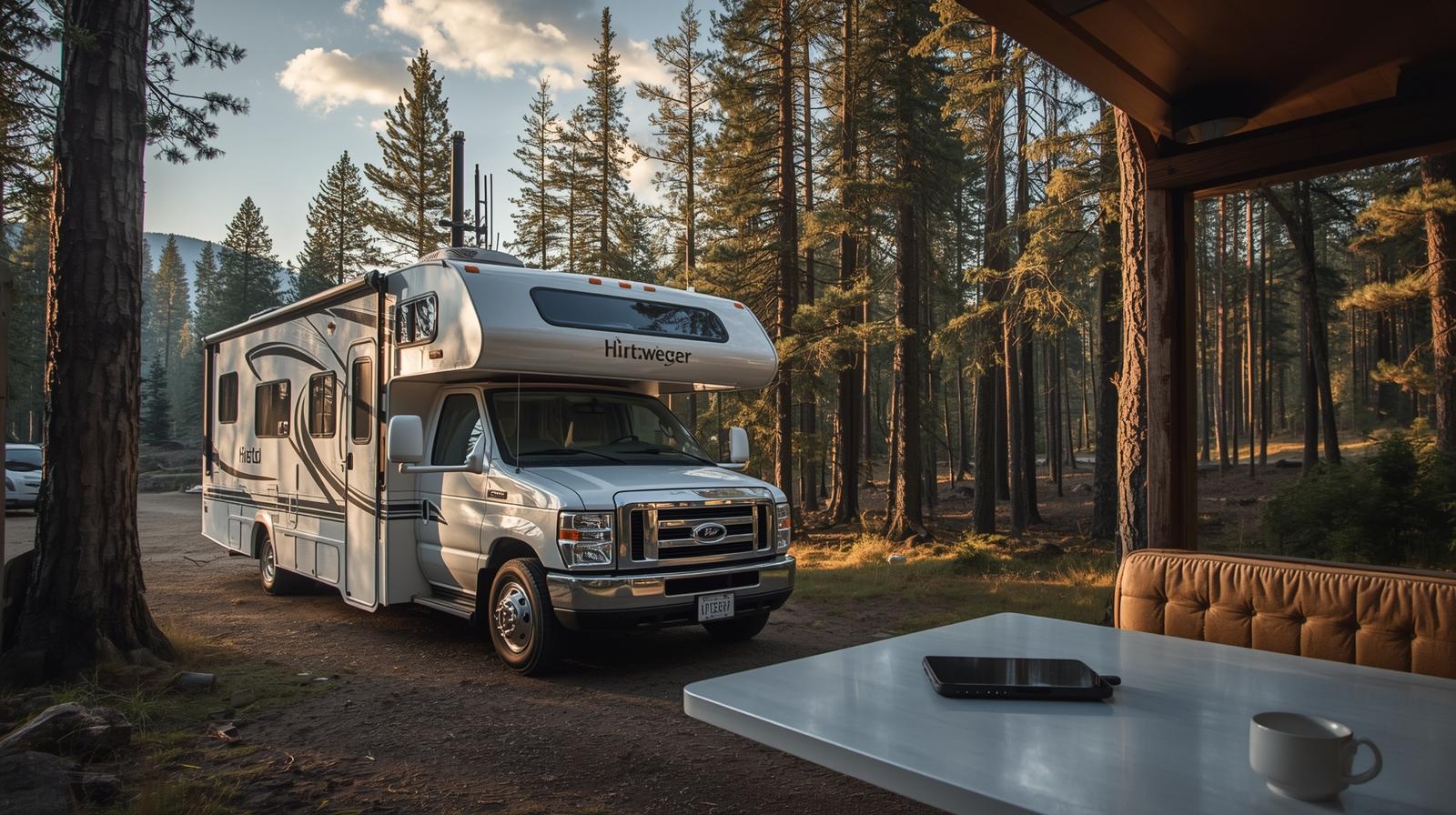
Best RV Cell Phone Boosters (2026) — Top 10 Ranked by What Owners Actually Report
Affiliate Disclaimer: This article contains affiliate links. If you click through and make a purchase, I may earn a small commission at no extra cost to you. This helps support my deep-dive research.
You already know the pain: you have “a bar” outside… then step into your RV and everything collapses—calls drop, texts hang, hotspots connect but don’t work. The decision tension is real because boosters can feel miraculous in the right conditions—and pointless in the wrong ones.
How we reviewed: We compiled this ranking from our individual product reviews, prioritizing real-world patterns: what consistently works, what frustrates owners, and what matters for long-term value.
Here’s what you’ll get: a fast award-style shortlist, a theme-based comparison table, and practical “pick/skip” guidance—without pretending any booster can create signal where none exists.
3) Quick Verdict
Awards Table
| Award | Product Name (linked) | Best For… | Quick Reason (grounded in review themes) |
|---|---|---|---|
| 🥇 Best Overall | HiBoost Power Travel 3.0 RV Cellular Booster | Most RVers in the 0–1 bar world | Recurring reports of meaningful “usable again” improvements—with a small “signal bubble” reality |
| 💰 Best Value | PHONETONE Cell Phone Booster | Budget-minded buyers who will install carefully | Owners commonly report solid call/text stability gains when placement is handled correctly |
| 💎 Best Premium | weBoost Drive X RV | Heavy users who want a higher-confidence kit | In real-world use, many users find it’s a legit quality-of-life upgrade in fringe coverage |
| ⚡ Best for boondocking in fringe-signal public lands | weBoost Drive Reach RV II | Boondockers chasing “weak-but-real” donor signal | One pattern that comes up repeatedly is install quality deciding results (antenna placement + separation) |
| ⭐ Best for parked RVs at a seasonal site | weBoost Destination RV | Parked-only setups | Based on aggregated owner experiences discussed in our reviews, it’s strongest when aimed well at a consistent campsite |
| 🎯 Best for first-time buyers | HiBoost Travel RV 2.0 Cell Booster | New buyers who want support and guidance | A frequent buyer surprise is how much support/hand-holding affects outcomes—and this theme shows up strongly here |
4) Quick Decision Matrix
- Need a balanced, high-confidence booster for typical RV travel → Go to #1 HiBoost Travel 3.0
- Need a premium kit for frequent use in fringe areas → Go to #2 weBoost Drive X RV
- Need a boondocking-focused kit where install quality is your “secret weapon” → Go to #3 weBoost Drive Reach RV II
- Need a parked-only solution for a repeat campsite/seasonal spot → Go to #4 weBoost Destination RV
- Budget-focused (and willing to do careful placement) → Go to #7 PHONETONE
5) Comparison Table
| Product Name (linked) | Best For | Owner-Reported Outcome | What Owners Liked | Common Complaints / Tradeoff | Ease/Friction | Rating |
|---|---|---|---|---|---|---|
| HiBoost Travel 3.0 | Most RVers in weak coverage | Strong (calls/text + usable hotspot near antenna) | “usable again,” support | “small bubble,” mounting/cable care | Moderate | High |
| weBoost Drive X RV | Premium travel use | Strong (stability gains in fringe areas) | stability, “feels premium” | “not whole-RV,” install-sensitive | Moderate | High |
| weBoost Drive Reach RV II | Boondocking in fringe coverage | Strong (usable calls + workable hotspot when donor exists) | calls/text wins | expectation mismatch, heat/feedback warnings | Moderate–Hard | High |
| weBoost Destination RV | Parked-only setups | Moderate–Strong (site-dependent) | parked reliability (when aimed) | aiming/setup dependency | Hard | Medium |
| HiBoost Travel RV 2.0 | First-time buyers | Moderate (weak-to-usable, setup dependent) | support themes | small bubble, install reality | Moderate | Medium |
| weBoost Drive Reach RV | Fringe-signal campers | Moderate (usability > “bars”) | workable connection | install frustration, expectations | Moderate–Hard | Medium |
| PHONETONE | Budget buyers | Moderate (calls/text stability themes) | stability, support | mixed outcomes if setup off | Moderate | Medium |
| ANNTLENT | DIY “high ceiling” installs | Moderate (near-antenna improvements) | strong upside potential | band/compatibility confusion | Hard | Medium |
| GAGBK | Budget installs with careful aiming | Moderate (consistency > bars) | fewer dropped calls | separation challenges | Moderate–Hard | Medium |
| SureCall Fusion2Go 3.0 | Buyers who will troubleshoot early | Unclear–Moderate (high variance) | “finally works” moments | return-window regret, variance | Moderate–Hard | Low |
6) Detailed Product Reviews
#1. HiBoost Power Travel 3.0 RV Cellular Booster — The “Make Weak Service Usable” Pick
📌 At a Glance
- Best for: Most RVers who camp in weak coverage and want calls/texts + usable hotspot back
- Owner-reported outcome: Strong (meaningful improvement near the inside antenna)
- Ease/frequency of friction: Moderate
- Reliability signals: Mixed (some mounting/cable-related complaints; support shows up as a bright spot)
- Our rating: High evidence
Quick Summary:
Based on aggregated owner experiences discussed in our reviews, this is the most consistently “worth it” style of outcome—as long as you accept the small coverage bubble and set it up around where you actually use your phone/hotspot.
The Deep Dive (Why It Ranked Here):
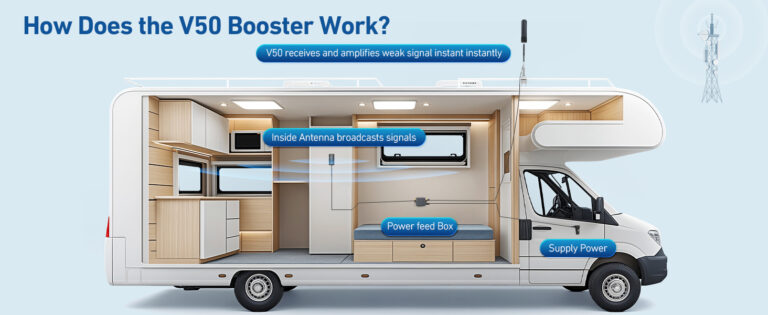
- Owners commonly report the biggest win is stability (calls/texts + workable hotspot) rather than a dramatic “bars” change.
- A frequent buyer surprise is how tight the indoor coverage area can be—results often concentrate within a few feet of the inside antenna.
- One pattern that comes up repeatedly is that owners who treat the kit like a real travel system (protect cables, store antenna smartly) stay happier.
- From real-world feedback and our review notes, support is repeatedly described as helpful for troubleshooting and parts.
- Common friction themes include vibration-related cable/connector loosening and mounting methods that don’t hold up if conditions are dusty/warm.
✅ Why Buy
- You want a reliable “usable again” connection in fringe coverage.
- You can build your setup around a known inside “signal station” spot (dinette, desk, bed).
- You value support-driven troubleshooting when dialing in placement.
⛔ Dealbreakers / What to Consider
- If you need whole-RV coverage, skip this.
- If your typical campsites are true dead zones, results will be — (not covered by owners) in a positive way; the recurring theme is that boosters can’t create signal.
- Plan for mounting and cable management—it’s not a zero-effort install.
Verdict for You:
- 👉 Pick this if: you want the most repeatable “weak-to-usable” outcome
- You’ll place your hotspot/phone near the inside antenna
- You’re okay treating it like a system, not a gadget
- 🛑 Skip this if: you want instant, whole-rig internet
- You won’t mount/route cables properly
- You camp where there’s no donor signal
- Check Price on Amazon: https://amzn.to/4jp6h5C
- Read the full review: https://rvoutfitting.com/hiboost-travel-3-0-rv-review/
#2. weBoost Drive X RV — Premium Stability for Heavy Users
📌 At a Glance
- Best for: Full-timers and frequent travelers who lean on hotspot stability
- Owner-reported outcome: Strong (quality-of-life upgrade in fringe coverage)
- Ease/frequency of friction: Moderate
- Reliability signals: Reliable (most negatives cluster around expectations/placement rather than defects)
- Our rating: High evidence
Quick Summary:
Across our individual reviews, a recurring theme is that this kit “earns its keep” when you already have weak service outside and your RV construction is wrecking signal inside.
The Deep Dive (Why It Ranked Here):
- In real-world use, many users find it meaningfully improves usability (calls, texts, and workable data) in fringe-signal campgrounds.
- Owners commonly report disappointment is tied to expectation mismatch (wanting “internet anywhere”) or placement mistakes.
- One pattern that comes up repeatedly is the “signal bubble” reality—inside antenna placement matters more than people expect.
- A frequent buyer surprise is that “premium build” is nice—but outcomes are dominated by signal reality + install quality.
- From real-world feedback and our review notes, the happiest owners describe stability improvements (fewer dropped calls and more consistent connections).
✅ Why Buy
- You need a premium, travel-ready booster for fringe coverage.
- Your priority is call/text reliability + usable hotspot, not “full bars.”
- You’re willing to optimize antenna placement.
⛔ Dealbreakers / What to Consider
- If you need whole-RV Wi-Fi, skip this.
- If you often camp in no-service zones, skip this.
- If you won’t do install tuning (height, separation, inside placement), results will be inconsistent.
Verdict for You:
- 👉 Pick this if: you want premium-grade stability in weak coverage
- You travel often and rely on hotspot workflows
- You’re willing to dial in placement
- 🛑 Skip this if: you want a miracle box
- You camp in true dead zones
- You won’t build a “signal station” setup
- Check Price on Amazon: https://amzn.to/4qIRzsP
- Read the full review: https://rvoutfitting.com/weboost-drive-x-rv-review/
#3. weBoost Drive Reach RV II — Boondocking-Focused, Install-Dependent Wins
📌 At a Glance
- Best for: Boondockers in fringe coverage who will install carefully
- Owner-reported outcome: Strong (usable calls + workable hotspot when donor exists)
- Ease/frequency of friction: Moderate–Hard
- Reliability signals: Mixed (heat/feedback warnings and “setup reality” complaints show up)
- Our rating: High evidence
Quick Summary:
Based on aggregated owner experiences discussed in our reviews, this kit can be a big upgrade—but it’s also one of the clearest examples of “install quality decides your fate.”
The Deep Dive (Why It Ranked Here):
- Owners commonly report best-case outcomes that look like “weak outside → usable inside.”
- A frequent buyer surprise is how many disappointments trace back to zero donor signal situations.
- One pattern that comes up repeatedly is antenna placement + separation being as important as the booster itself.
- From real-world feedback and our review notes, recurring frustration shows up when buyers expect home-internet performance.
- Some owners mention edge-case annoyances like running warm/hot or warning behavior when placement causes feedback.
✅ Why Buy
- You boondock where you often have weak-but-real outside service.
- You’re willing to treat install as a real project (height, separation, positioning).
- You care about calls/texts + “good enough” data.
⛔ Dealbreakers / What to Consider
- If you need plug-and-play “internet anywhere,” skip this.
- If you can’t achieve good antenna separation in your rig, results may be limited.
- Expect tuning, not magic.
Verdict for You:
- 👉 Pick this if: you boondock and can do careful placement
- You can mount the outside antenna well
- You can build a consistent inside use spot
- 🛑 Skip this if: you want effortless whole-RV coverage
- You won’t tune separation/placement
- You frequently camp beyond coverage
- Check Price on Amazon: https://amzn.to/4aGodGJ
- Read the full review: https://rvoutfitting.com/weboost-drive-reach-rv-ii-review/
#4. weBoost Destination RV — The Parked-Only “Aim It Right” Specialist
📌 At a Glance
- Best for: Parked RVs at repeat campsites/seasonal spots
- Owner-reported outcome: Moderate–Strong (site-dependent)
- Ease/frequency of friction: Hard
- Reliability signals: Mixed (results tied tightly to aiming/setup and donor signal)
- Our rating: Medium evidence
Quick Summary:
In our review analysis, we consistently saw the same story: when it’s used as a parked-only system and set up correctly, owners report real improvements. When expectations or aiming are off, frustration spikes.
The Deep Dive (Why It Ranked Here):
- Owners commonly report it shines when you return to the same campsite patterns and can aim/set once.
- A frequent buyer surprise is how much the “parked-only” reality matters for satisfaction.
- One pattern that comes up repeatedly is failures being tied to setup/aiming or having no donor signal.
- From real-world feedback and our review notes, it’s not a whole-RV blanket—think “stronger zone” near the inside antenna.
✅ Why Buy
- You camp parked most of the time.
- You’re willing to do a more involved setup for a more stable result.
- You want better calls + basic data in a repeat location.
⛔ Dealbreakers / What to Consider
- If you need a solution you can casually move day-to-day, skip this.
- If you won’t aim/tune it, skip this.
- If your campsites are truly out of service, skip this.
Verdict for You:
- 👉 Pick this if: you’re parked and can aim it properly
- You revisit the same areas often
- You can commit to setup time
- 🛑 Skip this if: you move constantly
- You want a travel-first kit
- You want instant results without aiming
- Check Price on Amazon: https://amzn.to/3L7anCV
- Read the full review: https://rvoutfitting.com/weboost-destination-rv-review/
#5. HiBoost Travel RV 2.0 Cell Booster — First-Timer Friendly Support Themes
📌 At a Glance
- Best for: First-time buyers who want support-forward troubleshooting
- Owner-reported outcome: Moderate (weak-to-usable, placement-dependent)
- Ease/frequency of friction: Moderate
- Reliability signals: Mixed (support praised, but outcomes still depend on environment and setup)
- Our rating: Medium evidence
Quick Summary:
Across our individual reviews, a recurring theme is that this style of kit works best when you approach it like a system: you need weak service outside, proper antenna separation, and a realistic expectation of a small coverage zone.
The Deep Dive (Why It Ranked Here):
- Owners frequently describe the win condition as “weak outside becomes usable inside.”
- A frequent buyer surprise is that support experiences can meaningfully change the outcome (setup help and troubleshooting).
- One pattern that comes up repeatedly is that it’s not for true dead zones.
- From real-world feedback and our review notes, the best results show up when the inside antenna is close to where you work/sit.
✅ Why Buy
- You’re buying your first booster and want support themes to be in your favor.
- You need calls/texts and basic data reliability more than speed bragging rights.
- You can place your hotspot/phone near the inside antenna.
⛔ Dealbreakers / What to Consider
- If you expect whole-rig coverage, skip this.
- If you camp beyond coverage, skip this.
- If you can’t do reasonable antenna separation, expect weaker results.
Verdict for You:
- 👉 Pick this if: you want a support-forward first booster
- You’re okay with a small coverage zone
- You can do careful placement
- 🛑 Skip this if: you want instant, blanket coverage
- You won’t tune your setup
- You routinely camp in dead zones
- Check Price on Amazon: https://amzn.to/45mYWxV
- Read the full review: https://rvoutfitting.com/hiboost-travel-rv-2-0-review/
#6. weBoost Drive Reach RV — Fringe-Camping Classic (Usability Over “Bars”)
📌 At a Glance
- Best for: Campers on the edge of coverage who don’t obsess over bar count
- Owner-reported outcome: Moderate (“usable” often improves more than “bars”)
- Ease/frequency of friction: Moderate–Hard
- Reliability signals: Mixed (many negatives tied to install frustration/expectations)
- Our rating: Medium evidence
Quick Summary:
Owners commonly report the win looks like this: the bars may not look dramatically different, but the connection becomes usable and more stable—especially for calls and basic hotspot tasks.
The Deep Dive (Why It Ranked Here):
- In our review analysis, we consistently saw owners emphasize usability (loading, stability) over a prettier signal icon.
- One pattern that comes up repeatedly is install reality: some find it manageable; others find routing/drilling and dial-in frustrating.
- Owners commonly report creative cable routing (using existing paths) as a practical workaround theme.
- A frequent buyer surprise is how much “expectation discipline” matters—dead-zone miracles are not the normal outcome.
✅ Why Buy
- You want an established travel kit for edge-of-coverage camping.
- You care about workable connectivity, not cosmetic bars.
- You can tolerate install effort.
⛔ Dealbreakers / What to Consider
- If you’re unwilling to route cables or tune antenna placement, skip this.
- If you want guaranteed performance everywhere, skip this.
- If your carrier/band reality doesn’t match your campsites, outcomes can vary.
Verdict for You:
- 👉 Pick this if: you camp in fringe areas and can install properly
- You value usability over bars
- You can do some routing/tuning
- 🛑 Skip this if: you want effortless internet anywhere
- You camp with no donor signal
- You won’t install carefully
- Check Price on Amazon: https://amzn.to/4bkdwK0
- Read the full review: https://rvoutfitting.com/weboost-drive-reach-rv-review/
#7. PHONETONE Cell Phone Booster — The Budget “Works If You Install It Right” Option
📌 At a Glance
- Best for: Budget buyers who still want call/text stability
- Owner-reported outcome: Moderate (stability gains show up when donor signal exists)
- Ease/frequency of friction: Moderate
- Reliability signals: Mixed (support/returns themes show up more than you’d expect)
- Our rating: Medium evidence
Quick Summary:
Based on aggregated owner experiences discussed in our reviews, this is a classic budget-booster story: high upside when expectations and placement are right, and mixed outcomes when they aren’t.
The Deep Dive (Why It Ranked Here):
- Owners commonly report the most consistent win is calls/text reliability and fewer “barely usable” moments.
- One pattern that comes up repeatedly is that antenna height/placement can change everything.
- A frequent buyer surprise is that support and return/exchange experiences show up as notable themes.
- From real-world feedback and our review notes, disappointment clusters around dead-zone expectations or band mismatches.
✅ Why Buy
- You want a lower-cost path to improved call/text stability.
- You’re willing to treat setup seriously (height, separation, inside placement).
- You mainly need a stronger spot inside the rig.
⛔ Dealbreakers / What to Consider
- If you need consistent performance without tuning, skip this.
- If your trips are often beyond service areas, skip this.
- Budget kits tend to punish sloppy placement.
Verdict for You:
- 👉 Pick this if: you’re value-driven but will install carefully
- You have at least weak donor signal outside
- You can create a consistent inside “use spot”
- 🛑 Skip this if: you want premium “set and forget” behavior
- You won’t test placement properly
- You expect full coverage everywhere
- Check Price on Amazon: https://amzn.to/45tSrZX
- Read the full review: https://rvoutfitting.com/phonetone-cell-phone-booster-review/
#8. ANNTLENT Cell Phone Booster for RV — High Ceiling, Brutal Floor (DIY-Friendly)
📌 At a Glance
- Best for: DIY-minded buyers who will verify compatibility and aim/setup carefully
- Owner-reported outcome: Moderate (best near inside antenna; not whole-rig)
- Ease/frequency of friction: Hard
- Reliability signals: Mixed (returns tied to band/expectations confusion show up repeatedly)
- Our rating: Medium evidence
Quick Summary:
From real-world feedback and our review notes, this is one of those kits where the ceiling is high—but sloppy setup or wrong expectations can send you straight into the return pile.
The Deep Dive (Why It Ranked Here):
- Owners commonly report wins like fewer dropped calls and more consistent LTE/5G data near the inside antenna.
- One pattern that comes up repeatedly is “it didn’t work” tracing back to wrong band/carrier expectations, poor antenna placement, or zero donor signal.
- A frequent buyer surprise is how much band/compatibility confusion drives unnecessary returns.
- In real-world use, many users find it’s best treated as a deliberate “signal zone” build.
✅ Why Buy
- You’re comfortable doing a more involved DIY setup.
- You want a kit with real upside when installed correctly.
- You can verify your situation and commit to tuning.
⛔ Dealbreakers / What to Consider
- If you hate troubleshooting, skip this.
- If you want whole-RV coverage, skip this.
- If you won’t verify compatibility realities, skip this.
Verdict for You:
- 👉 Pick this if: you’re DIY-capable and want upside
- You can plan the “signal zone” first
- You can aim and separate antennas properly
- 🛑 Skip this if: you want plug-and-play certainty
- You won’t validate compatibility
- You camp beyond coverage
- Check Price on Amazon: https://amzn.to/4qAzvRl
- Read the full review: https://rvoutfitting.com/anntlent-cell-phone-booster-review/
#9. GAGBK Cell Phone Booster — Budget Consistency Gains (If You Can Mount It Well)
📌 At a Glance
- Best for: Budget installs where you can get antenna height and separation
- Owner-reported outcome: Moderate (consistency improves even if bars don’t)
- Ease/frequency of friction: Moderate–Hard
- Reliability signals: Mixed (outcomes hinge on placement and separation)
- Our rating: Medium evidence
Quick Summary:
Owners commonly report a familiar pattern: the best wins show up when you mount higher, aim carefully, and keep the system from “seeing itself” (feedback).
The Deep Dive (Why It Ranked Here):
- Owners commonly report successful outcomes like fewer dropped calls and indoor dead zones becoming usable.
- One pattern that comes up repeatedly is “even at 1–2 bars, the connection behaves better.”
- Based on aggregated owner experiences discussed in our reviews, outdoor antenna location is everything (height + careful aiming).
- A frequent buyer surprise is that antenna separation can make RV installs tricky.
✅ Why Buy
- You’re budget-focused but willing to mount/aim carefully.
- You mainly want improved consistency for calls and basic data.
- You can achieve reasonable antenna separation.
⛔ Dealbreakers / What to Consider
- If you can’t mount high or separate antennas, skip this.
- If you need dead-zone miracles, skip this.
- Expect tuning time.
Verdict for You:
- 👉 Pick this if: you can mount higher and tune aiming
- You value stability over bars
- You can manage separation
- 🛑 Skip this if: your rig layout makes separation impossible
- You won’t spend time on placement
- You camp with no donor signal
- Check Price on Amazon: https://amzn.to/3Numuui
- Read the full review: https://rvoutfitting.com/gagbk-cell-phone-booster-review/
#10. SureCall Fusion2Go 3.0 RV Cell Signal Booster — High Variance, Test Early or Regret It
📌 At a Glance
- Best for: Buyers who will test aggressively during the return window
- Owner-reported outcome: Unclear–Moderate (wildly outcome-dependent)
- Ease/frequency of friction: Moderate–Hard
- Reliability signals: Mixed (unit variance and replacement-fixes show up)
- Our rating: Low evidence
Quick Summary:
In our review analysis, we consistently saw the same split: when it works, it can feel like a “finally usable again” fix—when it doesn’t, owners describe regret that they didn’t test hard before the return window closed.
The Deep Dive (Why It Ranked Here):
- Owners commonly report the indoor coverage is tight; best results often require using the phone/hotspot close to the inside antenna.
- Owners report mixed carrier outcomes, and band/compatibility mismatch is repeatedly cited as a cause of “no improvement.”
- Owners commonly report “normal lights but no real improvement,” with repeated explanations pointing to placement, inside antenna distance, or compatibility.
- Some owners report replacements suddenly working, which feeds the “unit variance” theme.
- A frequent buyer surprise is return-window regret—testing across multiple days/locations matters.
✅ Why Buy
- You’re comfortable troubleshooting and validating bands/placement.
- You will test immediately and methodically.
- You have weak donor signal and want a shot at improved usability.
⛔ Dealbreakers / What to Consider
- If you want predictable plug-and-play performance, skip this.
- If you won’t test during the return window, skip this.
- If you need a wide coverage area, skip this.
Verdict for You:
- 👉 Pick this if: you will test hard, early
- You’re comfortable troubleshooting
- You can validate compatibility realities
- 🛑 Skip this if: you want certainty
- You won’t methodically test placement
- You want wide-area inside coverage
- Check Price on Amazon: https://amzn.to/4qIlgKy
- Read the full review: https://rvoutfitting.com/surecall-fusion2go-3-0-rv-review/
7) Buying Guide: How to Avoid a Bad Purchase
Fit-for-purpose: match to real use-cases
- If you move constantly, prioritize travel-friendly kits and accept a small “signal station” zone inside.
- If you’re parked at a seasonal site, a parked-only system can make sense—but only if you’ll aim and keep it consistent.
Performance vs marketing: what actually matters
- Across our individual reviews, a recurring theme is that stability beats bar count. Calls that stop dropping and hotspots that hold are the real wins.
- Boosters generally need donor signal outside. If you camp beyond coverage, your best “upgrade” may be a different connectivity strategy (not a stronger booster).
For broader connectivity planning, these help:
Hidden tradeoffs (recurring complaints)
- “Small bubble” coverage: you may need to place your phone/hotspot close to the inside antenna.
- Install reality: height, separation, and routing matter.
- Compatibility confusion: some owners tie “no improvement” to band/carrier realities.
Durability/ownership signals
- Vibration and travel can loosen connections if you don’t protect and secure cables.
- The most frustration-heavy stories often include “I didn’t test enough before the return window ended.”
Week-one testing checklist (simple, repeatable)
- Baseline test outside (same spot, same time): do you have any usable service to work with?
- Proximity test inside: does service improve only when you’re close to the inside antenna?
- Antenna height test: can you raise the outside antenna safely and see improvement?
- Separation test: increase distance between outside and inside antennas if feedback/warnings appear.
- Real task test: place a call, load maps, refresh weather, and hold a hotspot session where you actually work.
Go Deeper:
- Read the full cell phone booster buying guide — If you want a deeper decision flow, it lays it out clearly.
8) FAQ
1) Will an RV cell phone booster work if I have zero service?
Owners commonly report the best results require at least some donor signal outside. If you’re in a true dead zone, outcomes are often described as disappointing.
2) Why do my bars look the same even if the booster “works”?
Across our individual reviews, a recurring theme is that usability improves more than bar count—fewer dropped calls, steadier data, and more reliable hotspot behavior.
3) Do boosters improve hotspot performance or just calls/texts?
In real-world use, many users find calls/texts reliability is the most consistent win, and hotspot improvements can happen—often best near the inside antenna.
4) Why do people say coverage is a “small bubble”?
Owners commonly report the strongest results are concentrated close to the inside antenna. Many describe building a “signal station” where the phone/hotspot sits.
5) What’s the biggest setup mistake?
One pattern that comes up repeatedly is poor antenna placement—insufficient separation, not enough height, or placing the inside antenna far from where you actually use devices.
6) Should I buy a parked-only booster or a travel booster?
Based on aggregated owner experiences discussed in our reviews, parked-only systems make the most sense when you stay in one location and can aim/tune once. Travel boosters are more flexible but still require careful placement.
7) What should I do before my return window ends?
Owners commonly report regret when they don’t test methodically. Test over multiple days/locations if possible, and validate your “real tasks” (calls, maps, hotspot session) where you actually sit.
8) Can one booster help multiple phones?
This is — (not covered by owners) as a consistent, universal promise in the patterns. Outcomes often depend on setup and carrier realities.
9) Final Verdict
Best overall: HiBoost Power Travel 3.0 RV Cellular Booster
Best value: PHONETONE Cell Phone Booster
Best for boondocking in fringe-signal public lands: weBoost Drive Reach RV II
If you want the safest “most people end up happier” pick based on recurring themes, start with HiBoost Travel 3.0—then build your setup around a realistic inside “signal station.”
Check Price on Amazon for HiBoost Power Travel 3.0 RV Cellular Booster: https://amzn.to/4jp6h5C