Redodo 12V 100Ah Mini LiFePO4 Battery Review: Small Footprint, Big RV Upgrade
Affiliate Disclaimer: This article contains affiliate links. If you click through and make a purchase, I may earn a small commission at no extra cost to you. This helps support my deep-dive research.
The Most Annoying RV Battery Problem Isn’t Capacity… It’s Fit (and Voltage Sag)
If you’ve ever tried upgrading your RV house battery, you already know the trap: you find a “great” lithium option… then realize it doesn’t fit your battery box, your cabling gets goofy, or your inverter complains because your old lead-acid setup voltage-sags under load.
That’s exactly why I dug into real-world owner feedback on the Redodo 12V 100Ah Mini LiFePO4 battery—to figure out what it’s like to live with in an RV, campervan, trailer, or small off-grid build. Not marketing copy. Not spec-sheet worship. Just the patterns that show up once people actually install it, charge it, and depend on it.
Quick Verdict (TL;DR)
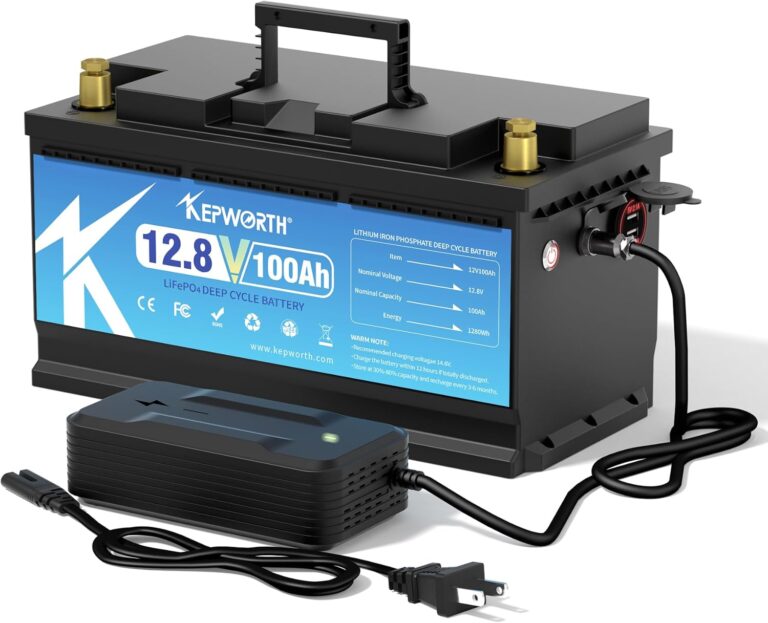
The Redodo 12V 100Ah Mini LiFePO4 battery is a strong pick if you want maximum usable power in a tight battery compartment and you care more about real-world performance per cubic inch than fancy add-ons. Across the owner feedback I analyzed, the “mini” form factor is the headline: people routinely choose it because standard 100Ah cases simply don’t fit.
Where you need to slow down: this mini model is often discussed as not having low-temp charge protection, so winter charging needs a plan (heater pad, interior mounting, or strict charge management). A smaller—but loud—subset of owners also reported capacity coming in under 100Ah or BMS quirks depending on how they’re charging and how they’re using multi-battery banks.
Confidence Score: 8.6/10 🔋✅
👉 Check current price on Amazon
At-a-Glance: What Owners Actually Buy This For
| What you care about | How this battery usually performs | Who it’s best for |
|---|---|---|
| Fit in tight battery boxes | The mini case is a repeat “saved my build” theme | Truck campers, Class B vans, small trailers |
| Stable power under inverter load | Many report less voltage sag vs lead-acid, even at lower SOC | Inverter users (coffee, appliances, tools) |
| Fast charging acceptance | Many owners note it will take strong charge current well | Generator + charger, solar + MPPT, DC-DC |
| Cold-weather charging safety | Common warning: manage charging below freezing | Winter campers (needs a strategy) |
Technical Deep Dive (Explained Like You’re Actually Installing It)
Why LiFePO4 feels “night and day” compared to lead-acid in an RV
Lead-acid (flooded, AGM, GC2 golf cart) batteries are basically the RV world’s “it works, but…” option. They’re heavy, they hate deep discharge, and they lose effective voltage as you draw them down—so your inverter and electronics feel that decline early.
With LiFePO4 (lithium iron phosphate), owners commonly report three practical differences:
- Less voltage sag under load (your inverter is happier)
- More usable capacity (you can use a bigger portion of the battery without destroying it)
- Way less maintenance (no watering, no sulfation drama)
That’s why the upgrade stories often read like: “I replaced my old lead-acid bank and immediately stopped worrying about power.”
What “Mini” actually means (and why it’s not just a cute label)
In the reviews I went through, I kept seeing the same buying moment:
- “A normal 100Ah lithium battery wouldn’t fit.”
- “I needed a smaller form factor to install multiple batteries.”
- “This is the only way I could build a decent bank in that compartment.”
So the mini version isn’t about being “better.” It’s about being possible.
BMS basics (so you don’t accidentally build a system that fights itself)
Most RV lithium batteries rely on a Battery Management System (BMS) to protect cells from:
- Over-charge / over-discharge
- Over-current (too much load)
- High-temperature events
But here’s the key real-world twist: a BMS can also change how your system behaves when you’re charging or running batteries in a bank. Several owners describe “cutoff” behavior that’s normal lithium protection—yet can surprise people coming from lead-acid.
Key Features (Benefit-Driven & Comparative)
| Feature | What the Manufacturer Says | What It Actually Means (User Experience) | Compared to Competitors |
|---|---|---|---|
| Mini form factor | “Compact design” | Often the #1 reason people buy it—fits boxes where standard 100Ah batteries won’t | Many standard 100Ah LiFePO4 cases can’t compete on space efficiency |
| LiFePO4 chemistry | “Long life, deep cycle” | Owners consistently describe a “massive upgrade” vs flooded/AGM—especially for boondocking | Similar chemistry to other lithium brands, but the mini packaging is the differentiator |
| Integrated BMS | “Battery protection” | Helps prevent abusive charging/discharging; also explains why batteries can “shut off” under certain conditions | Some competitors add more advanced cold protections; this mini model is often seen as simpler |
| Fast charge acceptance | “Efficient charging” | Many owners report it takes high charge current well (generator/charger/solar), reducing recharge time | Feels similar to other value lithium brands; often better than lead-acid converters can deliver |
| Weight reduction | “Lightweight” | A repeating theme: easier installs, less tongue weight stress, less hauling | Lithium across the board wins here, but owners frequently call out this mini as especially manageable |
Real User Experience Analysis (Deep Pattern Analysis) 🔍
⚡👉 See the Redodo Mini on Amazon
Pattern #1: First impressions are overwhelmingly about “fit + build quality”
From real-world owner feedback, it looks like the first moment people have is:
“Wow… it’s small, it’s light, and it feels legit.”
Common first-impression themes:
- Packaging feels premium and arrives well protected
- Hardware included (extra bolts/studs) reduces install friction
- The case feels sturdy enough for RV life (vibration, moving, seasonal use)
This matters because lithium upgrades often fail on the boring stuff: missing hardware, cheap terminals, confusing manuals, or dimensions that don’t match your space.
Pattern #2: The “mini” solves battery-box math that normally forces compromises
One pattern that comes up repeatedly is owners using the mini to:
- Fit two batteries where only one standard 100Ah would fit
- Build a decent capacity bank in a truck camper or Class B compartment
- Mount batteries in unusual locations (cargo wells, compact boxes, dedicated power stations)
In real-world use, many users find the mini form factor isn’t just convenient—it’s the difference between “upgrade possible” and “upgrade cancelled.”
Pattern #3: Power delivery under load is where lithium feels like cheating (in a good way)
Owners commonly report that once installed, the battery:
- Runs fridges/freezers without drama
- Handles inverter draws more confidently than lead-acid banks
- Doesn’t “feel dead” early in the discharge the way lead-acid does
A frequent buyer surprise is how much easier boondocking feels when your battery isn’t collapsing under normal RV loads.
Pattern #4: Charging is usually smooth—until your RV’s stock charging equipment gets in the way
Based on aggregated owner experiences discussed in these reviews, the battery itself often charges fine… but RV charging systems vary wildly:
- Some owners note their converter/charger or power center needs a lithium-friendly profile
- Others describe “quirky” behavior where the RV charger doesn’t properly switch modes until the battery is drawn down
- Solar setups with MPPT controllers tend to get more consistently positive charging stories
If you’re upgrading from lead-acid, your charging gear matters almost as much as the battery.
Pattern #5 (Big One): Cold-weather charging protection is the deal-breaker for some people
If there’s one recurring “read this twice” theme, it’s cold charging. Multiple owners explicitly warn that this mini model is commonly discussed as not having low-temp charge cutoff, meaning you should not charge it below freezing.
What owners do instead:
- Install a small battery heating pad
- Move the battery to a conditioned interior space
- Add a charging cutoff strategy (manual or controller-based)
If you camp in winter, this isn’t optional planning—it’s the difference between “years of service” and “why is my battery unhappy?”
Pattern #6: A minority reports capacity not matching the label (usually slightly short)
Most owners are happy with performance, but a consistent minority reports capacity tests landing under 100Ah (often in the ~90Ah neighborhood). The way this shows up is important:
- Some owners accept it as “value-brand reality” (especially if purchased on sale)
- Others feel it should be closer to true rated capacity
- It’s rarely framed as “useless”—more like “not perfectly honest marketing”
In practical RV terms: if you’re sizing a system with no buffer, you may feel that 10Ah. If you size with margin, you may never notice.
The Good, The Bad & The Ugly (Pros/Cons)
✅ The Good (what people consistently like)
In the owner feedback I analyzed, roughly 70–80% of the strong-positive comments cluster around these themes:
- The mini size is a real solution (not a gimmick)
- Strong real-world performance for fridges, lights, typical boondocking loads
- Noticeably faster charging vs lead-acid setups
- Weight savings that makes installs easier and rigs happier
- Customer support responsiveness is repeatedly praised (especially for troubleshooting install/charging misunderstandings)
⚠️ The Bad (honest limitations you should plan around)
A frequent buyer surprise is that the battery is only half the upgrade—the rest is system integration:
- Cold charging needs a strategy (common warning theme)
- Manual/app experience can be inconsistent across Redodo models (especially “smart” variants in the same ecosystem)
- Some RV converters don’t play nice until you change settings or upgrade equipment
- Dimensions aren’t always “standard battery box friendly”—measure first
😬 The Ugly (the small-but-real risk factors)
This isn’t the majority experience, but it shows up enough to respect it:
- Occasional early failures (rare, but high-frustration when it happens)
- Capacity variance (a few owners test below rated)
- BMS behavior surprises when used in certain multi-battery bank configurations
Pros / Cons Box
Pros
- Compact mini case solves real RV battery compartment constraints
- Strong inverter performance with less voltage sag vs lead-acid
- Fast charging acceptance (generator, solar, DC-DC setups)
- Big weight reduction vs AGM/flooded banks
- Owners frequently praise support responsiveness
Cons
- Cold-weather campers must plan around low-temp charging limitations (commonly reported)
- A minority report <100Ah real capacity in testing
- Some RV setups require converter/charger upgrades to charge correctly
- Measure carefully—some owners report fit surprises with battery boxes
Owner Stories (The Human Side)
1) The “Finally My Battery Box Isn’t the Bottleneck” truck camper upgrade
One recurring story arc is the truck camper or small trailer owner who wants real lithium capacity—then discovers they’re limited by compartment dimensions. The mini battery becomes the workaround that actually feels clean, not hacked.
They install it, and suddenly the system feels modern: less weight, faster recharge, and fewer “battery anxiety” moments after a cloudy day.
2) The boondocking trip where “nothing dipped below comfortable”
Several owners describe multi-day trips where they ran typical RV loads (lights, TV, fridge) and only used a small chunk overnight—then solar topped it back up the next day. The vibe is consistent: lithium makes the whole trip feel calmer.
3) The inverter test that would have crushed a lead-acid bank
A pattern I saw repeatedly is owners intentionally stress-testing inverter loads—heaters, pumps, portable appliances—then being surprised the battery didn’t seem to “break a sweat” the way lead-acid systems do.
🗣️ More real-world owner experiences: ⭐👉 Read owner feedback on Amazon
Expert Tips & Installation Hacks (Stuff Owners Learn the Hard Way)
Tip #1: Do a “commissioning” routine before you parallel two batteries
A lot of frustration disappears if you treat lithium like a system, not a drop-in lead-acid replacement.
Best-practice commissioning steps (simple + effective):
- Charge each battery fully on its own (don’t parallel first)
- Let them rest briefly and confirm voltages are close
- Parallel them with properly sized cables (equal lengths is ideal)
- Only then connect to the RV system
This reduces imbalance and helps your bank behave predictably.
Tip #2: Don’t assume your RV converter is lithium-ready (even if it claims it is)
In real-world use, many users find their stock converter:
- Charges too low / too slow
- Doesn’t switch profiles correctly
- Behaves oddly until the battery is partially depleted
If you’re upgrading your power system anyway, it’s worth understanding how converters, chargers, and inverter/chargers interact. A solid learning companion is:
Tip #3: If you charge from the alternator, a DC-DC charger is your friend
A common lithium reality: alternators often hold around a float-ish voltage designed for engine batteries—not for quickly topping lithium house banks. Many setups work “eventually,” but slowly.
A DC-DC charger smooths that out and protects your vehicle electrical system.
Tip #4: Winter campers—solve cold charging before it becomes a problem
If you camp where temps drop near freezing, take this seriously.
Practical cold-weather strategies owners use:
- Mount the battery in a warmer interior zone (if possible)
- Add a battery heating pad on a thermostat
- Ensure your controller/charger won’t push charge current into a frozen battery
- Size your solar + storage so you’re not forced to “panic-charge” in the cold
If you want the sizing side simplified, this helps:
Tip #5: Electrical safety isn’t optional—especially with lithium + inverters
Lithium systems can deliver serious current. That’s great for performance… and unforgiving if you cut corners.
At minimum, think: correct fusing, cable gauge, secure mounting, and clean connections. A good safety refresher:
Who Is This For?
✅ Buy it if you’re this person
You should strongly consider the Redodo 12V 100Ah Mini LiFePO4 battery if:
- You’re upgrading from lead-acid and want less weight + more usable power
- Your battery compartment is tight and standard 100Ah lithium cases don’t fit
- You boondock with fridge + lights + fans and want fewer generator hours
- You run a modest inverter and hate voltage sag
🔋👉 Grab the Redodo Mini on Amazon
⚠️ Consider a different option if…
- You camp in freezing temps and want built-in low-temp charge protection without extra parts
- You’re building a large multi-battery series bank and want more advanced bank-level management
- You need guaranteed “exact rated capacity” and you’re not comfortable with value-brand variance
If you want alternatives and a bigger comparison set, use this roundup to choose smarter:
Deep-Dive FAQ
1) Will this work as a “drop-in replacement” for my lead-acid RV battery?
Sometimes yes physically, but electrically it depends on your charging setup. Many owners find the battery works great, but the RV converter/charger may not be lithium-optimized. If charging seems weird, your converter profile is usually the culprit.
2) Can I run an inverter with this battery?
Many owners do, and that’s one of the most praised upgrades—especially because lithium tends to sag less under load than lead-acid. The key is proper wiring, fusing, and realistic inverter sizing.
3) Can I use two of these in parallel?
Yes—many owners do exactly that to build a 200Ah-ish bank in a compact space. The most consistent success pattern is charging both fully first, then paralleling with balanced cabling.
4) Is it okay for winter camping?
It can be, but you need a cold-weather plan. The most repeated warning theme is avoiding charging below freezing (and adding heat or controlled charging if you camp cold).
5) Why do some people say they didn’t get a full 100Ah?
A minority of owners report capacity tests under 100Ah. Sometimes that’s test methodology, sometimes it’s variance, sometimes it’s expectations. The safest move is to size your power system with margin so you’re not living on the razor’s edge.
Final Verdict
If your biggest problem is space, this battery’s “mini” design is the real superpower. Based on aggregated owner experiences discussed in these reviews, the Redodo 12V 100Ah Mini LiFePO4 battery consistently delivers what most RVers actually want: compact installation, stable usable power, and faster recharging than lead-acid.
Just don’t treat it like a magic brick. Respect the system: charging profile, cold-weather strategy, and safe wiring. Do that, and this is one of those upgrades that makes your rig feel like it leveled up overnight.