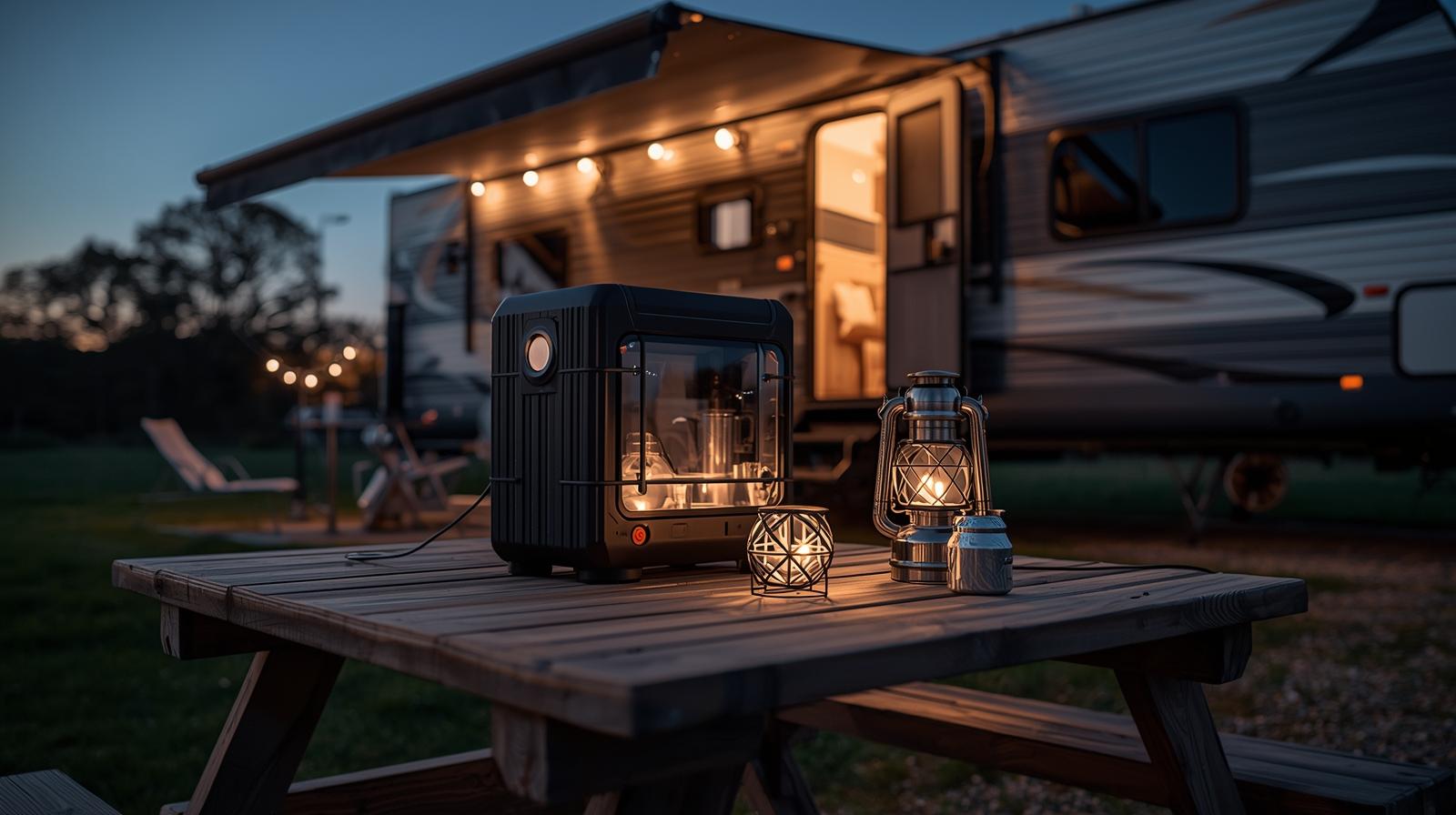
Portable Power Stations for RV: 10 Top Picks for CPAP, Fridge Backup, and Quiet Off-Grid Weekends (2026)
When your campground pedestal trips, “quiet hours” start, or you’re doing a weekend off-grid run, you don’t need marketing hype—you need predictable power.
Across our individual reviews, a recurring theme is that most buyer regret comes from mismatched expectations: “It says 1,000Wh… why did it die so fast?”
How we reviewed: We compiled this ranking from our individual product reviews, prioritizing real-world patterns: what consistently performs well, what frustrates owners, and what matters for long-term value.
Affiliate disclosure: This post contains affiliate links. If you buy through them, we may earn a commission at no extra cost to you.
Here’s what you’ll get: quick winners, a fast decision matrix, a real-world oriented comparison table, and deep-dive breakdowns so you can pick the right unit without overbuying (or underbuying).
3) Quick Verdict
| Award | Product Name (linked) | Best For… | Quick Reason |
|---|---|---|---|
| 🥇 Best Overall | BLUETTI Elite 200 V2 | Fridge + cooking bursts + devices | High-output 2kWh-class performance with strong real-world confidence |
| 💰 Best Value | BLUETTI AC180 Portable Power Station | “One-and-done” weekend power | Hits the sweet spot for RV essentials + fast top-ups |
| 💎 Best Premium | EcoFlow DELTA Pro 3 | Generator-class capability | Owners love it when it works; serious power with real planning required |
| ⚡ Fastest Recharge Pick | EF ECOFLOW RIVER 2 Pro | Quick top-offs between drives | In our review analysis, fast recharge is the standout theme |
| ⭐ Best for CPAP + Overnight Comfort | Jackery Explorer 1000 v2 | Quiet nights + realistic loads | Quiet operation and “workhorse” behavior show up repeatedly |
| 🎯 Best for “I Hate Lifting Heavy Boxes” | Anker SOLIX F2000 Portable Power Station | Rollable 2kWh-class power | Many users find the luggage-style form factor genuinely RV-friendly |
4) Quick Decision Matrix (Before tables)
- Need 2kWh-class power without going full “monster cart” → Go to #1
- Need best “weekend warrior” value for fridge + router + lights + short cooking bursts → Go to #2
- Need something you can roll instead of deadlifting → Go to #3
- Need a polished 1kWh workhorse for CPAP + night comfort → Go to #4
- Want fast top-offs and lighter-duty essentials → Go to #7
- Need true generator-class / 120V + 240V-style capability → Go to #8
- Budget-focused (accepting more variability) → Go to #9 or #10
5) Upgraded Comparison Table (Real-World Oriented)
| Product Name (linked) | Best For | Real-World Performance | Recharge Practicality | Key Tradeoff | Rating |
|---|---|---|---|---|---|
| BLUETTI Elite 200 V2 | 2kWh-class RV living | Strong: fridge + cooking bursts + devices | Fast (AC highlighted in review notes) | App polarizing | 8.7/10 |
| BLUETTI AC180 Portable Power Station | Weekend “one box” setup | Strong: essentials + short high-draw bursts | Fast | Calibration/UPS limits | 8.6/10 |
| Anker SOLIX F2000 Portable Power Station | Rollable 2kWh-class backup | Strong: refrigeration + small appliances | Fast (wall recharge emphasized) | Solar expectations | 8.6/10 |
| Jackery Explorer 1000 v2 | CPAP + quiet nights | Strong: practical “bridge power” | Fast | App/solar ecosystem quirks | 8.4/10 |
| Anker SOLIX C1000 Portable Power Station | 1kWh-class quiet-hours helper | Strong: but expectations matter | Moderate (solar expectations are the gotcha) | Fan noise | 8.4/10 |
| EF ECOFLOW DELTA 2 Max Portable Power Station | 2kWh-class “quiet generator replacement” | Strong: high output for RV essentials | Fast | Heavy + firmware/app stories | 8.3/10 |
| EF ECOFLOW RIVER 2 Pro | Fast recharge + lighter loads | Moderate-Strong: DC fridges/CPAP/routers | Fast | Self-discharge reports | 8.4/10 |
| EcoFlow DELTA Pro 3 | Premium generator-class | Very Strong: “runs everything” stories | Adjustable (plan your circuit) | Very heavy + QC risk | 8.4/10 |
| OUPES Mega 1 Portable Power Station | Value-focused RV panel-in-a-box | Moderate: good when unit is solid | Fast | Reliability/app quirks | 7.8/10 |
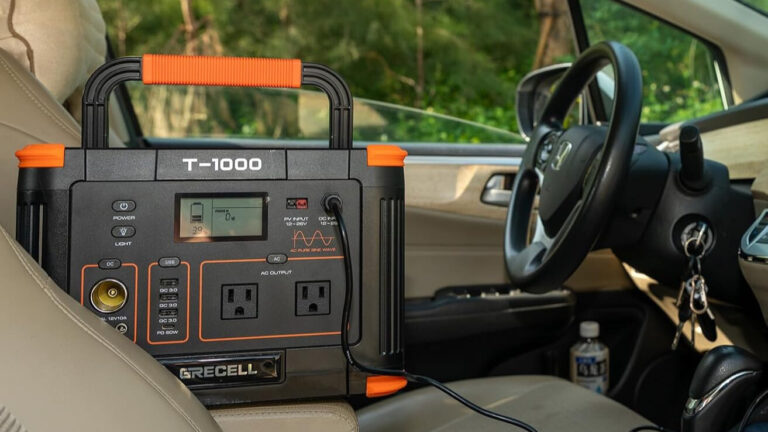
| GRECELL 1000W Portable Power Station | Budget-friendly basics | Moderate: great for light loads | Fast (often praised) | Reliability variance | 7.8/10 |
6) Detailed Product Reviews
#1. BLUETTI Elite 200 V2 — 2kWh Muscle Without the “Monster Cart”
📌 At a Glance
- Best for: Fridge backup + cooking bursts + devices (high-output RV use)
- Real-world performance: Strong (2kWh-class; owners emphasize it “feels bigger than 2kWh” in use)
- Recharge practicality: Fast (AC charging repeatedly highlighted)
- Noise/comfort: Quiet (owners highlight low noise)
- Our rating: 8.7/10
Quick Summary:
From real-world feedback and our review notes, this lands at #1 because it delivers high-output RV performance in a relatively compact footprint—without the constant friction stories that sink some competitors.
Key Specifications:
- Capacity: ~2074Wh (2kWh class)
- Inverter: 2600W continuous, ~3600W surge (as discussed in our review notes)
- Charging: Solar supported via MPPT with 60V / 1000W input limit
The Deep Dive (Why It Won):
- Based on aggregated owner experiences discussed in our reviews, it’s a “run-the-RV-stuff” unit: fridge strategy, cooking bursts, and device charging are consistently in its comfort zone.
- A frequent buyer surprise is how much idle/standby behavior matters; several owners call out low standby draw (including reports around ~10W idle).
- One pattern that comes up repeatedly is that inverter efficiency and low overhead can matter as much as headline capacity.
- Solar is supported, but the 60V ceiling is a real design constraint—panel pairing and wiring choices matter.
- The app/account experience is polarizing; some users don’t care, others consider it friction.
✅ Why Buy
- Strong “do real RV life” performance for a 2kWh-class unit
- High output headroom for short cooking bursts
- Owners commonly report efficient, practical day-to-day usability
⛔ Dealbreakers / What to Consider
- Heavy for “portable” (many users treat it as a carry-to-the-site unit, not a hike-to-the-beach unit)
- Solar design constraints (60V max) can limit certain panel wiring approaches
- If you hate app ecosystems, skip this
Verdict for You:
- 👉 Pick this if: you want a 2kWh-class station that behaves like a real RV power backbone
- You prioritize fridge + cooking bursts + devices
- You care about efficient real-world performance, not just spec-sheet claims
- 🛑 Skip this if: you want “no app, no account, no friction”
- You’re sensitive to ecosystem/software annoyances
- You need ultra-light portability
Best Pairing Gear
- How to Size Your RV Solar System — helps you avoid the “solar should refill it daily” expectation trap.
- RV Surge Protectors 101 — smart for shore-power charging protection.
- Check Price on Amazon: https://amzn.to/3YOD8qW
- Read the full review: https://rvoutfitting.com/bluetti-elite-200-v2-portable-power-station/
#2. BLUETTI AC180 Portable Power Station — The “Sweet Spot” RV Workhorse
📌 At a Glance
- Best for: RV essentials + short cooking bursts + quick top-ups
- Real-world performance: Strong (mid-tier capacity with legit inverter headroom)
- Recharge practicality: Fast (major highlight in review notes)
- Noise/comfort: Usually fine; fan behavior is a divider in the file
- Our rating: 8.6/10
Quick Summary:
In our review analysis, we consistently saw this model hit the practical middle ground: it’s not tiny, not a monster, and it’s easy for RVers to live with—if you treat it like a battery system (not a miracle).
Key Specifications:
- Battery: 1,152Wh LiFePO4 (LFP) (as stated in our review notes)
- Inverter: 1,800W continuous (with higher surge headroom noted)
- Charging: Very fast AC wall charging is repeatedly highlighted
The Deep Dive (Why It Won):
- Best-at theme: running RV essentials (fridge, router, lights) plus short bursts of higher-draw kitchen gear.
- A frequent buyer surprise is how quickly heat appliances drain any mid-tier station—owners love the capability, then learn the battery math.
- Solar can work well, but real-world panel output and setup quality drive results.
- One pattern that comes up repeatedly is that a quick early calibration routine can prevent confusion later (especially around usable watt-hours).
✅ Why Buy
- Strong real-world “RV essentials” performance
- Fast recharge behavior fits weekend use (drive → top off → camp)
- Great middle ground for people who don’t want to overbuild
⛔ Dealbreakers / What to Consider
- Not for long runtimes at high wattage (heating appliances)
- Not a “true UPS” in sketchy voltage situations
- If you need overnight high-draw comfort loads, skip this
Verdict for You:
- 👉 Pick this if: you want one box that covers most weekend RV needs
- Fridge strategy + lights + devices
- Short cooking bursts, not all-night heating
- 🛑 Skip this if: your plan depends on sustained high wattage
- Space heaters / long high-draw sessions
- Frequent voltage dips where you expect UPS-grade behavior
Best Pairing Gear
- DIY RV Solar Installation Guide — reduces “why is my solar input so low?” headaches.
- RV Electrical Safety Tips — useful if you’re integrating charging into shore-power routines.
- Check Price on Amazon: https://amzn.to/49eXEWy
- Read the full review: https://rvoutfitting.com/bluetti-ac180-review/
#3. Anker SOLIX F2000 Portable Power Station — 2kWh Power You’ll Actually Move
📌 At a Glance
- Best for: Rollable, high-utility backup power for quiet hours and outages
- Real-world performance: Strong (owners repeatedly use it for refrigeration + small appliances)
- Recharge practicality: Fast (wall recharge is a core use-case)
- Noise/comfort: Quiet (repeatedly called out for its class)
- Our rating: 8.6/10
Quick Summary:
Based on aggregated owner experiences discussed in our reviews, this stands out because it’s a “big battery” that’s still practical to move—so it actually gets used in real RV life.
Key Specifications:
- Capacity class: ~2,048Wh-class (as referenced in our review notes)
- Solar: Up to about ~1,000W input is discussed as achievable in ideal configurations
- Expandable: Optional add-on battery is repeatedly referenced
The Deep Dive (Why It Won):
- Owners commonly report successful real-world use for refrigeration, quiet-hours power, and outage-style scenarios.
- The luggage-style chassis is not a gimmick—many users find it changes whether a 2kWh-class unit is “usable” day to day.
- The biggest gotchas are solar charging expectations, UPS/bypass mode limits, and occasional app/Bluetooth friction.
- One pattern that comes up repeatedly is that it excels at realistic loads but is not a magical rooftop A/C solution.
✅ Why Buy
- Rollable form factor makes a big station practical
- Strong “quiet generator replacement” behavior for sensible loads
- A good fit for people who want capacity without constant lifting
⛔ Dealbreakers / What to Consider
- Solar performance depends heavily on correct design and expectations
- UPS/bypass mode has limits
- If you want rooftop A/C or heavy power-tool duty as the main goal, skip this
Verdict for You:
- 👉 Pick this if: you want 2kWh-class comfort without back pain
- You’ll actually move it often
- Your loads are realistic (fridge, devices, kitchen bursts)
- 🛑 Skip this if: your “plan” is sustained high-draw HVAC
- Rooftop A/C expectations
- Heavy tools as the primary use-case
Best Pairing Gear
- Best RV Solar Panels — helps match realistic panel output to your daily refill goal.
- RV Solar Maintenance & Troubleshooting Guide — if you’re relying on solar regularly.
- Check Price on Amazon: https://amzn.to/49vR4fJ
- Read the full review: https://rvoutfitting.com/anker-solix-f2000-portable-power-station/
#4. Jackery Explorer 1000 v2 — Quiet, Fast-Charging 1kWh-Class “Bridge Power”
📌 At a Glance
- Best for: CPAP + router + lights + realistic weekend loads
- Real-world performance: Strong (1kWh-class “dependable workhorse” theme)
- Recharge practicality: Fast (fast AC recharging is repeatedly emphasized)
- Noise/comfort: Quiet (quiet operation highlighted)
- Our rating: 8.4/10
Quick Summary:
Across our individual reviews, a recurring theme is that this unit does very well when you size expectations correctly—especially if you want fast AC recharge and low-noise operation.
Key Specifications:
- Capacity class: ~1kWh
- Inverter: 1500W pure sine wave (as referenced in our review notes)
The Deep Dive (Why It Won):
- The unit ranks high because it’s consistently described as a practical, quiet-hours helper for RVers.
- The biggest real-world “gotchas” are AC efficiency losses/standby draw (you don’t get every watt-hour back out) and app/connectivity quirks.
- A frequent buyer surprise is solar reality: one folding panel rarely behaves like people expect in real sunlight angles and partial shade.
- In real-world use, many users find it’s best as bridge power—overnight comfort and morning routines—then recharge later.
✅ Why Buy
- Fast AC recharge makes weekend routines easy
- Quiet operation fits “sleep + CPAP” scenarios well
- Strong usability for common RV electronics and comfort loads
⛔ Dealbreakers / What to Consider
- If you expect solar to be “set it and forget it” with one panel, skip this
- Standby draw/efficiency means usable energy can feel lower than you assume
- Some users report app/Bluetooth/Wi-Fi friction
Verdict for You:
- 👉 Pick this if: your goal is quiet, reliable backup power—not a full hookup replacement
- CPAP + lights + router/fans
- Fast recharging between drives
- 🛑 Skip this if: you want effortless daily solar refills from a small panel
- Solar simplicity is your #1 requirement
- App/connection quirks will annoy you
Best Pairing Gear
- How to Size Your RV Solar System — aligns panel reality with your overnight usage.
- RV Surge Protectors 101 — smart protection when charging from unknown pedestals.
- Check Price on Amazon: https://amzn.to/4qLeUdt
- Read the full review: https://rvoutfitting.com/jackery-explorer-1000-v2-review/
#5. Anker SOLIX C1000 Portable Power Station — Powerful 1kWh-Class (With a Fan-Noise Reality Check)
📌 At a Glance
- Best for: Quiet-hours power with strong “real appliance” capability in a 1kWh class
- Real-world performance: Strong (but battery math still rules)
- Recharge practicality: Moderate (solar expectations are the recurring gotcha)
- Noise/comfort: Noticeable (fans under fast charge/heavy loads)
- Our rating: 8.4/10
Quick Summary:
Based on aggregated owner experiences discussed in our reviews, this is one of the most consistently praised 1kWh-class options—right up until solar expectations and fan noise collide with reality.
The Deep Dive (Why It Won):
- A recurring theme is “excellent core performance,” paired with the same gotcha: solar refill expectations.
- Owners commonly report that shade sensitivity and input limitations matter more than marketing implies.
- Expect noticeable fan noise during fast charging or sustained heavier loads (explicitly called out in review notes).
- One pattern that comes up repeatedly is confusion around UPS/pass-through assumptions—some behaviors differ from what people expect.
✅ Why Buy
- Strong real-world reputation in the 1kWh class
- Good fit for weekend “bridge power” and quiet hours
- Excellent for realistic RV loads when you plan the math
⛔ Dealbreakers / What to Consider
- If your plan relies on daily solar refills, be cautious
- Fan noise can be noticeable in certain charge/load scenarios
- If you need true UPS-like behavior, skip this
Verdict for You:
- 👉 Pick this if: you want a strong 1kWh-class unit and you’ll recharge intelligently
- Drive days / shore power recharge plans
- Realistic loads (not all-night heating)
- 🛑 Skip this if: you’re noise-sensitive or solar-dependent
- Fan noise will bother you
- Your strategy is “solar refills everything every day”
- Check Price on Amazon: https://amzn.to/49t1zAu
- Read the full review: https://rvoutfitting.com/anker-solix-c1000-portable-power-station-review/
#6. EF ECOFLOW DELTA 2 Max Portable Power Station (Amazon link not provided) — Big Capability, Heavier Tradeoffs
📌 At a Glance
- Best for: 2kWh-class “quiet generator replacement” behavior (if you accept the ecosystem tradeoffs)
- Real-world performance: Strong (ports + output capability themes show up repeatedly)
- Recharge practicality: Fast
- Noise/comfort: Quiet (quiet generator-replacement theme)
- Our rating: 8.3/10
Quick Summary:
From real-world feedback and our review notes, the hardware capability is the selling point—while weight, solar setup sensitivity, and a minority of firmware/app/support stories are what keep it from ranking higher.
Key Specifications:
- Battery Chemistry: LiFePO4 (LFP) (explicitly stated in our review notes)
- Capacity class: 2kWh-class (repeatedly referenced across the review discussion)
The Deep Dive (Why It Won):
- Many RVers want “lights + fridge strategy + short cooking bursts,” and this unit’s capability aligns with that goal.
- Solar charging works, but results depend heavily on correct panel pairing, wiring, and staying inside input limits.
- A frequent buyer surprise is how quickly high-watt cooking appliances change the runtime math.
- The recurring caution is ecosystem friction: firmware/app/support experiences are mixed.
✅ Why Buy
- Strong capability for common RV essentials
- Good fit for people who want “generator-like usefulness” without generator noise
- LFP chemistry is a recurring positive ownership signal in our review notes
⛔ Dealbreakers / What to Consider
- Heavy and less “grab-and-go” than many expect
- Solar can be setup-sensitive
- If you want hands-off simplicity with no ecosystem quirks, skip this
Verdict for You:
- 👉 Pick this if: you want 2kWh-class capability and you’ll set it up thoughtfully
- You can handle weight and planning
- You’ll test early and learn your charging behavior
- 🛑 Skip this if: you want zero friction
- App/firmware stories make you nervous
- You want ultra-simple solar daily refills
- Check Price on Amazon: https://rvoutfitting.com/ef-ecoflow-delta-2-max-portable-power-station/
- Read the full review: https://rvoutfitting.com/ef-ecoflow-delta-2-max-portable-power-station/
#7. EF ECOFLOW RIVER 2 Pro — Fast Recharge, Lighter-Duty RV Hero
📌 At a Glance
- Best for: Fast recharge + moderate essentials (CPAP, routers, laptops, DC fridges via DC)
- Real-world performance: Moderate-Strong (~768Wh-class; best when used as “bridge power”)
- Recharge practicality: Fast (core theme)
- Noise/comfort: Most of the time it’s quiet.
- Our rating: 8.4/10
Quick Summary:
In our review analysis, we consistently saw this as a fast-recharge “use it overnight, refill later” tool—especially when you lean on DC for fridge-style loads.
The Deep Dive (Why It Won):
- Best-at theme: fast recharge and running moderate RV essentials (explicitly called out).
- The tradeoff is also consistent: some units self-discharge in storage and that surprises owners.
- Solar setup friction comes up repeatedly (connector mismatches, missing adapters, “why is input so low?” moments).
- Customer service experiences are mixed, and a small percentage of reliability failures show up in owner stories.
✅ Why Buy
- Fast recharge fits drive-day routines
- Great for overnight essentials and DC-friendly loads
- Solid “quiet hours” helper when used realistically
⛔ Dealbreakers / What to Consider
- If you store it for long periods, self-discharge reports matter
- Solar setup can be finicky depending on your cable/adapter situation
- If you need higher-draw cooking comfort, skip this
Verdict for You:
- 👉 Pick this if: you want speed and simplicity for lighter-duty RV loads
- Quick top-offs are part of your routine
- CPAP/router/12V fridge strategy is the goal
- 🛑 Skip this if: you need higher capacity for longer off-grid stints
- You want 2kWh-class behavior
- You’re trying to run heavier cooking loads frequently
- Check Price on Amazon: https://amzn.to/497v61i
- Read the full review: https://rvoutfitting.com/ef-ecoflow-river-2-pro-review/
#8. EcoFlow DELTA Pro 3 — Generator-Class Power (If You’ll Actually Manage the Risk)
📌 At a Glance
- Best for: High-demand RV setups and serious backup capability (including 120V + true 240V split-phase use cases discussed in review notes)
- Real-world performance: Very Strong (owners often report it runs “everything they throw at it”)
- Recharge practicality: Adjustable (plan your circuit)
- Noise/comfort: Quiet (quiet, powerful theme appears repeatedly)
- Our rating: 8.4/10
Quick Summary:
Owners commonly report “love it when it works.” This ranks as the premium pick because the capability is real—but so are the heavy weight and the minority of QC/support risk stories.
The Deep Dive (Why It Won):
- This is generator-class battery territory; owners routinely use it for high-demand scenarios and serious backup.
- A frequent buyer surprise is how heavy it is—this is not a casual “move it daily” unit.
- One pattern that comes up repeatedly is the downside risk: defects, firmware weirdness, and support/returns friction show up in a minority of stories.
- The review notes repeatedly emphasize planning: surge protection and early testing matter here.
✅ Why Buy
- Serious capability when you actually need “big power”
- True premium-class feature set discussed across owner experiences
- Quiet operation is a recurring positive theme
⛔ Dealbreakers / What to Consider
- Very heavy (logistics matter)
- If you can’t tolerate QC/support uncertainty, skip this
- If you hate app-dependent control, skip this (explicitly called out)
Verdict for You:
- 👉 Pick this if: you want premium power and you’ll treat it like mission-critical gear
- You’ll test hard in week one
- You’ll use surge protection and plan charging properly
- 🛑 Skip this if: you want “appliance-simple” ownership
- Heavy + QC stories will stress you out
- You don’t want app dependency
Best Pairing Gear
- RV Surge Protectors 101 — repeatedly relevant when you’re charging expensive gear from unknown pedestals.
- RV Electrical Safety Tips — good baseline if you’re integrating high-power charging routines.
- Check Price on Amazon: https://amzn.to/3LfBj39
- Read the full review: https://rvoutfitting.com/ecoflow-delta-pro-3-review/
#9. OUPES Mega 1 Portable Power Station — Great on Paper, Mixed in Ownership
📌 At a Glance
- Best for: Value-focused buyers who will test hard early
- Real-world performance: Moderate (strong when you get a good unit)
- Recharge practicality: Fast
- Noise/comfort: Mixed; fan/noise themes appear in owner reviews
- Our rating: 7.8/10
Quick Summary:
From real-world feedback and our review notes, the story is consistent: strong value and performance when the unit is solid, but reliability/app quirks and standby drain complaints are part of the decision.
The Deep Dive (Why It Won):
- When it behaves, it fits RV life well: fridge + lights + Starlink-style loads + small appliances.
- The biggest gotchas include fan noise, app reliability, and reports of units failing to charge or recover after deep discharge.
- EPS/UPS-style usage is where quirks show up more often (especially with pulsing loads like fridges).
- A frequent buyer surprise is that “portable electrical panel” capability does not equal all-night heater performance.
✅ Why Buy
- Strong capability-for-the-money theme appears repeatedly
- Useful feature set for typical RV electronics and essentials
- Can shine as a weekend/off-grid helper if your expectations are realistic
⛔ Dealbreakers / What to Consider
- Reliability variance is the headline risk
- App quirks can be a real ownership friction point
- If you need rock-solid “mission-critical” reliability, skip this
Verdict for You:
- 👉 Pick this if: you’re value-driven and you’ll verify performance immediately
- You’ll stress test early and build a Plan B
- Your loads are realistic (not heating all night)
- 🛑 Skip this if: you want premium consistency
- Reliability/app stories make you uneasy
- You can’t tolerate standby/quirk risk
- Check Price on Amazon: https://amzn.to/4jj72xc
- Read the full review: https://rvoutfitting.com/oupes-mega-1-portable-power-station-review/
#10. GRECELL 1000W Portable Power Station — Budget-Friendly Basics (With a Reliability Asterisk)
📌 At a Glance
- Best for: Light-to-moderate RV basics and short trips
- Real-world performance: Moderate (great for morning routines and essentials)
- Recharge practicality: Fast (often highlighted)
- Noise/comfort: Generally acceptable;
- Our rating: 7.8/10
Quick Summary:
Owners commonly report it’s excellent for “daily RV basics”—but the biggest risk is reliability variance. If you buy it, treat it like gear you must validate early.
The Deep Dive (Why It Won):
- The recurring positive theme is practicality for essentials: phones, lights, small fans, laptop, router/Starlink-style setups.
- The biggest risk is reliability variance: reports of charging failures or errors over time show up meaningfully in owner experiences.
- A frequent buyer surprise is usable energy vs label—efficiency and overhead can reduce what you feel you “paid for.”
- Many users highlight competitive wall recharge, but heavy loads still drain fast (battery physics wins every time).
✅ Why Buy
- Strong “basic RV life” value theme
- Fast wall recharge is often praised
- Works well for essentials and short off-grid stints
⛔ Dealbreakers / What to Consider
- If you need consistent long-term reliability, skip this
- High-draw heat appliances are a poor match
- If you won’t test early and keep a backup plan, skip this
Verdict for You:
- 👉 Pick this if: you want budget-friendly basics and you’ll be realistic
- Essentials + short outings
- You’ll stress test immediately
- 🛑 Skip this if: you need premium durability and consistency
- You’re relying on it as your only critical power source
- Your loads are high-draw and frequent
- Check Price on Amazon: https://amzn.to/3L6TpVc
- Read the full review: https://rvoutfitting.com/grecell-1000w-portable-power-station-review/
7) Buying Guide: How to Avoid a Bad Purchase
Fit-for-purpose (match your real use)
- If your primary goal is CPAP + router + lights overnight, prioritize quiet operation and predictable “bridge power” behavior over extreme output.
- If your goal includes cooking bursts (coffee maker/toaster/air-fryer-style loads), you need inverter headroom—and you still must respect battery math.
- If you want longer off-grid weekends, 2kWh-class units generally reduce stress versus 1kWh-class units.
Performance vs marketing (what actually matters)
- A frequent buyer surprise is that you don’t get 100% of the labeled capacity as usable AC power.
- In real-world use, many users find that inverter efficiency + standby draw meaningfully changes how long a station “feels like it lasts.”
Hidden tradeoffs (recurring owner complaints)
- Solar expectations: One pattern that comes up repeatedly is “solar will refill it daily” optimism—then shade, angle, and input limits ruin the plan.
- App/ecosystem friction: Some models are fine; others become annoying when essential toggles feel app-dependent.
- Storage/self-discharge: A frequent buyer surprise is storing a unit for weeks and finding it not full when needed.
Ecosystem/compatibility dependencies
- If you’re doing solar, you must match voltage limits, connectors, and cable/adapters—this is where many “why is input so low?” moments start.
- For shore charging, consider basic pedestal hygiene and protection habits (many users pair charging routines with surge protection thinking).
Durability/ownership signals
- From real-world feedback and our review notes: “Great when you get a good unit” is a real category—treat that as a risk factor, not a compliment.
Week-one testing checklist (category-generic, no hype)
- Fully charge → run a realistic overnight load → recharge the way you’ll recharge in real life.
- Test both AC and DC output with your actual gear (CPAP, fridge, router, lights).
- If you’ll use solar, test in real conditions (morning/afternoon angles; partial shade) so you don’t build a fantasy system.
8) FAQ
1) Will a 1,000Wh power station run an RV fridge overnight?
In real-world use, many users find it depends on the fridge type, duty cycle, and whether you can run it efficiently via DC. Expect variability and test your exact fridge early.
2) Why does a “1,000Wh” unit feel like it runs out faster than expected?
A frequent buyer surprise is that AC conversion losses, inverter overhead, and standby draw reduce usable energy in practice.
3) Are portable power stations quiet enough for CPAP use?
Across our individual reviews, a recurring theme is that many units are quiet in normal operation, but some can ramp fans during fast charging or heavier loads. Plan to run CPAP while the unit is not in rapid-charge mode.
4) Can I rely on solar to refill my power station every day?
One pattern that comes up repeatedly is that solar results depend on panel pairing, sun angle, wiring, and staying within input limits. Treat solar as “helpful” unless you’ve sized and tested it for your routine.
5) What’s the most common “gotcha” owners report?
Solar expectations and usability friction (apps, connectors, missing adapters) show up constantly across review analysis.
6) Should you pick 1kWh or 2kWh for weekend off-grid trips?
From real-world feedback and our review notes, 2kWh-class units reduce stress for fridge strategy and cooking bursts—but they’re heavier and more expensive. If you mostly need overnight comfort and can recharge later, 1kWh-class can be enough.
7) Do these replace a generator?
In real-world use, many users find they replace a generator for quiet-hours essentials and short high-draw bursts—but not for sustained HVAC/heating loads unless you build a much larger system.
8) What should you do the day you unbox it?
Charge it fully, test your real loads, and verify your recharge plan (shore, vehicle, solar). Catching issues early is a recurring theme in owner stories—especially in models with more variability.
9) Final Verdict
If you want the cleanest “do RV life without drama” pick, start with BLUETTI Elite 200 V2.
If you want the strongest value-focused sweet spot, go with BLUETTI AC180 Portable Power Station.
If your priority is overnight comfort, CPAP support, and fast recharge routines, Jackery Explorer 1000 v2 is a very safe place to land.
Check Price on Amazon for BLUETTI Elite 200 V2.